Hydrochloric Acid → 4-[3-(p-Nitrobenzyloxycarbonyl)-2-oxopropyl]-azetidin-2-one
Reaction equation

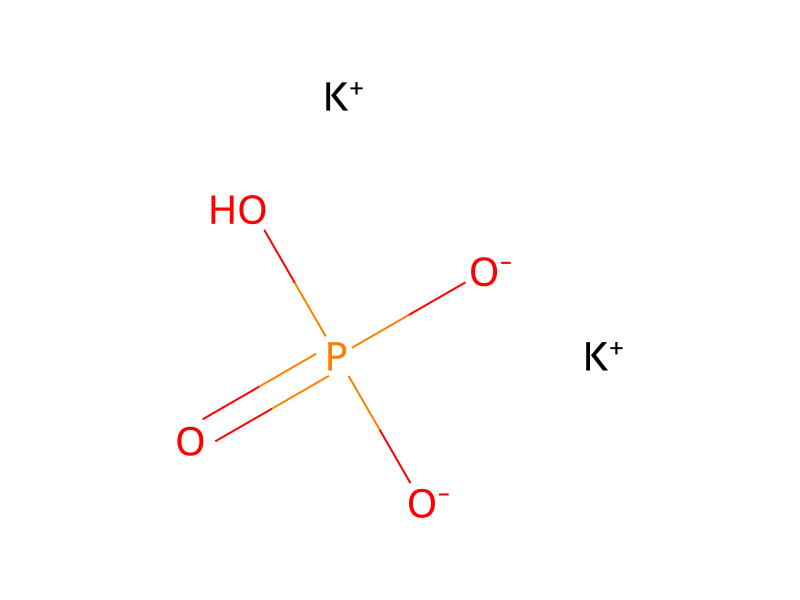
[Si]([N:8]1[CH:11]([CH2:12][C:13](=[O:28])[CH2:14][C:15]([O:17][CH2:18][C:19]2[CH:24]=[CH:23][C:22]([N+:25]([O-:27])=[O:26])=[CH:21][CH:20]=2)=[O:16])[CH2:10][C:9]1=[O:29])(C(C)(C)C)(C)C.Cl.P([O-])([O-])(O)=O.[K+].[K+]>CO>[N+:25]([C:22]1[CH:23]=[CH:24][C:19]([CH2:18][O:17][C:15]([CH2:14][C:13](=[O:28])[CH2:12][CH:11]2[NH:8][C:9](=[O:29])[CH2:10]2)=[O:16])=[CH:20][CH:21]=1)([O-:27])=[O:26]Participants
Reactant 3


Product 1

Reagents, catalysts & solvents 1

Procedure
A solution of N-(t-butyldimethylsilyl)-4-[3-(p-nitrobenzyloxycarbonyl)-2-oxopropyl]-azetidin-2-one (5.17 g, 12.3 mMol) in methanol (55 ml) is treated with 1N hydrochloric acid (6.2 ml) and then kept at room temperature for 200 mins. The solution is treated with 1M dipotassium hydrogenphosphate (6.2 ml) and concentrated under vacuum. The residue is taken up in ethyl acetate (100 ml), washed with brine, dried over magnesium sulfate, filtered, and evaporated under vacuum. Triturating the resulting oil with diethyl ether yields 4-[3-(p-nitrobenzyloxycarbonyl)-2-oxopropyl]-azetidin-2-one (3.42 g, 91%) as an off-white powder: mp 50°-52°; IR (CH2Cl2) 3416, 1767, 1723, 1528, and 1352 cm-1 ; NMR (CDCl3) α2.60 (ddd,1,J=1,2.7, and 15.1,H3β), 2.77 (dd,1,J=8.4 and 18.2, CHCH2CO), 3.13 (dd,1,J=5.1 and 18.2, CHCH2CO), 3.20 (ddd,1,J=2.4, 5.0, and 15.1, H3α), 3.57 (s,2,COCH2CO2), 3.98 (m,1,H4); 5.27 (s,2,CH2Ar), 6.28 br s,1,NH), 7.53 and 8.23 (two d's,4,J=8.5, ArH); mass spectrum m/e 306(M+), 264(M+-42), 237, 153, 125, 111, and 136.
Workup
- concentrationconcentrated under vacuum
- washwashed with brine
- dry with materialdried over magnesium sulfate
- filtrationfiltered
- customevaporated under vacuum
- customTriturating the resulting oil with diethyl ether
Sources & evidence
- ORD record
- ord-1f340f10673b4b21be066e71e7ef47f3
- Source dataset
- uspto-grants-1985_07
- Patent number
- US04530841
Reaction notes
Loading…