Acetonitrile → HCID 19028147, compound
Reaction equation

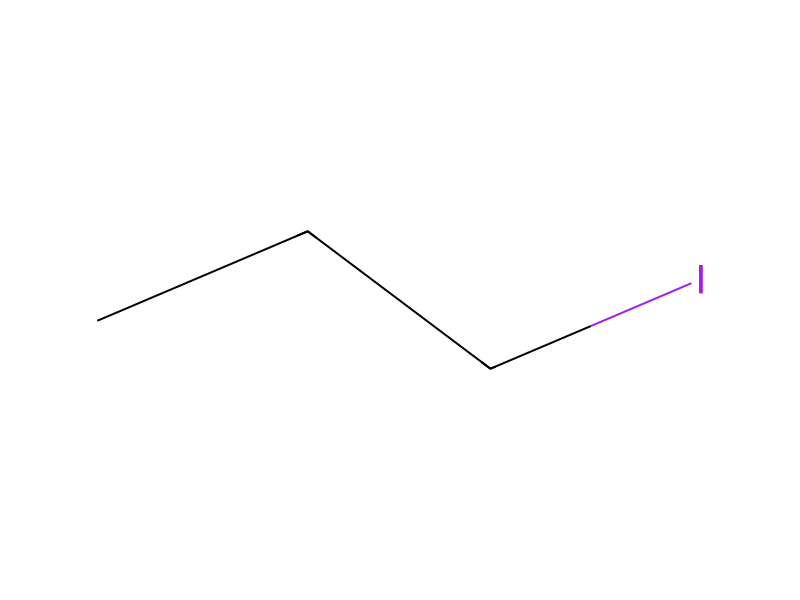
[CH2:1]([NH:4][CH:5]1[CH2:14][C:13]2[C:8](=[CH:9][CH:10]=[CH:11][C:12]=2[O:15][CH3:16])[O:7][CH2:6]1)[CH:2]=[CH2:3].[CH2:17](I)[CH2:18][CH3:19].C([O-])([O-])=O.[K+].[K+].C(#N)C>CCOCC>[CH2:1]([N:4]([CH:5]1[CH2:14][C:13]2[C:8](=[CH:9][CH:10]=[CH:11][C:12]=2[O:15][CH3:16])[O:7][CH2:6]1)[CH2:17][CH2:18][CH3:19])[CH:2]=[CH2:3]Participants
6
Reactant 4



Product 1

Reagents, catalysts & solvents 1

Conditions
- Temperature
- 47 °C
Procedure
3-(N-Allylamino)-5-methoxychroman (1.3 g, 5.9 mmol) prepared analogous to example 26, n-propyl iodide (2.1 mL, 21 mmol) , anhyrous K2CO3 (3.0 g, 21 mmol) and acetonitrile (5.5 mL) were stirred under N2 at 47° C. (oilbath temp) for five days until GC indicated complete reaction. Ether (40 mL) was added, the salts were filtered off by suction and the clear filtrate was concentrated in vacuo to afford 3-(N-allyl-N-n-propylamino)-5-methoxy chroman (1.24 g, 81% yield) as an oil. The base was precipitated from an ether solution by adding a slight excess of HCl (approx. 3M in ether). Crystallization of the crude HCl salt afforded colourless needles. Mp 117°-118° C.
Workup
- customreaction
- filtrationthe salts were filtered off by suction
- concentrationthe clear filtrate was concentrated in vacuo
Sources & evidence
- ORD record
- ord-f2b2155b23e942fbbb2a748a22e8f7fc
- Source dataset
- uspto-grants-1995_05
- Patent number
- US05420151
Reaction notes
Loading…