Ethylene → Ethylene/propylene 5-ethylidene-2-norbornene dicyclopentadiene
Reaction equation

C=C.[CH2:3]=[CH:4]C.[CH:6](=[C:8]1CC2CC1C=C2)[CH3:7].[CH2:15]1[CH:19]2[CH:20]3[CH:24]=[CH:23][CH:22]([CH:18]2[CH:17]=[CH:16]1)[CH2:21]3>CCCCCC>[CH2:3]=[CH2:4].[CH2:7]=[CH:6][CH3:8].[CH:15](=[C:19]1[CH2:18][CH:22]2[CH2:21][CH:20]1[CH:24]=[CH:23]2)[CH3:16].[CH2:15]1[CH:19]2[CH:20]3[CH:24]=[CH:23][CH:22]([CH:18]2[CH:17]=[CH:16]1)[CH2:21]3Participants
Reactant 4


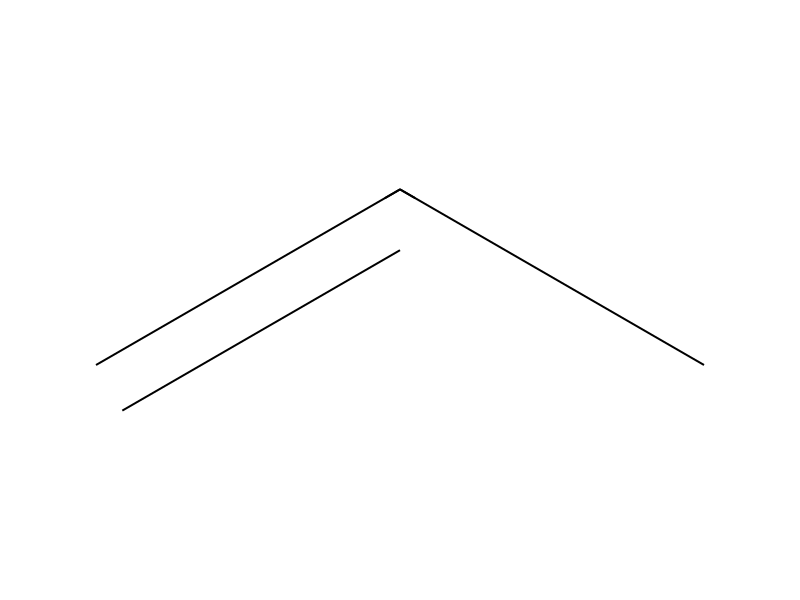

Product 1

Reagents, catalysts & solvents 1
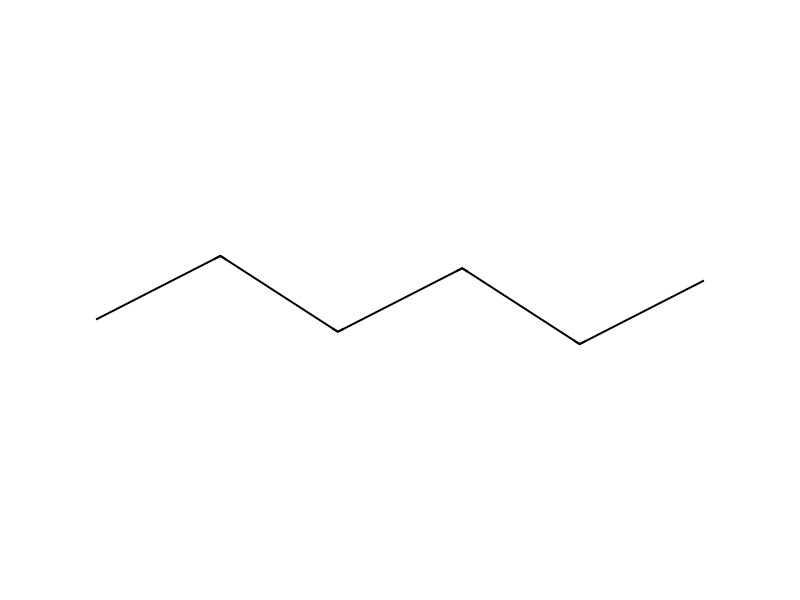
Procedure
Ethylene, propylene, 5-ethylidene-2-norbornene and dicyclopentadiene were continuously co-polymerized in a 100-liter polymerization vessel, made of stainless steel, equipped with stirring blades. Briefly, hexane was continuously fed as a solvent for polymerization to a lower site of the polymerization vessel at a rate of 83 liters/hour. On the other hand, the polymerization solution was continuously withdrawn from an upper site so that the polymerization solution in the polymerization vessel was 100 liters. Ethylene, propylene, 5-ethylidene-2-norbornene and dicyclopentadiene were continuously fed as monomers at the lower site of the polymerization vessel at rates of 3.00 kg/hour, 2.00 kg/hour, 0.60 kg/hour and 0.03 kg/hour, respectively, into the polymerization vessel. Dimethylsilyl (tetramethylcyclopentadienyl) (3-tert-butyl-5-methyl-2-phenoxy) titanium dichloride, triphenylmethyl tetrakis(pentafluorophenyl)borate and triisobutyl aluminum were continuously fed as catalysts at the lower site of the polymerization vessel at rates of 0.045 g/hour, 1.378 g/hour and 2.640 g/hour, respectively, into the polymerization vessel. The molecular weight was adjusted with hydrogen. The co-polymerization reaction was effected at 89° C. by feeding low-pressure steam into a jacket attached outside the polymerization vessel. The polymerization solution withdrawn from the polymerization vessel was treated with a small amount of ethanol to quench the polymerization reaction, stripped of the monomers and washed with water. Then the solvent was removed by treating with steam in a large amount of water to separate a copolymer, which was dried at 80° C. for a day and night under reduced pressure. By the above procedure, ethylene/propylene/5-ethylidene-2-norbornene/dicyclopentadiene copolymer was produced at a rate of 3.6 kg/hour. Detailed results are shown in Table 1.
Workup
- customequipped with stirring blades
- customOn the other hand, the polymerization solution was continuously withdrawn from an upper site so that the polymerization solution in the polymerization vessel
- customThe co-polymerization reaction
- customwas effected at 89° C.
- customThe polymerization solution withdrawn from the polymerization vessel
- additionwas treated with a small amount of ethanol
- customto quench
- customthe polymerization reaction
- washwashed with water
- customThen the solvent was removed
- additionby treating with steam in a large amount of water
- customto separate a copolymer, which
- customwas dried at 80° C. for a day and night under reduced pressure
Sources & evidence
- ORD record
- ord-d0add749c4bf4936a34587fb91347e76
- Source dataset
- uspto-grants-2001_10
- Patent number
- US06300447B1
Reaction notes
Loading…