Methanol → 2-Chloro-6-methoxy-3-nitropyridine
Reaction equation

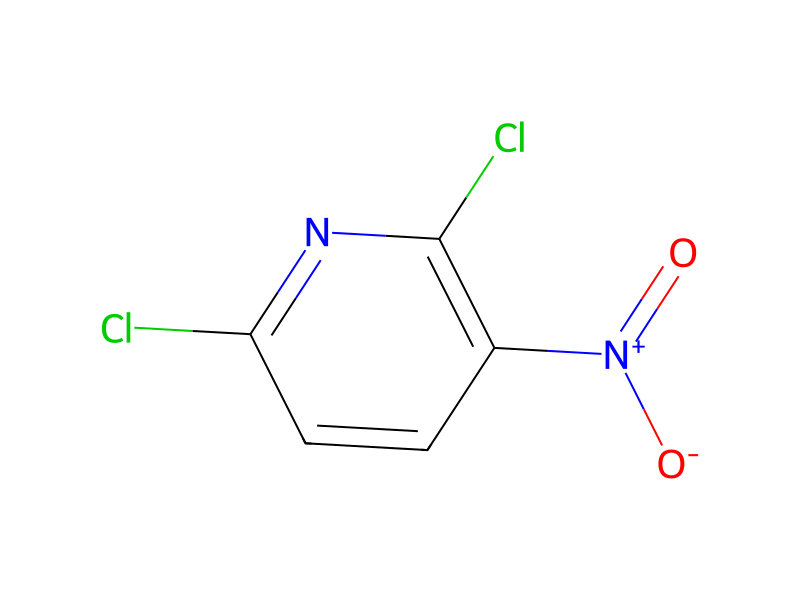
[Cl:1][C:2]1[C:7]([N+:8]([O-:10])=[O:9])=[CH:6][CH:5]=[C:4]([Cl:11])[N:3]=1.[CH3:12][OH:13]>>[Cl:11][C:4]1[CH:5]=[CH:6][C:7]([N+:8]([O-:10])=[O:9])=[C:2]([O:13][CH3:12])[N:3]=1.[Cl:1][C:2]1[C:7]([N+:8]([O-:10])=[O:9])=[CH:6][CH:5]=[C:4]([O:13][CH3:12])[N:3]=1Participants
4



Procedure
A slurry of 2,6-dichloro-3-nitropyridine (92%, 9.9 g, 47 mmol) and K2 CO3 powder (6.5 g, 47 mmol) in methanol (100 mL) was stirred for a week at RT. The reaction was filtered and concentrated. The residue was partitioned in ethyl acetate and 60% sat. aq. NaHCO3. The organic solution was washed with 60% sat. aq. NaHCO3(2×), H2O, then sat. aq. NaCl, dried (MgSO4) and concentrated to afford 2-chloro-6-methoxy-5-nitropyridine and 2-chloro-6-methoxy-3-nitropyridine (8.9 g, 100%) as a light yellow solid: 1H NMR (CDCl3, 300 MHz, ppm) 8.31 (d, 8.3 Hz, 1H), 8.28 (d, 8.9 Hz, 1H), 7.10 (d, 8.3 Hz, 1H), 6.82 (d, 8.9 Hz, 1H), 4.15 (s, 3H), 4.06 (s, 3H).
Workup
- filtrationThe reaction was filtered
- concentrationconcentrated
- customThe residue was partitioned in ethyl acetate
- washThe organic solution was washed with 60% sat. aq. NaHCO3(2×), H2O
- dry with materialsat. aq. NaCl, dried (MgSO4)
- concentrationconcentrated
Sources & evidence
- ORD record
- ord-4aeed2662c504c9ba23e48098e01afcf
- Source dataset
- uspto-grants-2001_10
- Patent number
- US06306840B1
Reaction notes
Loading…