2-(2,5-Dimethoxy-tetrahydrofuran-3-yl-methylidene)-1,3-dithiane → Methyl 2-(2,5-dimethoxy-tetrahydrofuran-3-yl)acetate
Reaction equation

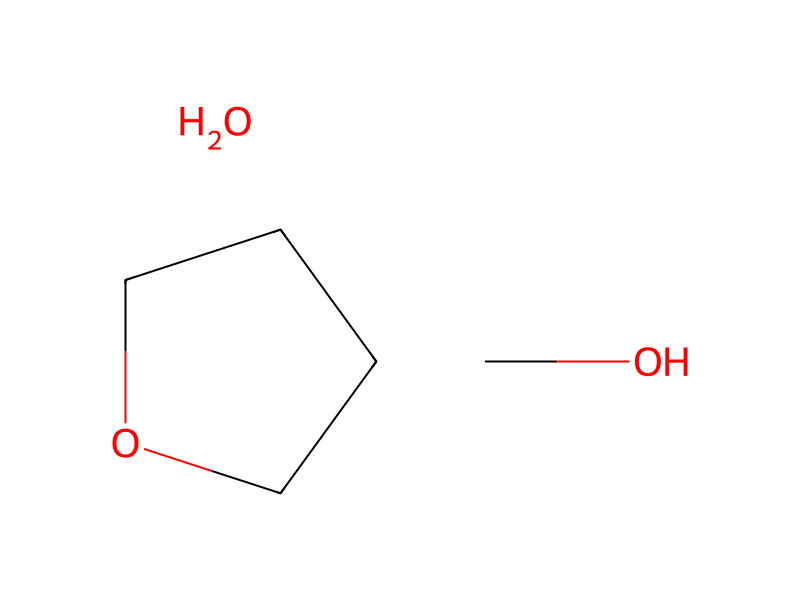
[CH3:1][O:2][CH:3]1[CH:7]([CH:8]=[C:9]2SCCCS2)[CH2:6][CH:5]([O:15][CH3:16])[O:4]1.C[OH:18].C1[CH2:23][O:22]CC1.O>>[CH3:1][O:2][CH:3]1[CH:7]([CH2:8][C:9]([O:22][CH3:23])=[O:18])[CH2:6][CH:5]([O:15][CH3:16])[O:4]1Participants


Conditions
- Temperature
- 80 °C
Procedure
Also according to a procedure from Boger, D. L.; Brotherton, C. E. J Org. Chem. 1984, 49, 4050-4055, to a solution of 2-(2,5-dimethoxy-tetrahydrofuran-3-yl-methylidene)-1, 3-dithiane (200 mg, 0.76 mmol) in a mixture of MeOH:THF:H2O (8:1:1; 10 mL) was added mercuric chloride (450 mg, 1.66 mmol). Upon heating at 80° C., a white precipitate formed, and after 5 hours at 80° C., the mixture was filtered through Celite. The collected solid was washed with EtOAc followed by aqueous. NH4Cl. The filtrates were combined, and the biphasic mixture separated. The aqueousueous layer was extracted twice with EtOAc. The combined organic layers were washed with brine, dried over Na2SO4, and concentrated to yield 120 mg (77%) of methyl 2-(2,5-dimethoxy-tetrahydrofuran-3-yl)-acetate as an oil, which was a mixture of diastereomers as evident by NMR, and which was used without further purification. An analytical sample was obtained by flash column chromatography with 0-20% EtOAc/hex as gradient eluant.
Workup
- customa white precipitate formed
- filtrationthe mixture was filtered through Celite
- washThe collected solid was washed with EtOAc
- customthe biphasic mixture separated
- extractionThe aqueousueous layer was extracted twice with EtOAc
- washThe combined organic layers were washed with brine
- dry with materialdried over Na2SO4
- concentrationconcentrated
Sources & evidence
- ORD record
- ord-5a74ef4882bd491dad995ad6383fb9ce
- Source dataset
- uspto-grants-2001_10
- Patent number
- US06306892B1
Reaction notes
Loading…