Hydrochloric Acid → Halauxifen-methyl
Reaction equation

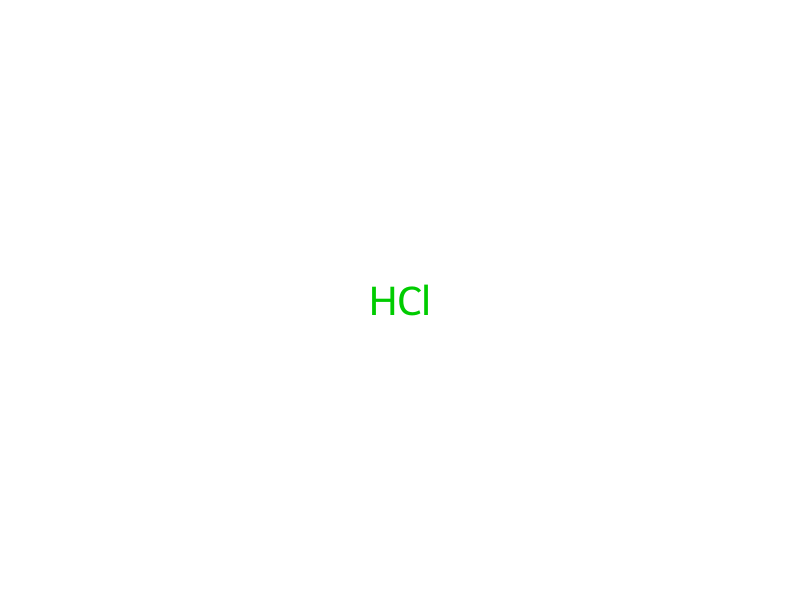
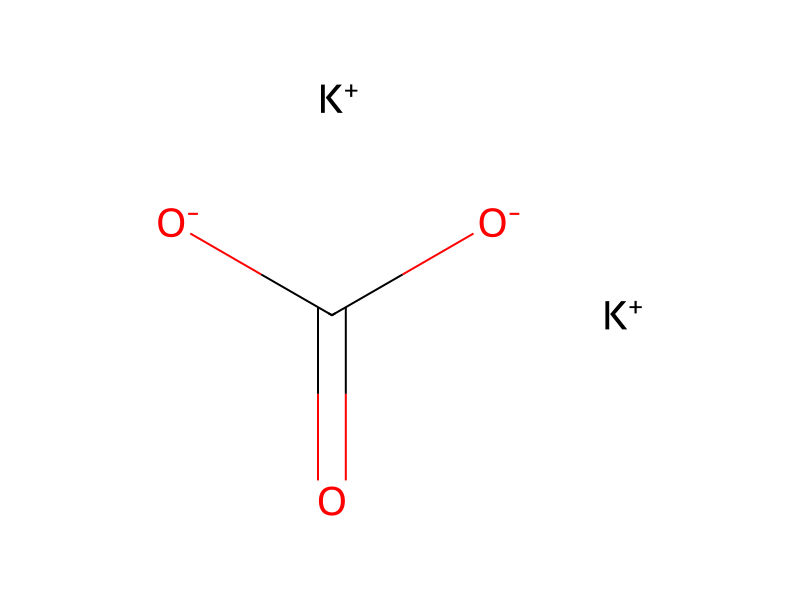
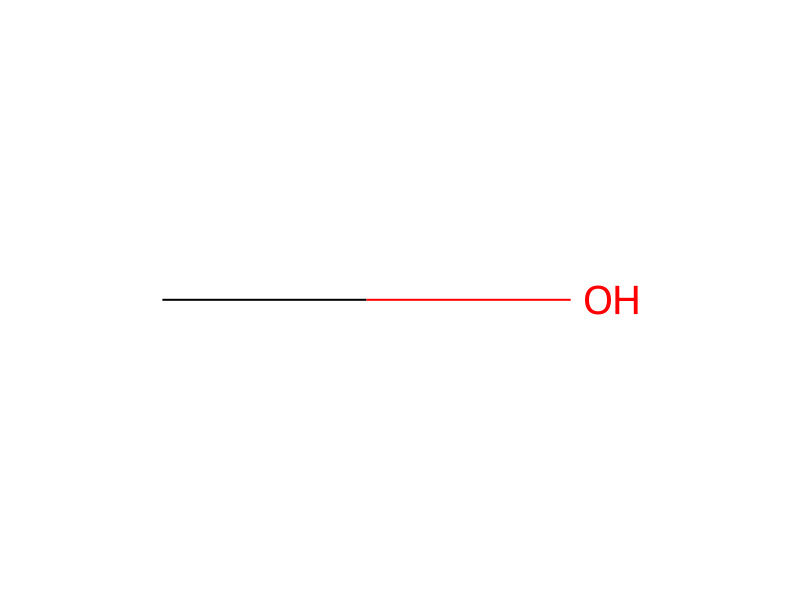
C([NH:4][C:5]1[CH:10]=[C:9]([C:11]2[CH:16]=[CH:15][C:14]([Cl:17])=[C:13]([O:18][CH3:19])[C:12]=2[F:20])[N:8]=[C:7]([C:21]([O:23][CH3:24])=[O:22])[C:6]=1[Cl:25])(=O)C.Cl.C(=O)([O-])[O-].[K+].[K+]>CO>[NH2:4][C:5]1[CH:10]=[C:9]([C:11]2[CH:16]=[CH:15][C:14]([Cl:17])=[C:13]([O:18][CH3:19])[C:12]=2[F:20])[N:8]=[C:7]([C:21]([O:23][CH3:24])=[O:22])[C:6]=1[Cl:25]Participants


Conditions
- Temperature
- 50 °C
Procedure
To the slurry of methyl 4-(acetylamino)-3-chloro-6-(4-chloro-2-fluoro-3-methoxyphenyl)pyridine-2-carboxylate (prepared as described in Example 5) was added 144 ml of methanol at 25° C. To this slurry was sparged 6.0 g (1.3 equivalents) of anhydrous HCl and the slurry was heated to 50° C. for between 4 hours and 5 hours. The solution was sampled and analyzed by GC to determine reaction completion. The reaction time is dependent on the equivalents of anhydrous HCl employed in the reaction. Using larger excesses of HCl, such as above 1.3 equivalents of HCl, results in shorter reaction times. However, increased volumes of base are subsequently required in the neutralization/work-up to neutralize the excess acid. The reaction mixture was cooled to 25° C. and 127.1 g of a 10% potassium carbonate solution was slowly added until a pH of 7.95 was reached. The organic and aqueous phases were separated and the organic (top) phase was transferred to a 1-L reactor. A total of 140 ml of a saturated sodium chloride solution was added and the mixture was stirred for several minutes. The organic and aqueous phases were separated and the organic (top) phase was transferred to a 1-L reactor equipped with a mechanical stirrer, distillation head, temperature probe, and vacuum capability. The organic phase was concentrated via a vacuum distillation to about a 30% by weight solution. To the solution at 70° C. was added 662.8 g of heptane over 45 minutes. After adding about half of the heptane; a product began to precipitate from solution. The minimum temperature during the heptane addition was 65° C. Upon completion of the heptane addition, the slurry was cooled to about 5° C. The product was collected by filtration and washed with 195 ml of heptane. The product was dried in a vacuum oven at 55° C. overnight to give 87%-90% yield (based on AcAP-Me) of methyl 4-amino-3-chloro-6-(4-chloro-2-fluoro-3-methoxyphenyl)pyridine-2-carboxylate.
Workup
- aliquotThe solution was sampled
- customreaction completion
- customemployed in the reaction
- customresults in shorter reaction times
- temperatureHowever, increased volumes of base
- temperatureThe reaction mixture was cooled to 25° C.
- customThe organic and aqueous phases were separated
- customthe organic (top) phase was transferred to a 1-L reactor
- additionA total of 140 ml of a saturated sodium chloride solution was added
- customThe organic and aqueous phases were separated
- customthe organic (top) phase was transferred to a 1-L reactor
- customequipped with a mechanical stirrer
- distillationdistillation head, temperature probe, and vacuum capability
- concentrationThe organic phase was concentrated via a vacuum distillation to about a 30% by weight solution
- additionTo the solution at 70° C. was added 662.8 g of heptane over 45 minutes
- additionAfter adding about half of the heptane
- customto precipitate from solution
- additionThe minimum temperature during the heptane addition
- customwas 65° C
- additionUpon completion of the heptane addition
- temperaturethe slurry was cooled to about 5° C
- filtrationThe product was collected by filtration
- washwashed with 195 ml of heptane
- customThe product was dried in a vacuum oven at 55° C. overnight
Sources & evidence
- ORD record
- ord-0033a76dfac349aca8571476994a086f
- Source dataset
- uspto-grants-2014_06
- Patent number
- US08754110B2
Reaction notes
Loading…