2-Amino-6-chlorobenzoic acid → 4-Chloro-1-(piperidin-4-yl)-1,3-dihydro-2H-benzimidazol-2-one
Reaction equation

C(O[BH-](OC(=O)C)OC(=O)C)(=O)C.[Na+].C(OC([N:22]1[CH2:27][CH2:26][CH:25]([NH:28][C:29]2[CH:37]=[CH:36][CH:35]=[C:34]([Cl:38])[C:30]=2C(O)=O)[CH2:24][CH2:23]1)=O)(C)(C)C.NC1C=CC=C(Cl)C=1C(O)=O.C([O:54][C:55]([N:57]1CCC(=O)CC1)=O)(C)(C)C>ClC(Cl)C>[Cl:38][C:34]1[C:30]2[NH:57][C:55](=[O:54])[N:28]([CH:25]3[CH2:24][CH2:23][NH:22][CH2:27][CH2:26]3)[C:29]=2[CH:37]=[CH:36][CH:35]=1Participants

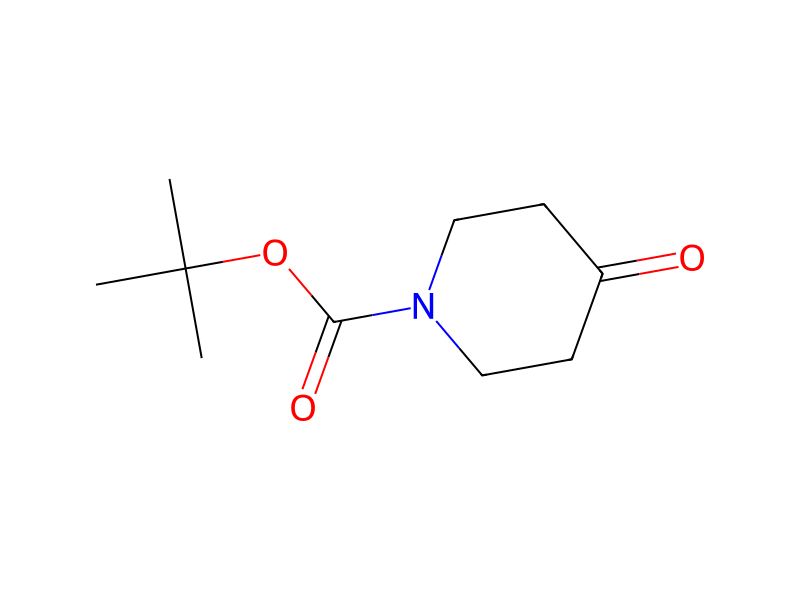



Procedure
2-{[1-(tert-butoxycarbonyl)piperidin-4-yl]amino}-6-chlorobenzoic acid Sodium triacetoxyborohydride (3.09 g, 14.6 mmol) was added to a solution of 2-amino-6-chlorobenzoic acid (1.00 g, 5.83 mmol) and N-(t-butoxycarbonyl)-4-piperidone (2.32 g, 11.7 mmol) in dichloroethane (20 mL) at room temperature. After 5 h, the reaction was quenched with saturated aqueous ammonium chloride. This mixture was separated and extracted with ethyl acetate (3×). After drying over sodium sulfate, the solution was filtered and evaporated to give the crude product. This was purified by chromatorgraphy (silica gel, 0 to 15% methanol in methylene chloride gradient elution), which gave the title compound contaminated with some ketone starting material (3.60 g). MS 335.1 (M+1).
Workup
- customthe reaction was quenched with saturated aqueous ammonium chloride
- customThis mixture was separated
- extractionextracted with ethyl acetate (3×)
- dry with materialAfter drying over sodium sulfate
- filtrationthe solution was filtered
- customevaporated
- customto give the crude product
- customThis was purified by chromatorgraphy (silica gel, 0 to 15% methanol in methylene chloride gradient elution), which
Sources & evidence
- ORD record
- ord-58a9245300ef4ab6a15094e359c05988
- Source dataset
- uspto-grants-2007_03
- Patent number
- US07196079B2
Reaction notes
Loading…