Sodium Hydroxide → 6-(4-Benzyl-phenyl)-7-cyclohexyl-pyrazolo[1,5-a]pyrimidine-3-carboxylic acid ethyl ester
Reaction equation

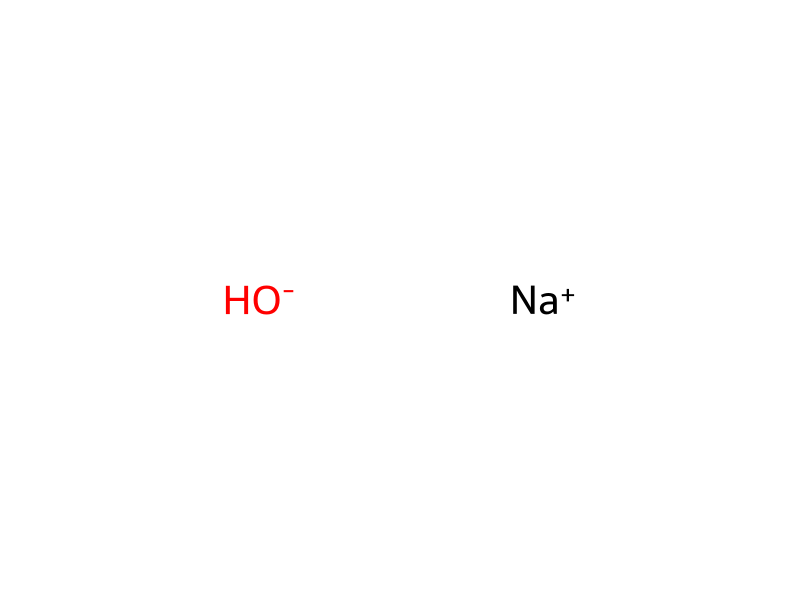
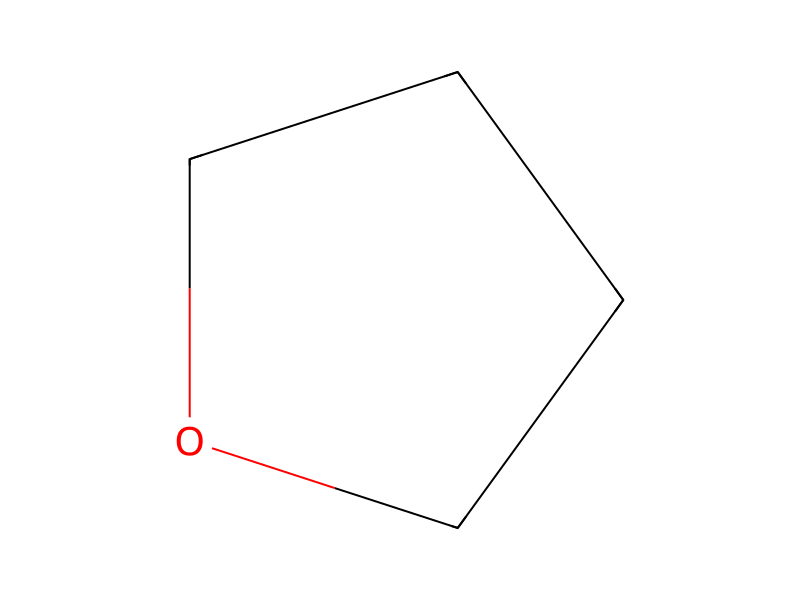
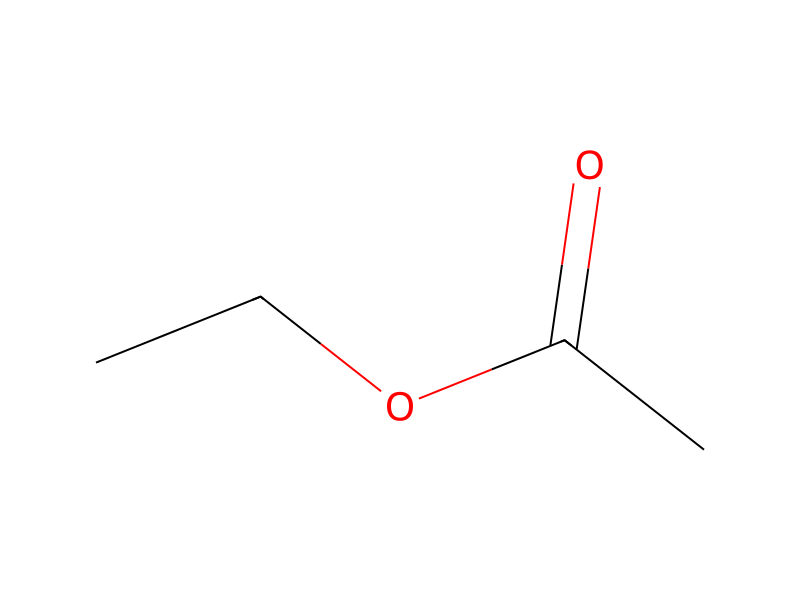
[CH2:1]([O:3][C:4]([C:6]1[CH:7]=[N:8][N:9]2[C:14]([CH:15]3[CH2:20][CH2:19][CH2:18][CH2:17][CH2:16]3)=[C:13]([C:21]3[CH:26]=[CH:25][C:24](I)=[CH:23][CH:22]=3)[CH:12]=[N:11][C:10]=12)=[O:5])[CH3:2].B1([CH2:37][C:38]2[CH:43]=[CH:42][CH:41]=[CH:40][CH:39]=2)C2CCCC1CCC2.[OH-].[Na+]>[Pd].O1CCCC1.C(OCC)(=O)C>[CH2:1]([O:3][C:4]([C:6]1[CH:7]=[N:8][N:9]2[C:14]([CH:15]3[CH2:20][CH2:19][CH2:18][CH2:17][CH2:16]3)=[C:13]([C:21]3[CH:26]=[CH:25][C:24]([CH2:37][C:38]4[CH:43]=[CH:42][CH:41]=[CH:40][CH:39]=4)=[CH:23][CH:22]=3)[CH:12]=[N:11][C:10]=12)=[O:5])[CH3:2]Participants
Reactant 3


Product 1

Reagents, catalysts & solvents 3

Procedure
According to a modification of a literature procedure (Suzuki, A. et al Tetrahedron Lett. 1986, 27, 6369–6372) a mixture of 57 mg (0.12 mmol) of 7-cyclohexyl-6-(4-iodo-phenyl)-pyrazolo[1,5-a]pyrimidine-3-carboxylic acid ethyl ester and 5 mg (0.006 mmol, 5 mol %) of Pd catalyst was placed into a carousel tube. After a vacuum and argon cycle, tetrahydrofuran (THF) (2 mL) was added, followed by 0.29 mL (0.144 mmol, 1.2 equiv) of B-Benzyl-9-BBN 0.5 M solution in THF, and 0.12 mL (0.36 mmol, 3 equiv) of 3 N NaOH solution, and the resulting mixture was heated reflux under argon overnight. Since analysis by LC-MS revealed unreacted starting material still present, 0.12 mL (0.06 mmol) of B-Benzyl-9-BBN, 5 mg (0.006 mmol, 5 mol %) of Pd catalyst, and 0.12 mL (0.36 mmol) of 3 N NaOH solution was added and heating was continued for 24 h. The reaction mixture was then diluted with ethyl acetate, washed with water, dried over sodium sulfate, passed through a small pad of Celite, and evaporated to give a brown residue (crude coupling product), which was chromatographed on silica gel (Biotage; 2% ethyl acetate in dichloromethane) to afford 36 mg (68% yield) of desired 6-(4-benzyl-phenyl)-7-cyclohexyl-pyrazolo[1,5-a]pyrimidine-3-carboxylic acid ethyl ester as indicated by 1H NMR (containing traces of impurities); LC-MS—calcd for C28H29N3O2 [M++H]+: 440.23, found: 440.2.
Workup
- customwas placed into a carousel tube
- temperaturereflux under argon overnight
- temperatureheating
- washwashed with water
- dry with materialdried over sodium sulfate
- customevaporated
- customto give a brown residue (crude coupling product), which
- customwas chromatographed on silica gel (Biotage; 2% ethyl acetate in dichloromethane)
Sources & evidence
- ORD record
- ord-b46a3ba0e8da49128551a2a7f125ba14
- Source dataset
- uspto-grants-2007_03
- Patent number
- US07196111B2
Reaction notes
Loading…