3,4-dihydro-2H-pyran → 5-bromo-4-fluoro-1-(tetrahydro-pyran-2-yl)-1H-benzoimidazole
Reaction equation

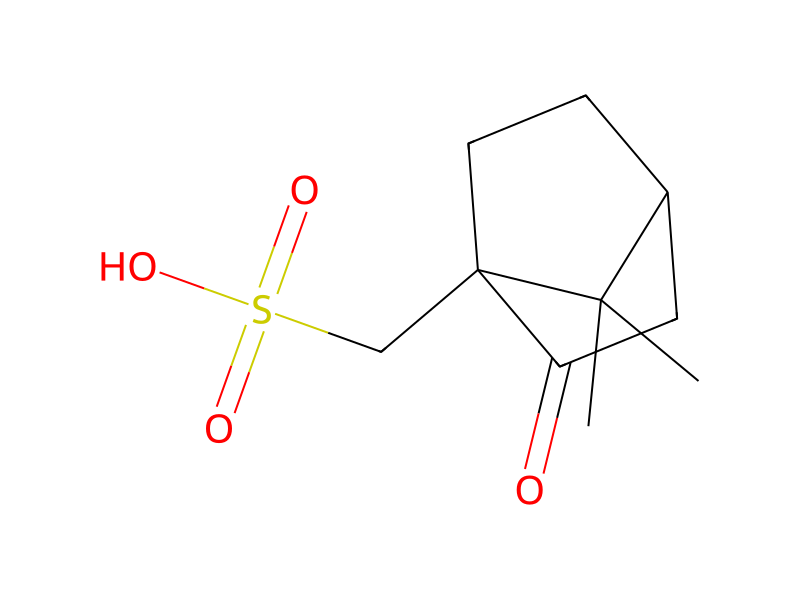
[Br:1][C:2]1[CH:10]=[CH:9][C:5]2[NH:6][CH:7]=[N:8][C:4]=2[C:3]=1[F:11].[O:12]1[CH:17]=[CH:16][CH2:15][CH2:14][CH2:13]1.C12(CS(O)(=O)=O)C(C)(C)C(CC1)CC2=O>C1COCC1>[Br:1][C:2]1[CH:10]=[CH:9][C:5]2[N:6]([CH:13]3[CH2:14][CH2:15][CH2:16][CH2:17][O:12]3)[CH:7]=[N:8][C:4]=2[C:3]=1[F:11]Participants
5
Reactant 3


Product 1

Reagents, catalysts & solvents 1

Procedure
To a solution of 144 (24 g, 0.111 mol) in dry THF (720 mL) was added 3,4-dihydro-2H-pyran (28.1 g, 0.334 mol) and camphorsulfonic acid (2.6 g, 0.011 mol) then heated to reflux for 16 h. The resulting mixture was concentrated and the residue purified by SiO2 chromatography eluting with 20% EtOAc/petroleum ether to afford 26 g (78%) of 5-bromo-4-fluoro-1-(tetrahydro-pyran-2-yl)-1H-benzoimidazole (146) as pale yellow oil: 1H-NMR (400 MHz, RT, DMSO-d6): δ 1.57-1.63 (m, 2H), 1.70-1.74 (m, 1H), 1.91-2.04 (m, 2H), 2.15-2.19 (m, 1H), 3.73-3.77 (m, 1H), 3.96-4.03 (m, 1H), 5.68-5.71 (dd, 1H), 7.50-7.53 (d, 2H), and 8.51 (s, 1H); MS (ESI): m/z=301.0 [M+1]+.
Workup
- temperaturethen heated
- temperatureto reflux for 16 h
- concentrationThe resulting mixture was concentrated
- customthe residue purified by SiO2 chromatography
- washeluting with 20% EtOAc/petroleum ether
Sources & evidence
- ORD record
- ord-43415d75bb2a4056a0712e3cc8c77ed2
- Source dataset
- uspto-grants-2014_01
- Patent number
- US08637537B2
Reaction notes
Loading…