Hydrochloric Acid → Ethyl 2-(acetylamino)-3-(3-pyridyl)propanoate
Reaction equation
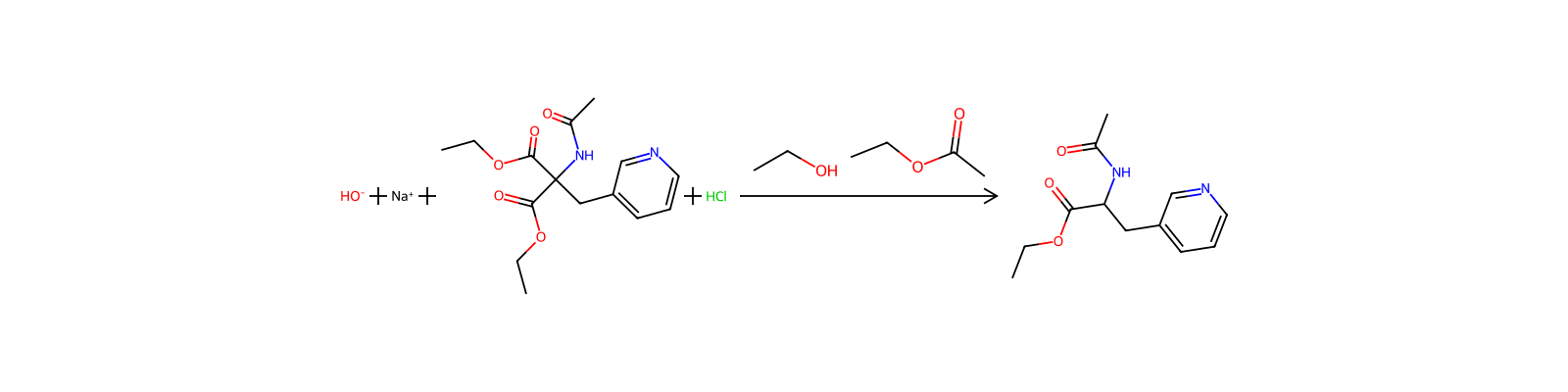
[OH-].[Na+].[C:3]([NH:6][C:7]([CH2:18][C:19]1[CH:20]=[N:21][CH:22]=[CH:23][CH:24]=1)(C(OCC)=O)[C:8]([O:10][CH2:11][CH3:12])=[O:9])(=[O:5])[CH3:4].Cl>C(O)C.C(OCC)(=O)C>[C:3]([NH:6][CH:7]([CH2:18][C:19]1[CH:20]=[N:21][CH:22]=[CH:23][CH:24]=1)[C:8]([O:10][CH2:11][CH3:12])=[O:9])(=[O:5])[CH3:4]Participants
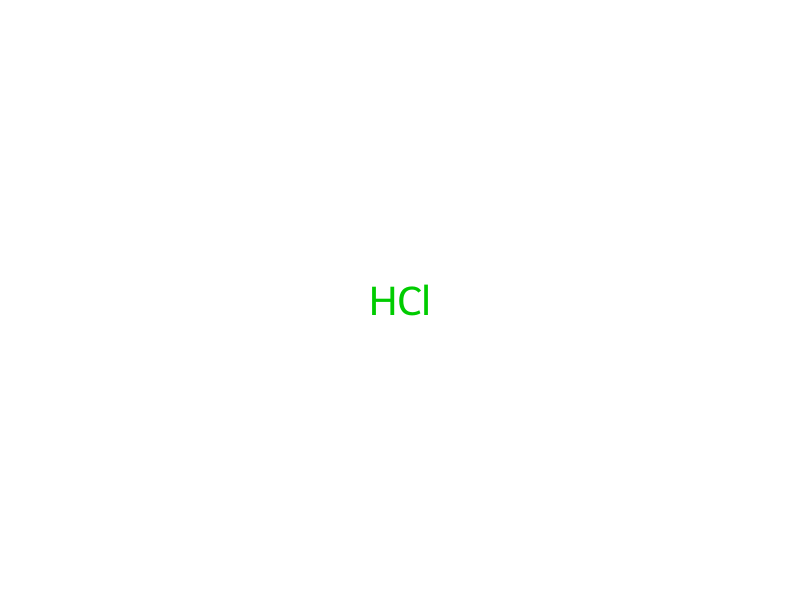
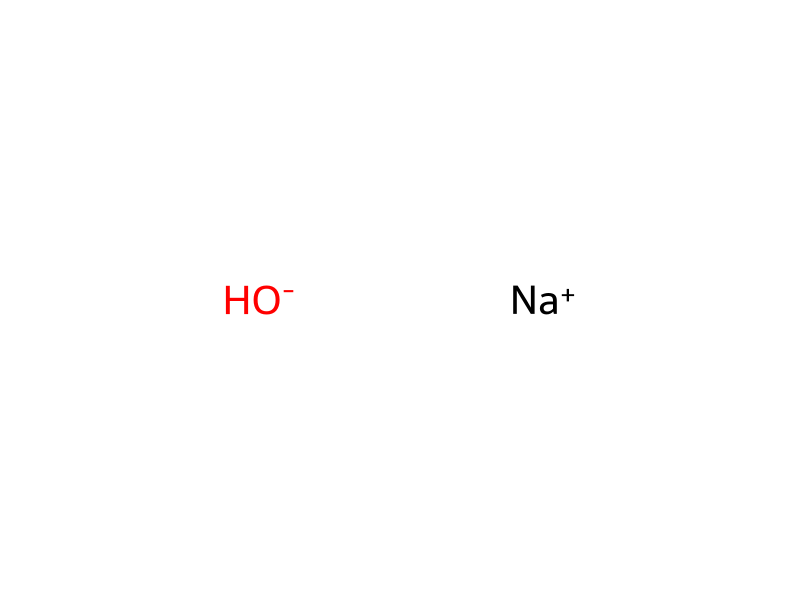
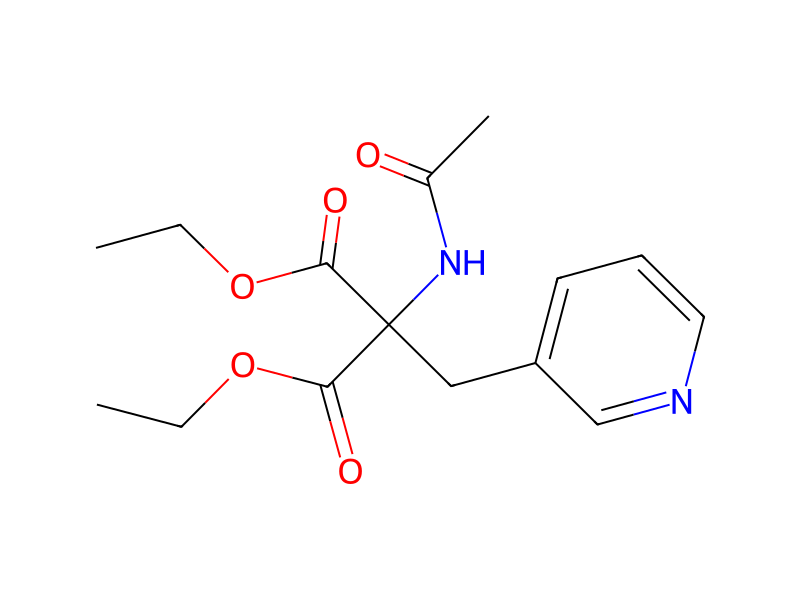

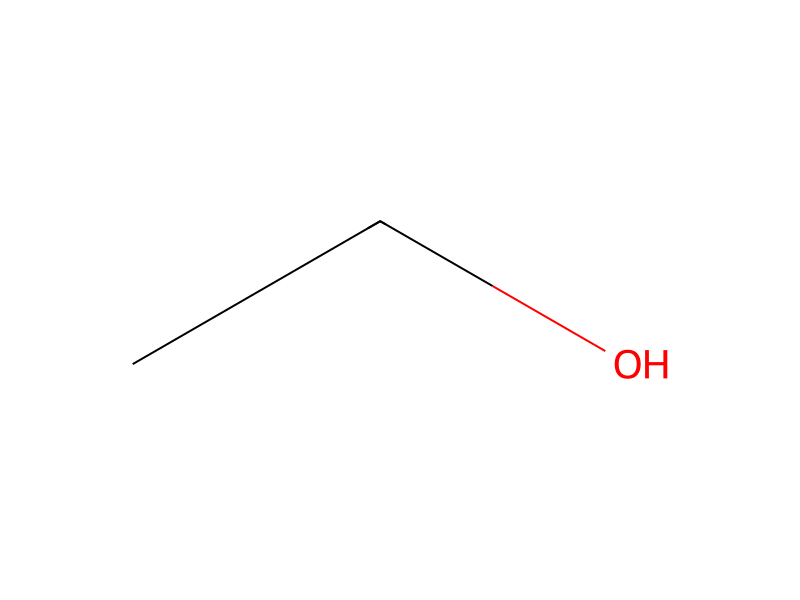
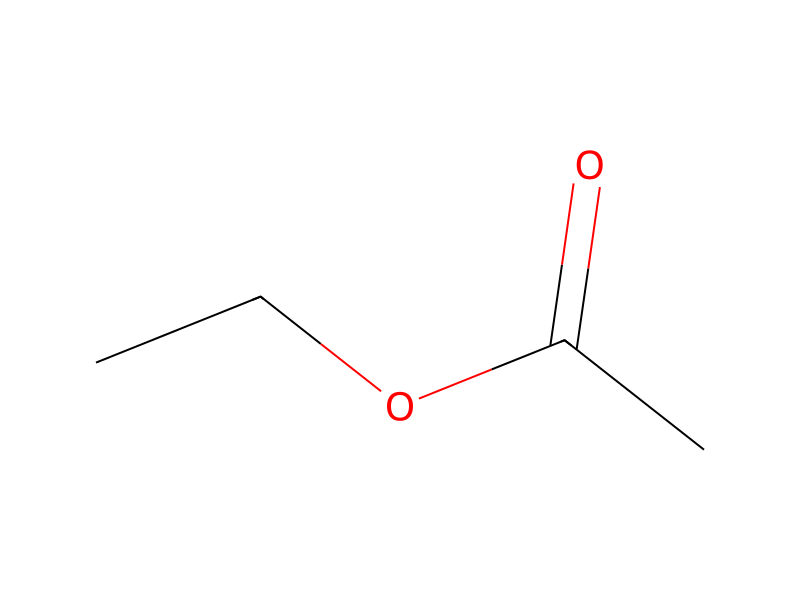
Conditions
- Temperature
- 20 °C
Procedure
44.45 cm3 of aqueous 6N sodium hydroxide are added dropwise to a solution of 51.4 g of diethyl 2-(acetylamino)-2-(3-pyridylmethyl)malonate in 857 cm3 of ethanol. The mixture is stirred for 1 hour 30 minutes at a temperature in the region of 20° C. and then cooled to a temperature in the region of 0° C. 22.2 cm3 of 12N hydrochloric acid are added dropwise; a precipitate forms. The reaction medium is warmed to room temperature and, after stirring for 2 hours, its pH is 5-6. It is concentrated under reduced pressure (4 kPa) at a temperature in the region of 50° C., to give a sticky dark-beige solid which is dried for 16 hours in an oven under vacuum (0.1 kPa) at a temperature in the region of 50° C. This residue is taken up in 1000 cm3 of dioxane and then heated to a temperature in the region of 100° C. for 1 hour. The dioxane is evaporated off under reduced pressure (2 kPa) at a temperature in the region of 40° C., and the residue is dissolved in 250 cm3 of water. This solution is neutralized by addition of 4 cm3 of aqueous 10N sodium hydroxide, followed by addition of 750 cm3 of ethyl acetate. After separation of the phases by settling, the organic phase is extracted and the aqueous phase is washed with twice 300 cm3 of ethyl acetate. The organic phases are combined, dried over magnesium sulfate, filtered and concentrated under reduced pressure (2 kPa) at a temperature in the region of 40° C. The solid residue obtained is taken up in 70 cm3 of ethyl acetate and 20 cm3 of heptane and then filtered on a sinter funnel. 27.76 g of ethyl 2-(acetylamino)-3-(3-pyridyl)propanoate are obtained in the form of a beige-colored solid melting at 118° C. [1H NMR spectrum (400 MHz, (CD3)2SO-d6, δ in ppm): 1.13 (t, J=7 Hz: 3H); 1.81 (s: 3H); 2.92 (dd, J=14 and 9 Hz: 1H); 3.04 (dd, J=14 and 5.5 Hz: 1H); 4.07 (q, J=7 Hz: 2H); 4.48 (mt: 1H); 7.33 (dd, J=8 and 5 Hz: 1H); 7.66 (dt, J=8 and 2 Hz: 1H); 8.38 (d, J=8 Hz: 1H); 8.45 (mt: 2H)]. By re-extracting the aqueous phase with twice 500 cm3 of ethyl acetate and after drying and concentration of the combined organic phases under reduced pressure, 4 g of ethyl 2-(acetylamino)-3-(3-pyridyl)propanoate are recovered in the form of a beige-yellow solid melting at 121° C.
Workup
- temperaturecooled to a temperature in the region of 0° C
- customThe reaction
- temperaturemedium is warmed to room temperature
- stirringafter stirring for 2 hours
- concentrationIt is concentrated under reduced pressure (4 kPa) at a temperature in the region of 50° C.
- customto give a sticky dark-beige solid which
- customis dried for 16 hours in an oven under vacuum (0.1 kPa) at a temperature in the region of 50° C
- temperatureheated to a temperature in the region of 100° C. for 1 hour
- customThe dioxane is evaporated off under reduced pressure (2 kPa) at a temperature in the region of 40° C.
- dissolutionthe residue is dissolved in 250 cm3 of water
- additionThis solution is neutralized by addition of 4 cm3 of aqueous 10N sodium hydroxide
- additionfollowed by addition of 750 cm3 of ethyl acetate
- customAfter separation of the phases
- extractionthe organic phase is extracted
- washthe aqueous phase is washed with twice 300 cm3 of ethyl acetate
- dry with materialdried over magnesium sulfate
- filtrationfiltered
- concentrationconcentrated under reduced pressure (2 kPa) at a temperature in the region of 40° C
- customThe solid residue obtained
- filtration20 cm3 of heptane and then filtered on a sinter funnel
Sources & evidence
- ORD record
- ord-550792c5ecbb4c508fb0b7611ac799fe
- Source dataset
- uspto-grants-2004_03
- Patent number
- US06699895B2
Reaction notes
Loading…