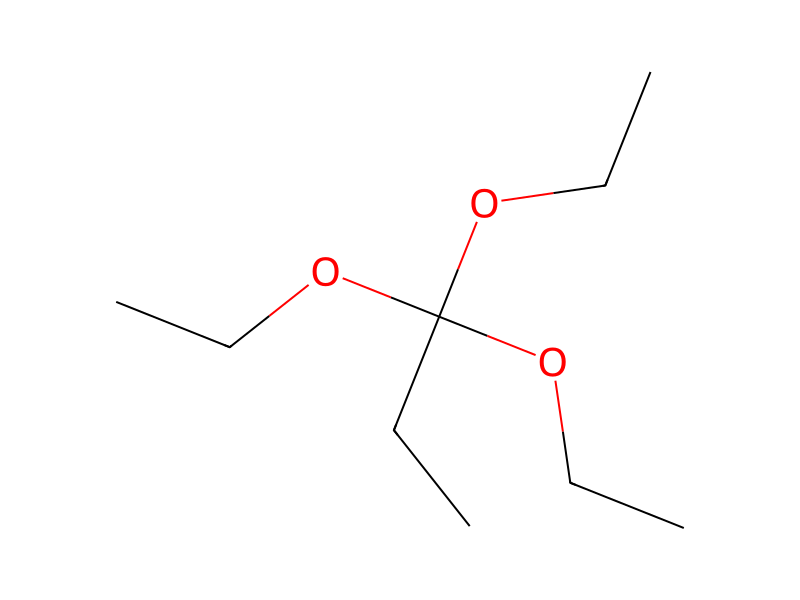
Ethyl orthopropionate → HCID 13393635, compound
Reaction equation

[CH2:1]([C:3]1[N:8]=[C:7]([N:9]2[CH2:14][CH2:13][N:12]([CH3:15])[CH2:11][CH2:10]2)[CH:6]=[C:5]([NH:16][NH2:17])[N:4]=1)[CH3:2].[C:18](OCC)(OCC)(OCC)[CH2:19][CH3:20]>>[CH2:19]([C:20]1[N:4]2[C:3]([CH2:1][CH3:2])=[N:8][C:7]([N:9]3[CH2:14][CH2:13][N:12]([CH3:15])[CH2:11][CH2:10]3)=[CH:6][C:5]2=[N:16][N:17]=1)[CH3:18]Participants


Procedure
A mixture of 8.3 g (0.035 mole) of 2-ethyl-6-hydrazinyl-4-(4-methyl-1-piperazinyl)pyrimidine and 75 ml of triethyl orthopropionate was heated at reflux for 48 hours. After cooling the mixture was evaporated in vacuo. Diethyl ether was added to the residue and the mixture was cooled. The precipitate was collected by filtration to provide 4.5 g (37%) of 3,5-diethyl-7-(4-methyl-1-piperazinyl)-1,2,4-triazolo[4,3-c]pyrimidine. Recrystallizations from ethyl acetate-hexane and ethyl acetate-cyclohexane provided white crystalline product, m.p. 128°-131° C. Analysis for C14H22N6 : Calculated: %C, 61.3; %H, 8.1; %N, 30.6; Found: %C, 59.8; %H, 8.2; %N, 30.1. The structural assignment was confirmed by nuclear magnetic resonance and infrared spectral analyses.
Workup
- temperaturewas heated
- temperatureat reflux for 48 hours
- temperatureAfter cooling the mixture
- customwas evaporated in vacuo
- additionDiethyl ether was added to the residue
- temperaturethe mixture was cooled
- filtrationThe precipitate was collected by filtration
Sources & evidence
- ORD record
- ord-f45cbea3306d4a59ae2922457c5bded3
- Source dataset
- uspto-grants-1985_08
- Patent number
- US04536579
Reaction notes
Loading…