Ammonium formate → Methyl {3-[(2R)-2-aminopropyl]phenyl}acetate
Reaction equation

C1([C@H]([NH:9][C@H:10]([CH3:23])[CH2:11][C:12]2[CH:13]=[C:14]([CH2:18][C:19]([O:21][CH3:22])=[O:20])[CH:15]=[CH:16][CH:17]=2)C)C=CC=CC=1.C([O-])=O.[NH4+]>C(O)C.[OH-].[OH-].[Pd+2]>[NH2:9][C@H:10]([CH3:23])[CH2:11][C:12]1[CH:13]=[C:14]([CH2:18][C:19]([O:21][CH3:22])=[O:20])[CH:15]=[CH:16][CH:17]=1Participants
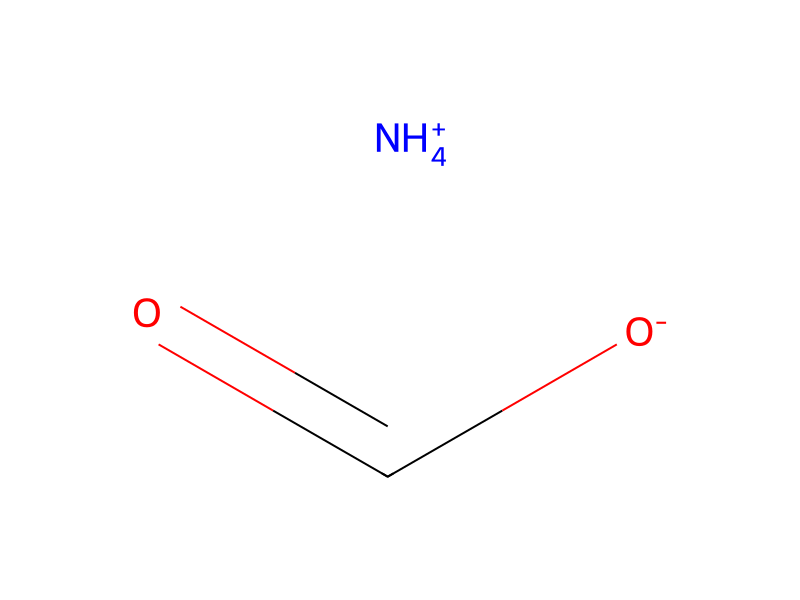




Procedure
A solution of methyl [3-((2R)-2-{[(1R)-1-phenyl-ethyl]-amino}-propyl)-phenyl]-acetate (Preparation 89) (13.65 g, 40.9 mmol) and ammonium formate (12.9 g, 204 mmol) in ethanol (200 ml) was heated at reflux in the presence of 20% of palladium hydroxide on charcoal (Pd(OH)2/C, 1.36 g). After 3 hours the reaction mixture was cooled to room temperature, filtered through arbocel and the filtrate concentrated in vacuo. The residue was partitioned between dichloromethane (200 ml) and 880 ammonia (100 ml) and the organic phase separated. The aqueous phase was extracted with further dichlorormethane (3×100 ml) and the combined organic extracts washed with brine (100 ml), dried (sodium sulfate) and reduced in vacuo to give the title compound (8.48 g) as a pale yellow oil.
Workup
- filtrationfiltered through arbocel
- concentrationthe filtrate concentrated in vacuo
- customThe residue was partitioned between dichloromethane (200 ml) and 880 ammonia (100 ml)
- customthe organic phase separated
- extractionThe aqueous phase was extracted with further dichlorormethane (3×100 ml)
- washthe combined organic extracts washed with brine (100 ml)
- dry with materialdried (sodium sulfate)
Sources & evidence
- ORD record
- ord-3d72c30d1d2745df839609238fe97019
- Source dataset
- uspto-grants-2009_05
- Patent number
- US07538141B2
Reaction notes
Loading…