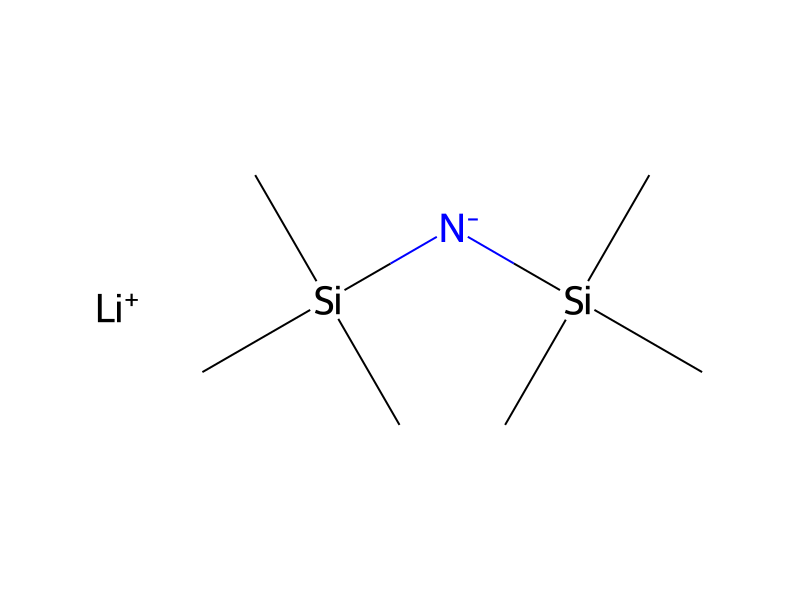
Lithium Hexamethyldisilazide → 3-cyano-N-(2,4-dimethoxybenzyl)-4-fluoro-N-(1,2,4-thiadiazol-5-yl)benzenesulfonamide
Reaction equation

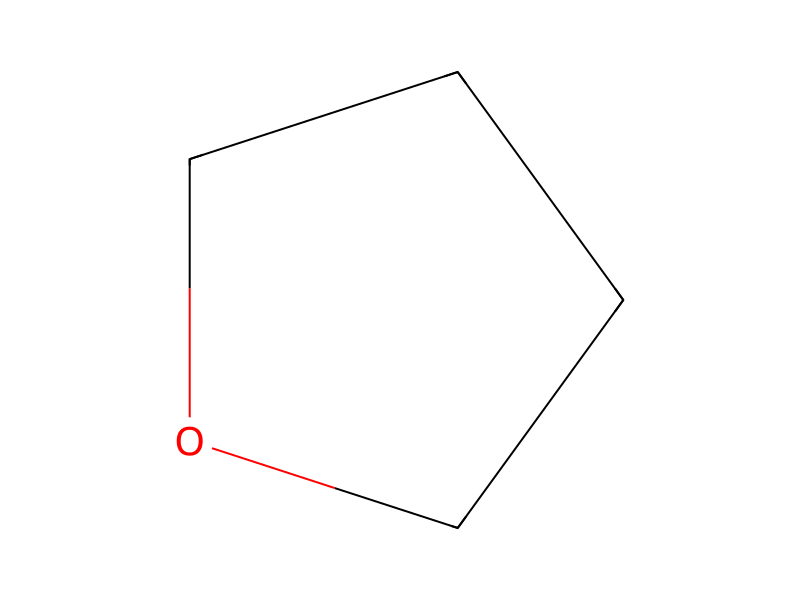
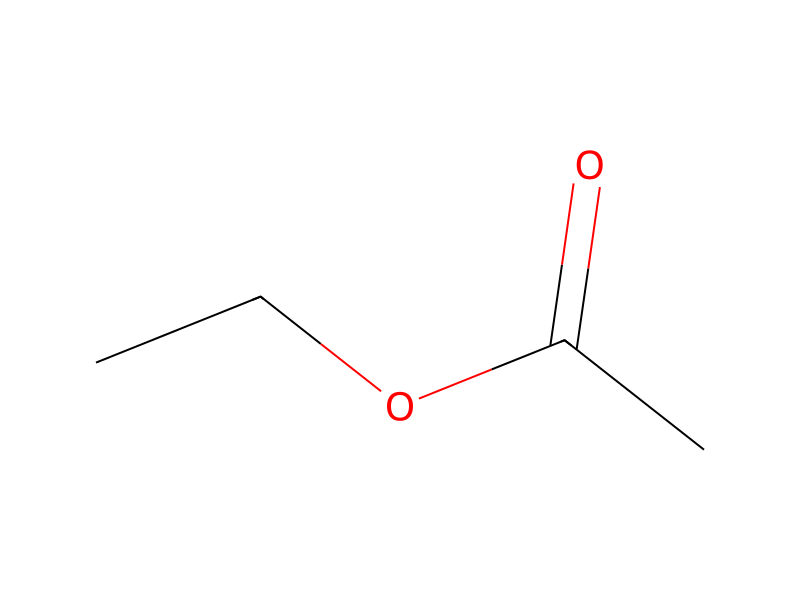
[CH3:1][O:2][C:3]1[CH:15]=[C:14]([O:16][CH3:17])[CH:13]=[CH:12][C:4]=1[CH2:5][NH:6][C:7]1[S:11][N:10]=[CH:9][N:8]=1.[Li+].C[Si]([N-][Si](C)(C)C)(C)C.[C:28]([C:30]1[CH:31]=[C:32]([S:37](Cl)(=[O:39])=[O:38])[CH:33]=[CH:34][C:35]=1[F:36])#[N:29]>C1COCC1.C(OCC)(=O)C>[C:28]([C:30]1[CH:31]=[C:32]([S:37]([N:6]([CH2:5][C:4]2[CH:12]=[CH:13][C:14]([O:16][CH3:17])=[CH:15][C:3]=2[O:2][CH3:1])[C:7]2[S:11][N:10]=[CH:9][N:8]=2)(=[O:39])=[O:38])[CH:33]=[CH:34][C:35]=1[F:36])#[N:29]Participants
Reactant 3


Product 1

Reagents, catalysts & solvents 2
Conditions
- Temperature
- -78 °C
Procedure
N-(2,4-Dimethoxybenzyl)-1,2,4-thiadiazol-5-amine (Preparation 18, 42.8 g, 170 mmol) was dissolved in anhydrous THF (600 mL) and stirred under a nitrogen atmosphere at −78° C. A 1M solution of LiHMDS in THF (238 mL, 238 mmol) was added dropwise over 30 minutes maintaining the temperature between −65° C. and −70° C. The reaction mixture was left at −78° C. for 5 minutes, then allowed to warm to −10° C. over 1.5 hours. Upon reaching −10° C., the brown reaction mixture was cooled to −78° C. again, and a solution of 3-cyano-4-fluorobenzene sulfonyl chloride (48.6 g, 221 mmol) in THF (200 mL) was added dropwise over 30 minutes maintaining the temperature between −65° C. and −70° C. The brown solution was allowed to warm gradually to ambient temperature and stirred overnight. The reaction mixture was diluted with ethyl acetate, washed with a saturated ammonium chloride solution, and extracting with further ethyl acetate. The combined organics were dried over MgSO4, filtered and concentrated in vacuo to afford a brown residue. The residue was purified by silica gel column chromatography (10%-30% ethyl acetate in heptane gradient elution) to afford the title compound as a white solid (52.3 g, 71%).
Workup
- temperaturemaintaining the temperature between −65° C. and −70° C
- temperatureto warm to −10° C. over 1.5 hours
- customUpon reaching −10° C.
- temperaturethe brown reaction mixture was cooled to −78° C. again
- temperaturemaintaining the temperature between −65° C. and −70° C
- temperatureto warm gradually to ambient temperature
- stirringstirred overnight
- washwashed with a saturated ammonium chloride solution
- extractionextracting with further ethyl acetate
- dry with materialThe combined organics were dried over MgSO4
- filtrationfiltered
- concentrationconcentrated in vacuo
- customto afford a brown residue
- customThe residue was purified by silica gel column chromatography (10%-30% ethyl acetate in heptane gradient elution)
Sources & evidence
- ORD record
- ord-3668af3c47694a34a552556dad9e70d9
- Source dataset
- uspto-grants-2015_08
- Patent number
- US09096558B2
Reaction notes
Loading…