Ethanol → Beta-Carboline
Reaction equation

[CH2:1]1[C:13]2[NH:12][C:11]3[C:6](=[CH:7][CH:8]=[CH:9][CH:10]=3)[C:5]=2[CH2:4][CH2:3][NH:2]1.Cl.NCCC1C2C(=CC=CC=2)NC=1.C(O)(=O)C=O.C(O)C>C1(C(C)C)C=CC=CC=1.[Pd]>[CH:8]1[CH:9]=[CH:10][C:11]2[NH:12][C:13]3[CH:1]=[N:2][CH:3]=[CH:4][C:5]=3[C:6]=2[CH:7]=1Participants
Reactant 4


Product 1

Reagents, catalysts & solvents 2
Procedure
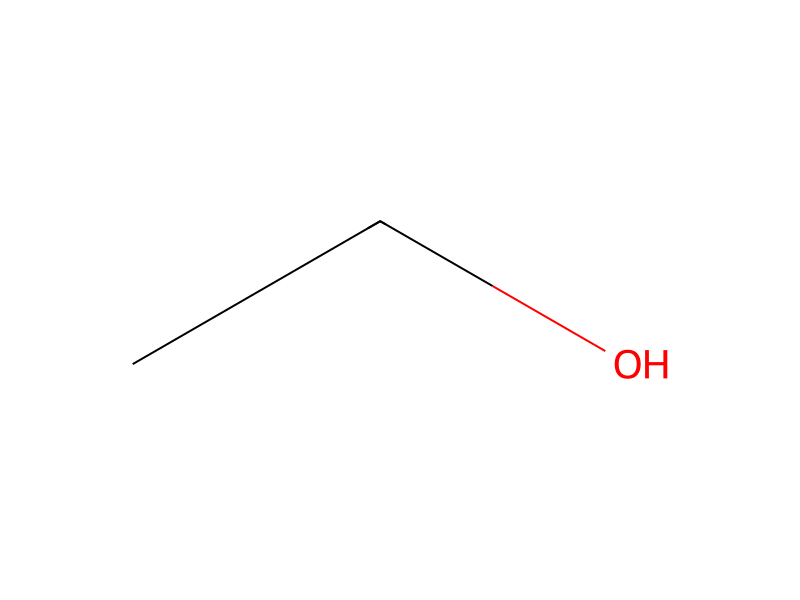
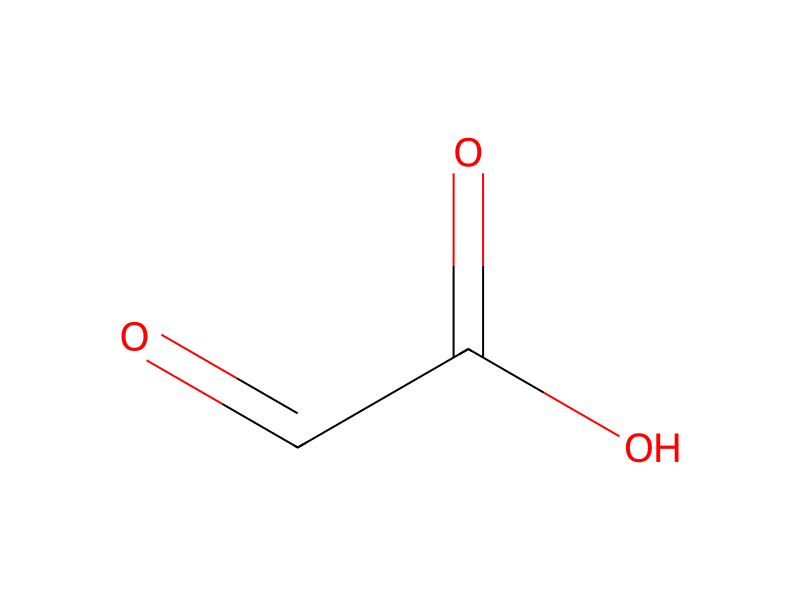
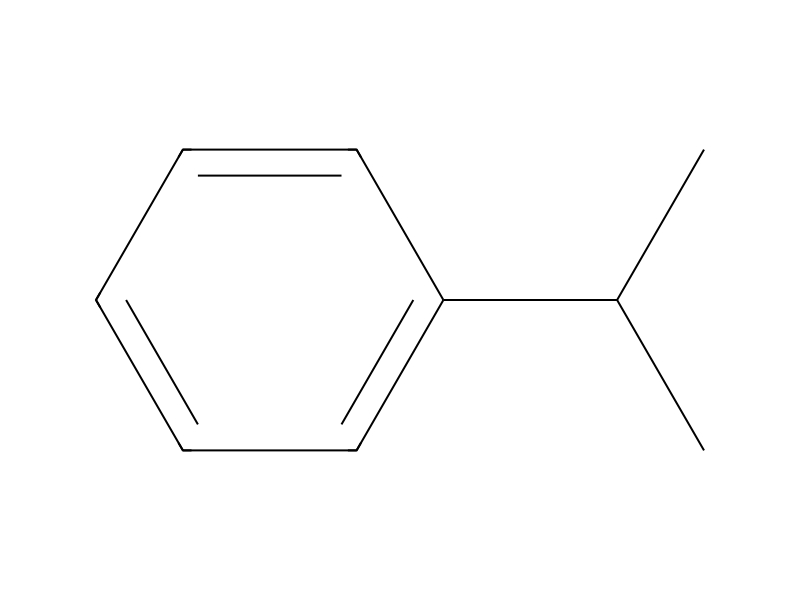
A stirred solution of 13 g (0.0756 Mol) 1,2,3,4-tetrahydro-β-carboline, manufactured by tryptamine hydrochloride and glyoxylic acid as described by Ho and Walker (1988), and 2.6 g Pd/C (10%) in 600 ml of cumene were refluxed in a nitrogen atmosphere for 90 min. After addition of 100 ml of ethanol, the hot solution was filtrated, and the coal was extracted thrice by 30 ml of hot ethanol. The combined liquid fractions were concentrated, and the residues was crystallised in toluene to yield 10.5 g (82%) or norharman. Methylation at position 9 was performed as described in the literature (Ho B T, Mcisaac W M, Walker K E, Estevez V, J Pharm Sci 57: 269, 1968) yet with an improved reprocessing. One gram (5.95 mmol) of norharman was dissolved in 10 ml of dried DMF in a nitrogen atmosphere. After that, 0.36 g (14.9 mmol) of sodium hydride were added in form of a 60% dispersion in paraffin at 0° C. After cooling of the reaction mixture down to room temperature, this was cooled down to −10° C., and 0.84 g (5.95 mmol) iodomethane were added. After further stirring for 12 hours, one allowed the mixture to cool down to room temperature once again. All volatile ingredients were removed in reduced pressure. After that, 100 ml of water were added, and the mixture was extracted by 3×50 ml of CHCl3. The combined organic fractions were washed with 5×20 ml of water and were evaporated for drying. The residue was suspended in 100 ml 2 N hydrochloric acid. To separate the educt from the desired methylated product, ion pair exchange extraction of the HCl salt was performed in CHCl3 by a liquid/liquid extractor for two days. After removal of the solvent one yielded 0.7 g (64%) of yellow crystals of 9-methyl-β-carbolinium hydrochloride.
Workup
- temperaturewere refluxed in a nitrogen atmosphere for 90 min
- filtrationthe hot solution was filtrated
- extractionthe coal was extracted thrice by 30 ml of hot ethanol
- concentrationThe combined liquid fractions were concentrated
- customthe residues was crystallised in toluene
Sources & evidence
- ORD record
- ord-ddbb08412c634bf19ba68feefb7f8657
- Source dataset
- uspto-grants-2015_08
- Patent number
- US09107914B2
Reaction notes
Loading…