Hydrogen Bromide → HCID 22998022, compound
Reaction equation

[Cl:1][C:2]1[CH:12]=[CH:11][C:5]([O:6][CH2:7][C:8](Cl)=[CH2:9])=[CH:4][CH:3]=1.BrN1[C:18](=O)[CH2:17][CH2:16][C:15]1=O.[BrH:21].[C:22](#N)[CH3:23].[OH2:25]>CCOCC>[Br:21][CH2:22][C:23](=[O:25])[CH2:9][C:8]1[CH:15]=[CH:16][CH:17]=[CH:18][C:7]=1[O:6][C:5]1[CH:11]=[CH:12][C:2]([Cl:1])=[CH:3][CH:4]=1Participants





Procedure
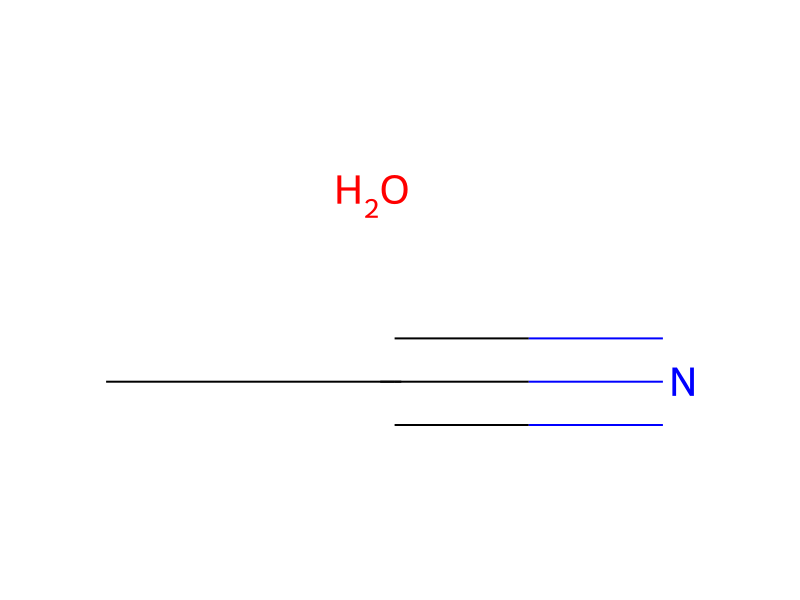
To a turbid solution of 1-(4-chlorophenoxy)-2-chloro-2-propene from Step 1 (3 g, 15.7 mmol) in acetonitrile/water (4/1, 100 mL), N-bromosuccinimide (4.84 g, 31.4 mmol) was added in one lot. A catalytic amount of 48% HBr (40 μl) was added to the reaction and the yellowish orange mixture was stirred at room temperature. After 24 hours, the reaction mixture was diluted with ether and washed with 5% w/v of sodium thiosulfate. The organic layer was separated and washed with saturated sodium bicarbonate and brine. After drying (MgSO4), filtration and concentration in vacuo, the crude liquid (4.8 g) was chromatographed (silica gel, hexane/ethyl acetate, 80/20) to give crude 1-bromo-3-[(4-chlorophenoxy)phenyl]-2-propanone (2.3 g, 54%) which was used in the next step without further purification.
Workup
- washwashed with 5% w/v of sodium thiosulfate
- customThe organic layer was separated
- washwashed with saturated sodium bicarbonate and brine
- customAfter drying
- filtration(MgSO4), filtration and concentration in vacuo
- customthe crude liquid (4.8 g) was chromatographed (silica gel, hexane/ethyl acetate, 80/20)
Sources & evidence
- ORD record
- ord-385fb46f10b44196a89d41e35fbede4c
- Source dataset
- uspto-grants-1997_04
- Patent number
- US05616601
Reaction notes
Loading…