Potassium Nitrate → Acea-1031
Reaction equation

[Br:1][C:2]1[CH:3]=[C:4]2[C:9](=[CH:10][C:11]=1[Br:12])[NH:8][C:7](=[O:13])[C:6](=[O:14])[NH:5]2.[N+:15]([O-])([O-:17])=[O:16].[K+]>OS(O)(=O)=O>[N+:15]([C:10]1[C:11]([Br:12])=[C:2]([Br:1])[CH:3]=[C:4]2[C:9]=1[NH:8][C:7](=[O:13])[C:6](=[O:14])[NH:5]2)([O-:17])=[O:16]Participants
Reactant 2
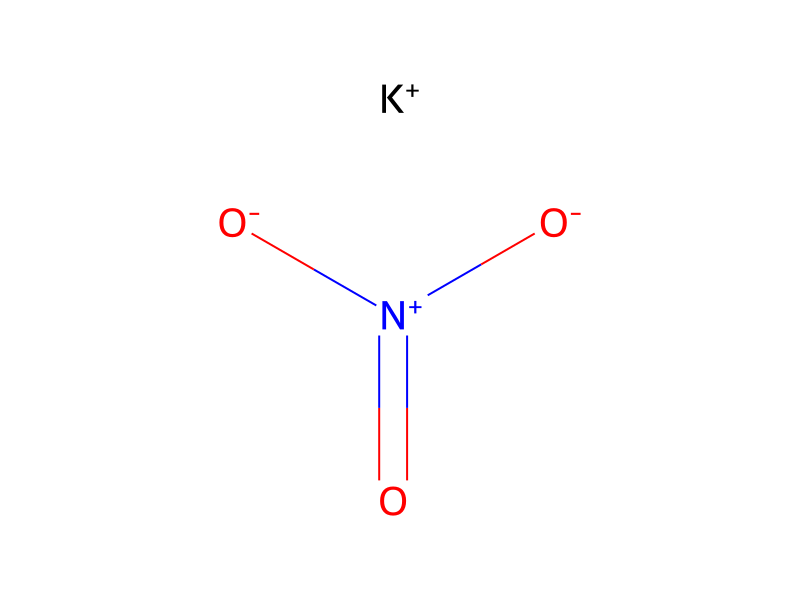

Product 1

Reagents, catalysts & solvents 1

Conditions
- Temperature
- 0 °C
Procedure
The procedure of Cheeseman, G. W. H., J. Chem. Soc. 1170 (1962) was adapted. To a stirred suspension of 6,7-dibromo-1,4-dihydro-2,3-quinoxalinedione (576 mg, 1.8 mMol) in concentrated H2SO4 (6 mL) at 0° C. for 30 min. was added KNO3 (220 mg, 2.18 mMol, Baker) in one portion. The mixture was stirred at 0° C. for 3 h then at room temperature for one day. The color of mixture was changed from red to yellow brown. Then it was poured into ice (60 g) resulting in the separation of a bright yellow precipitate, which was collected by filtration and washed with distilled water (2×2 mL) followed by ethanol (2×1 mL) to get 498 mg of crude 5-nitro-6,7-dibromo-1,4-dihydro-2,3-quinoxalinedione (76%, contains minor impurities by NMR). Crystallization from DMSO/H2O gave pure 5-nitro-6,7-dibromo-1,4-dihydro-2,3-quinoxalinedione as bright yellow microcrystals; mp: 352°-354° C. (dec.). IR (KBr, cm-1): 3387; 3256; 1756; 1700; 1537. NMR (1H, DMSO-d6): δ7.475 (s, 1H); 12.217 (s, 1H); 12.265 (s, 1H). HRMS: calcd for C8H3N3O4Br2 (M+) m/z: 362.8489; found: 362.8509.
Workup
- waitat room temperature for one day
- customresulting in the separation of a bright yellow precipitate, which
- filtrationwas collected by filtration
- washwashed with distilled water (2×2 mL)
Sources & evidence
- ORD record
- ord-16f1f1872f2949f68aabf2087a8ad3e0
- Source dataset
- uspto-grants-1997_04
- Patent number
- US05622952
Reaction notes
Loading…