Hydrochloric Acid → 5-(Chloromethyl)quinolin-8-ol
Reaction equation

[OH:1][C:2]1[CH:3]=[CH:4][CH:5]=[C:6]2[C:11]=1[N:10]=[CH:9][CH:8]=[CH:7]2.[ClH:12].[CH2:13]=O>>[Cl:12][CH2:13][C:5]1[CH:4]=[CH:3][C:2]([OH:1])=[C:11]2[C:6]=1[CH:7]=[CH:8][CH:9]=[N:10]2Participants
4



Procedure
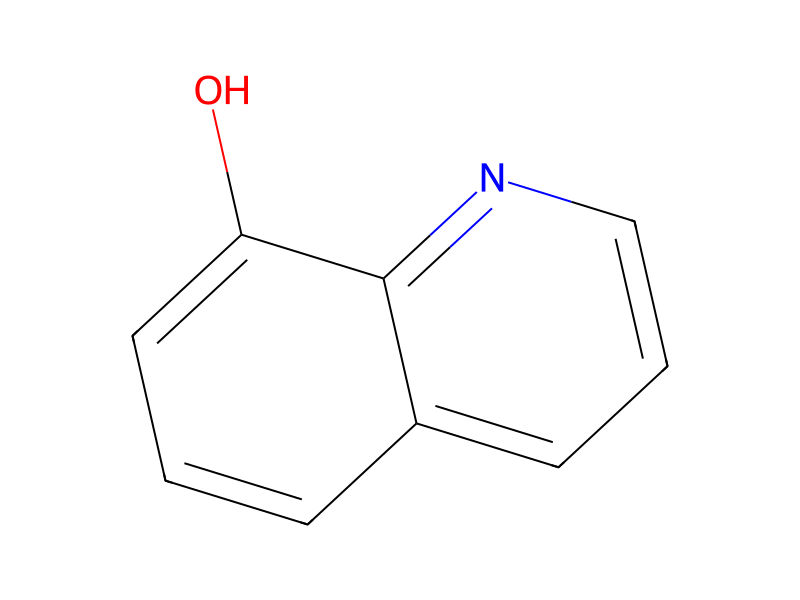
As shown in Scheme A below, 8-hydroxyquinoline (A1) is treated with hydrochloric acid and formaldehyde to give 5-chloromethyl-8-hydroxyquinoline (A2). The chloro group of A2 is substituted with propargylamine to afford 5-(1-propargylamino)methyl-8-hydroxyquinoline (A3). Bromination of A3 employing N-bromosuccinimide (NBS) provides the bromide A4 which is then treated, for example, with the modified peptide [D-Cys6]GnRH to give the target compound A5, which is the compound M22A in Appendix I.
Sources & evidence
- ORD record
- ord-dfbfaa0671094e71baef6f5442d1acc9
- Source dataset
- uspto-grants-2011_11
- Patent number
- US08058442B2
Reaction notes
Loading…