Trifluoroacetic acid → L-Glutamic Acid
Reaction equation

OC[C:3]([CH2:7]O)([CH2:5][OH:6])[NH2:4].[Cl-].[Cl-].[Ca+2].F[C:13](F)(F)[C:14]([OH:16])=[O:15].FC(F)(F)C(O)=[O:22].C(#N)C>>[NH2:4][C@H:3]([C:5]([OH:6])=[O:22])[CH2:7][CH2:13][C:14]([OH:16])=[O:15]Participants


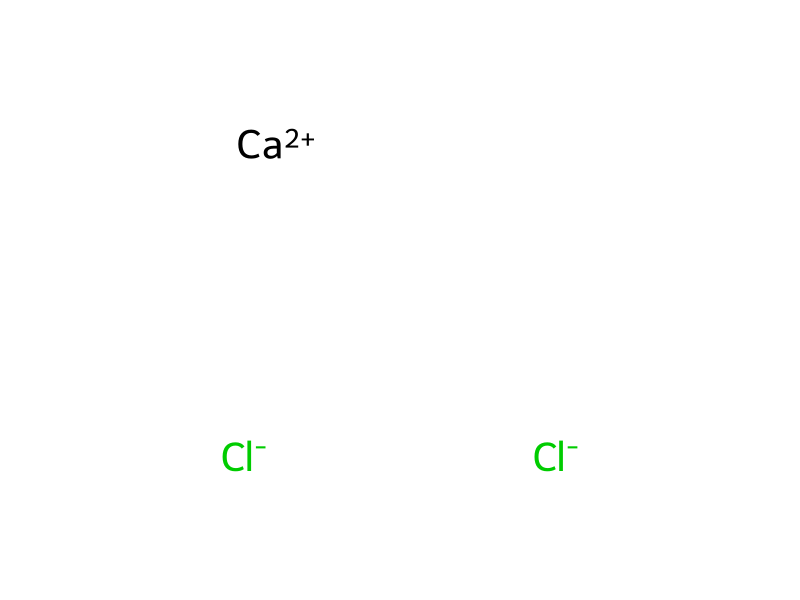


Procedure
The oligopeptides prepared as described in Example 2 were individually dissolved in PSA digestion buffer (12 mM tris(hydroxymethyl)-aminomethane pH8.0, 25 mM NaCl, 0.5 mM CaCl2) and the solution added to PSA at a molar ration of 100 to 1. Alternatively, the PSA digestion buffer utilized is 50 mM tris(hydroxymethyl)-aminomethane pH7.4, 140 mM NaCl. The reaction is quenched after various reaction times by the addition of trifluoroacetic acid (TFA) to a final 1% (volume/volume). Alternatively the reaction is quenched with 10 nM ZnCl2. The quenched reaction was analyzed by HPLC on a reversed-phase C18 column using an aqueous 0.1% TFA/acetonitrile gradient. The results of the assessment are shown in FIG. 2. Other oligopeptides prepared as described in Example 2 were tested in the same assay wherein the reaction was quenched at 4 hours. Those results of the assessment are shown in FIG. 3. The removal of an asparagine residue from the amino terminus of the oligopeptide results in a significant loss of PSA mediated peptide hydrolysis, while the presence of a glutamic acid residue at the carboxyl end of the peptide appears not to be essential to recognition by PSA.
Workup
- customThe reaction is quenched
- customafter various reaction times
- customAlternatively the reaction is quenched with 10 nM ZnCl2
- customThe quenched reaction
- customThe results of the assessment
- customwas quenched at 4 hours
- customThose results of the assessment
- customThe removal of an asparagine residue from the amino terminus of the oligopeptide
Sources & evidence
- ORD record
- ord-470cca05e2134cadba41f5ac77585b70
- Source dataset
- uspto-grants-2001_01
- Patent number
- US06177404B1
Reaction notes
Loading…