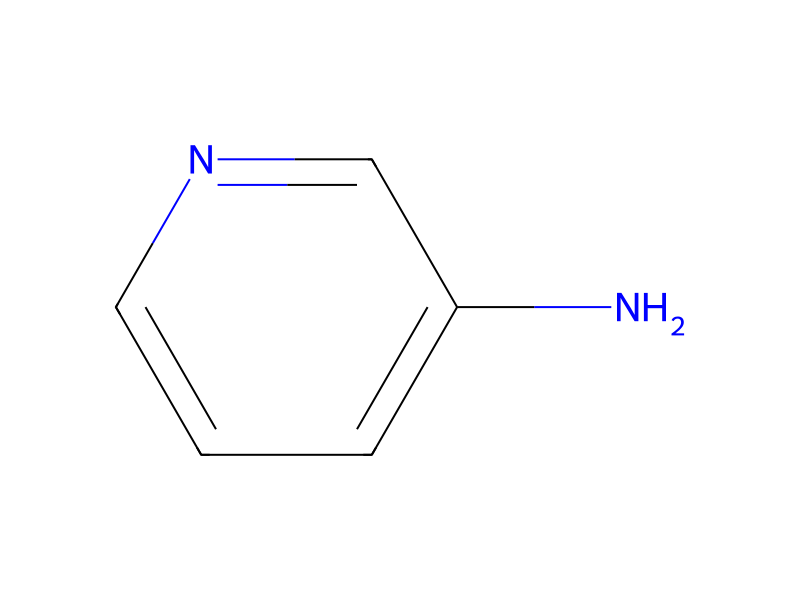
3-Aminopyridine → 5-Bromo-6-methoxy-N-(3-pyridyl)benzo-[b]thiophene-3-carboxamide
Reaction equation

[Br:1][C:2]1[C:13]([O:14][CH3:15])=[CH:12][C:5]2[S:6][CH:7]=[C:8]([C:9]([OH:11])=O)[C:4]=2[CH:3]=1.[NH2:16][C:17]1[CH:18]=[N:19][CH:20]=[CH:21][CH:22]=1>S(Cl)(Cl)=O>[Br:1][C:2]1[C:13]([O:14][CH3:15])=[CH:12][C:5]2[S:6][CH:7]=[C:8]([C:9]([NH:16][C:17]3[CH:18]=[N:19][CH:20]=[CH:21][CH:22]=3)=[O:11])[C:4]=2[CH:3]=1Participants



Procedure
5-Bromo-6-methoxybenzo[b]thiophene-3-carboxylic acid (D5) (0.36 g, 0.0013 mole) and thionyl chloride (20 ml) were heated under reflux for 1 hour, after which the reaction mixture was cooled to ambient temperature and evaporated in vacuo. The resulting acid chloride was dissolved in dry dichloromethane (30 ml) and acetonitrile (10 ml) under argon. 3-Aminopyridine (0.12 g, 0.0013 mole) was added and the reaction mixture stirred at ambient temperature for 16 hours. The solvent was removed in vacuo and the resulting solid basified with 10% sodium hydroxide solution, extracted into dichloromethane, dried (Na2SO4) and evaporated in vacuo. The resulting solid was recrystallised from ethyl acetate/methanol to afford the title compound (0.11 g, 23%) as a beige solid.
Workup
- temperatureunder reflux for 1 hour
- customevaporated in vacuo
- dissolutionThe resulting acid chloride was dissolved in dry dichloromethane (30 ml)
- customThe solvent was removed in vacuo
- extractionextracted into dichloromethane
- dry with materialdried (Na2SO4)
- customevaporated in vacuo
- customThe resulting solid was recrystallised from ethyl acetate/methanol
Sources & evidence
- ORD record
- ord-da20ae4ccbd441ddb1db182aa7887a98
- Source dataset
- uspto-grants-1999_07
- Patent number
- US05922733
Reaction notes
Loading…