Ethylmorpholine → Z-D-Trp-D-Phe-OMe
Reaction equation
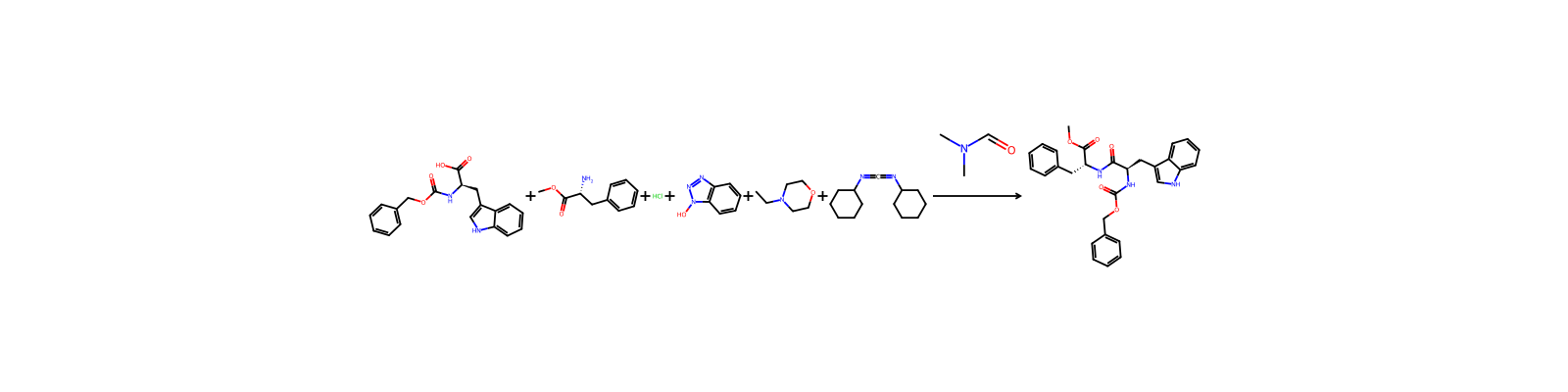
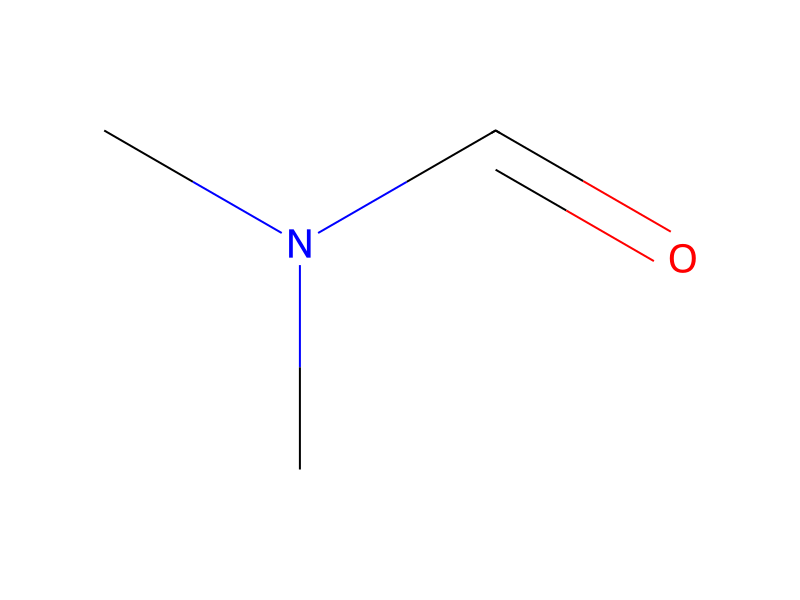
[NH:1]([C:16]([O:18][CH2:19][C:20]1[CH:25]=[CH:24][CH:23]=[CH:22][CH:21]=1)=[O:17])[C@@H:2]([C:13](O)=[O:14])[CH2:3][C:4]1[C:12]2[C:7](=[CH:8][CH:9]=[CH:10][CH:11]=2)[NH:6][CH:5]=1.[NH2:26][C@@H:27]([C:35]([O:37][CH3:38])=[O:36])[CH2:28][C:29]1[CH:34]=[CH:33][CH:32]=[CH:31][CH:30]=1.Cl.ON1C2C=CC=CC=2N=N1.C(N1CCOCC1)C.C1CCC(N=C=NC2CCCCC2)CC1>CN(C=O)C>[NH:1]([C:16]([O:18][CH2:19][C:20]1[CH:25]=[CH:24][CH:23]=[CH:22][CH:21]=1)=[O:17])[C@@H:2]([C:13]([NH:26][C@@H:27]([C:35]([O:37][CH3:38])=[O:36])[CH2:28][C:29]1[CH:34]=[CH:33][CH:32]=[CH:31][CH:30]=1)=[O:14])[CH2:3][C:4]1[C:12]2[C:7](=[CH:8][CH:9]=[CH:10][CH:11]=2)[NH:6][CH:5]=1Participants
Reactant 5


Product 1

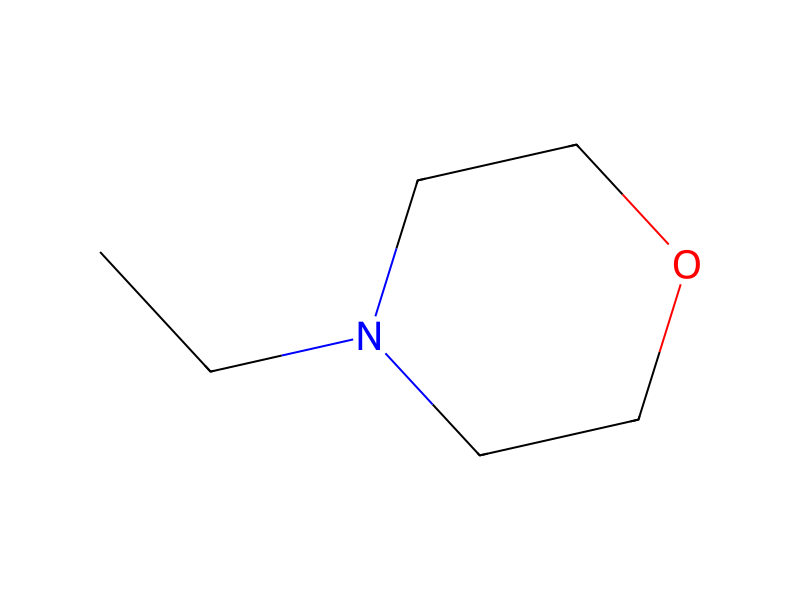
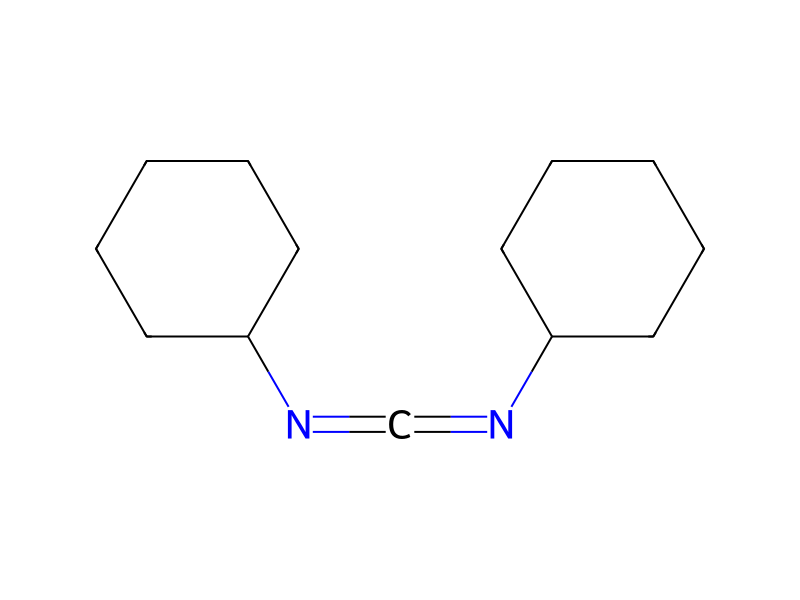
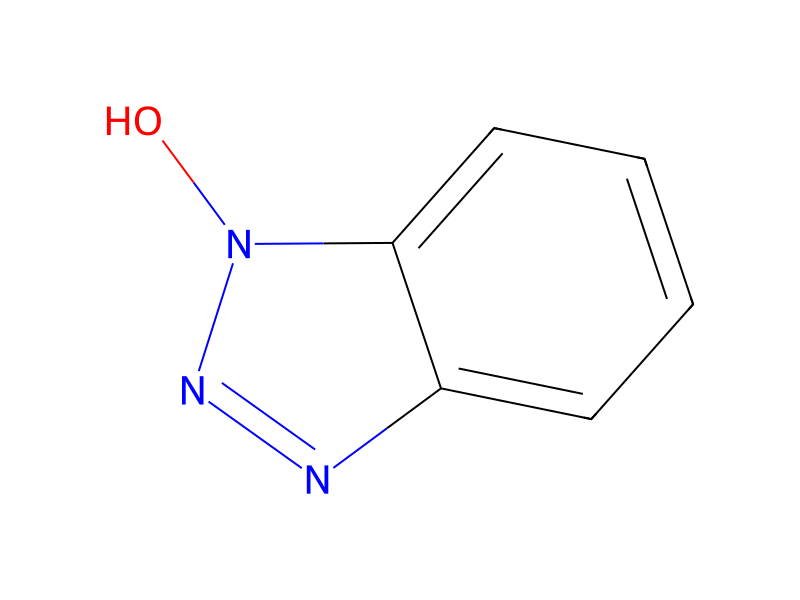
Reagents, catalysts & solvents 1
Procedure
In a preferred embodiment of the preparation of the above tetrapeptide fragment 4-7, substantially equimolar amounts of Z-D-Trp-OH, prepared as described for the L-isomer by E. Klieger, E. Schroder, and H. Gibian, Justus Liebigs' Ann. Chem., 640, 157 (1961), and H-D-Phe-OMe.HCl (see F. Bergel et al. cited above) with an excess, preferably 1.5 to 2.5 molar equivalents, of 1 -hydroxybenzotriazole, in an inert organic solvent, preferably DMF, at -20° to 10° C, preferably 0° C, is treated with an excess, preferably 1.1 to 1.3 molar equivalents, of an organic base, preferably N-ethylmorpholine, to pH 7 - 8. A substantially equimolar amount of DCC in an inert organic solvent, preferably DMF, at -10° to 10° C, is added dropwise. The mixture is kept at -20° to 10° C for an additional hour, cooled to -10° to 10° C, filtered, and the filtrate evaporated. The residue is taken up in a substantially water-immiscible solvent, preferably ethyl acetate, washed, dried and evaporated. The residue is taken up in a mixture of a halogenated hydrocarbon solvent, preferably chloroform, and a lower alkanol, preferably methanol. The solution is passed through a column of silica gel. Evaporation of the eluate and crystallization of the residue yields the dipeptide fragment 6-7 of formula Z-D-Trp-D-Phe-OMe. Said last-named compound is then subjected to hydrogenation in the presence of a noble metal catalyst, preferably 5% Pd/C. Methanol, ethanol, acetic acid, or mixtures thereof are convenient solvents for this hydrogenation. When acetic acid is used the product will be isolated as the acetic acid addition salt. Filtration of the catalyst, and evaporation of the filtrate yields the dipeptide fragment 6-7 of formula H-D-Trp-D-Phe-OMe. Said last-named compound in an inert organic solvent, preferably DMF, at -20° to 10° C, preferably 0° C, is treated with an excess, preferably 1.1 to 1.3 molar equivalents, of a strong organic base, preferably N-ethylmorpholine, to pH 7 - 8, the mixture is then treated with a substantially molar equivalent of a protected activated ester of D-lysine, preferably ##STR47## prepared in the same manner from D-lysine as described for the L-isomer by E. Sandrin and R. A. Boissonnas, Helv. Chim. Acta., 46, 1637 (1963). The solution is stirred at about 0° C for 30 minutes to two hours, at 20° - 30° C for two to four days and evaporated. The residue is taken up in a substantially water-immiscible solvent, preferably ethyl acetate, washed, dried, and evaporated. The residue is taken up in a halogenated hydrocarbon solvent, preferably chloroform, a lower alkanol, preferably methanol, and a strong organic base, preferably pyridine. The solution is passed through silica gel. After evaporation of the eluate the residue is crystallized to yield the tripeptide fragment 5-7 of formula ##STR48## Said last-named compound is then subjected to hydrogenation in the presence of a noble metal catalyst, preferably 5% Pd/C. Methanol, ethanol, acetic acid, or mixtures thereof are convenient solvents for this hydrogenation, when acetic acid is used the product will be isolated as the acetic acid addition salt. Filtration of the catalyst, and evaporation of the filtrate yields the tripeptide fragment 5-7 of formula ##STR49## Said last-named compound, substantially equimolar amount of a protected D-threonine, preferably ##STR50## (see E. Schroder cited above), and about one to two molar equivalents of 1-hydroxybenzotriazole in an inert organic solvent, preferably DMF, at -20° to 10° C, preferably 0° C, is treated with an excess, preferably 1.1 to 1.3 molar equivalents, of a strong organic base, preferably N-ethylmorpholine, to pH 7 - 8. A substantially equimolar amount of DCC in an inert solvent, preferably DMF, at about 0° C is slowly added dropwise. The mixture is stirred at about 0° C for 30 minutes to two hours, at 20° - 30° C for one to two hours, filtered, and evaporated. The residue is taken up in a halogenated hydrocarbon solvent, preferably chloroform, and a lower alkanol, preferably methanol. The solution is passed through a column of silica gel. Evaporation of the eluate and crystallization of the residue yields the tetrapeptide fragment 4-7 of formula ##STR51## Said last-named compound is dissolved in an inert organic solvent, for example methanol, ethanol, or DMF, preferably DMF. The solution is treated with an excess of hydrazine hydrate, for example 20 to 50 molar equivalents, and is kept at -20° to 10° C, preferably at 0° C, for one and a half to three hours, preferably two hours. Water is added; the precipitate is collected by filtration, dried, and crystallized to yield the tetrapeptide fragment 4-7 of formula ##STR52##
Workup
- customprepared
- waitThe mixture is kept at -20° to 10° C for an additional hour
- temperaturecooled to -10° to 10° C
- filtrationfiltered
- customthe filtrate evaporated
- washwashed
- customdried
- customevaporated
- additionThe residue is taken up in a mixture of a halogenated hydrocarbon solvent, preferably chloroform
- customEvaporation of the eluate and
- customcrystallization of the residue
Sources & evidence
- ORD record
- ord-5e74b8c9b31646e7a2e39c1ccb96d4cc
- Source dataset
- uspto-grants-1977_03
- Patent number
- US04010260
Reaction notes
Loading…