Formaldehyde → ((4-chloro-1H-pyrrolo(2,3-b)pyridin-3-yl)methyl)dimethylamine
Reaction equation

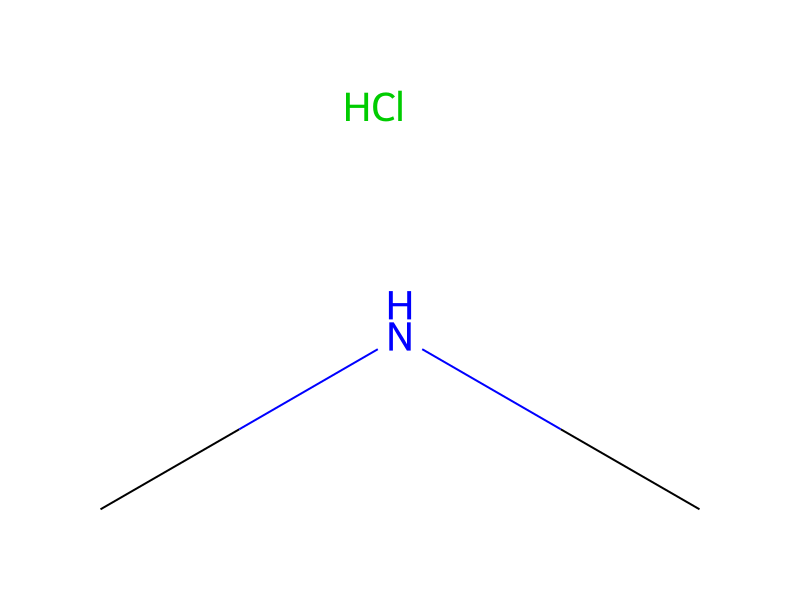
[Cl:1][C:2]1[CH:10]=[CH:9][N:8]=[C:7]2[C:3]=1[CH:4]=[CH:5][NH:6]2.[CH2:11]=O.Cl.[CH3:14][NH:15][CH3:16]>C(O)CCC.C(OCC)C>[Cl:1][C:2]1[CH:10]=[CH:9][N:8]=[C:7]2[NH:6][CH:5]=[C:4]([CH2:14][N:15]([CH3:11])[CH3:16])[C:3]=12Participants





Procedure
4-Chloro-7-azaindole (7.32 g, 48 mmol), paraformaldehyde (1.59 g, 52.8 mmol) and dimethylamine hydrochloride (4.32 g, 52.8 mmol) were suspended in 1-butanol (30 mL) and the mixture heated under reflux for 2 hours. The mixture was cooled to ambient temperature and diluted with diethyl ether (50 mL). The resultant solid was collected by filtration and washed with diethyl ether and left to air-dry. The solid was dissolved in water (100 mL) and the pH of the solution adjusted to 11 by the portion-wise addition of solid potassium carbonate. The aqueous phase was extracted with dichloromethane (3×40 mL). The combined organic phase was dried (MgSO4), filtered and evaporated to afford the title compound as a pale yellow solid (7.12 g, 70%). 1H NMR (300 MHz, CDCl3): 11.19 (s, 1H), 8.15 (d, J=5.2 Hz, 1H), 7.32 (s, 1H), 7.08 (d, J=5.2 Hz, 1H), 3.79 (s, 2H), 2.34 (s, 6H).
Workup
- temperaturethe mixture heated
- temperatureunder reflux for 2 hours
- filtrationThe resultant solid was collected by filtration
- washwashed with diethyl ether
- waitleft
- customto air-dry
- dissolutionThe solid was dissolved in water (100 mL)
- additionthe pH of the solution adjusted to 11 by the portion-wise addition of solid potassium carbonate
- extractionThe aqueous phase was extracted with dichloromethane (3×40 mL)
- dry with materialThe combined organic phase was dried (MgSO4)
- filtrationfiltered
- customevaporated
Sources & evidence
- ORD record
- ord-ad0394e3391142828b367e4e57f25660
- Source dataset
- uspto-grants-2016_09
- Patent number
- US09440976B2
Reaction notes
Loading…