1,3-Dibromo-5,5-dimethylhydantoin → (1S,4S,5S)-4-Bromo-6-oxabicyclo[3.2.1]octan-7-one
Reaction equation

[Br:1]N1C(C)(C)C(=O)N(Br)C1=O.C1([C@H](N)C)C=CC=CC=1.[C@H:21]1([C:27]([OH:29])=[O:28])[CH2:26][CH2:25][CH:24]=[CH:23][CH2:22]1.C(OCC)(=O)C.S([O-])([O-])(=O)=S.[Na+].[Na+]>C(#N)C>[Br:1][C@@H:24]1[C@@H:25]2[CH2:26][C@@H:21]([C:27](=[O:29])[O:28]2)[CH2:22][CH2:23]1Participants
Reactant 4



Product 1

Reagents, catalysts & solvents 1

Procedure
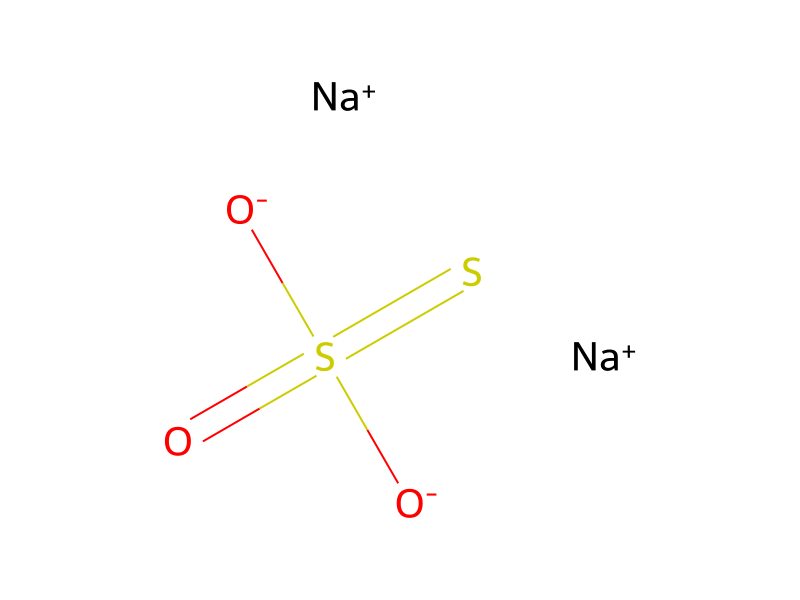
Under a nitrogen atmosphere, 1,3-dibromo-5,5-dimethylhydantoin (4) (11.6 g, 40.6 mol) was added to a solution of (S)-3-cyclohexene-1-carboxylic acid (R)-α-phenylethylamine salt (2-b) (10.0 g, 40.4 mmol) in acetonitrile (25 ml) that had been cooled on ice. The temperature of the reaction solution was increased to room temperature, and the reaction solution was then stirred for 2 hours. Thereafter, ethyl acetate (50 ml) and a 10% sodium thiosulfate aqueous solution (40 ml) were added to the reaction solution to separate it. The aqueous layer was extracted with ethyl acetate (50 ml), and the organic layers were gathered and were then washed with a 5% citric acid aqueous solution (40 ml). The resulting organic layer was washed with saturated saline (30 ml) and was then concentrated under reduced pressure. Thereafter, isopropyl alcohol (50 ml) was added to the residue, and the solvent was then concentrated under reduced pressure, so that the volume became 30 ml. The obtained slurry liquid was cooled to −10° C., and a precipitate was filtered and was then washed with ice-cooled isopropyl alcohol (10 ml) to obtain the title compound (6.9 g, yield: 84%).
Workup
- temperaturehad been cooled on ice
- customto separate it
- extractionThe aqueous layer was extracted with ethyl acetate (50 ml)
- washwere then washed with a 5% citric acid aqueous solution (40 ml)
- washThe resulting organic layer was washed with saturated saline (30 ml)
- concentrationwas then concentrated under reduced pressure
- additionThereafter, isopropyl alcohol (50 ml) was added to the residue
- concentrationthe solvent was then concentrated under reduced pressure, so that the volume
- temperatureThe obtained slurry liquid was cooled to −10° C.
- filtrationa precipitate was filtered
- washwas then washed with ice-
- temperaturecooled isopropyl alcohol (10 ml)
Sources & evidence
- ORD record
- ord-fb3e8ce4f8454649be1829394b18c905
- Source dataset
- uspto-grants-2016_09
- Patent number
- US09447118B2
Reaction notes
Loading…