Hydrogen Sulfide → 10-(1-Diethylamino-2-propyl)-N-propyl-2-phenothiazinecarbothioamide
Reaction equation
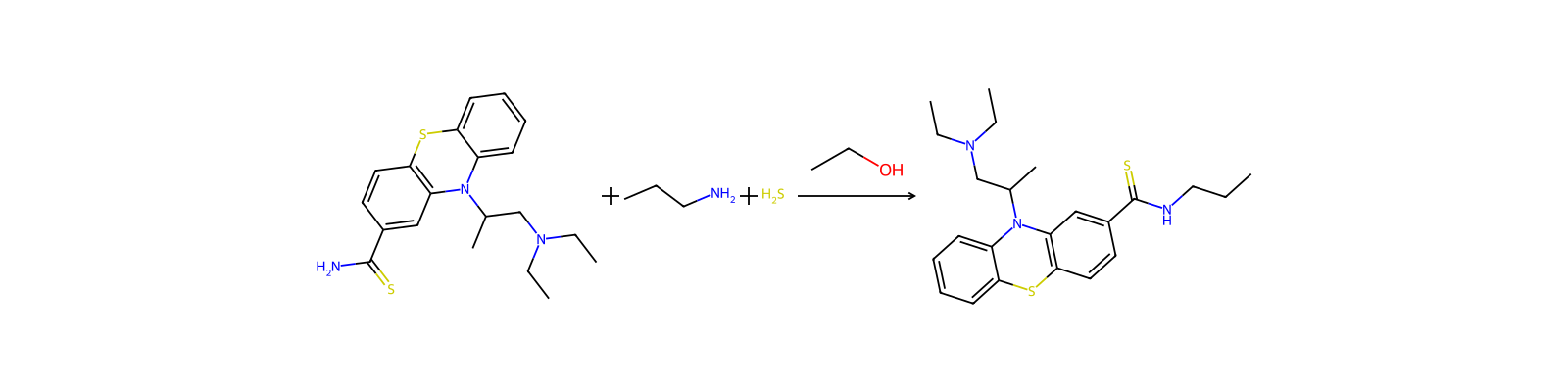
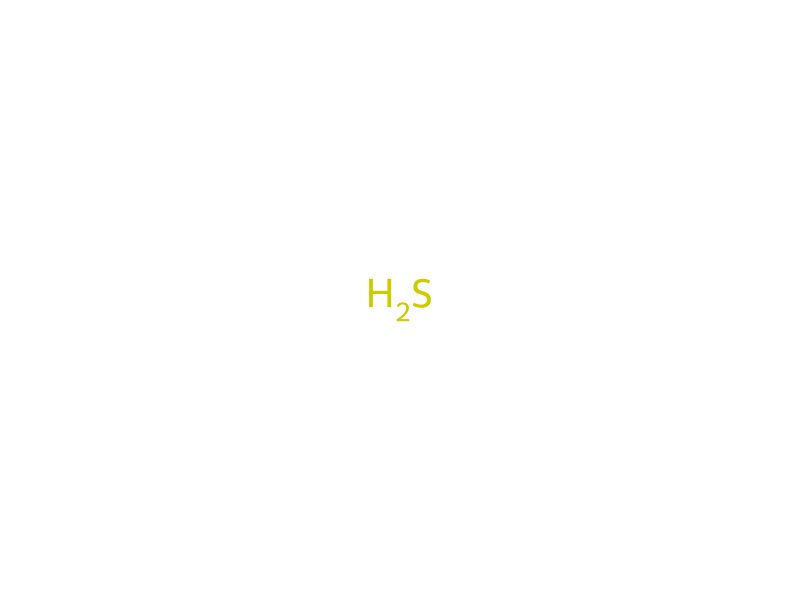
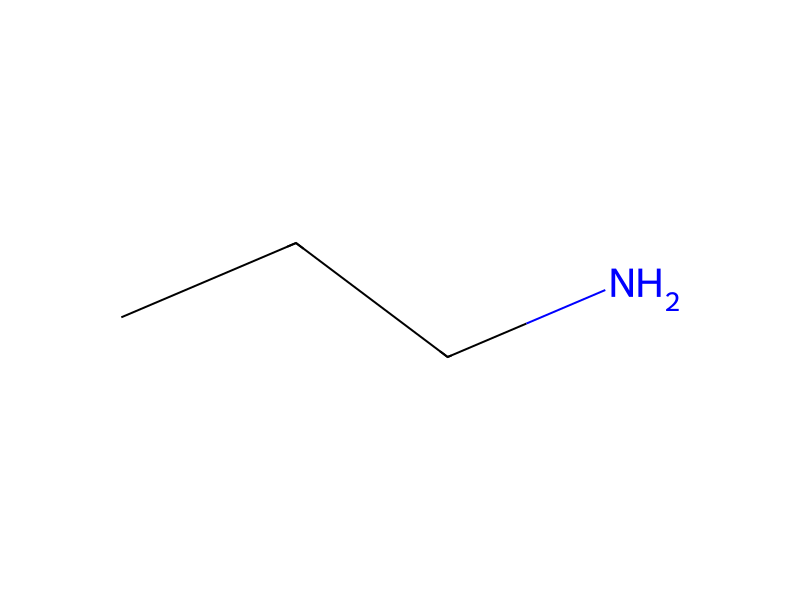
[CH2:1]([N:3]([CH2:24][CH3:25])[CH2:4][CH:5]([N:7]1[C:20]2[CH:19]=[C:18]([C:21](=[S:23])[NH2:22])[CH:17]=[CH:16][C:15]=2[S:14][C:13]2[C:8]1=[CH:9][CH:10]=[CH:11][CH:12]=2)[CH3:6])[CH3:2].[CH2:26](N)[CH2:27][CH3:28].S>C(O)C>[CH2:24]([N:3]([CH2:1][CH3:2])[CH2:4][CH:5]([N:7]1[C:20]2[CH:19]=[C:18]([C:21](=[S:23])[NH:22][CH2:26][CH2:27][CH3:28])[CH:17]=[CH:16][C:15]=2[S:14][C:13]2[C:8]1=[CH:9][CH:10]=[CH:11][CH:12]=2)[CH3:6])[CH3:25]Participants



Conditions
- Temperature
- 100 °C
Procedure
A solution of 10-(1-diethylamino-2-propyl)-2-phenothiazinecarbothioamide acid fumarate, L series (0.56 g) and propylamine (1.4 cc) in absolute ethanol (10 cc) is saturated with hydrogen sulphide and heated for 16 hours to a temperature in the region of 100° C. After cooling, the mixture is concentrated to dryness under reduced pressure (30 mm Hg; 4 kPa) at 40° C. The residual orange oil is purified by chromatography on a column (height: 25 cm; diameter: 1 cm) of silica gel (0.04-0.063 mm) with a slight excess pressure of nitrogen (40 kPa), eluting with a mixture (80:20 by volume) (150 cc) of ethyl acetate and cyclohexane and collecting 15-cc fractions. The combined fractions 4 to 7 are concentrated to dryness under reduced pressure (30 mm Hg; 4 kPa) at 40° C. 10-(1-Diethylamino-2-propyl)-N-propyl-2-phenothiazinecarbothioamide, L series (0.5 g) is thereby obtained in the form of a yellow oil. 0.25 g of this product is dissolved in isopropyl ether (25 cc) and a 0.3N solution (2.2 cc) of hydrochloric acid in isopropyl ether is added dropwise, with stirring and at a temperature in the region of 5° C. Stirring is maintained for 1 hour at a temperature in the region of 5° C. The precipitate is drained, washed with isopropyl ether (3×5 cc) and dried under reduced pressure (5 mm Hg; 4 kPa) at 40° C. 10-(1-Diethylamino-2-propyl)-N-propyl-2-phenothiazinecarbothioamide hydrochloride, L series (0.24 g) is thereby obtained in the form of a yellow solid, m.p. 95°-100 C. (melts forming a paste), the NMR characteristics of which are identical to those of the product described in Example 6.
Workup
- temperatureAfter cooling
- concentrationthe mixture is concentrated to dryness under reduced pressure (30 mm Hg; 4 kPa) at 40° C
- customThe residual orange oil is purified by chromatography on a column (height: 25 cm; diameter: 1 cm) of silica gel (0.04-0.063 mm) with a slight excess pressure of nitrogen (40 kPa)
- washeluting with a mixture (80:20 by volume) (150 cc) of ethyl acetate and cyclohexane
- customcollecting 15-cc fractions
- concentrationThe combined fractions 4 to 7 are concentrated to dryness under reduced pressure (30 mm Hg; 4 kPa) at 40° C
Sources & evidence
- ORD record
- ord-de54dc246f184818b2f00889bab13600
- Source dataset
- uspto-grants-1991_01
- Patent number
- US04985419
Reaction notes
Loading…