Hydrochloric Acid → HCID 66611810, compound
Reaction equation

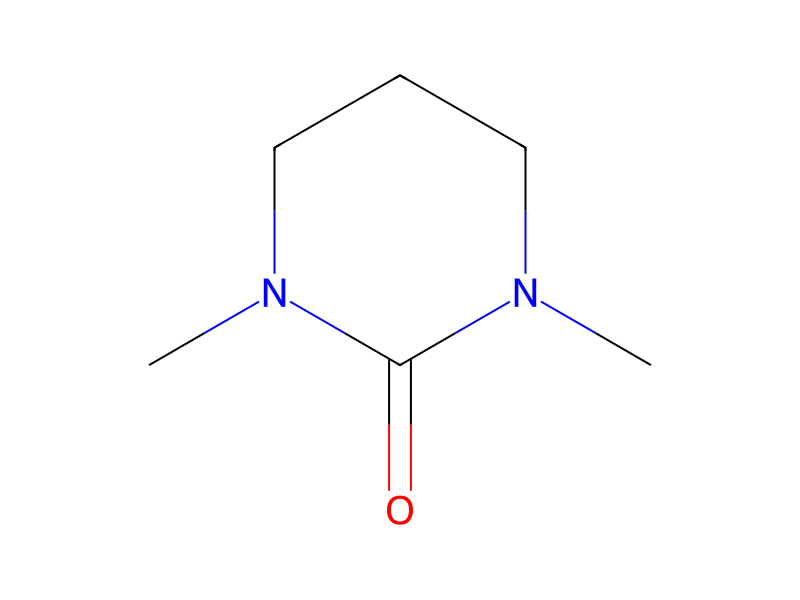
CN1C(=O)N(C)CCC1.[F:10][C:11]([F:24])([F:23])[C:12]1[CH:13]=[C:14]([CH2:18][C:19]([O:21][CH3:22])=[O:20])[CH:15]=[CH:16][CH:17]=1.Br[CH2:26][N:27]1[C:31](=[O:32])[C:30]2=[CH:33][CH:34]=[CH:35][CH:36]=[C:29]2[C:28]1=[O:37].Cl>C1COCC1>[O:37]=[C:28]1[C:29]2[C:30](=[CH:33][CH:34]=[CH:35][CH:36]=2)[C:31](=[O:32])[N:27]1[CH2:26][CH:18]([C:14]1[CH:15]=[CH:16][CH:17]=[C:12]([C:11]([F:23])([F:24])[F:10])[CH:13]=1)[C:19]([O:21][CH3:22])=[O:20]Participants
Reactant 4



Product 1

Reagents, catalysts & solvents 1

Conditions
- Temperature
- -78 °C
Procedure
Over about 5 min, a solution of n-butyllithium (1.6 M in hexane, 18.75 ml, 30 mmol) was added dropwise to a solution, pre-cooled to −20° C., of 4.91 ml (35 mmol) of diisopropylamine in 50 ml of THF. The LDA solution obtained in this manner was cooled to −78° C., and 15.1 ml of DMPU (1,3-dimethyltetrahydro-2(1H)-pyrimidinone, 125 mmol) were added. After 20 min at −78° C., a solution of 5.45 g (25 mmol) of methyl [3-(trifluoromethyl)phenyl]acetate in 35 ml of THF was slowly added dropwise. After a further 20 min at −78° C., a solution of 7.20 g (30 mmol) of N-bromomethylphthalimide in 50 ml of THF was added dropwise. Stirring of the reaction mixture was continued initially at −78° C. for 1 h, then without cooling bath at RT overnight. After addition of 100 ml of 1 N hydrochloric acid, the mixture was extracted three times with ethyl acetate. The combined organic phases were washed with saturated sodium chloride solution, dried over sodium sulphate and freed from the solvent on a rotary evaporator. The residue was dissolved in 50 ml of DMSO and purified in several portions by preparative HPLC [Method 8]. This gave 2.20 g (22% of theory) of the title compound.
Workup
- waitAfter a further 20 min at −78° C.
- waitwas continued initially at −78° C. for 1 h
- temperaturewithout cooling bath at RT overnight
- extractionthe mixture was extracted three times with ethyl acetate
- washThe combined organic phases were washed with saturated sodium chloride solution
- dry with materialdried over sodium sulphate
- customfreed from the solvent on a rotary evaporator
- dissolutionThe residue was dissolved in 50 ml of DMSO
- custompurified in several portions by preparative HPLC [Method 8]
Sources & evidence
- ORD record
- ord-3231dc906dd94e69802f70ce211cd7ff
- Source dataset
- uspto-grants-2015_11
- Patent number
- US09180120B2
Reaction notes
Loading…