Benzene, 1-bromo-2-(trifluoromethyl)- → 5-(3,4-Diethoxyphenyl)-3-(4-(1,2,3,6-tetrahydropyridin-4-yl)phenyl)-1,2,4-oxadiazole
Reaction equation

Br[C:2]1[CH:7]=[CH:6][C:5]([C:8]2[N:12]=[C:11]([C:13]3[CH:18]=[CH:17][C:16]([O:19][CH2:20][CH3:21])=[C:15]([O:22][CH2:23][CH3:24])[CH:14]=3)[O:10][N:9]=2)=[CH:4][CH:3]=1.FC(F)(F)C1C=CC=CC=1Br.B1([C:45]2[CH2:50][CH2:49][N:48](C(OC(C)(C)C)=O)[CH2:47][CH:46]=2)OC(C)(C)C(C)(C)O1.B(O)O>>[CH2:23]([O:22][C:15]1[CH:14]=[C:13]([C:11]2[O:10][N:9]=[C:8]([C:5]3[CH:6]=[CH:7][C:2]([C:45]4[CH2:50][CH2:49][NH:48][CH2:47][CH:46]=4)=[CH:3][CH:4]=3)[N:12]=2)[CH:18]=[CH:17][C:16]=1[O:19][CH2:20][CH3:21])[CH3:24]Participants
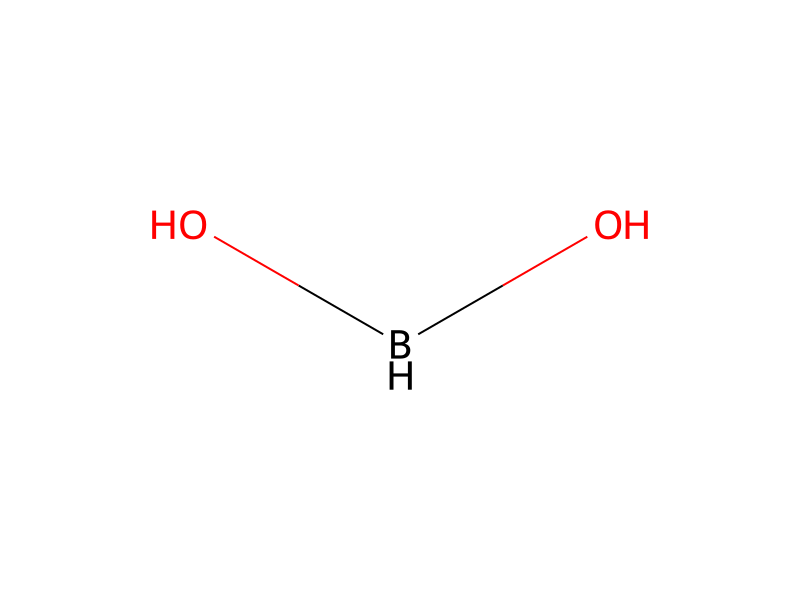
Reactant 4



Product 1

Procedure
When the product of Step B was substituted for 2-trifluoromethyl-bromobenzene and 3,6-dihydro-2H-pyridine-1-tert-butoxycarbonyl-4-boronic acid was substituted for 4-carbaldehyde boronic acid in Example 36 Step A, the similar process gave the title compound in 57% yield. This (0.085 g) was dissolved in anhydrous CH2Cl2 (2 ml) and CF3CO2H (0.5 ml) was added to it. The mixture was stirred for 3 h, then the solvent was evaporated to dryness. The residue was purified by FCC (SiO2) to give the title compound (0.063 g, 93%), as a colourless solid. 1H-NMR (CDCl3) 1.47-1.52 (m, 6H); 2.72 (m, 2H); 3.33-3.29 (m, 2H); 3.75 (m, 2H); 4.14-4.24 (m, 4H); 6.2 (s, 1H); 6.97 (d, 1H, J=8.4 Hz); 7.64-7.68 (m, 3H); 7.78 (d, 1H, J=8.42); 8.24 (d, 2H, J=8.19 Hz).
Sources & evidence
- ORD record
- ord-370a527c5cae4892bff8533b9a1f605e
- Source dataset
- uspto-grants-2015_11
- Patent number
- US09181182B2
Reaction notes
Loading…