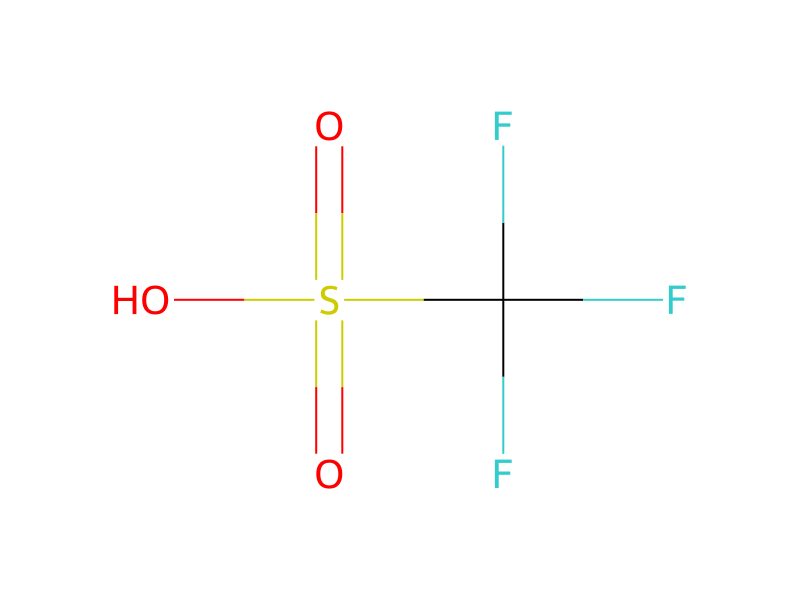
Trifluoroacetic acid → (2S,4S)-4-mercapto-2-[4-(N-4-nitrobenzyloxycarbonylformimidoyl)piperazin-1-ylcarbonyl]-1-(4-nitrobenzyloxycarbonyl)pyrrolidine trifluoromethanesulfonate
Reaction equation

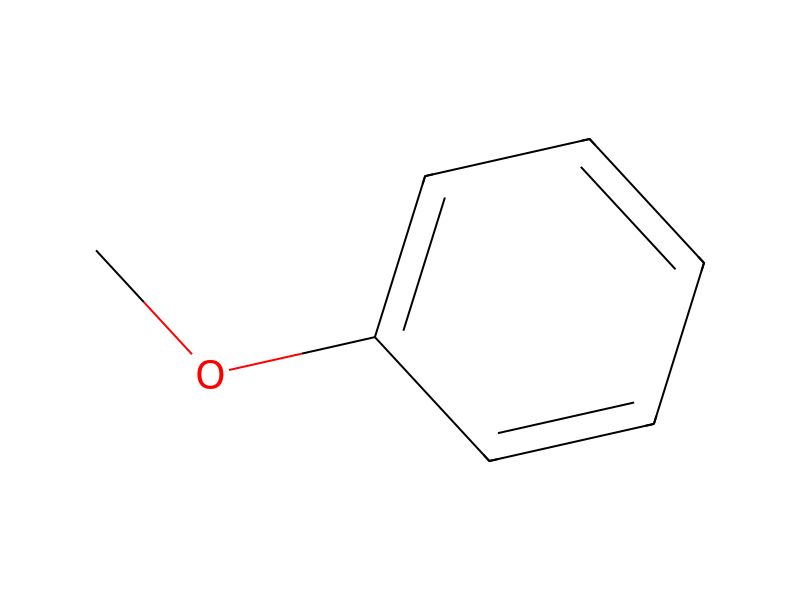
FC(F)(F)C(O)=O.[F:8][C:9]([F:15])([F:14])[S:10]([OH:13])(=[O:12])=[O:11].COC1C=CC(C[S:23][C@@H:24]2[CH2:28][N:27]([C:29]([O:31][CH2:32][C:33]3[CH:38]=[CH:37][C:36]([N+:39]([O-:41])=[O:40])=[CH:35][CH:34]=3)=[O:30])[C@H:26]([C:42]([N:44]3[CH2:49][CH2:48][N:47]([CH:50]=[N:51][C:52]([O:54][CH2:55][C:56]4[CH:61]=[CH:60][C:59]([N+:62]([O-:64])=[O:63])=[CH:58][CH:57]=4)=[O:53])[CH2:46][CH2:45]3)=[O:43])[CH2:25]2)=CC=1>C1(OC)C=CC=CC=1>[F:8][C:9]([F:15])([F:14])[S:10]([OH:13])(=[O:12])=[O:11].[SH:23][C@@H:24]1[CH2:28][N:27]([C:29]([O:31][CH2:32][C:33]2[CH:34]=[CH:35][C:36]([N+:39]([O-:41])=[O:40])=[CH:37][CH:38]=2)=[O:30])[C@H:26]([C:42]([N:44]2[CH2:45][CH2:46][N:47]([CH:50]=[N:51][C:52]([O:54][CH2:55][C:56]3[CH:57]=[CH:58][C:59]([N+:62]([O-:64])=[O:63])=[CH:60][CH:61]=3)=[O:53])[CH2:48][CH2:49]2)=[O:43])[CH2:25]1Participants
Reactant 3


Product 1

Reagents, catalysts & solvents 1
Procedure
15 ml of trifluoroacetic acid and 460 μl of trifluoromethanesulfonic acid were added to a solution of 2.50 g of (2S,4S)-4-(4-methoxybenzylthio)-2-[4-(N-4-nitrobenzyloxycarbonylformimidoyl)piperazin-1-ylcarbonyl]-1-(4-nitrobenzyloxycarbonyl)pyrrolidine [prepared as described in step (i) above] in 3 ml of anisole, and the resulting mixture was stirred for 1 hour, whilst ice-cooling. The solvent was removed by distillation under reduced pressure, and the resulting residue was washed with diethyl ether, to give 2.55 g of (2S,4S)-4-mercapto-2-[4-(N-4-nitrobenzyloxycarbonylformimidoyl)piperazin-1-ylcarbonyl]-1-(4-nitrobenzyloxycarbonyl)pyrrolidine trifluoromethanesulfonate as a powder. The whole of this product was dissolved in a mixture of ethyl acetate and water, and the solution was made alkaline by adding an aqueous solution of sodium hydrogencarbonate. The ethyl acetate layer was separated and washed with water and with an aqueous solution of sodium chloride, in that order. The solution was dried over anhydrous sodium sulfate, and then the solvent was removed by distillation under reduced pressure, to give 2.0 g of the title compound, as a powder.
Workup
- temperaturecooling
- customThe solvent was removed by distillation under reduced pressure
- washthe resulting residue was washed with diethyl ether
Sources & evidence
- ORD record
- ord-3042742b114c4a2a98c58051217b73d3
- Source dataset
- uspto-grants-1998_01
- Patent number
- US05712267
Reaction notes
Loading…