Carbon tetrabromide → 5-Bromo-4-chloro-1-[tris(1-methylethyl)silyl]-1H-pyrrolo[2,3-b]pyridine
Reaction equation

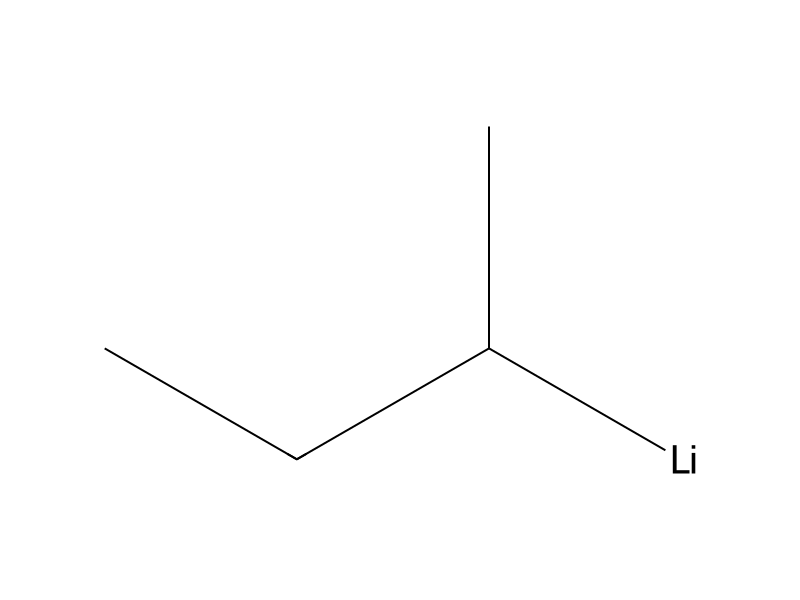
[Cl:1][C:2]1[CH:7]=[CH:6][N:5]=[C:4]2[N:8]([Si:11]([CH:18]([CH3:20])[CH3:19])([CH:15]([CH3:17])[CH3:16])[CH:12]([CH3:14])[CH3:13])[CH:9]=[CH:10][C:3]=12.[Li]C(CC)C.C(Br)(Br)(Br)[Br:27]>C1COCC1>[Br:27][C:7]1[C:2]([Cl:1])=[C:3]2[CH:10]=[CH:9][N:8]([Si:11]([CH:15]([CH3:17])[CH3:16])([CH:18]([CH3:20])[CH3:19])[CH:12]([CH3:13])[CH3:14])[C:4]2=[N:5][CH:6]=1Participants
5
Reactant 3


Product 1

Reagents, catalysts & solvents 1

Conditions
- Temperature
- -78 °C
Procedure
4-Chloro-1-(triisopropylsilyl)-1H-pyrrolo[2,3-b]pyri dine (0.55 g, 1.78 mmol) was dissolved in THF (15 mL) and cooled to −78° C. s-BuLi (2.80 mL, 3.92 mmol) was then added dropwise. The solution was then stirred at −78° C. for 30 minutes. CBr4 (1.48 g, 4.45 mmol) was then added as a THF (2 mL) solution. The reaction was stirred for an additional 30 minutes as it was allowed to warm to 0° C. The reaction was then quenched with saturated NH4Cl and allowed to warm to room temperature. The reaction was then extracted with DCM (3×50 mL), dried, and filtered to give a crude residue. The crude residue was purified by chromatography with hexane to give 5-bromo-4-chloro-1-(triisopropylsilyl)-1H-pyrrolo[2,3-b]pyridine (0.502 g, 72.7% yield).
Workup
- additionwas then added dropwise
- stirringThe reaction was stirred for an additional 30 minutes as it
- temperatureto warm to 0° C
- customThe reaction was then quenched with saturated NH4Cl
- temperatureto warm to room temperature
- extractionThe reaction was then extracted with DCM (3×50 mL)
- customdried
- filtrationfiltered
- customto give a crude residue
- customThe crude residue was purified by chromatography with hexane
Sources & evidence
- ORD record
- ord-3ba57ae6efa94fbb86bbb7fa974fd4a0
- Source dataset
- uspto-grants-2014_09
- Patent number
- US08841304B2
Reaction notes
Loading…