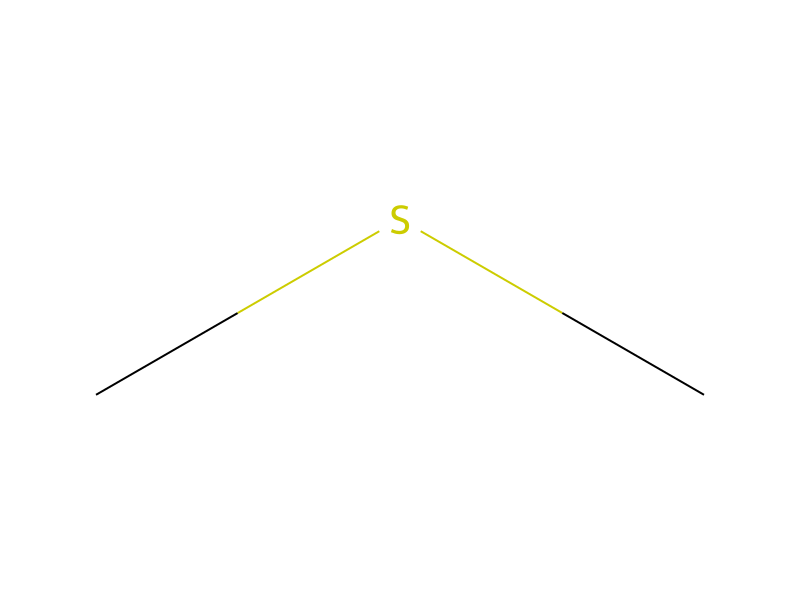
Dimethyl Sulfide → 7-Bromo-1-(2-chloro-3,6-difluorobenzyl)-1,2,3,4-tetrahydropyrazino[2,3-b]pyrazine
Reaction equation

[Br:1][C:2]1[N:7]=[C:6]2[N:8]([CH2:14][C:15]3[C:20]([F:21])=[CH:19][CH:18]=[C:17]([F:22])[C:16]=3[Cl:23])[C:9](=O)[C:10](=O)[NH:11][C:5]2=[N:4][CH:3]=1.S(C)C>C1COCC1>[Br:1][C:2]1[N:7]=[C:6]2[N:8]([CH2:14][C:15]3[C:20]([F:21])=[CH:19][CH:18]=[C:17]([F:22])[C:16]=3[Cl:23])[CH2:9][CH2:10][NH:11][C:5]2=[N:4][CH:3]=1Participants
4
Reactant 2

Product 1

Reagents, catalysts & solvents 1

Procedure
To a solution of 7-bromo-1-(2-chloro-3,6-difluorobenzyl)-1,4-dihydropyrazino[2,3-b]pyrazine-2,3-dione (2.5 mmol, 1.0 g) in THF (5 mL) was added BH3.Me2S (7.5 mmol, 3.75 mL, 2.0 M in THF). The resulting solution was refluxed for 2 hrs under N2. Excessive BH3 was quenched by addition of MeOH at rt then heating the reaction mixture for 10 min. After volatile components were removed on rotavap, the residue was subjected to a silica gel column chromatography by using 4:1 ratio of CH2Cl2/MeOH (pre-saturated with ammonia gas) as eluents, furnishing 7-bromo-1-(2-chloro-3,6-difluorobenzyl)-1,2,3,4-tetrahydropyrazino[2,3-b]pyrazine in 20% yield (0.19 g).
Workup
- temperatureThe resulting solution was refluxed for 2 hrs under N2
- customExcessive BH3 was quenched by addition of MeOH at rt
- temperaturethen heating the reaction mixture for 10 min
- customAfter volatile components were removed on rotavap
Sources & evidence
- ORD record
- ord-db66337310a243fab069f774116a8f27
- Source dataset
- uspto-grants-2014_09
- Patent number
- US08846664B2
Reaction notes
Loading…