Stannous Chloride → ethyl 1-(4-aminophenyl)-1H-imidazole-4-carboxylate
Reaction equation

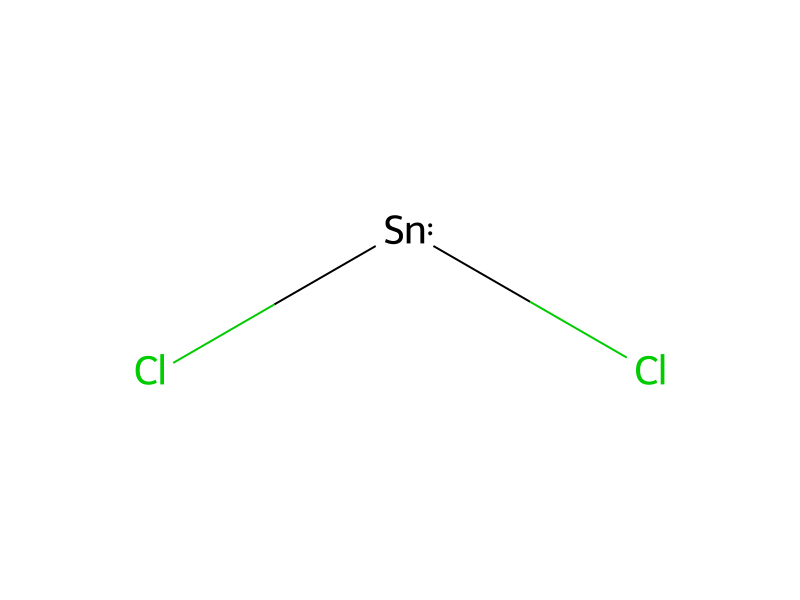
[CH2:1]([O:3][C:4]([C:6]1[N:7]=[CH:8][N:9]([C:11]2[CH:16]=[CH:15][C:14]([N+:17]([O-])=O)=[CH:13][CH:12]=2)[CH:10]=1)=[O:5])[CH3:2].[Sn](Cl)Cl>C(O)C>[CH2:1]([O:3][C:4]([C:6]1[N:7]=[CH:8][N:9]([C:11]2[CH:12]=[CH:13][C:14]([NH2:17])=[CH:15][CH:16]=2)[CH:10]=1)=[O:5])[CH3:2]Participants
4
Reactant 2

Product 1

Reagents, catalysts & solvents 1

Procedure
A mixture of 1-(4-nitrophenyl)imidazole-4-carboxylic acid ethyl ester (see part (i)) (950 mg, 3.64 mmol) and tin (II) chloride (4.11 g, 18.2 mmol) in absolute ethanol (30 ml) was heated under reflux for 30 minutes under nitrogen. After cooling to room temperature the mixture was concentrated under reduced pressure and then partitioned between ethyl acetate (30 ml) and saturated sodium hydrogen carbonate solution (20 ml). The aqueous layer was extracted with ethyl acetate (30 ml) and the combined organic layers were dried (MgSO4) and concentrated under reduced pressure to give 1-(4-aminophenyl)imidazole-4-carboxylic acid ethyl ester (810 mg, 96%) as a yellow oil.
Workup
- temperaturewas heated
- temperatureunder reflux for 30 minutes under nitrogen
- concentrationwas concentrated under reduced pressure
- custompartitioned between ethyl acetate (30 ml) and saturated sodium hydrogen carbonate solution (20 ml)
- extractionThe aqueous layer was extracted with ethyl acetate (30 ml)
- dry with materialthe combined organic layers were dried (MgSO4)
- concentrationconcentrated under reduced pressure
Sources & evidence
- ORD record
- ord-196bf49671e247bcb6b951e48f55f228
- Source dataset
- uspto-grants-2002_04
- Patent number
- US06376490B1
Reaction notes
Loading…