Methylhydrazine → 5-(chloromethyl)-1,3-dimethyl-1H-1,2,4-triazole
Reaction equation

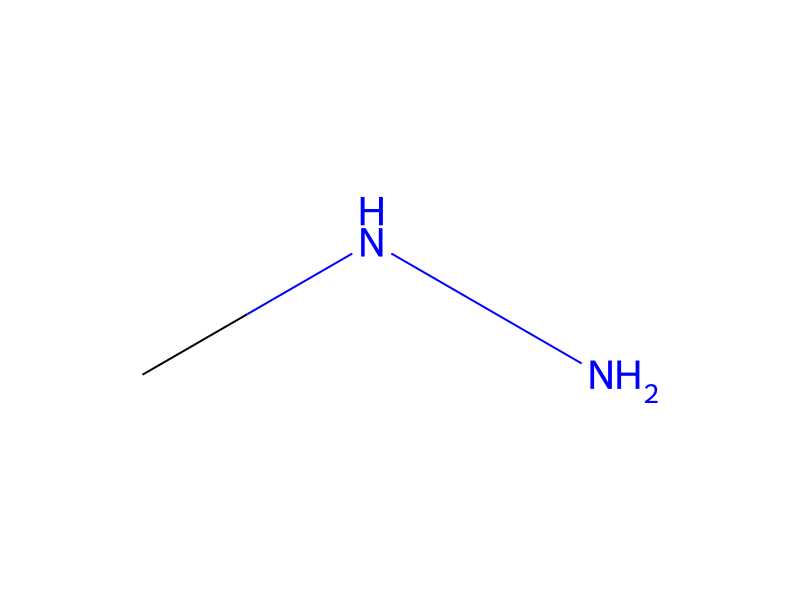
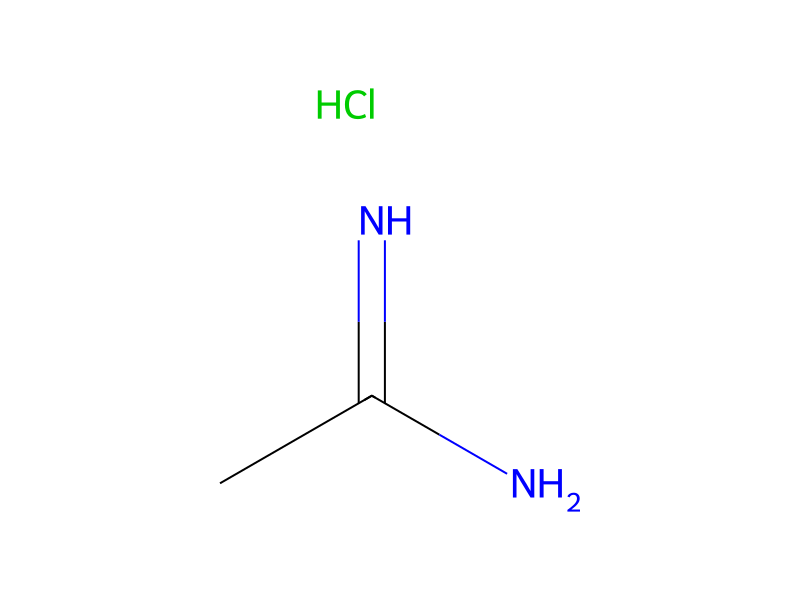
Cl.[C:2]([NH2:5])(=[NH:4])[CH3:3].[CH3:6][NH:7]N.[Cl:9][CH2:10][C:11](Cl)=O>CO>[Cl:9][CH2:10][C:11]1[N:7]([CH3:6])[N:5]=[C:2]([CH3:3])[N:4]=1Participants
Reactant 3

Product 1

Reagents, catalysts & solvents 1

Procedure
The title compound was prepared by a modification of a reported method (Kuebel, B. DE 3118258, Dec. 2, 1982): A 2 L-round bottomed flask equipped with a magnetic stirrer was charged with acetamidine hydrochloride (94.5 g, 1.0 mol) and methanol (500 mL). Methylhydrazine (50.0 g, 1.1 mol) was added slowly via a dropping funnel over 30 min at room temperature under nitrogen blanket. After 2 d, the solvent was removed in vacuo, and the resulting residue triturated with ethyl acetate, filtered, and washed with ethyl acetate (3×400 mL). After drying the residue in a vacuum oven at 50° C., the crude intermediate amidrazone, N′-methylethanehydrazonamide hydrochloride (109.8 g) was used directly in the next step. This intermediate (109.8 g) was suspended in dichloromethane (400 mL), cooled to 0–5° C., and treated slowly with triethylamine (100.2 g) at this temperature. Chloroacetyl chloride (103.7 g, 1.02 mol) was added slowly over 30 min at 0–5° C. via a dropping funnel. The reaction mixture was allowed to warm to room temperature and stirred for 18 h under nitrogen blanket. The solvent was then removed under reduced pressure, affording a residue (432.6 g) containing the N-chloroacetyl amidrazone intermediate. Polyphosphoric acid, PPA (400 g) was added to this material in a 2 L-3 necked flask, which was equipped with an overhead stirrer, a water condenser and a thermometer. The reaction mixture was stirred and heated at 120–130° C. for 4 h. Upon cooling to 80° C., water (400 mL) was added slowly and stirring continued for an additional 2 h. Aqueous NaOH (100 g/150 mL) was used to adjust the pH from 3 to 9. The organic material was extracted with chloroform (4×1 L), and the resulting solution treated with activated charcoal, dried with Na2SO4, filtered, and evaporated carefully. The dark oily residue thus obtained was extracted with a mixture of ether (700 mL) and pentane (300 mL) to separate the product from insoluble impurities. The yellow supernatant was decanted and the solvent removed carefully in vacuo (30° C. and ˜10 Torr), affording 60.0 g (46% overall) of the title product as an oil (95% pure by NMR).
Workup
- customA 2 L-round bottomed flask equipped with a magnetic stirrer
- customthe solvent was removed in vacuo
- customthe resulting residue triturated with ethyl acetate
- filtrationfiltered
- washwashed with ethyl acetate (3×400 mL)
- customAfter drying the residue in a vacuum oven at 50° C.
- temperaturecooled to 0–5° C.
- additiontreated slowly with triethylamine (100.2 g) at this temperature
- customThe solvent was then removed under reduced pressure
Sources & evidence
- ORD record
- ord-0fdf5403cbc14e73ae1de134e87ec0ec
- Source dataset
- uspto-grants-2006_12
- Patent number
- US07148226B2
Reaction notes
Loading…