acetoacetyl-CoA → acetyl CoA
Reaction equation

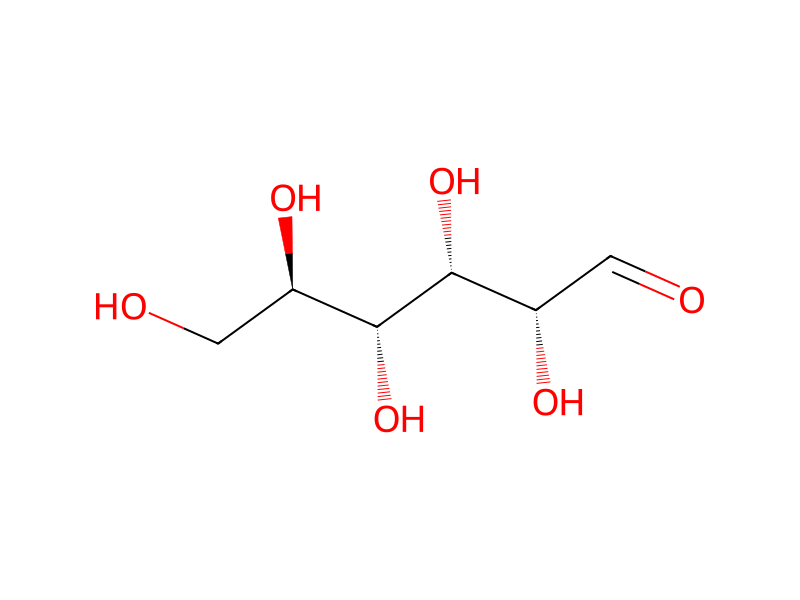
O[CH2:2][CH2:3][CH2:4][C:5]([S:7][CH2:8][CH2:9][NH:10][C:11](=[O:54])[CH2:12][CH2:13][NH:14][C:15](=[O:53])[C@H:16]([OH:52])[C:17]([CH3:51])([CH3:50])[CH2:18][O:19][P:20]([OH:49])(=[O:48])[O:21][P:22]([OH:47])(=[O:46])[O:23][CH2:24][C@H:25]1[O:29][C@@H:28]([N:30]2[C:39]3[N:38]=[CH:37][N:36]=[C:34]([NH2:35])[C:33]=3[N:32]=[CH:31]2)[C@H:27]([OH:40])[C@@H:26]1[O:41][P:42]([OH:45])([OH:44])=[O:43])=[O:6].O=C[C@@H]([C@H]([C@@H]([C@@H](CO)O)O)O)O.[C:67]([S:73][CH2:74][CH2:75][NH:76][C:77](=[O:120])[CH2:78][CH2:79][NH:80][C:81](=[O:119])[C@H:82]([OH:118])[C:83]([CH3:117])([CH3:116])[CH2:84][O:85][P:86]([OH:115])(=[O:114])[O:87][P:88]([OH:113])(=[O:112])[O:89][CH2:90][C@H:91]1[O:95][C@@H:94]([N:96]2[C:105]3[N:104]=[CH:103][N:102]=[C:100]([NH2:101])[C:99]=3[N:98]=[CH:97]2)[C@H:93]([OH:106])[C@@H:92]1[O:107][P:108]([OH:111])([OH:110])=[O:109])(=[O:72])[CH2:68]C(C)=O.C(SCCNC(=O)CCNC(=O)[C@H](O)C(C)(C)COP(O)(=O)OP(O)(=O)OC[C@H]1O[C@@H](N2C3N=CN=C(N)C=3N=C2)[C@H](O)[C@@H]1OP(O)(O)=O)(=O)C.OC(C)CC(SCCNC(=O)CCNC(=O)[C@H](O)C(C)(C)COP(O)(=O)OP(O)(=O)OC[C@H]1O[C@@H](N2C3N=CN=C(N)C=3N=C2)[C@H](O)[C@@H]1OP(O)(O)=O)=O>C(O)CCC>[C:5]([S:7][CH2:8][CH2:9][NH:10][C:11](=[O:54])[CH2:12][CH2:13][NH:14][C:15](=[O:53])[C@H:16]([OH:52])[C:17]([CH3:50])([CH3:51])[CH2:18][O:19][P:20]([OH:49])(=[O:48])[O:21][P:22]([OH:47])(=[O:46])[O:23][CH2:24][C@H:25]1[O:29][C@@H:28]([N:30]2[C:39]3[N:38]=[CH:37][N:36]=[C:34]([NH2:35])[C:33]=3[N:32]=[CH:31]2)[C@H:27]([OH:40])[C@@H:26]1[O:41][P:42]([OH:45])([OH:44])=[O:43])(=[O:6])/[CH:4]=[CH:3]/[CH3:2].[C:67]([S:73][CH2:74][CH2:75][NH:76][C:77](=[O:120])[CH2:78][CH2:79][NH:80][C:81](=[O:119])[C@H:82]([OH:118])[C:83]([CH3:116])([CH3:117])[CH2:84][O:85][P:86]([OH:115])(=[O:114])[O:87][P:88]([OH:113])(=[O:112])[O:89][CH2:90][C@H:91]1[O:95][C@@H:94]([N:96]2[C:105]3[N:104]=[CH:103][N:102]=[C:100]([NH2:101])[C:99]=3[N:98]=[CH:97]2)[C@H:93]([OH:106])[C@@H:92]1[O:107][P:108]([OH:111])([OH:110])=[O:109])(=[O:72])[CH3:68]Participants



Procedure
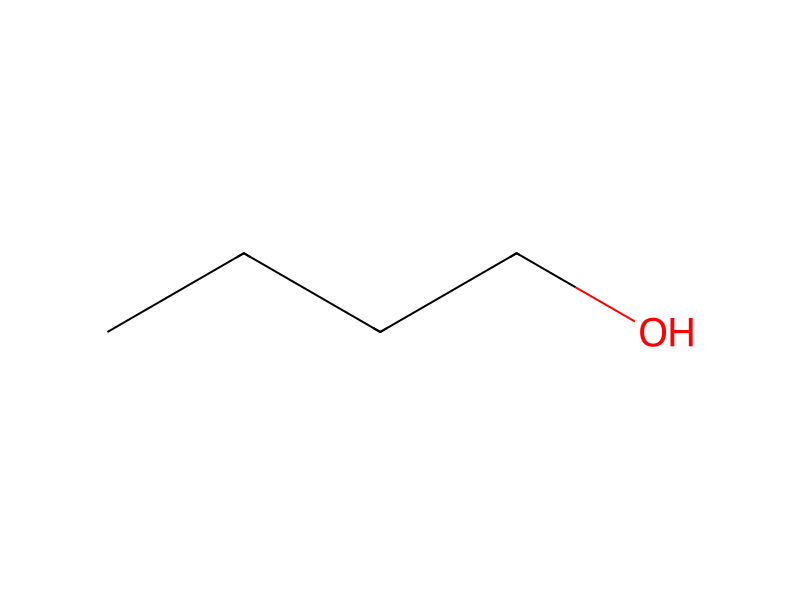
Another compound that can be synthesized from 4-hydroxybutyryl-CoA is n-butanol. Assuming glucose as a carbohydrate feedstock, this pathway has a theoretical yield of about 1.00 mol/mol yield of n-butanol. This yield is comparable to a route to n-butanol, native to many Clostridial species, that involves the formation of acetoacetyl-CoA from acetyl-CoA, followed by four reductions and a dehydration (Jones et al., Microbiol. Rev., 50:484-524 (1986)). A benefit of the present invention is that it bypasses the first three steps of this traditional butanol production pathway (i.e., acetyl-CoA acetyltransferase, 3-hydroxybutyryl-CoA dehydrogenase, and crotonase) which form one molecule of crotonoyl-CoA from two acetyl-CoA molecules. Any or all of these enzymes represent potential bottlenecks to production. For example, although recombinant strains of E. coli have been engineered to express the requisite Clostridial genes for the traditional butanol synthetic pathway, titers of less than 1 g/L were reported (Atsumi, et al, Metabolic Engineering, 2008, 10, 305-311). Further benefits of the current invention are found in the underlying central metabolism required to produce n-butanol from 4-hydroxybutyryl-CoA as opposed to producing n-butanol from two acetyl-CoA molecules. Specifically, to establish the highest yield and redox balance under anaerobic conditions, the traditional Clostridial route requires that two reducing equivalents per n-butanol are extracted from the conversion of pyruvate to acetyl-CoA (i.e., two pyruvate molecules must be oxidized to two acetyl-CoA molecules per butanol produced). This represents a challenge in organisms such as Escherichia coli, in which pyruvate dehydrogenase is not naturally highly active under anaerobic or microaerobic conditions. The production pathway disclosed herein needs only one pyruvate to be oxidized to acetyl-CoA per n-butanol produced. The additional reducing equivalent is generated by the conversion of isocitrate to alpha-ketoglutarate by isocitrate dehydrogenase.
Sources & evidence
- ORD record
- ord-7fc0650ddb03416bb7a40a0dbc4f28fb
- Source dataset
- uspto-grants-2015_03
- Patent number
- US08993285B2
Reaction notes
Loading…