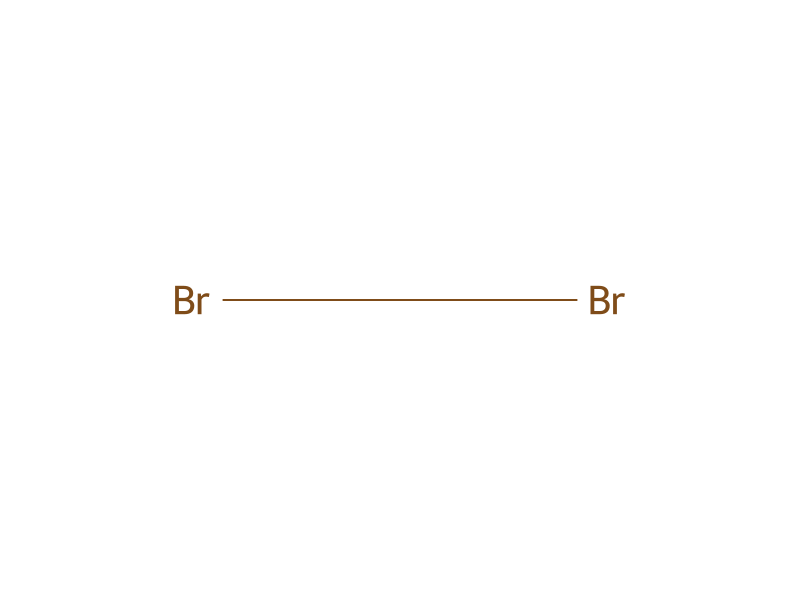
Bromine → 2-Bromo-1-(4-cyclohexylphenyl)ethanone
Reaction equation

[CH3:1][C:2]([C:4]1[CH:9]=[CH:8][C:7]([CH:10]2[CH2:15][CH2:14][CH2:13][CH2:12][CH2:11]2)=[CH:6][CH:5]=1)=[O:3].[Br:16]Br>>[CH:10]1([C:7]2[CH:6]=[CH:5][C:4]([C:2](=[O:3])[CH2:1][Br:16])=[CH:9][CH:8]=2)[CH2:15][CH2:14][CH2:13][CH2:12][CH2:11]1Participants


Procedure
p-cyclohexylphenyl methyl ketone is reacted with bromine in a non-polar solvent to produce the corresponding p-cyclohexylphenacyl bromide. Reaction of this reactive alpha-bromo ketone with commercially available thioacetamide in an protic solvent such as methanol with heat affords the corresponding 2-methyl-4-(4-cyclohexylphenylthiazole. N-Alkylation of this thiazole with [methoxy(polyethylene)n-1]ethyl chloride (where n is from 19 to 24) in aprotic solvents such as dimethylformamide and heat readily forms the corresponding methochioride product, which is also named either N-[methoxy(polyethylene)n-1]ethyl-2-methyl-4-(4-cyclohexylphenypthiazolium chloride or 3-[methoxy(polyethylene)n-1]ethyl-2-methyl-4-(4-cyclohexylphenyl)thiazolium chloride. Reaction of this thiazolium chloride with (N,N-dimethyl)amino benzaldehyde in a protic solvent such as methanol with a basic catalyst such as piperidine and heat then produces the desired 4-(4-cyclohexylphenyl)-2-(N,N-diethylaminostyryl)-3-[methoxy(polyethylene)n-1]ethylthiazolinm chloride, which can also be named 4-(4-cyclohexylphenyl)-2-[2-(4-dimethylaminophenyl)vinyl]-3-[methoxy(polyethylene)n-1]ethylthiazol-3-ium chloride. In all of the above reactions n is from 19 to 24.
Sources & evidence
- ORD record
- ord-6c0ca211590944168097252001cff30d
- Source dataset
- uspto-grants-2012_08
- Patent number
- US08247571B2
Reaction notes
Loading…