Perchloric Acid → Pyrylium perchlorate
Reaction equation

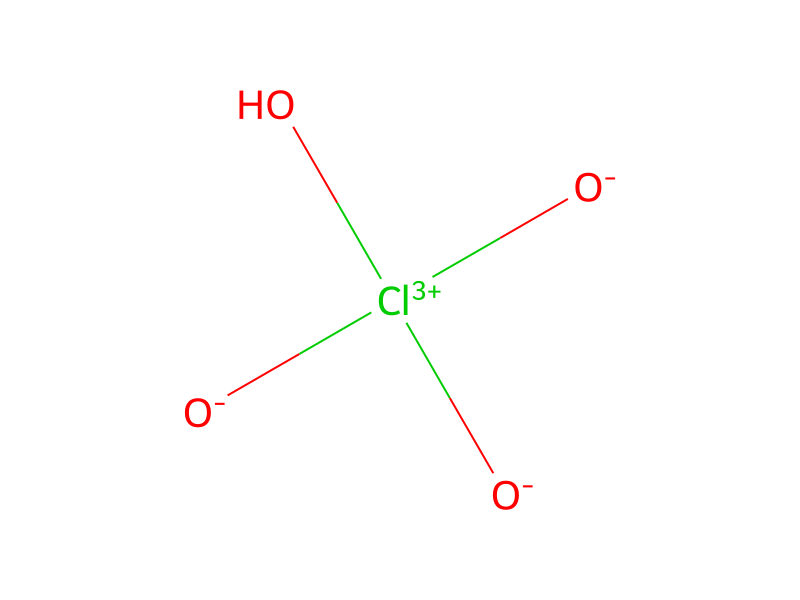
[CH:1](N1CCCCC1)=[CH:2][CH2:3][CH2:4][CH2:5]CCCCCCC.[Cl:19]([OH:23])(=[O:22])(=[O:21])=[O:20]>>[Cl:19]([O-:23])(=[O:22])(=[O:21])=[O:20].[O+:20]1[CH:5]=[CH:4][CH:3]=[CH:2][CH:1]=1Participants


Procedure
Using sodium hydride (2.0 g), p-(5-decyl-2-pyridinyl)-phenol (m.p. 90.4°-91.8° C.) (9 g) and 2S-2-(2'-tetrahydropyranyloxy)-4-methyl-pentyl-p-toluenesulfonate (10 g) obtained in Example 1-(2), and in the same manner as in Example 1-(3), the objective compound, S-1-(4-(5-decyl-2-pyridinyl)-phenoxy)-4-methyl-pentane-2-ol ([α]D24 6.4 (C0.5CHCl3)) (8.5 g) was obtained. In addition, the above-mentioned p-(5-decyl-2-pyridinyl)-phenol is obtained according to the process disclosed in Japanese patent application No. Sho 60-293934/1985 wherein p-methoxyphenyl-β-chlorovinyl ketone and N-dodecenylpiperidine as known substances are reacted together, followed by reacting the reaction product with perchloric acid to obtain pyrylium perchlorate, reacting this compound with ammonium acetate to obtain 5-decyl-2-(p-methoxyphenyl)pyridine, and further reacting this compound with aqueous hydrogen bromide in acetic acid for demethylation.
Workup
- customare reacted together
Sources & evidence
- ORD record
- ord-14f88e3f9db443a284a53acb63669e7b
- Source dataset
- uspto-grants-1992_06
- Patent number
- US05120468
Reaction notes
Loading…