N-Formylmorpholine → 4-(4-Benzyl-morpholin-2-yl)-benzaldehyde
Reaction equation

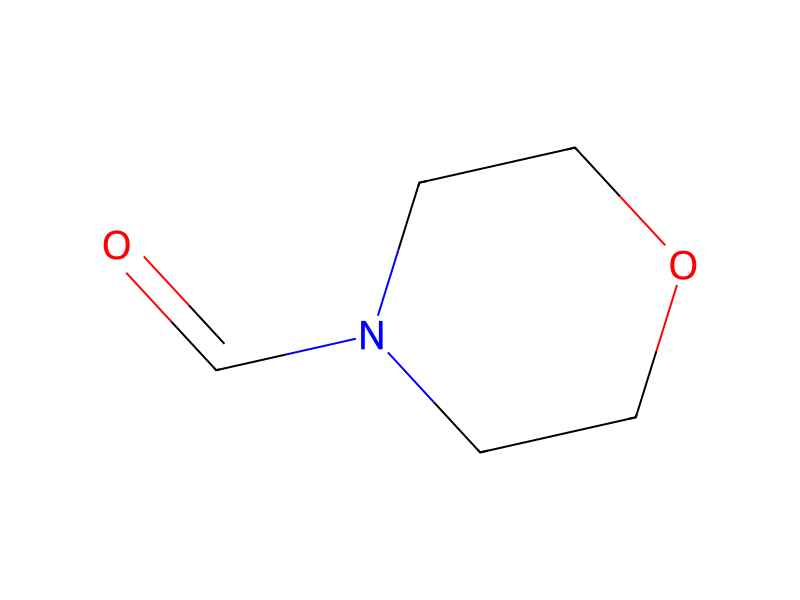
[CH2:1]([N:8]1[CH2:13][CH:12]([C:14]2[CH:19]=[CH:18][C:17](Br)=[CH:16][CH:15]=2)[O:11][CH2:10][CH2:9]1)[C:2]1[CH:7]=[CH:6][CH:5]=[CH:4][CH:3]=1.[Li]CCCC.[CH:26](N1CCOCC1)=[O:27]>C1COCC1>[CH2:1]([N:8]1[CH2:9][CH2:10][O:11][CH:12]([C:14]2[CH:19]=[CH:18][C:17]([CH:26]=[O:27])=[CH:16][CH:15]=2)[CH2:13]1)[C:2]1[CH:7]=[CH:6][CH:5]=[CH:4][CH:3]=1Participants
5
Reactant 3


Product 1

Reagents, catalysts & solvents 1

Procedure
To a solution of 4-benzyl-6-(4-bromo-phenyl)-morpholine (1.73 g; 5.21 mmol) in THF (25 mL) was added dropwise n-BuLi (2.08 mL; 2.50 mol/l; 5.21 mmol), at −78° C. The resulting mixture was stirred for one hour, and subsequently a solution of N-formylmorpholine (0.90 g; 7.81 mmol) in THF (5 mL) was added dropwise, at −78° C. The reaction was quenched by the addition of an 5% aqueous NaHCO3 solution, at −70° C. The resulting mixture was extracted with Et2O. The combined organic layers were dried (Na2SO4), filtered, and concentrated in vacuo. The residue was purified by column chromatography (SiO2, Et2O: hexanes 1:1) to afford 4-(4-benzyl-morpholin-2-yl)-benzaldehyde (1.21 g).
Workup
- customat −78° C
- customThe reaction was quenched by the addition of an 5% aqueous NaHCO3 solution, at −70° C
- extractionThe resulting mixture was extracted with Et2O
- dry with materialThe combined organic layers were dried (Na2SO4)
- filtrationfiltered
- concentrationconcentrated in vacuo
- customThe residue was purified by column chromatography (SiO2, Et2O: hexanes 1:1)
Sources & evidence
- ORD record
- ord-75b4a781b40a40c791246b471dd770a2
- Source dataset
- uspto-grants-2016_03
- Patent number
- US09273017B2
Reaction notes
Loading…