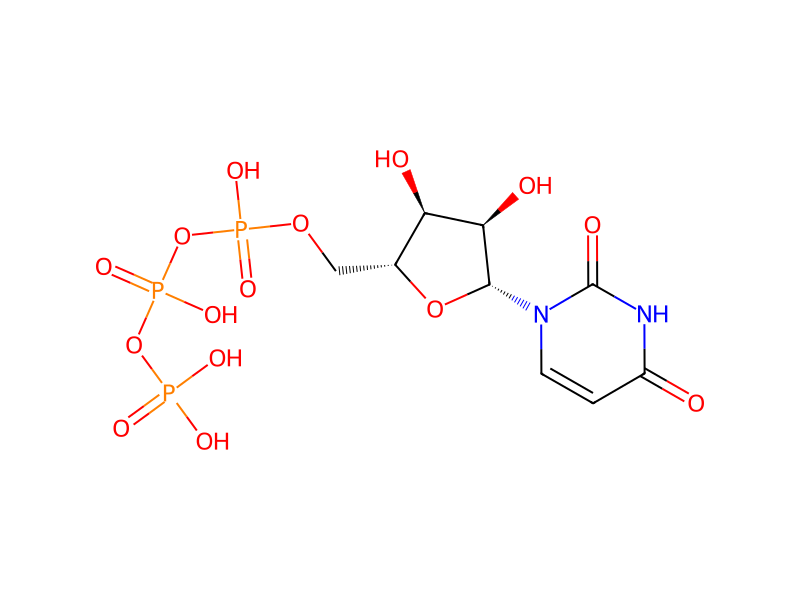
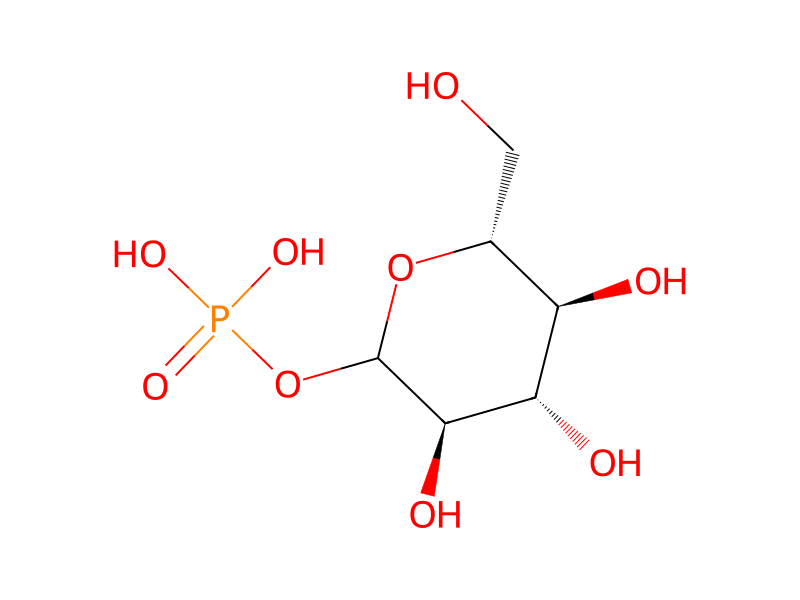
Uridine 5'-triphosphate → Udp-Glucose
Reaction equation
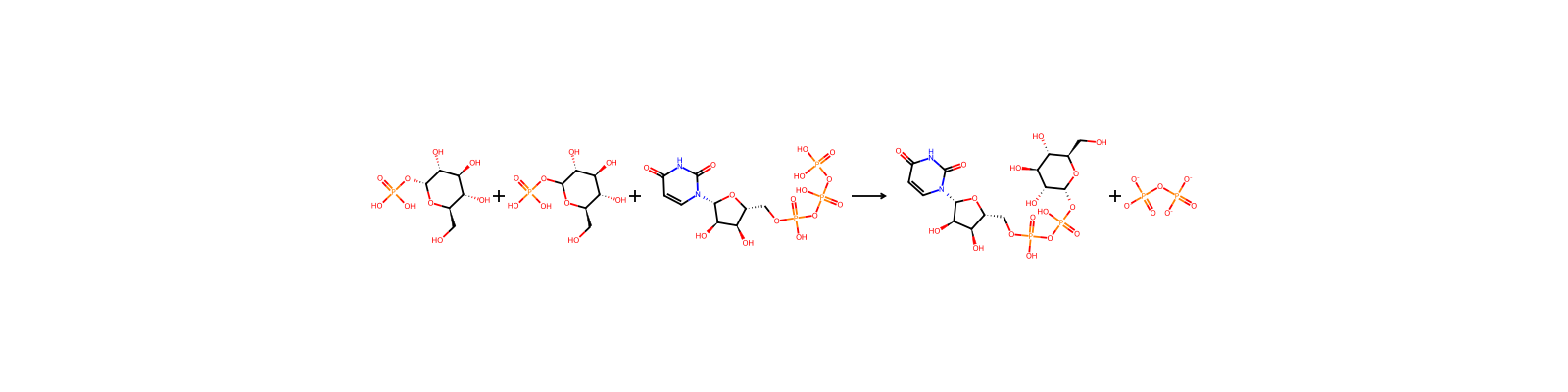
[CH2:1]([OH:16])[C@H:2]1[O:7][C@H:6]([O:8][P:9]([OH:12])([OH:11])=[O:10])[C@H:5]([OH:13])[C@@H:4]([OH:14])[C@@H:3]1[OH:15].C(O)[C@H]1OC(OP(O)(O)=O)[C@H](O)[C@@H](O)[C@@H]1O.[CH:33]1[C:39](=[O:40])[NH:38][C:36](=[O:37])[N:35]([C@@H:41]2[O:45][C@H:44]([CH2:46][O:47][P:48]([O:51][P:52]([O:55]P(O)(O)=O)([OH:54])=[O:53])([OH:50])=[O:49])[C@@H:43]([OH:60])[C@H:42]2[OH:61])[CH:34]=1>>[CH:33]1[C:39](=[O:40])[NH:38][C:36](=[O:37])[N:35]([C@@H:41]2[O:45][C@H:44]([CH2:46][O:47][P:48]([O:10][P:9]([O:8][C@H:6]3[O:7][C@H:2]([CH2:1][OH:16])[C@@H:3]([OH:15])[C@H:4]([OH:14])[C@H:5]3[OH:13])([OH:12])=[O:11])([OH:50])=[O:49])[C@@H:43]([OH:60])[C@H:42]2[OH:61])[CH:34]=1.[O-:49][P:48]([O:51][P:52]([O-:55])([O-:54])=[O:53])(=[O:47])[O-:50]Participants



Procedure
Acceptor specificity of the β1-4GlcA transferase activity of PmHS2 was also explored in one-pot three-enzyme system, as shown in FIG. 19. The first enzyme was a glucose-1-phosphate uridylyltransferase (GalU) which catalyzes the reversible conversion of Glc-1-P in the presence of UTP to produce UDP-Glc and inorganic pyrophosphate. The second enzyme was a UDP-glucose dehydrogenase (Ugd) for oxidation of 6-OH in glucose residue of UDP-Glc to form the UDP-glucuronic acid (UDP-GlcA) in the presence of its coenzyme NAD+. The third enzyme is PmHS2 transferring GlcA from UDP-GlcA for the formation of β1-4 linkage. As shown in FIG. 20, trisaccharides GlcAβ1-4GlcNAcα1-4GlcAβ2AAMe F20-1, GlcAβ1-4GlcNAc6N3α1-4GlcAβ2AAMe F20-3, GlcAβ1-4GlcNAcN3α1-4GlcAβ2AAMe F20-5 were synthesis by small-scale reaction and analyzed by HPLC method in 100%, 100% and 95% yields, respectively. The relative low yield (72%) for the formation of GlcAβ1-4GlcNTFAα1-4GlcAβ2AAMe F20-2 was due to the formation of byproduct GlcAβ1-4GlcNH2α1-4GlcAβ2AAMe in which the TFA group was removed. Disaccharide F18-4 with N-glycolyl group in C2 position of glucosamine residue acts as a good acceptor for PmHS2, leading to the formation of GlcAβ1-4GlcNGcα1-4GlcAβ2AAMe F20-4 in 75% yield, but the disaccharide F18-6 with N-glycolyl group in C6 position of GlcNAc was converted to trisaccharide GlcAβ1-4GlcNAc6NGcα1-4GlcAβ2AAMe F20-6 only in 14% yield. Taken together, these results indicate that the donor and acceptor substrate activity of PmHS2 can tolerate a limited number of modifications on C-2 and C-6 position of glucosamine residue.
Sources & evidence
- ORD record
- ord-05d69003f7c645bc8797dc3f0f266036
- Source dataset
- uspto-grants-2016_03
- Patent number
- US09290530B2
Reaction notes
Loading…