Potassium Carbonate → 5-Cyanomethoxy-2-methyl-1H-indole-3-carboxylic Acid Benzyl Ester
Reaction equation

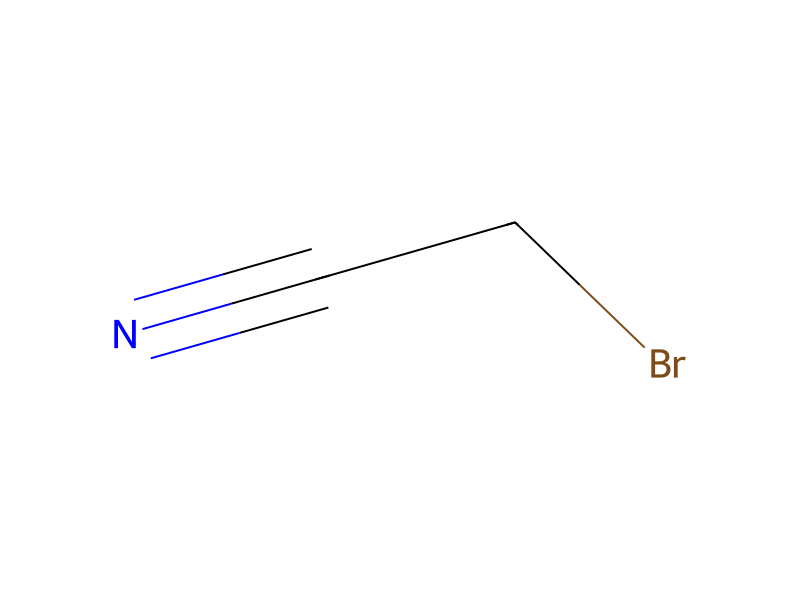
Br[CH2:2][C:3]#[N:4].[CH3:5][C:6]1[NH:7][C:8]2[C:13]([C:14]=1[C:15]([O:17][CH2:18][C:19]1[CH:24]=[CH:23][CH:22]=[CH:21][CH:20]=1)=[O:16])=[CH:12][C:11]([OH:25])=[CH:10][CH:9]=2.C(=O)([O-])[O-].[K+].[K+].CCCCCC.C(OCC)(=O)C>C(#N)C>[CH2:18]([O:17][C:15]([C:14]1[C:13]2[C:8](=[CH:9][CH:10]=[C:11]([O:25][CH2:2][C:3]#[N:4])[CH:12]=2)[NH:7][C:6]=1[CH3:5])=[O:16])[C:19]1[CH:20]=[CH:21][CH:22]=[CH:23][CH:24]=1Participants
6
Reactant 4



Product 1

Reagents, catalysts & solvents 1

Procedure
α-Bromoacetonitrile (0.209 mL, 3.00 mmol, 1.0 eq.) was dissolved in dry acetonitrile (30 mL) and treated with 2-methyl-3-benzyloxycarbonyl-5-hydroxyindole (0.972 g, 3.46 mmol, 1.2 eq.) and potassium carbonate (0.690 g, 5.0 mmol, 1.7 eq.). The reaction was heated to reflux and followed by TLC (hexane/ethyl acetate 3/2). After 6 hours, the reaction was quenched with water and extracted with ethyl acetate. The resulting organic layers were concentrated, taken up in methylene chloride, and filtered. The filtrate was evaporated to afford a brown solid: 0.490 g (51% yield).
Workup
- temperatureThe reaction was heated
- temperatureto reflux
- customthe reaction was quenched with water
- extractionextracted with ethyl acetate
- concentrationThe resulting organic layers were concentrated
- filtrationfiltered
- customThe filtrate was evaporated
- customto afford a brown solid
Sources & evidence
- ORD record
- ord-2bdbdd4182d74e7489fd491c0af4d5ef
- Source dataset
- uspto-grants-2005_10
- Patent number
- US06951848B2
Reaction notes
Loading…