Dimethyl Disulfide → 3-Bromo-5-(methylsulfonyl)pyridine
Reaction equation

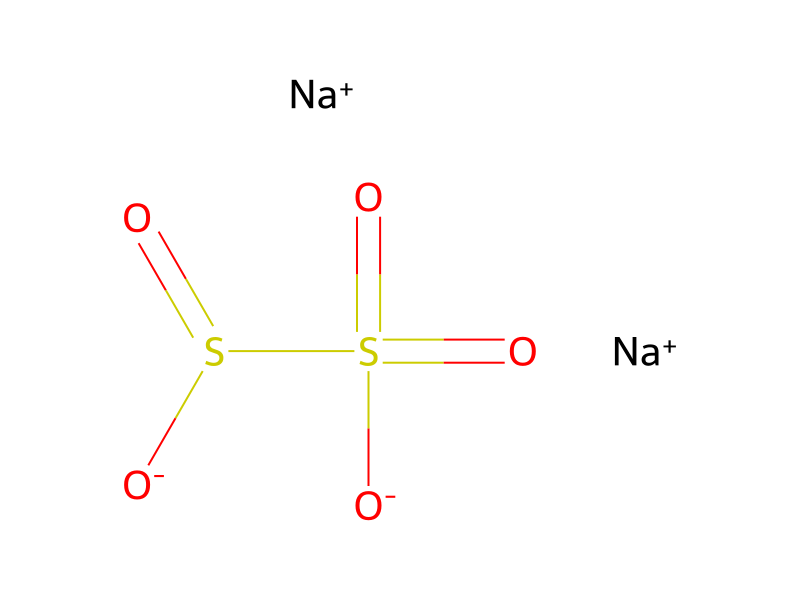
[Br:1][C:2]1[CH:3]=[N:4][CH:5]=[C:6](Br)[CH:7]=1.C([Li])CCC.[CH3:14]SSC.[S:18](S([O-])=O)([O-:21])(=O)=[O:19].[Na+].[Na+]>C(OCC)C>[Br:1][C:2]1[CH:3]=[N:4][CH:5]=[C:6]([S:18]([CH3:14])(=[O:21])=[O:19])[CH:7]=1Participants
Reactant 4



Product 1

Reagents, catalysts & solvents 1

Procedure
To 3,5-dibromopyridine (2.96 g, 12.5 mmol) in diethyl ether (70 ml) at −78° C. was added n-butyllithium 1.6M in hexanes (8.6 ml, 13.7 mmol) and the resulting mixture was stirred in the cold for 3 hours. Dimethyl disulfide (1.12 ml, 12.5 mmol) was added and the mixture was warmed to room temperature, then partitioned between ether and water. To the crude product from evaporation of the organic phase was added tetrahydrofuran (80 ml), methanol (20 ml), oxone (17 g) and enough saturated aqueous sodium bicarbonate to afford a slightly basic medium. After stirring for 4 hours at room temperature, an excess of 1M aqueous sodium metabisulfite was added, the organic solvents were evaporated, and the residue was partitioned between ethyl acetate and water. The crude product from the organic phase was stirred in a small volume of ethyl acetate and filtered to afford the 3-Bromo-5-methylsulfonylpyridine compound as a solid.
Workup
- custompartitioned between ether and water
- customTo the crude product from evaporation of the organic phase
- additionwas added tetrahydrofuran (80 ml), methanol (20 ml), oxone (17 g) and enough saturated aqueous sodium bicarbonate
- customto afford a slightly basic medium
- stirringAfter stirring for 4 hours at room temperature
- customthe organic solvents were evaporated
- customthe residue was partitioned between ethyl acetate and water
- stirringThe crude product from the organic phase was stirred in a small volume of ethyl acetate
- filtrationfiltered
Sources & evidence
- ORD record
- ord-136496eedf6a445eafd100f1e53fb1be
- Source dataset
- uspto-grants-2007_12
- Patent number
- US07312334B2
Reaction notes
Loading…