Sodium Carbonate → 2-(4-Pyridyl)butyronitrile
Reaction equation

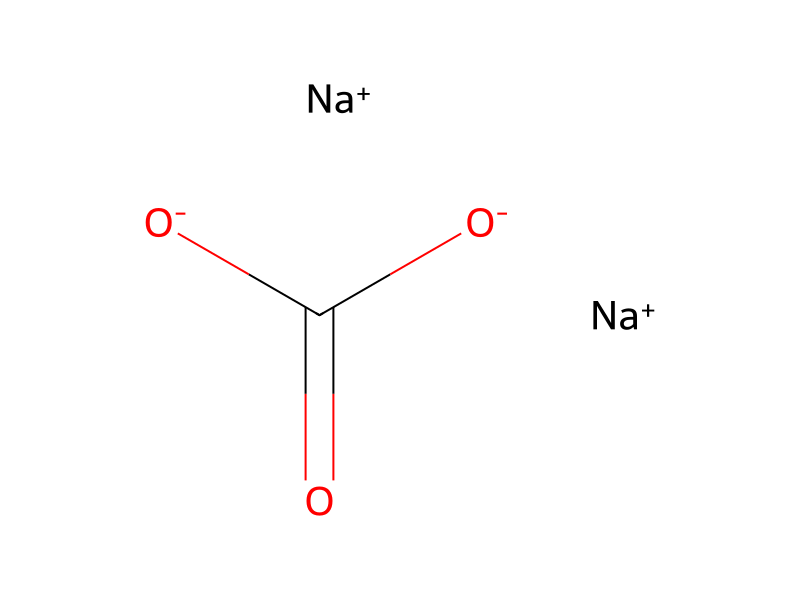
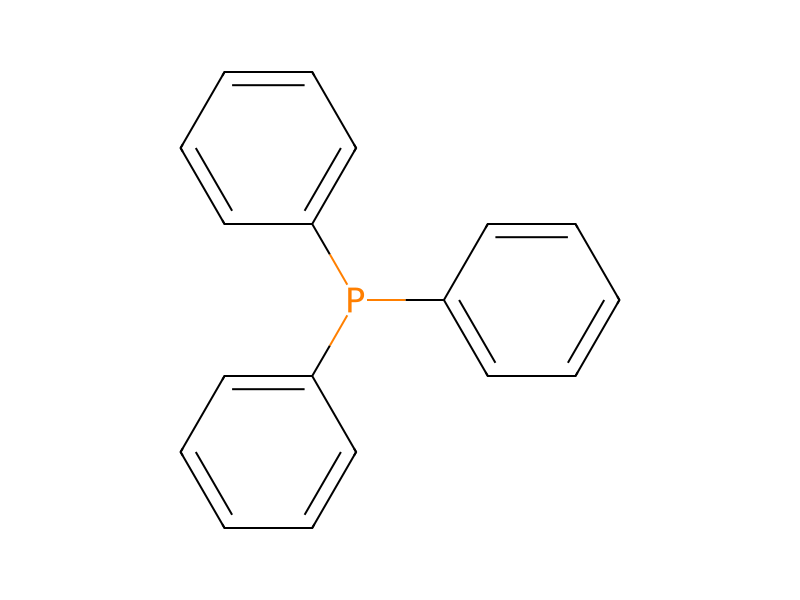
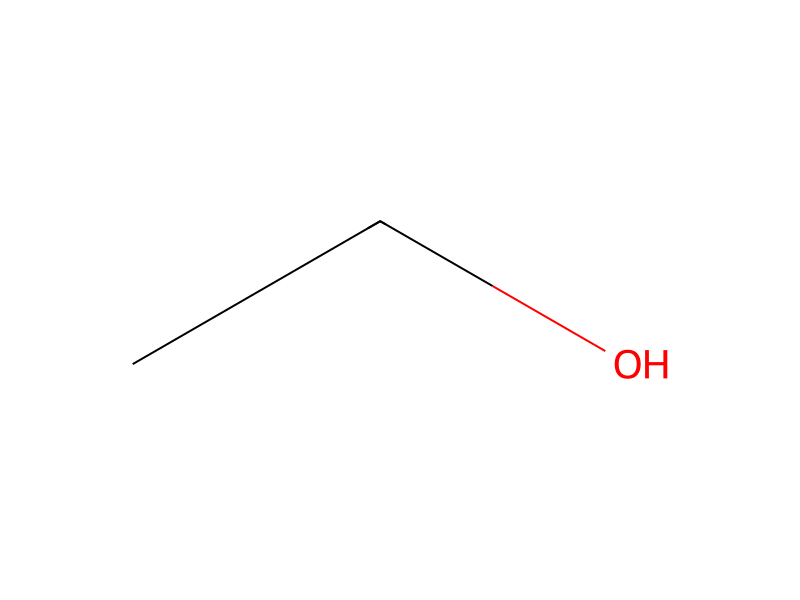
[N:1]1[CH:6]=[CH:5][C:4]([CH2:7][C:8]#[N:9])=[CH:3][CH:2]=1.[C:10]1(P(C2C=CC=CC=2)C2C=CC=CC=2)C=CC=C[CH:11]=1.C(=O)([O-])[O-].[Na+].[Na+]>C(O)C.O.O.O.[Rh](Cl)(Cl)Cl>[N:1]1[CH:6]=[CH:5][C:4]([CH:7]([CH2:10][CH3:11])[C:8]#[N:9])=[CH:3][CH:2]=1Participants


Procedure
4-Pyridylacetonitrile (5.6 g, 47.46 mmol) dissolved in ethanol (70 ml) was heated under reflux with rhodium chloride trihydrate (624 mg, 2.37 mmol), triphenylphosphine (3.11 g, 11.87 mmol) and anhydrous sodium carbonate (5.534 g, 52.2 mmol) for 20 hours, filtered and concentrated. Elution from a column (4.5, 35 cm) of silica gel (Merck 7734) with CHCl3 afforded a pure fraction of 2-(4-pyridyl)butyronitrile (5.44 g, 78.5% yield). This was taken up in t-butanol (15 ml) and stirred with `Triton B` (0.2 ml) and acrylonitrile (2.5 ml, 58 mmol) for 2 hours. Excess solvent was evaporated and the residue was diluted with water (200 ml). Extraction from CHCl3 (2×100 ml) afforded impure 2-ethyl-2-(4-pyridyl)butyronitrile which was heated under reflux with a mixture of glacial acetic acid (30 ml) and concentrated sulphuric acid (6 ml) for 3 hours and poured onto ice water. Sodium hydrogen carbonate was added to neutralise the solution, to pH 7-7.5 and the solution was then extracted with CHCl3. Column chromatography (3×20 cm, silica gel, CHCl3 :MeOH 19:1 v/v) of the crude product afforded a pure fraction of the title compound, (3.29 g), in a 40.2% yield based on 2-(4-pyridyl)butyronitrile. The title compound was crystallised from toluene, m.p. 138-139° (corrected).
Workup
- temperaturewas heated
- filtrationfiltered
- concentrationconcentrated
- washElution from a column (4.5, 35 cm) of silica gel (Merck 7734) with CHCl3
Sources & evidence
- ORD record
- ord-f1a06049ded5464eb6f18b99f5c87a93
- Source dataset
- uspto-grants-1987_05
- Patent number
- US04668689
Reaction notes
Loading…