

基本信息
- 标准SMILES
O=C1CCCN1- InChIKey
HNJBEVLQSNELDL-UHFFFAOYSA-N- 分子式
- C4H7NO
- 平均分子量
- 85.1 g/mol
- 单同位素质量
- 85.05276384
概述
Pyrrolidin-2-one is the simplest member of the class of pyrrolidin-2-ones, consisting of pyrrolidine in which the hydrogens at position 2 are replaced by an oxo group. The lactam arising by the formal intramolecular condensation of the amino and carboxy groups of gamma-aminobutyric acid (GABA). It has a role as a metabolite and a polar solvent.
名称与标识
- 首选名称
- 2-Pyrrolidone
- IUPAC
- pyrrolidin-2-one
- 中文名
- 吡咯烷酮盐酸盐
- 英文名
- Pyrrolidone hydrotribromide
- 分子式
- C4H8Br3NO
- 分子量
- 325.83
名称与别名
2-Pyrrolidinonepyrrolidin-2-one616-45-52-PYRROLIDONEPyrrolidoneButyrolactam2-Oxopyrrolidine2-Ketopyrrolidine2-Pyrolgamma-ButyrolactamPyrrolidonalpha-Pyrrolidinone
展开更多名称
吡咯烷酮盐酸盐吡咯烷酮三溴化氢吡咯烷酮三溴化氢盐吡咯烷酮氢化三溴化物三吡咯烷酮三溴化氢盐2-吡咯烷酮三溴化氢盐2-吡咯烷二酮氢三溴化物2-吡咯烷酮 氢三溴化物2-吡咯烷酮氢三溴化物(3:1)2-吡咯烷二酮氢三溴化物,97%PHTSKL178YRROLIDONE HYDROTRIBROMIDEPyrrolidone hydrotribromidePYRROLIDINONE HYDROTRIBROMIDETripyrrolidone HydrotribromidePHT~Pyrrolidone hydrotribromide2-PYRROLIDINONE HYDROTRIBROMIDEPyrrolidone hydrotribromide(3:1)Pyrrolidone hydrotribromide ,97%
4-Aminobutyric acid lactamgamma-Aminobutyric lactamgamma-Aminobutyrolactamalpha-Pyrrolidonegamma-Aminobutyric acid lactamButanoic acid, 4-amino-, lactamDTXSID8027246KKL5D39EOL
数据库标识
- CAS
22580-55-8、616-45-5- PubChem CID
- 12025
- DTXSID
DTXSID8027246- ChEMBL
CHEMBL276849- ChEBI
CHEBI:36592- UNII
- KKL5D39EOL
- EC Number
- 210-483-1
- Nikkaji
- J1.663B
性质
结构计算性质
- XLogP
- -0.8
- 极性表面积
- 29.1 Ų
- 氢键供体
- 1
- 氢键受体
- 1
- 可旋转键
- 0
- 重原子
- 6
- 形式电荷
- 0
- 复杂度
- 69.9
实验与物化性质
Chemical ClassesNitrogen Compounds -> Other Nitrogen Compounds
SpringerMaterials PropertiesBoiling point
LogP
log Kow= -0.85
-0.85
Density
1.116 @ 25 °C
Relative density (water = 1): 1.1
1.116 @25 °C
Viscosity13.3 CP @ 25 °C
Color/Form
CRYSTALS FROM COLD PETROLEUM ETHER
Light yellow liquid
Solubility
Very sol in alcohol, ether, benzene, chloroform, carbon disulfide
Infinitely soluble in water
1000 mg/mL at 20 °C
Solubility in water: good
CorrosivityNon-corrosive
Flash Point
265 °F (129 °C) (open cup)
129 °C o.c.
Animal DrugsPharmaceuticals -> UK Veterinary Medicines Directorate List
Boiling Point
245 °C @ 760 mm Hg; 113-114 @ 9.2 mm Hg; 76 °C @ 0.2 mm Hg
245 °C
245 °C @760 [mm Hg]
DecompositionWHEN HEATED TO DECOMPOSITION IT EMITS TOXIC FUMES OF NITROXIDES.
物理化学性质
- 熔点
- 88 · 88-90 °C(lit.)
- 储存条件
- 2 · 2-8°C
- 形态
- Crystalline Powder and Chunks
- 颜色
- Red-brown
- 水溶解性
- Very sol in alcohol, ether, benzene, chloroform, carbon disulfide. Infinitely soluble in water.
- 敏感性
- Moisture Sensitive
- InChI
- InChI=1S/C4H7NO.Br3H/c6-4-2-1-3-5-4;1-3-2/h1-3H2,(H,5,6);3H
- InChIKey
- GZGCJWMZGQDMLC-UHFFFAOYSA-N
- SMILES
- O=C1NCCC1.Br(Br)Br
安全与法规
GHS分类
GHS Classification
This chemical does not meet GHS hazard criteria for 21.1% (116 of 551) of reports.
Danger
H315 (17.4%): Causes skin irritation [Warning Skin corrosion/irritation]
P203, P261, P264, P264+P265, P271, P280, P302+P352, P304+P340, P305+P351+P338, P305+P354+P338, P317, P318, P319, P321, P332+P317, P337+P317, P362+P364, P403+P233, P405, and P501 (click each P-code to see the statement)
Aggregated GHS information provided per 551 reports by companies from 30 notifications to the ECHA C&L Inventory. Each notification may be associated with multiple companies.
Danger
危害信息
Regulatory Information
Chemical: 2-Pyrrolidinone
2-Pyrrolidinone is listed on the EPA's Chemical Data Reporting (CDR) system. Manufacturers and importers of 2-Pyrrolidinone are required to report information about their production and use of this chemical to the EPA under the Toxic Substances Control Act (TSCA). (40 eCFR Part 711)
Status: Active Update: 10-10-2022 https://echa.europa.eu/registration-dossier/-/registered-dossier/14900
2-Pyrrolidinone: Does not have an individual approval but may be used under an appropriate group standard
Other Safety InformationIMAP assessments - 2-Pyrrolidinone: Environment tier I assessment
Fire HazardsCombustible. Gives off irritating or toxic fumes (or gases) in a fire.
Fire PotentialSLIGHT, WHEN EXPOSED TO HEAT OR FLAME. ...CAN REACT WITH OXIDIZING MATERIALS.
Hazards SummaryA skin, eye, and respiratory tract irritant; [ICSC] An irritant; [MSDSonline] See N-Methyl-2-pyrrolidone.
Chemical DangersDecomposes on heating and on burning. This produces toxic fumes including nitrogen oxides.
NFPA Hazard Classification
2 - Materials that, under emergency conditions, can cause temporary incapacitation or residual injury.
1 - Materials that must be preheated before ignition can occur. Materials require considerable preheating, under all ambient temperature conditions, before ignition and combustion can occur.
0 - Materials that in themselves are normally stable, even under fire conditions.
Hazard Classes and Categories
Skin Irrit. 2 (17.4%)
Serious eye damage/eye irritation - Category 2
Critical Temperature and PressureCritical Temperature: 802 K; Critical Pressure: 6.17X10+6 Pa
安全与防护
Fire FightingUse water spray, powder, alcohol-resistant foam, carbon dioxide.
First Aid Measures
Remove contaminated clothes. Rinse skin with plenty of water or shower.
First rinse with plenty of water for several minutes (remove contact lenses if easily possible), then refer for medical attention.
Safe StorageVentilation along the floor.
Fire Fighting ProceduresALCOHOL FOAM, CO2, DRY CHEMICAL.
Disposal Methods
SRP: At the time of review, criteria for land treatment or burial (sanitary landfill) disposal practices are subject to significant revision. Prior to implementing land disposal of waste residue (including waste sludge), consult with environmental regulatory agencies for guidance on acceptable disposal practices.
Spillage DisposalCollect leaking and spilled liquid in sealable containers as far as possible. Absorb remaining liquid in sand or inert absorbent. Then store and dispose of according to local regulations.
Eye PreventionWear safety spectacles.
Fire PreventionNO open flames.
Inhalation RiskA harmful contamination of the air will not or will only very slowly be reached on evaporation of this substance at 20 °C; on spraying or dispersing, however, much faster.
Skin PreventionProtective gloves.
Ingestion PreventionDo not eat, drink, or smoke during work.
Effects of Short Term ExposureThe substance is irritating to the skin, eyes and respiratory tract.
毒理信息
Environmental Fate
TERRESTRIAL FATE: Based on a classification scheme(1), an estimated Koc value of 17(SRC), determined from a structure estimation method(2), indicates that 2-pyrrolidone is expected to have very high mobility in soil(SRC). Volatilization of 2-pyrrolidone from moist soil surfaces is not expected to be an important fate process(SRC) given an estimated Henry's Law constant of 1.06X10⁻⁹ atm-cu m/mole(3). 2-Pyrrolidone is not expected to volatilize from dry soil surfaces(SRC) based upon a vapor pressure of 9.49X10⁻³ mm Hg(4).
AQUATIC FATE: Based on a classification scheme(1), an estimated Koc value of 17(SRC), determined from a structure estimation method(2), indicates that 2-pyrrolidone is not expected to adsorb to suspended solids and sediment in water(SRC). Volatilization from water surfaces is not expected(3) based upon an estimated Henry's Law constant of 1.06X10⁻⁹ atm-cu m/mole(4,SRC). According to a classification scheme(5), an estimated BCF of 3(3,SRC), from a log Kow of -0.85(6), suggests the potential for bioconcentration in aquatic organisms is low.
ATMOSPHERIC FATE: According to a model of gas/particle partitioning of semivolatile organic compounds in the atmosphere(1), 2-pyrrolidone, which has a vapor pressure of 9.49X10⁻³ mm Hg at 25 °C(2), is expected to exist solely as a vapor in the ambient atmosphere. Vapor-phase 2-pyrrolidone is degraded in the atmosphere by reaction with photochemically-produced hydroxyl radicals(SRC); the half-life for this reaction in air is estimated to be 28 hrs(SRC) calculated from its rate constant of 1.35X10⁻¹¹ cu cm/molecule sec(SRC), determined using a structure estimation method(3).
Exposure RoutesThe substance can be absorbed into the body through the skin.
Signs and Symptoms
Redness.
Pain. Redness. Blurred vision.
Soil Adsorption/Mobility
Using a structure estimation method based on molecular connectivity indices(1), the Koc for 2-pyrrolidone can be estimated to be about 17(SRC). According to a classification scheme(2), this estimated Koc value suggests that 2-pyrrolidone is expected to have very high mobility in soil.
Fish/Seafood Concentrations
Samples of adult lake trout or walleye collected in 1977 from each of the Great Lakes and Lake St. Clair with each sampling site consisting of 20 large fish composited into one sample; 2-pyrrolidone was detected in trout from Lake Michigan, concentration not specified(1).
Artificial Pollution Sources2-Pyrrolidone's production and use as a precursor to N-vinyl-2-pyrrolidone(1) may result in its release to the environment through various waste streams(SRC).
Environmental BiodegradationThrough co-metabolism, 2-pyrrolidone was reported to break down to glutamic acid under aerobic conditions by Bacillus megaterium(1).
Environmental Bioconcentration
An estimated BCF of 3 was calculated for 2-pyrrolidone(SRC), using a log Kow of -0.85(1) and a regression-derived equation(2). According to a classification scheme(3), this BCF suggests the potential for bioconcentration in aquatic organisms is low.
Volatilization from Water/Soil
The Henry's Law constant for 2-pyrrolidone is estimated as 1.06X10⁻⁹ atm-cu m/mole(SRC) from its vapor pressure, 9.49X10⁻³ mm Hg(1), and miscibility in water(2). This Henry's Law constant indicates that 2-pyrrolidone is expected to be essentially nonvolatile from water surfaces(3). 2-Pyrrolidone's estimated Henry's Law constant(1,2) indicates that volatilization from moist soil surfaces will not occur(SRC). 2-Pyrrolidone is not expected to volatilize from dry soil surfaces(SRC) based upon a vapor pressure of 9.49X10⁻³ mm Hg(1).
Non-Human Toxicity Excerpts
PYRROLIDONE ADMINISTERED BY GASTRIC GAVAGE TO RATS SHOWED LD100, LD50, & MAXIMUM TOLERABLE DOSES OF 10, 7.3 & 4 G/KG, RESPECTIVELY. TOPICAL APPLICATION TO THE EYES OF RABBITS CAUSED IRREVERSIBLE CLOUDING OF THE CORNEA.
NO EPILEPTOID ACTIVITY WAS OBTAINED WITH ADMIN OF 4-AMINOBUTYRIC ACID LACTAM (18 MMOL/KG, IP) IN SPRAGUE-DAWLEY RATS. THE EEG WAS DESYNCHRONIZED.
THE EFFECTIVENESS OF A VARIETY OF AMIDE-CONTAINING COMPOUNDS WERE STUDIED TO DETERMINE THE STRUCTURAL FEATURES REQUIRED FOR INDUCTION OF LEUKEMIA CELL DIFFERENTIATION. SUBSTITUED AMIDES WERE EFFECTIVE INDUCERS OF THE DIFFERENTIATION OF MURINE ERYTHROLEUKEMIA (FRIEND) CELLS, AS JUDGED BY THE CELLULAR ACCUMULATION OF HB. ERYTHROID DIFFERENTIATION WAS ASSESSED BY MEASURING THE PERCENTAGE OF BENZIDINE-POSITIVE (IE, HEMOGLOBIN-CONTAINING) CELLS. 2-PYRROLIDONE EXERTED A HIGH INDUCTION (89% BENZIDINE-POSITIVE CELLS) AT A CONCN OF 100 MMOL AFTER 6 DAYS OF CONTINUOUS EXPOSURE.
THE EFFECT OF VARIOUS POLAR ORGANIC COMPOUNDS ON THE OVERALL TRANSCRIPTION OF CHROMATIN FROM FRIEND-VIRUS-INFESTED ERYTHROLEUKEMIA CELLS WITH E COLI RNA POLYMERASE WAS INVESTIGATED. ALL OF THE COMPOUNDS, INCLUDING 2-PYRROLIDONE, WERE FOUND TO STIMULATE TRANSCRIPTION & INDUCE HEMOGLOBIN SYNTHESIS IN FRIEND CELLS. THE OVERALL TRANSCRIPTION INCREASED BY A FACTOR OF 1.3 AT A 230 MMOL CONCN OF 2-PYRROLIDONE.
For more Non-Human Toxicity Excerpts (Complete) data for 2-PYRROLIDONE (11 total), please visit the HSDB record page.
Environmental Abiotic Degradation
The rate constant for the vapor-phase reaction of 2-pyrrolidone with photochemically-produced hydroxyl radicals has been estimated as 1.35X10⁻¹¹ cu cm/molecule-sec at 25 °C(SRC) using a structure estimation method(1). This corresponds to an atmospheric half-life of about 1 day at an atmospheric concentration of 5X10+5 hydroxyl radicals per cu cm(1). The rate constant for the reaction of 2-pyrrolidone with the hydroxyl radical in aqueous solution is 2.2X10+9 l/mol sec(2) with a half life of 1 year(SRC) assuming a hydroxyl radical concentration of 1X10-17 mol/l(3). 2-Pyrrolidone is not expected to directly photolyze due to the lack of absorption in the environmental UV spectrum.
Probable Routes of Human Exposure
NIOSH (NOES Survey 1981-1983) has statistically estimated that 1,215 workers (259 of these are female) are potentially exposed to 2-pyrrolidone in the US(1). Occupational exposure to 2-pyrrolidone may occur through inhalation and dermal contact with this compound at workplaces where pyrrolidone is produced or used(SRC). The general population may be exposed to pyrrolidone via ingestion of fish(2) and drinking water(3).
安全数据
- wgk
- 3
- 存储类别
- 11 - Combustible Solids
- 安全说明
- 26-39
- 海关编码
- 29337900
- 危险品标志
- Xi
- 危险性类别
- Eye Dam. 1Skin Irrit. 2STOT SE 3
- 危险类别码
- 37/38-41
化学与工业
药理信息
Mechanism of Action
THE MECHANISMS OF SKIN PENETRATION ENHANCERS WERE INVESTIGATED BY MEASURING STEADY-STATE FLUXES IN VITRO FOR MODEL COMPOUNDS, METHANOL, OCTANOL & CAFFEINE. 2-PYRROLIDONE ENHANCED THEIR PERMEATION THROUGH THE POLAR ROUTE OF THE SKIN BY INCREASING THE DIFFUSIVITY & DECREASED PASSAGE THROUGH THE NONPOLAR ROUTE BY DECREASING DIFFUSIVITY & PARTITIONING.
TRYPSINIZED, ABDOMINAL STRATUM CORNEUM ABSORBED 1-4 TIMES ITS WT OF PRIMARY ALCOHOLIC VEHICLE FROM SOLUTIONS OF 0-80% WT 2-PYRROLIDONE IN WATER; ABOUT 2 SEPARATION PARTITION COEFFICIENTS OPERATED. CALCULATIONS OF HM VALUES FOR THE PARTITIONS INDICATED THAT 2-PYRROLIDONE IS PROBABLY NOT A PENETRATION ACCELERANT FOR C1-C8 PRIMARY ALCOHOLS.
FOR THE SIMPLE NONELECTROLYTES TESTED, & UNDER IDEALIZED IN VITRO STEADY STATE CONDITIONS, 2-PYRROLIDONE ACTED AS A MILD ACCELERANT FOR POLAR MATERIAL (METHANOL) DIFFUSION THROUGH HUMAN STRATUM CORNEUM, BUT INHIBITED NONPOLAR, LIPOPHILIC (OCTANOL) TRANSPORT.
Metabolism/Metabolites
THE URINARY EXCRETION OF RADIOACTIVE METABOLITES FOLLOWING THE IP ADMIN OF A RANGE OF DOSES OF 2,5-(14)C-2-LABELED N-NITROSOPYRROLIDINE TO RATS WAS EXAMINED. PYRROLIN-2-ONE WAS ONE OF SEVERAL METABOLITES IDENTIFIED.
PYRROLIDONE WAS IDENTIFIED AS A URINARY METABOLITE OF METHADONE.
AN ENZYME SYSTEM RESIDING IN THE SOL FRACTION OF RABBIT LIVER CATALYZES THE CONVERSION OF DELTA 1-PYRROLINE TO GAMMA-AMINOBUTYRIC ACID & ITS LACTAM, 2-PYRROLIDONE.
2-PYRROLIDONE WAS IDENTIFIED AS A METABOLITE OF (14)C-PUTRESCINE IN SLICED RAT LIVER IN VITRO. IT IS ALSO SYNTHESIZED FROM PUTRESCINE BY THE SPLEEN & LUNG, BUT NOT BY KIDNEY, BRAIN, HEART OR MUSCLE.
For more Metabolism/Metabolites (Complete) data for 2-PYRROLIDONE (6 total), please visit the HSDB record page.
Absorption, Distribution and Excretion
The percutaneous absorption has been investigated in rats of a mixture (3:2, w/w) of N-methyl-2-pyrrolidinone and 2-pyrrolidinone, a combination intended for use as a vehicle in the formulation of an antimycotic drug to enhance skin penetration on dermal application, following co-administration of the two (14)C-radiolabelled compounds by the dermal and oral routes. Radioactivity was excreted predominantly in the urine after either route of administration, and comparison of the respective excretion profiles indicated that about three-quarters of the applied dose was absorbed through the skin. Plasma concentrations of each parent compound, as determined by radio-HPLC, reached peak values at 2 hr after oral dosing, and remained relatively uniform during 1-6 hr after application to the skin, suggesting constant percutaneous absorption during this period. N-Methyl-2-pyrrolidinone appeared to be absorbed through the skin more extensively and at a slightly faster rate than 2-pyrrolidinone; total percutaneous absorption tended to be more extensive in female than in male rats. Together, these two 14C-compounds accounted for most of the plasma radioactivity up to 6-8 hr post-administration. However, by 12 hr (when plasma levels were relatively low), most of the radioactivity was associated with unknown polar metabolites. In view of the extensive percutaneous absorption and little first-pass metabolism of the two pyrrolidinones, the oral route was considered to represent a valid alternative to the dermal route for the assessment of the systemic toxicity of the two compounds.
Tissue LocationsBrain
Cellular LocationsCytoplasm
用途与制造
Uses
Used as an intermediate in the manufacture of polyvinylpyrrolidone and polypyrrolidone (a polymer, formed in presence of alkaline catalysts); as high-boiling solvent in petroleum processing and acrylonitrile manufacture; in specialty printers inks; as an industrial solvent for polymers, chlordane, DDT, sorbitol, glycerol, iodine, and sugars; as plasticizer and coalescing agent for acrylic-styrene emulsion-type floor polishes; as a chemical intermediate for n-vinyl-2-pyrrolidone and nylon 4 fibers; as a monomer for copolymers with vinyl compounds; as constituent of pharmaceutical preparations; for polyhydroxylic alcohols and ethyl acetate; [HSDB]
Intermediate in mfr of polyvinylpyrrolidone & polypyrrolidone (polymer, formed in presence of alkaline catalysts); used as high-boiling solvent in petroleum processing, acrylonitrile mfr; in specialty printers inks; industrial solvent for polymers, Chlordane, DDT, sorbitol, glycerol, iodine, sugars; as plasticizer & coalescing agent for acrylic-styrene emulsion-type floor polishes
CHEM INT FOR N-VINYL-2-PYRROLIDONE; CHEM INT FOR NYLON 4 FIBERS; SOLVENT; MONOMER FOR COPOLYMERS WITH VINYL COMPOUNDS
USED AS CONSTITUENT OF PHARMACEUTICAL PREPARATIONS
Polyhydroxylic alcohols and ethyl acetate.
U.S. Imports
(1972) 6.22X10+7 GRAMS
(1975) 3.23X10+7 GRAMS
U.S. Production
2023: 40,000,000 - <55,000,000 lb
(1972) 7.7X10+9 GRAMS
Consumption PatternsOver 95% of the 2-pyrrolidone produced is processed into N-vinyl-2-pyrrolidone.
Consumer UsesOther
Industry UsesOther
Methods of Manufacturing
REACTION OF GAMMA-BUTYROLACTONE AND AMMONIA
From acetylene & formaldehyde by high-pressure synth.
Prepd on large scale from butyrolactone by Reppe process.
Household ProductsInformation on 24 consumer products that contain 2-Pyrrolidone in the following categories is provided:
General Manufacturing Information
Printing Ink Manufacturing
2-Pyrrolidinone: ACTIVE
上下游产品信息
上游原料
试剂价格
- XW022258055803 · 100G
- 2-吡咯烷酮氢三溴化物 — 284元
- XW022258055802 · 25G
- 2-吡咯烷酮氢三溴化物 — 84元
供应商50 家
上海麦克林生化科技股份有限公司021-50706066 15221275939 · [email protected]
河南赢创生物科技有限公司16650615803 · [email protected]
Shanghai Yingrui Biopharma Co.,Ltd21-33585366 · [email protected]
Dayang Chem (Hangzhou) Co.,Ltd.+86-0571-88938639 17705817739 · [email protected]
毕佳索(上海毕得医药科技股份有限公司)400-6005915 · [email protected]
湖南瑞威尔生物科技有限公司15608648206 13297919155 · [email protected]
上海迈瑞尔生化科技有限公司4006356688 18621169109 · [email protected]
北京索莱宝科技有限公司010-50973130 17801761073 · [email protected]
阿法埃莎(中国)化学有限公司400-6106006 · [email protected]
安耐吉化学&3A(安徽泽升科技股份有限公司)400-0056266 · [email protected]
常州科化生物科技有限公司0519-68985668 13685222090 · [email protected]
南京诺利斯医药科技有限公司13901585132 · [email protected]
嘉兴市艾森化工有限公司0573-85285100 18627885956 · [email protected]
山东西亚化学有限公司13355009207 13355009207 · [email protected]
天津希恩思生化科技有限公司400 638 7771 · [email protected]
赛默飞世尔科技(中国)有限公司800-810-5118 · [email protected]
南京诺利斯医药科技有限公司13901585132 · [email protected]
PT CHEM GROUP LIMITED+86-85511178; +86-85511178 · [email protected]
上海毕得医药科技股份有限公司400-164-7117 18317119277 · [email protected]
南京恰风和医药科技有限公司025-57018978 18251899859 · [email protected]
广州市慈铭生物科技有限公司020-38082199,29065168,38082986,29878298,29866629,4000192398
Sigma-Aldrich西格玛奥德里奇(上海)贸易有限公司021-61415566 800-8193336 · [email protected]
湖北源梦生物科技有限公司027-68897569 18120462897 · [email protected]
南兴化工(江苏)有限公司0512-66387035 18662433356 · [email protected]
HANGZHOU LEAP CHEM CO., LTD.+86-571-87711850 +86-15355479329 · [email protected]
上海珈得尔化学技术有限公司021-4007787-550 400-7787-550 · [email protected]
上海阿拉丁生化科技股份有限公司6206333 13167063860 · [email protected]
陕西缔都医药化工有限公司029-029-81120477 17792793610 · [email protected]
湖北源梦生物科技有限公司027-68897569 18120462897 · [email protected]
苏州科源医药科技有限公司13656237714 13656237714 · [email protected]
上海思言生物科技有限公司021-50908862,442785678,326799392 18721037013 · [email protected]
上海源叶生物科技有限公司13636370518 · [email protected]
上海颖心实验室设备有限公司021-021-59178156 15300768757 · [email protected]
山东小野化学股份有限公司0539-6362799 20)
济南凯风生物科技有限公司15153166971 · [email protected]
上海万千化工有限公司18796480002 18796480002 · [email protected]
烟台博运生物科技有限公司13793517650 13793517650 · [email protected]
Shanghai Acmec Biochemical Technology Co., Ltd.+86-18621343501 · [email protected]
杭州洁汉化工有限公司+86-571-86217390; +8618058761490 · [email protected]
Capot Chemical Co.,Ltd.+86-(0)57185586718 +86-13336195806 · [email protected]
江苏艾康生物医药研发有限公司025-58851090 13913916777 · [email protected]
天津希恩思生化科技有限公司400-6387771-6039 18920764717 · [email protected]
career henan chemical co+86-0371-86658258 · [email protected]
ATK CHEMICAL COMPANY LIMITED+undefined-21-51877795 · [email protected]
郑州艾克姆化工有限公司037163312495 13303845143 · [email protected]
上海吉至生化科技有限公司021-4009004166/18616739031 18616739031 · [email protected]
Aladdin Scientific[email protected]
常州新星联生物科技有限公司+86-0519-85551759 · [email protected]
上海皓鸿生物医药科技有限公司400-8210725 4008210725 · [email protected]
XIAMEN AMITY INDUSTRY AND TRADE CO., LTD.+8618950047208 · [email protected]
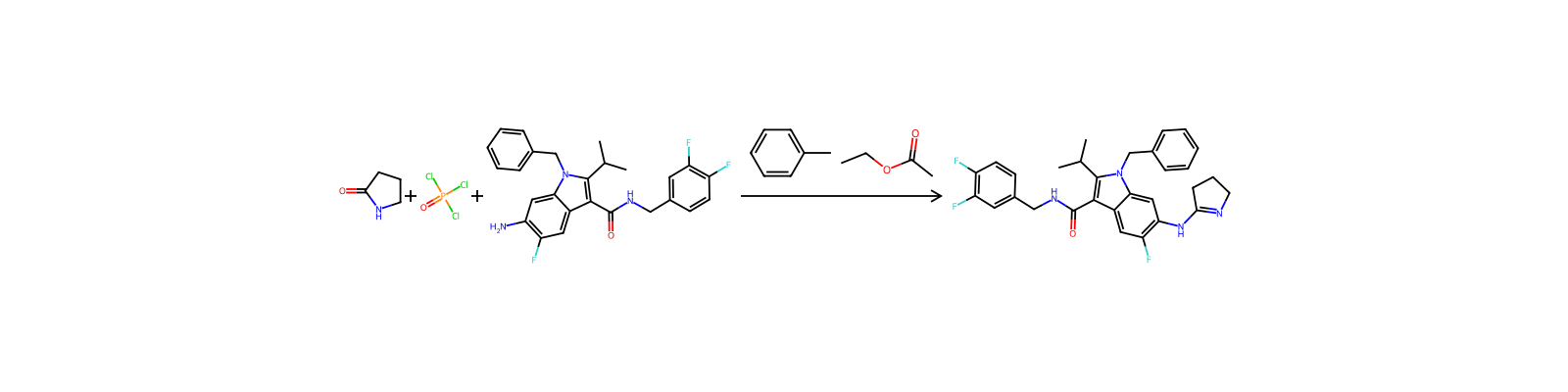
相关反应
738 条




关联笔记
加载中…