基本信息
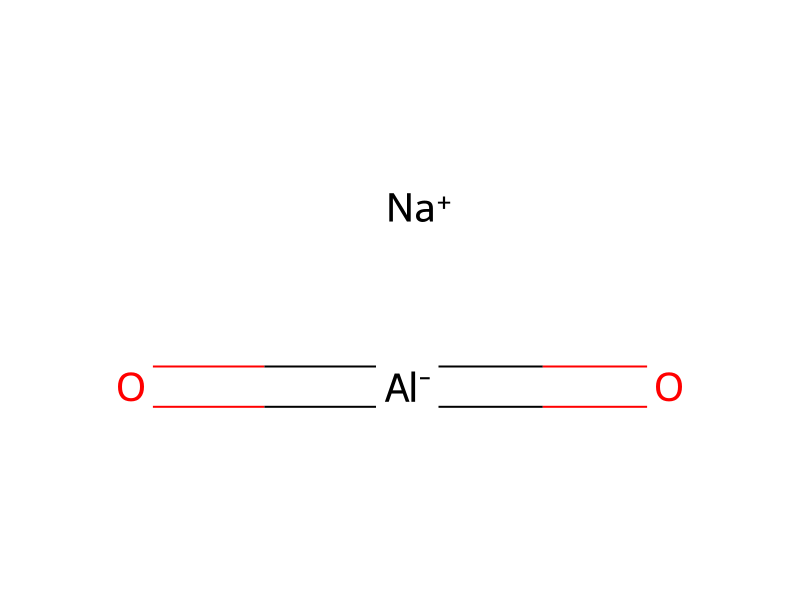
- 标准SMILES
[Na+].[O]=[Al-]=[O]- InChIKey
IYJYQHRNMMNLRH-UHFFFAOYSA-N- 分子式
- AlNaO2
- 平均分子量
- 81.97 g/mol
- 单同位素质量
- 81.9611369
名称与标识
- 首选名称
- Sodium aluminate
- IUPAC
- sodium dioxoalumanuide
- 中文名
- 偏铝酸钠
- 英文名
- Sodium aluminate
- 分子式
- AlNaO2
- 分子量
- 81.97
名称与别名
SODIUM ALUMINATESodium metaaluminateAluminium sodium dioxideAluminate, sodiumSodium aluminum oxide (NaAlO2)Sodium aluminum dioxideSodium aluminate (NaAlO2)Aluminate (alo21-), sodiumSodium aluminate (Na2Al2O4)Sodium metaaluminate (NaAlO2)DTXSID30512062VMT26903W
展开更多名称
鉛酸鈉偏铝酸钠氧化铝钠偏铝酸钠工业级偏铝酸钠,无水铝酸钠含量85%铝酸钠含量65%偏铝酸钠/氧化铝钠偏铝酸钠:铝酸钠:偏铝酸钠盐偏铝酸钠(CAS号:11138-49-1)BETA-ALUMINASodiuM aluMinate technical, anhydrousj242vsa45nalco680monofraxhdynaflocklmaxifloc8010Alumiumsodiumoxide
Aluminum sodium oxide (Al2Na2O4)215-100-1RefChem:6229SODIUM ALUMANOYLOLATEDTXCID5021594ALUMINUM SODIUM OXIDE (ALNAO2)923-596-21302-42-7
数据库标识
- CAS
11138-49-1、1302-42-7- PubChem CID
- 14766
- DTXSID
DTXSID3051206- EC Number
- 215-100-1、234-391-6、923-596-2
性质
结构计算性质
- 极性表面积
- 34.1 Ų
- 氢键供体
- 0
- 氢键受体
- 3
- 可旋转键
- 0
- 重原子
- 4
- 形式电荷
- 0
- 复杂度
- 18
实验与物化性质
pHAQ SOLN IS STRONGLY ALKALINE
Density
>1.5 g/cm³
1.55 @25 °C
4.63 @25 °C
Color/Form
WHITE GRANULAR MASS
WHITE AMORPHOUS POWDER
Solubility
SOL IN WATER; INSOL IN ALCOHOL
Solubility in water: very good
Melting Point
1650 °C
1650 °C
1650 °C
1650 °C
Refractive IndexINDEX OF REFRACTION: 1.566; 1.595; 1.580
Physical Description
Sodium aluminate, solid is an odorless white powdered solid. Toxic by ingestion and corrosive to tissue. Used in water purification.
Liquid; Wet Solid
Liquid
White solid; [Merck Index] Hygroscopic; [ICSC] White crystalline solid, soluble in water; [Hawley]
WHITE HYGROSCOPIC POWDER.
Other Experimental PropertiesHYGROSCOPIC
物理化学性质
- 密度
- 3.24 · 3.240
- 形态
- powder
- 稳定性
- Stable. Incompatible with strong oxidizing agents.
- InChI
- InChI=1S/Al.Na.2O/q-1;+1;;
- InChIKey
- IYJYQHRNMMNLRH-UHFFFAOYSA-N
- SMILES
- [Al-](=O)=O.[Na+]
- CAS 数据库
- 11138 · 11138-49-1(CAS DataBase Reference)
- EPA化学物质信息
- Aluminum sodium oxide (11138-49-1)
化学性质
偏铝酸钠,化学式为 NaAlO2,白色结晶性粉末,易吸湿,极易溶于水,不溶于乙醇,水溶液呈碱性,但在水中会发生水解反应,生成氢氧化铝(Al(OH)3)和氢氧化钠(NaOH)。实际上偏铝酸钠(NaAlO2)是四羟基合铝酸钠(Na[Al(OH)4])的一种简写形式。其实际组成结构较为复杂,在水溶液中是以 [Al (OH)4]-等形式存在,但习惯写成 NaAlO2的形式,其实在熔融状态下多以AlO2-的形式存在,NaAlO2是一种离子化合物,由钠离子和偏铝酸根离子组成。一般也是通过铝与氢氧化钠溶液反应,但反应条件和后续处理有所不同,例如在较高温度和特定浓度的氢氧化钠溶液中反应,然后经过浓缩、结晶等过程得到偏铝酸钠。
安全与法规
GHS分类
GHS Classification
This chemical does not meet GHS hazard criteria for 0.3% (1 of 372) of reports.
Danger
H271 (15.9%): May cause fire or explosion; strong Oxidizer [Danger Oxidizing liquids; Oxidizing solids];H290 (75%): May be corrosive to metals [Warning Corrosive to Metals];H314 (98.4%): Causes severe skin burns and eye damage [Danger Skin corrosion/irritation];H318 (65.9%): Causes serious eye damage [Danger Serious eye damage/eye irritation]
P210, P220, P234, P260, P264, P264+P265, P280, P283, P301+P330+P331, P302+P361+P354, P304+P340, P305+P354+P338, P306+P360, P316, P317, P321, P363, P370+P378, P371+P380+P375, P390, P405, P406, P420, and P501 (click each P-code to see the statement)
Aggregated GHS information provided per 372 reports by companies from 13 notifications to the ECHA C&L Inventory. Each notification may be associated with multiple companies.;Reported as not meeting GHS hazard criteria per 1 of 372 reports by companies.;There are 12 notifications provided by 371 of 372 reports by companies with hazard statement code(s).;Information may vary between notifications depending on impurities, additives, and other factors. The percentage value in parenthesis indicates the notified classification ratio from companies that provide hazard codes. Only hazard codes with percentage values above 10% are shown. For more detailed information, please visit ECHA C&L website.
危害信息
Regulatory Information
Chemical: Aluminate, (AlO21-), sodium
Chemical: Aluminium sodium oxide
Aluminate (AlO21-), sodium (1:1) is listed on the EPA's Chemical Data Reporting (CDR) system. Manufacturers and importers of Aluminate (AlO21-), sodium (1:1) are required to report information about their production and use of this chemical to the EPA under the Toxic Substances Control Act (TSCA). (40 eCFR Part 711)
Aluminum sodium oxide is listed on the EPA's Chemical Data Reporting (CDR) system. Manufacturers and importers of Aluminum sodium oxide are required to report information about their production and use of this chemical to the EPA under the Toxic Substances Control Act (TSCA). (40 eCFR Part 711)
Status: Active Update: 23-02-2023 https://echa.europa.eu/registration-dossier/-/registered-dossier/15466;Status: Active Update: 22-11-2010 https://echa.europa.eu/registration-dossier/-/registered-dossier/7456;Status: Active Update: 17-06-2011 https://echa.europa.eu/registration-dossier/-/registered-dossier/1350
Status: Active Update: 06-12-2021 https://echa.europa.eu/registration-dossier/-/registered-dossier/14477
Other Safety InformationIMAP assessments - Aluminium sodium oxide: Human health tier I assessment
DOT LabelCorrosive
Fire Hazards
Excerpt from ERG Guide 154 [Substances - Toxic and/or Corrosive (Non-Combustible)]:;Non-combustible, substance itself does not burn but may decompose upon heating to produce corrosive and/or toxic fumes. Some are oxidizers and may ignite combustibles (wood, paper, oil, clothing, etc.). Corrosives in contact with metals may evolve flammable hydrogen gas. Containers may explode when heated. For electric vehicles or equipment, ERG Guide 147 (lithium ion or sodium ion batteries) or ERG Guide 138 (sodium batteries) should also be consulted. (ERG, 2024)
· Non-combustible, substance itself does not burn but may decompose upon heating to produce corrosive and/or toxic fumes.;· Some are oxidizers and may ignite combustibles (wood, paper, oil, clothing, etc.).;· Corrosives in contact with metals may evolve flammable hydrogen gas.;· Containers may explode when heated.;· For electric vehicles or equipment, GUIDE 147 (lithium ion or sodium ion batteries) or GUIDE 138 (sodium batteries) should also be consulted.
· Non-combustible, substance itself does not burn but may decompose upon heating to produce corrosive and/or toxic fumes.;· Some are oxidizers and may ignite combustibles (wood, paper, oil, clothing, etc.).;· Corrosives in contact with metals may evolve flammable hydrogen gas.;· Containers may explode when heated.;· For electric vehicles or equipment, GUIDE 147 (lithium ion or sodium ion batteries) or GUIDE 138 (sodium batteries) should also be consulted.
Not combustible.
Health Hazards
Excerpt from ERG Guide 154 [Substances - Toxic and/or Corrosive (Non-Combustible)]:;TOXIC and/or CORROSIVE; inhalation, ingestion or skin contact with material may cause severe injury or death. Contact with molten substance may cause severe burns to skin and eyes. Avoid any skin contact. Fire may produce irritating, corrosive and/or toxic gases. Runoff from fire control or dilution water may be corrosive and/or toxic and cause environmental contamination. (ERG, 2024)
· TOXIC and/or CORROSIVE; inhalation, ingestion or skin contact with material may cause severe injury or death.;· Contact with molten substance may cause severe burns to skin and eyes.;· Avoid any skin contact.;· Fire may produce irritating, corrosive and/or toxic gases.;· Runoff from fire control or dilution water may be corrosive and/or toxic and cause environmental contamination.
· TOXIC and/or CORROSIVE; inhalation, ingestion or skin contact with material may cause severe injury or death.;· Contact with molten substance may cause severe burns to skin and eyes.;· Avoid any skin contact.;· Fire may produce irritating, corrosive and/or toxic gases.;· Runoff from fire control or dilution water may be corrosive and/or toxic and cause environmental contamination.
Hazards Summary
Solution is alkaline and a strong tissue irritant; [Hawley] A corrosive substance that can cause injury to the skin, eyes, and respiratory tract; [ICSC] Can cause eye injury; [HSDB] Corrosive to tissue; [CAMEO] A skin and eye irritant; [eChemPortal: ERMA] A corrosive substance that can cause injury to the skin, eyes, and respiratory tract; [MSDSonline] Sodium aluminate solution has CAS # 11138-49-1; See Aluminum.
DOT ID and Guide
1819 154
2812 154
Reactive GroupBases, Strong
UN ClassificationUN Hazard Class: 8; UN Pack Group: III
Reactivity AlertsWater-Reactive
OSHA Standards
Permissible Exposure Limit: Table Z-1 8-hr Time Weighted Avg: 15 mg/cu m. /Aluminum, metal as Al, total dust/
Permissible Exposure Limit: Table Z-1 8-hr Time Weighted Avg: 5 mg/cu m. /Aluminum metal, as Al, respirable fraction/
Vacated 1989 OSHA PEL TWA 2 mg/cu m is still enforced in some states. /Aluminum, soluble salts & alkyls, as Al/
Reactivity ProfileSODIUM ALUMINATE, SOLID dissolves in water to produce a corrosive alkaline solution. Reacts exothermically with acids. Corrosive to metals. Not compatible with copper, tin, zinc, aluminum, acids, phosphorus, or chlorocarbons.
安全与防护
Fire Fighting
Excerpt from ERG Guide 154 [Substances - Toxic and/or Corrosive (Non-Combustible)]:;SMALL FIRE: Dry chemical, CO2 or water spray.;LARGE FIRE: Dry chemical, CO2, alcohol-resistant foam or water spray. If it can be done safely, move undamaged containers away from the area around the fire. Dike runoff from fire control for later disposal.;FIRE INVOLVING TANKS, RAIL TANK CARS OR HIGHWAY TANKS: Fight fire from maximum distance or use unmanned master stream devices or monitor nozzles. Do not get water inside containers. Cool containers with flooding quantities of water until well after fire is out. Withdraw immediately in case of rising sound from venting safety devices or discoloration of tank. ALWAYS stay away from tanks in direct contact with flames. (ERG, 2024)
In case of fire in the surroundings, use appropriate extinguishing media.
First Aid Measures
Fresh air, rest. Refer for medical attention.
Remove contaminated clothes. Rinse skin with plenty of water or shower. Refer for medical attention .
First rinse with plenty of water for several minutes (remove contact lenses if easily possible), then refer for medical attention.
Rinse mouth. Do NOT induce vomiting. Refer for medical attention .
Accidental Release Measures
· CALL 911. Then call emergency response telephone number on shipping paper. If shipping paper not available or no answer, refer to appropriate telephone number listed on the inside back cover.;· Keep unauthorized personnel away.;· Stay upwind, uphill and/or upstream.;· Ventilate closed spaces before entering, but only if properly trained and equipped.
· ELIMINATE all ignition sources (no smoking, flares, sparks or flames) from immediate area.;· Do not touch damaged containers or spilled material unless wearing appropriate protective clothing.;· Stop leak if you can do it without risk.;· Prevent entry into waterways, sewers, basements or confined areas.;· Absorb or cover with dry earth, sand or other non-combustible material and transfer to containers.;· DO NOT GET WATER INSIDE CONTAINERS.
First Aid
Excerpt from ERG Guide 154 [Substances - Toxic and/or Corrosive (Non-Combustible)]:;Refer to the "General First Aid" section. Specific First Aid: For corrosives, in case of contact, immediately flush skin or eyes with running water for at least 30 minutes. Additional flushing may be required. (ERG, 2024)
General First Aid:;· Call 911 or emergency medical service.;· Ensure that medical personnel are aware of the material(s) involved, take precautions to protect themselves and avoid contamination.;· Move victim to fresh air if it can be done safely.;· Administer oxygen if breathing is difficult.;· If victim is not breathing:;-- DO NOT perform mouth-to-mouth resuscitation; the victim may have ingested or inhaled the substance.;-- If equipped and pulse detected, wash face and mouth, then give artificial respiration using a proper respiratory medical device (bag-valve mask, pocket mask equipped with a one-way valve or other device).;-- If no pulse detected or no respiratory medical device available, provide continuous compressions. Conduct a pulse check every two minutes or monitor for any signs of spontaneous respirations.;· Remove and isolate contaminated clothing and shoes.;· For minor skin contact, avoid spreading material on unaffected skin.;· In case of contact with substance, remove immediately by flushing skin or eyes with running water for at least 20 minutes.;· For severe burns, immediate medical attention is required.;· Effects of exposure (inhalation, ingestion, or skin contact) to substance may be delayed.;· Keep victim calm and warm.;· Keep victim under observation.;· For further assistance, contact your local Poison Control Center.;· Note: Basic Life Support (BLS) and Advanced Life Support (ALS) should be done by trained professionals.;Specific First Aid:;· For corrosives, in case of contact, immediately flush skin or eyes with running water for at least 30 minutes. Additional flushing may be required.
General First Aid:;· Call 911 or emergency medical service.;· Ensure that medical personnel are aware of the material(s) involved, take precautions to protect themselves and avoid contamination.;· Move victim to fresh air if it can be done safely.;· Administer oxygen if breathing is difficult.;· If victim is not breathing:;-- DO NOT perform mouth-to-mouth resuscitation; the victim may have ingested or inhaled the substance.;-- If equipped and pulse detected, wash face and mouth, then give artificial respiration using a proper respiratory medical device (bag-valve mask, pocket mask equipped with a one-way valve or other device).;-- If no pulse detected or no respiratory medical device available, provide continuous compressions. Conduct a pulse check every two minutes or monitor for any signs of spontaneous respirations.;· Remove and isolate contaminated clothing and shoes.;· For minor skin contact, avoid spreading material on unaffected skin.;· In case of contact with substance, remove immediately by flushing skin or eyes with running water for at least 20 minutes.;· For severe burns, immediate medical attention is required.;· Effects of exposure (inhalation, ingestion, or skin contact) to substance may be delayed.;· Keep victim calm and warm.;· Keep victim under observation.;· For further assistance, contact your local Poison Control Center.;· Note: Basic Life Support (BLS) and Advanced Life Support (ALS) should be done by trained professionals.;Specific First Aid:;· For corrosives, in case of contact, immediately flush skin or eyes with running water for at least 30 minutes. Additional flushing may be required.
Safe StorageSeparated from food and feedstuffs and acids. Dry.
Exposure Control and Personal Protection
· Wear positive pressure self-contained breathing apparatus (SCBA).;· Wear chemical protective clothing that is specifically recommended by the manufacturer when there is NO RISK OF FIRE.;· Structural firefighters' protective clothing provides thermal protection but only limited chemical protection.
· Wear positive pressure self-contained breathing apparatus (SCBA).;· Wear chemical protective clothing that is specifically recommended by the manufacturer when there is NO RISK OF FIRE.;· Structural firefighters' protective clothing provides thermal protection but only limited chemical protection.
Cleanup MethodsAQ WASTE SOLUTIONS CONTAINING SODIUM ALUMINATE ARE ACIDIFIED WITH SULFURIC ACID & TREATED WITH A WEAKLY BASIC CMPD (PH 7-11) TO IMPROVE PPT & FILTERABILITY OF ALUMINUM CMPD.
Nonfire Spill Response
Excerpt from ERG Guide 154 [Substances - Toxic and/or Corrosive (Non-Combustible)]:;ELIMINATE all ignition sources (no smoking, flares, sparks or flames) from immediate area. Do not touch damaged containers or spilled material unless wearing appropriate protective clothing. Stop leak if you can do it without risk. Prevent entry into waterways, sewers, basements or confined areas. Absorb or cover with dry earth, sand or other non-combustible material and transfer to containers. DO NOT GET WATER INSIDE CONTAINERS. (ERG, 2024)
Spillage DisposalPersonal protection: particulate filter respirator adapted to the airborne concentration of the substance. Sweep spilled substance into covered containers. Wash away remainder with plenty of water.
Preventive Measures
SRP: The scientific literature for the use of contact lenses in industry is conflicting. The benefit or detrimental effects of wearing contact lenses depend not only upon the substance, but also on factors including the form of the substance, characteristics and duration of the exposure, the uses of other eye protection equipment, and the hygiene of the lenses. However, there may be individual substances whose irritating or corrosive properties are such that the wearing of contact lenses would be harmful to the eye. In those specific cases, contact lenses should not be worn. In any event, the usual eye protection equipment should be worn even when contact lenses are in place.
Isolation and Evacuation
Excerpt from ERG Guide 154 [Substances - Toxic and/or Corrosive (Non-Combustible)]:;IMMEDIATE PRECAUTIONARY MEASURE: Isolate spill or leak area in all directions for at least 50 meters (150 feet) for liquids and at least 25 meters (75 feet) for solids.;SPILL: Increase the immediate precautionary measure distance, in the downwind direction, as necessary.;FIRE: If tank, rail tank car or highway tank is involved in a fire, ISOLATE for 800 meters (1/2 mile) in all directions; also, consider initial evacuation for 800 meters (1/2 mile) in all directions. (ERG, 2024)
Immediate precautionary measure;· Isolate spill or leak area in all directions for at least 50 meters (150 feet) for liquids and at least 25 meters (75 feet) for solids.;Spill;· For highlighted materials: see Table 1 - Initial Isolation and Protective Action Distances.;· For non-highlighted materials: increase the immediate precautionary measure distance, in the downwind direction, as necessary.;Fire;· If tank, rail tank car or highway tank is involved in a fire, ISOLATE for 800 meters (1/2 mile) in all directions; also, consider initial evacuation for 800 meters (1/2 mile) in all directions.
Immediate precautionary measure;· Isolate spill or leak area in all directions for at least 50 meters (150 feet) for liquids and at least 25 meters (75 feet) for solids.;Spill;· For highlighted materials: see Table 1 - Initial Isolation and Protective Action Distances.;· For non-highlighted materials: increase the immediate precautionary measure distance, in the downwind direction, as necessary.;Fire;· If tank, rail tank car or highway tank is involved in a fire, ISOLATE for 800 meters (1/2 mile) in all directions; also, consider initial evacuation for 800 meters (1/2 mile) in all directions.
Eye PreventionWear safety goggles, face shield or eye protection in combination with breathing protection.
毒理信息
Body Burden
A body burden of 100 mg/70 kg man with a daily dietary intake of approximately 36 mg. ... The total body burden of aluminum in humans can be estimated to range from 60-100 mg. /Aluminum/
THE NORMAL BLOOD LEVEL OF ALUMINUM IS 17 UG AL/100 ML AND MOST SOFT TISSUES CONTAIN BETWEEN 0.2 AND 0.6 PPM. HUMAN BODY BURDEN OF ALUMINUM IS 50 TO 150 MG & IS APPARENTLY UNAFFECTED BY EITHER NORMAL DAILY INTAKE LEVELS ESTIMATED TO BE APPROXIMATELY 10 TO 100 MG OR CONSIDERABLY HIGHER DOSES. /ALUMINUM/
Aluminum content of normal human brain ranged from 0.1-3.9 ug/g dry weight. In a study of 208 samples taken from 7 patients, ... a mean aluminum content of 1.9 + or - 0.07 ug/g dry weight of gray matter /was found/ to be abnormal. In a study of 585 areas sampled from the brain tissue of 10 patients with Alzheimer's disease they found 28% had an aluminum concn > 4 ug/g. The range of the 585 samples was 0.4-107 ug/g. /Aluminum/
Treatment
EYES: irrigate opened eyes for several minutes under running water. INGESTION: do not induce vomiting. Rinse mouth with water (never give anything by mouth to an unconscious person). Seek immediate medical advice. SKIN: should be treated immediately by rinsing the affected parts in cold running water for at least 15 minutes, followed by thorough washing with soap and water. If necessary, the person should shower and change contaminated clothing and shoes, and then must seek medical attention. INHALATION: supply fresh air. If required provide artificial respiration.
Interactions
In a case study of patients on long-term dialysis, systemic aluminum absorption with concurrent oral citrate (as an alkalinizing agent) and aluminum containing phosphate binder (eg, aluminum hydroxide or carbonate) was significantly increased. Based on the proposed mechanism and pharmacologic similarity, an interaction may be expected to occur between citric acid and other aluminum salts (eg, aluminum phosphate, aluminum glycinate, attapulgite, dihydroxyaluminum, kaolin, magaldrate). It has been shown that following concurrent administration of citric acid (from lemon juice) and aluminum hydroxide there is an increase in serum levels of a nonionized aluminum citrate complex, which is postulated to easily pass the gastrointestinal barrier. Simultaneous administration of citric acid and aluminum hydroxide should be avoided since significant systemic absorption of aluminum may occur. This may be of additional concern in patients on long-term dialysis or with impaired renal function. /Aluminum salts/
... 25 Dialysis patients that experienced accidental exposure to aluminum and parathyroid hormone /were examined/. At the same time as parathyroid hormone decreased, serum calcium increased. Based on this observation it has been suggested that aluminum is incorporated, instead of calcium, into the bone and that this leads to the osteomalacia characteristic of aluminum induced bone disease. Instead of being incorporated into osteoid bone tissue, calcium returns to the circulation which in turn inhibits the parathyroid hormone release from the parathyroid. In support of this hypothesis, ... a strong correlation /was found/ between bone aluminum content and the amount of bone occupied by unmineralized osteoid in humans. Experimental support for the hypothesis of calcium aluminum interactions has also been provided in studies on chicks. /Aluminum/
Groups of 120 Atlantic salmon fry (Salmo salar, 1 g mass) were kept in through flow tanks of water (pH 5) containing various concn of aluminum and silicic acid. The aluminum concn in all but the control tank (0.85 umol aluminum/l) were 6-7 umol/l, at acutely toxic levels. Silicon levels were 0.66 umol/l (control), 93.06, 24.89, 5.46, and 0.60 umol/l, corresponding to silicon:aluminum ratios of 13.0, 3.7, 0.9, and 0.1. Exchangeable aluminum, ie, aluminum retained on Amberlite, was 6.00, 5.00, 4.11, and 1.52 umol/l in test tanks, respectively. Fish were exposed for 96 hr, and the proportion of dead fish was recorded at 12 hr intervals. The whole experiment was run three times; data are from all runs combined. At a silicon:aluminum ratio of 13, acute toxicity of aluminum was eliminated and gill structures of the fish were normal. Percent survival versus time was higher for the higher silicon:aluminum ratio groups. Accumulation of aluminum by fish fell sharply as the exchangeable aluminum increased. Aluminum and silicon levels in fish were 0.44 and 0.01 (control), 0.40 and 0.54 (silicon:aluminum ratio of 13), 2.04 and 0.35 (silicon:aluminum ratio of 3.7), 2.49 and 0.33 (silicon:aluminum ratio of 0.9), 2.38 and 0.08 (silicon:aluminum ratio of 0.1) umol/g dry mass, respectively. /Aluminum/
Health Effects
Aluminum targets the nervous system and causes decreased nervous system performance and is associated with altered function of the blood-brain barrier. The accumulation of aluminum in the body may cause bone or brain diseases. High levels of aluminum have been linked to Alzheimer's disease. A small percentage of people are allergic to aluminium and experience contact dermatitis, digestive disorders, vomiting or other symptoms upon contact or ingestion of products containing aluminium. (L739, L740)
Environmental Fate
AQUATIC FATE: The adsorption of aluminum by fine particulates was studied in Whitray Beck, a hill stream in England. ... Uptake of aluminum by the particles increased with total aluminum , with pH, and with particle concentration, although the fraction of aluminum bound at a given pH and particle concentration decreased with total aluminum ... . /Total aluminum/
TERRESTRIAL FATE: Air dried, <2 mm fractions of 3 soil samples from The Netherlands and 1 from New Hampshire, were taken from the surface and subsurface horizons of two podzols (Haplorthods) and of a recent driftsand (Udipsamment). Duplicate samples of each emulsion soil horizon were leached ... with aqueous hydrogen chloride (pH 3.0). ... Charge balances of the leachates indicate that dissolved aluminum is present mainly as aquo-aluminum +3. Only in leachates of podzol Bhs horizons is a significant fraction (20-30%) of dissolved aluminum organically complexed. Dissolved aluminum concn are significantly correlated with the organic (tetrasodium pyrophosphate extractable) aluminum content of the soil sample. Mobility of aluminum in the Hubbard Brook soils is significantly lower than in the Dutch soils, because of higher soil solution pH values. /Aluminum cmpd/
TERRESTRIAL FATE: Albic and spodic soil horizons were sampled from old growth eastern white pine/mixed northern hardwoods. Adirondacks, and an ochric soil horizon was sampled from the Appalachian plateau of NY State. 21 Three horizon forest floor and 21 forest floor/mineral soil (field moist equivalent of 12.0 oven dry albic, spodic, or ochric mineral soil) columns were leached in triplicate with either 10 uM nitric acid (pH 5), 5 uM sulfuric acid (pH 5), 100 uM nitric acid (pH 4), 50 uM sulfuric acid (pH 4), 1000 uM nitric acid (pH 3), 500 uM sulfuric acid (pH 3), or distilled, deionized water (pH 5.7) control treatment). Nitric acid leached more aluminum than did sulfuric acid from forest floor/spodic soil columns. Increasing the nitric acid concn from pH 3-5 increased total aluminum concn in leachates from 0.70 to 0.85 mM, while increasing sulfuric acid had no effect. Addition of pH 3 sulfuric acid to forest floor/spodic columns raised leachate pH relative to pH 3 nitric acid and controls, and resulted in the lowest aluminum concn of all treatments in the first 3 of 4 sequential leachings. /Aluminum/
TERRESTRIAL FATE: Albic and spodic soil horizons were sampled from old growth eastern white pine/mixed northern hardwoods sites in the Adirondacks, and an ochric soil horizon was sampled from the Appalachian Plateau of NY State. 9 Three horizon forest floo, 9 mineral soil (field moist equivalent of 12.0 oven dry albic, spodic, or ochric mineral soil) and 9 forest floor/mineral soil columns were leached with 60 ml of (a) 10 mM ammonium nitrate (control), (b) 1.0 mM nitric acid in 10 mM ammonium nitrate (pH 3), and (c) 1.0 mM ammonium nitrate (pH 3) at the rate of 10 ml/h. The above procedure was repeated on each mineral soil without a forest floor, except leaching soln were 0.5 mM calcium nitrate or calcium sulfate, each in 10 mM ammonium nitrate. Adding 2 and 0.5 cmol sub c (H+)/kg to forest floor and mineral soils, respectively, simulated snowmelt additions. Total aluminum concn in leachates from forest floor/albic or forest floor/ochric columns were greater than the sum of concn in leachates from the forest floor and mineral horizon when leached separately. This positive synergistic behavior of the forest floor-mineral horizon sequences was also observed in the forest floor-spodic horizon sequence when leached with control soln, but the synergism was negative for both labile and non-labile aluminum when leached with the acids. Sulfuric acid leached less aluminum from the spodic horizon than did nitric acid, regardless of the presence of a forest floor, but nitric acid, sulfuric acid , and control soln leached similar concn of aluminum from the albic and ochric horizons. The forest floor effects on the mineral soil leachates were attributed to effects of calcium, sulfate, nitrate, and dissolved organic C leached from the forest floor to the mineral horizon since forest floor removed nearly all added H+. /Aluminum/
Adverse EffectsDermatotoxin - Skin burns.
Exposure Routes
The substance can be absorbed into the body by inhalation of its aerosol and by ingestion.
Oral (L739) ; inhalation (L739)
Toxicity Summary
The main target organs of aluminum are the central nervous system and bone. Aluminum binds with dietary phosphorus and impairs gastrointestinal absorption of phosphorus. The decreased phosphate body burden results in osteomalacia (softening of the bones due to defective bone mineralization) and rickets. Aluminum's neurotoxicity is believed to involve several mechanisms. Changes in cytoskeletal protein functions as a results of altered phosphorylation, proteolysis, transport, and synthesis are believed to be one cause. Aluminum may induce neurobehavioral effects by affecting permeability of the blood-brain barrier, cholinergic activity, signal transduction pathways, lipid peroxidation, and impair neuronal glutamate nitric oxide-cyclic GMP pathway, as well as interfere with metabolism of essential trace elements because of similar coordination chemistries and consequent competitive interactions. It has been suggested that aluminum's interaction with estrogen receptors increases the expression of estrogen-related genes and thereby contributes to the progression of breast cancer (A235), but studies have not been able to establish a clear link between aluminum and increased risk of breast cancer (A15468). Certain aluminum salts induce immune responses by activating inflammasomes. (L739, A235, A236)
Average Daily IntakeThe daily ingestion of aluminum by humans was estimated to be 30-50 mg. /Aluminum/
Signs and Symptoms
Burning sensation. Sore throat. Cough. Laboured breathing.
Redness. Pain. Blisters.
Redness. Pain. Blurred vision. Severe deep burns.
Abdominal pain. Burning sensation. Shock or collapse.
Inhalating aluminum dust causes coughing and abnormal chest X-rays. A small percentage of people are allergic to aluminium and experience contact dermatitis, digestive disorders, vomiting or other symptoms upon contact or ingestion of products containing aluminium. (L739, L740)
Human Toxicity Excerpts
(SOLUTION) TOXIC; STRONG IRRITANT TO TISSUE.
IT IS KNOWN TO HAVE CAUSED INJURIES OF EYES SIMILAR TO THOSE CAUSED BY SODIUM HYDROXIDE. THE INJURIOUSNESS OF SOLUTIONS OF SODIUM ALUMINATE ARE PROPORTIONAL TO THEIR ALKALINITY.
Patients who had died with dialysis encephalopathy syndrome had brain gray matter aluminum levels that were 3 times higher (approximately 12 mg/kg dry weight) than those seen in patients who had been comparably dialyzed but did not have dialysis encephalopathy syndrome (approximately 4 mg/kg dry weight). Both of these groups were markedly higher than the 1 mg/kg dry weight level seen in controls. These data clearly indicate elevated brain levels of aluminum in dialyzed patients and emphasize the fact that only the highest levels of brain aluminum are associated with dialysis encephalopathy syndrome. /Aluminum/
X ray spectrometric evidence of aluminum accumulation in neurofibrillary tangle bearing neurons of human brains was reported. Quite in contrast to the extensive literature on aluminum in dialysis encephalopathy syndrome, there appears to be only a small amount of additional corroborating evidence for elevated brain levels of aluminum in Alzheimer's disease patients. ... Much of the argument for a role of aluminum in Alzheimer's disease has been built on the fact that in experimental animals, such as cat and rabbit, intracerebral injections of small amounts of aluminum result in neural degeneration which is characterized by the development of neurofibrillary tangles. ... Aluminum induced tangles in experimental animals are composed of single 10 nm filaments while those from Alzheimer's disease are paired, helically wound filaments. ... In spite of the apparent similarities in the two types of tangles, there are sufficient differences to warrant caution in interpreting that the tangles in humans are caused by aluminum as they are in experimental animals. /Aluminum/
For more Human Toxicity Excerpts (Complete) data for SODIUM ALUMINATE (25 total), please visit the HSDB record page.
Artificial Pollution SourcesACTIVITIES OF MAN INCR ALUMINUM CONTENT IN SURFACE WATER ... .
法规信息
Regulatory Information
Chemical: Aluminate, (AlO21-), sodium
Chemical: Aluminium sodium oxide
Aluminate (AlO21-), sodium (1:1) is listed on the EPA's Chemical Data Reporting (CDR) system. Manufacturers and importers of Aluminate (AlO21-), sodium (1:1) are required to report information about their production and use of this chemical to the EPA under the Toxic Substances Control Act (TSCA). (40 eCFR Part 711)
Aluminum sodium oxide is listed on the EPA's Chemical Data Reporting (CDR) system. Manufacturers and importers of Aluminum sodium oxide are required to report information about their production and use of this chemical to the EPA under the Toxic Substances Control Act (TSCA). (40 eCFR Part 711)
Status: Active Update: 23-02-2023 https://echa.europa.eu/registration-dossier/-/registered-dossier/15466;Status: Active Update: 22-11-2010 https://echa.europa.eu/registration-dossier/-/registered-dossier/7456;Status: Active Update: 17-06-2011 https://echa.europa.eu/registration-dossier/-/registered-dossier/1350
Status: Active Update: 06-12-2021 https://echa.europa.eu/registration-dossier/-/registered-dossier/14477
State Drinking Water Standards(CA) CALIFORNIA 1000 ug/l /Aluminum/
State Drinking Water Guidelines
(AZ) ARIZONA 73 ug/l /Aluminum/
(CA) CALIFORNIA 200 ug/l /Aluminum/
(ME) MAINE 1430 ug/l /Aluminum/
Federal Drinking Water GuidelinesEPA 50-200 ug/l /Aluminum/
安全数据
- wgk
- 1
- RTECS号
- BD1600000
- 存储类别
- 8A - Combustible corrosive hazardous materials
- 安全说明
- 26-36/37/39-45
- 危险品标志
- C
- 危险性类别
- Met. Corr. 1Skin Corr. 1A
- 危险类别码
- 35
- 危险品运输编号
- UN 2812 8/PG III (SODIUM ALUMINATE, SOLID)
毒性防护
职业标准TLV-TWA 2 毫克(铝)/立方米; TWA 2 毫克(铝)/立方米
包装储运
可燃性危险特性遇氨盐放出可燃氨气; 本身有碱性, 腐蚀性
储运特性库房通风低温干燥; 与酸、氨盐分开存放
灭火剂水、砂土、二氧化碳
化学与工业
药理信息
Biological Half-Life
The mean plasma half-life of aluminum after iv admin in dogs is approx 4.5 hr. /Aluminum/
The shorter half-life for the urinary elimination of aluminum was about 8 hr. /Aluminum/
Metabolism/Metabolites
Aluminum is poorly absorbed following either oral or inhalation exposure and is essentially not absorbed dermally. The bioavailability of aluminum is strongly influenced by the aluminum compound and the presence of dietary constituents which can complex with aluminum and enhance or inhibit its absorption. Aluminum binds to various ligands in the blood and distributes to every organ, with highest concentrations found in bone and lung tissues. In living organisms, aluminum is believed to exist in four different forms: as free ions, as low-molecular-weight complexes, as physically bound macromolecular complexes, and as covalently bound macromolecular complexes. Absorbed aluminum is excreted principally in the urine and, to a lesser extent, in the bile, while unabsorbed aluminum is excreted in the faeces. (L739)
Absorption, Distribution and Excretion
It was calculated that a dialysate aluminum concn of 0.2-1.0 mg/l (a concn readily found in many water supplies) would result in the direct transfer of aluminum into the blood of 3-16 mg for each dialysis treatment or 42-211 mg/mo. /Aluminum/
A given oral dose of aluminum results in significantly higher serum and tissue levels of the metal in nephrectomized rats than in intact controls in spite of the fact that only minimal amounts of aluminum are normally excreted in the urine. /Aluminum/
It was found that 70-90% of total aluminum bound to plasma proteins (60-70% to a high molecular weight protein and 10-20% to albumin while only 10-30% was unbound). This high affinity of aluminum for plasma proteins strongly suggests high levels of binding of aluminum to a variety of tissue proteins. /Aluminum/
It was shown that the uptake of aluminum into the blood during renal dialysis was due to the extensive binding of aluminum to plasma proteins leaving very little aluminum in the non-bound state in plasma. Thus, the plasma proteins served as a trap for accumulating the metal. It was shown that the component of plasma protein that binds aluminum is saturable. Consistent with this ... is the fact that, during dialysis with aluminum containing dialysate, plasma aluminum levels reach a plateau. /Aluminum/
For more Absorption, Distribution and Excretion (Complete) data for SODIUM ALUMINATE (18 total), please visit the HSDB record page.
用途与制造
Uses
Used for printing on fabrics (mordant), making foundry molds (binder), to soften and purify water, to harden building stones, to process acrylic and polyester fibers, to remove carbonyl sulfide from gas streams, and to improve sizing and filler retention in the paper industry; Also used to make soap, lake colors, milk-glass, cleansing compounds, alumina-based catalysts, and zeolites; [HSDB]
Molding and Core Making [Category: Foundry];Pulp and Paper Processing [Category: Industry];Textiles (Printing, Dyeing, or Finishing) [Category: Industry];Glass Manufacturing [Category: Industry]
PRINTING ON FABRICS; SOAP; HARDENING BUILDING STONES; MFR LAKE COLORS & MILK-GLASS; SIZING PAPER; WATER SOFTENER.
SIZING IMPROVER & FILLER RETENTION AID IN PAPER INDUSTRY; ADDITIVE TO TITANIUM DIOXIDE PIGMENTS FOR OUTDOOR PAINTS; COMPONENT OF ALKALINE WASHING SOLUTIONS, EG, FOR GLASS; ACRYLIC & POLYESTER FIBER PROCESSING ADDITIVE; CHEM INT FOR ALUMINA-BASED CATALYSTS; BINDER IN FOUNDRY MOLDS.
Mordant, zeolites, water purification, sizing paper, manufacture of milk-glass, soap & cleansing compounds.
/In removing/ carbonyl sulfide from a gas stream.
U.S. Imports
(1976) 1.35X10+6 GRAMS
(1978) 2.23X10+8 GRAMS
U.S. Production
2023: 850,000,000 - <1,000,000,000 lb;2022: 850,000,000 - <1,000,000,000 lb;2021: 850,000,000 - <1,000,000,000 lb;2020: 700,000,000 - <850,000,000 lb
2023: 473,600,000 lb;2022: 465,600,000 lb;2021: 532,900,000 lb;2020: 486,000,000 lb
(1976) 5.00X10+10 GRAMS
Consumer Uses
Flocculating agent
Other
Industry Uses
Processing aids not otherwise specified;Bleaching agent;pH regulating agent;Other;Solids separation (precipitating) agent, not otherwise specified;Flocculating agent;Pigment;Intermediate;Reducing agent
Other;Flocculating agent;Intermediate
Methods of Manufacturing
REACTION OF HYDRATED ALUMINA WITH SODIUM HYDROXIDE; FUSION OF SODIUM CARBONATE WITH ALUMINUM ACETATE.
BY HEATING BAUXITE WITH SODIUM CARBONATE & EXTRACTING SODIUM ALUMINATE WITH WATER.
Formulations/PreparationsGRADES: TECHNICAL; REAGENT; ALSO 27 DEG BAUME SOLUTION.
Use Classification
Plastics -> Polymer Type -> N.a.
Cosmetics -> Buffering
Plastics -> Flame retardants
General Manufacturing Information
Non-metallic Mineral Product Manufacturing (includes clay, glass, cement, concrete, lime, gypsum, and other non-metallic mineral product manufacturing);All Other Chemical Product and Preparation Manufacturing;Food, beverage, and tobacco product manufacturing;Paper Manufacturing;Textiles, apparel, and leather manufacturing;Other (requires additional information);Services;Utilities;All Other Basic Inorganic Chemical Manufacturing;Wholesale and Retail Trade
All Other Basic Inorganic Chemical Manufacturing;Pharmaceutical and Medicine Manufacturing;Utilities;Synthetic Dye and Pigment Manufacturing;All other Petroleum and Coal Products Manufacturing
Aluminate (AlO21-), sodium (1:1): ACTIVE
Sodium aluminate normally contains an excess of sodium hydroxide or soda ash to maintain a sufficiently high pH to prevent aluminum hydroxide precipitation prior to its addition ... as a coagulant /in municipal water treatment/.
THE SUPPLY IN SOILS IS ABUNDANT. SOME ACID SOILS CONTAIN SUFFICIENT ALUMINUM IN SOLUTION FORM TO KILL CERTAIN PLANTS. /ALUMINUM/
应用领域
用途媒染剂。软水剂。制造沸石、乳白玻璃和肥皂,分析试剂。
制备方法
生产方法用氢氧化铝同铝酸钠或碳酸钠在1100℃加热制得。
上下游产品信息
上游原料
试剂价格
- XW111384912 · 500g
- 偏铝酸钠 — 47元
- 20037328 · 500g
- 铝酸钠sodium aluminate;aluminum sodium oxide;aluminium sodium dioxide — 94元
供应商50 家
国药集团化学试剂有限公司86-21-63210123 · [email protected]
阿诺西(上海)生物技术有限公司400-1107768 15058188853 · [email protected]
山东旭晨化工科技有限公司0533-15715337262 15715337262 · [email protected]
上海阿拉丁生化科技股份有限公司400-6206333 13167063860 · [email protected]
Shandong chuangyingchemical Co., Ltd.18853181302 · [email protected]
广州纳珑化工有限公司13192879270; 13192879270 · [email protected]
廊坊乾耀科技有限公司0316-2617888 17301291189 · [email protected]
杭州品高化工有限公司0571-87658025 · [email protected]
宁波化工原料有限公司13306607903;13306607903 · [email protected]
韶关阳安化工有限公司18902343715 · [email protected]
武汉零加一化工有限公司15972036926 15972036926 · [email protected]
河北创海生物科技有限公司+86-86-13131129325 · [email protected]
河北展药生物科技有限公司15369953316 +8615369953316 · [email protected]
Dayang Chem (Hangzhou) Co.,Ltd.+86-0571-88938639 17705817739 · [email protected]
Hebei Yanxi Chemical Co., Ltd.+86-17531190177 · [email protected]
淄博丽硕化工贸易有限公司13853320569
武汉绿景丰华生物科技有限公司19972070065 · [email protected]
山东喜玛供应链管理有限公司0533-13011607593; 13011607593
上海迈瑞尔生化科技有限公司4006356688 18621169109 · [email protected]
武汉易泰科技有限公司上海分公司18930552037 · [email protected]
上海晶抗生物工程有限公司021-54721350 13524668266 · [email protected]
广东云星生物技术有限公司0751-18902340975/189023400307 18902340307 · [email protected]
上海瀚鸿科技股份有限公司021-54306202 13764082696 · [email protected]
山东多聚化学有限公司0531-88779566 13105315100
上海泰坦科技股份有限公司400-6009262 15618770481 · [email protected]
沈阳依莱普克斯化工有限公司024-31124838 15840046119
广东大小化工有限公司1866-171603 18666171603 · [email protected]
Xiamen AmoyChem Co., Ltd+86-86-5926051114 · [email protected]
武汉卡诺斯科技有限公司153-37111468 15337111468 · [email protected]
北京京土恒盛化工科技有限公司00-13911456598 13911456598 · [email protected]
武汉吉业升化工有限公司15927657268 · [email protected]
上海将来实业股份有限公司400-0066400 13621662912 · [email protected]
安徽科迪达化工有限公司0554-2106669 · [email protected]
成都零六生物科技有限公司400-1166-196 13458535857 · [email protected]
上海麦克林生化科技股份有限公司15221275939 15221275939 · [email protected]
杭州杰恒化工有限公司0571-87396432 · [email protected]
济南琳盛化工有限公司18769772272 · [email protected]
山东强森化工有限公司0533-15169226111-15169226111 15169226111 · [email protected]
成都润泽本土化工有限公司13096311329 028-88469284 616445927 · [email protected]
Sigma-Aldrich西格玛奥德里奇(上海)贸易有限公司021-61415566 800-8193336 · [email protected]
海南瀚海致远生物科技有限公司18171012772 · [email protected]
武汉峰耀同辉化学制品有限公司027-87466205 15377579727 · [email protected]
厦门志信化学有限公司+86-5922680277 +86-13806087780 · [email protected]
安耐吉化学&3A(安徽泽升科技股份有限公司)400-0056266 · [email protected]
上海玻尔化学试剂有限公司19102157732 · [email protected]
廊坊乾耀科技有限公司0316-2132008 19932680339 · [email protected]
启源(广东)医药化工有限公司18026564465 · [email protected]
成都润泽本土化工有限公司028-88469284 18000562381 · [email protected]
陕西缔都医药化工有限公司+86-29-81139210 +86-17392587031 · [email protected]
南通市苏北化工原料有限公司0513-85290972 18762756250 · [email protected]
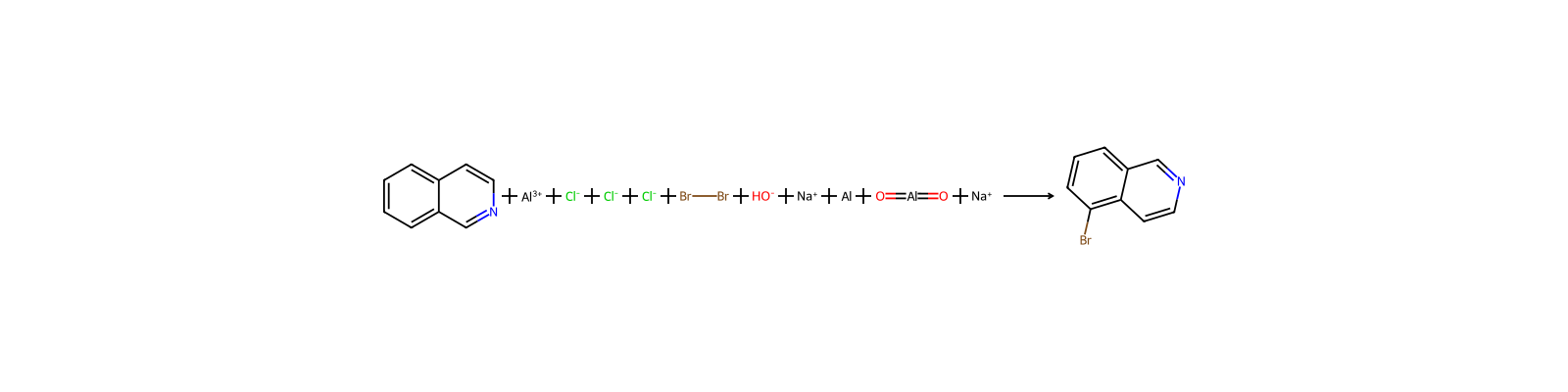
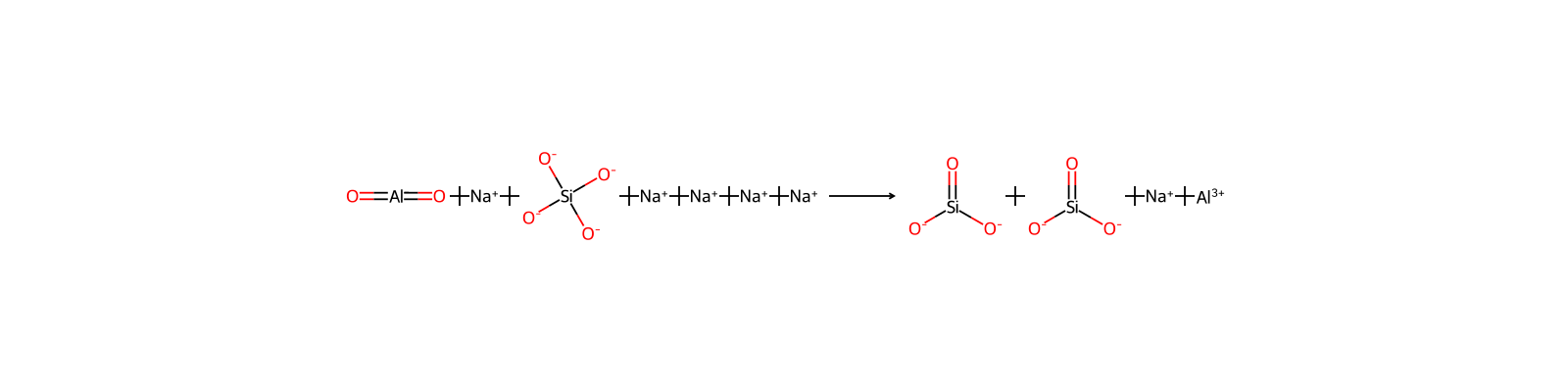
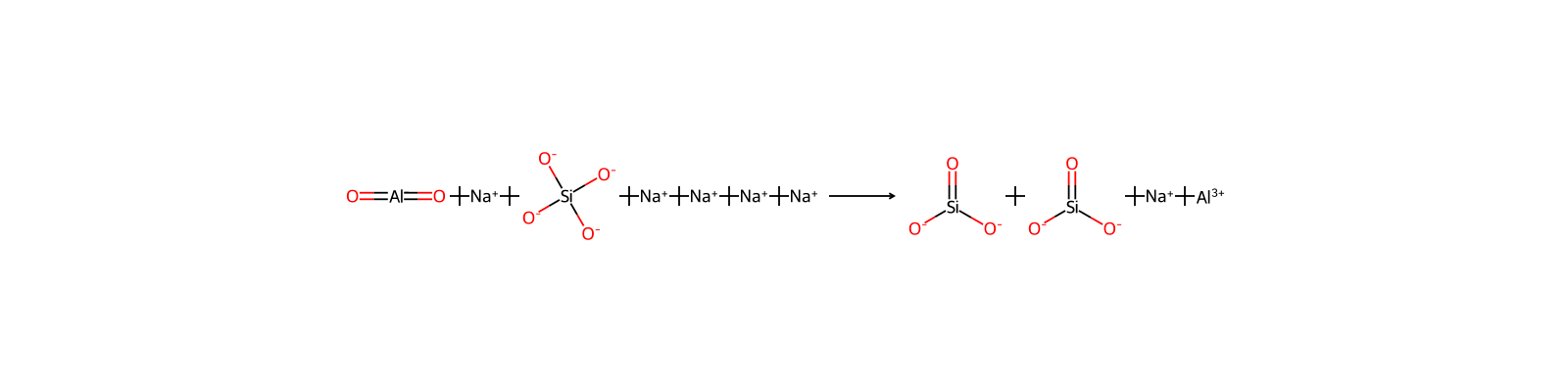
相关反应
53 条




关联笔记
加载中…