醋酸
乙酸 · 醋酸 · 冰醋酸 · 冰乙酸 · 乙酸冰 · 冰酸醋 · 稀乙酸 · PH酸
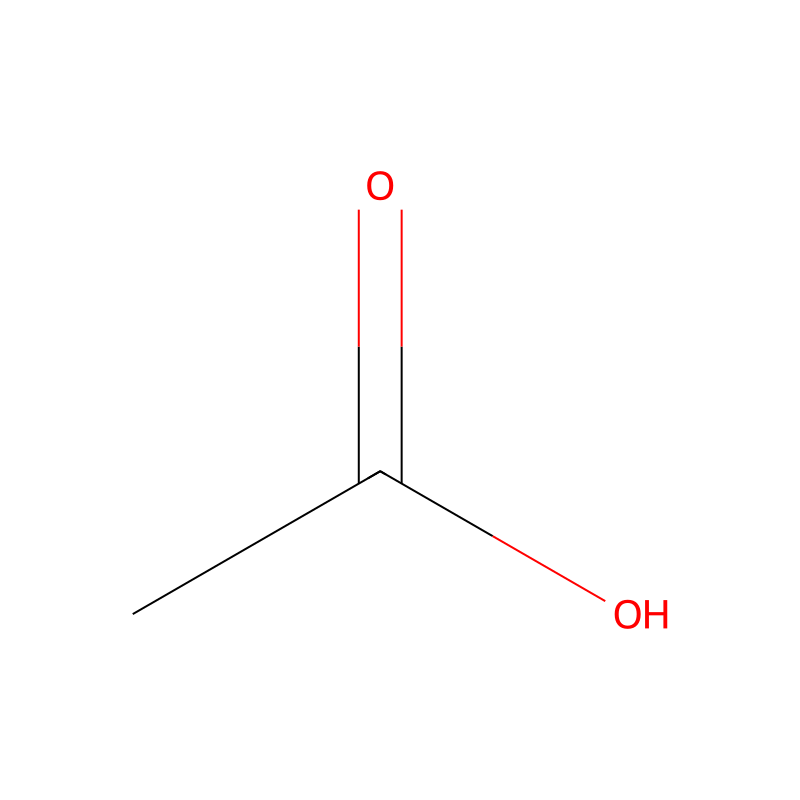
标识与物理属性
| CAS No. | 64-19-7 |
|---|---|
| 分子式 | C2H4O2 |
| 平均分子量 | 60.05 g/mol |
| 单同位素质量 | 60.02112937 g/mol |
| SMILES | CC(=O)O |
| InChIKey | QTBSBXVTEAMEQO-UHFFFAOYSA-N |
| PubChem CID | 176 |
| ChEMBL | CHEMBL539 |
| ChEBI | CHEBI:15366 |
| EC No. | 200-580-7 |
| DTXSID | DTXSID5024394 |
| 中文名 | 醋酸 |
化学与物理性质
| XLogP | -0.2 |
|---|---|
| 极性表面积 | 37.3 |
| 氢键供体 | 1 |
| 氢键受体 | 2 |
| 可旋转键 | 0 |
| 重原子 | 4 |
| 形式电荷 | 0 |
| 复杂度 | 31 |
| pH | Aqueous solution 1.0 molar = 2.40.1 molar = 2.90.01 molar = 3.43.91(1 mM solution)3.39(10 mM solution)2.88(100 mM solution) |
| LogP(油水分配系数) | -0.17log Kow = -0.17 |
| LogS | 1.22 |
| 气味 | PungentSour, vinegar-like odorStrong, pungent, vinegar-like odor detectable at 0.2 to 1.0 ppm |
| 味道 | Burning taste |
| 密度 | 1.051 at 68 °F (USCG, 1999) - Denser than waterwill sink1.0446 g/cu cm at 25 °CDensity: 1.266 at 16.60 °C (solid)1.053 at 16.67 °C (liquid)contracts slightly on freezingRelative density (water = 1): 1.051.0491.049 g/mL at 25 °C(lit.) |
| Viscosity | 1.056 mPa-s at 25 °C |
| Color/Form | Clear, colorless liquidColorless liquid or crystals (Note: Pure compound is a solid below 62 degrees F). Often used in an aqueous solution). |
| 溶解性 | greater than or equal to 100 mg/mL at 73 °F (NTP, 1992)1000000Miscible with waterMiscible with ethanol, ethyl ether, acetone, benzenesoluble in carbon tetrachloride, carbon disulfideMiscible with glycerolinsoluble in carbon disulfide1000.0 mg/mLalcohol: miscible(lit.) |
| Corrosivity | Corrosive organic acidGlacial acetic acid (100%) is highly corrosive, and its ingestion has produced penetrating lesions of the esophagus and later strictures of the esophagus and pylorus in man. |
| 闪点 | 104 °F (NTP, 1992)103 °F (NFPA, 2010)The Guide from the Emergency Response Guidebook is for "acetic acid, glacial." 39 °C103 °F (39 °C) Closed cup112 °F (open cup)104 °F (closed cup)39 °C c.c. |
| 沸点 | 244 °F at 760 mmHg (NTP, 1992)117.9117.9 °C118 °C117-118 °C(lit.) |
| 熔点 | 16.2 °C(lit.) |
| 蒸气密度 | 2.07 (vs air) |
| 蒸气压 | 11.4 mm Hg ( 20 °C) |
| FEMA | 2006 | ACETIC ACID |
| 折射率 | n20/D 1.371(lit.) |
| 储存条件 | Store below +30°C. |
| pKa(酸度系数) | 4.74(at 25℃) |
| 形态 | Solution |
| 颜色 | colorless |
| 比重 | 1.0492 (20℃) |
| 酸碱指示剂变色ph值范围 | 2.4 (1.0M solution) |
| 嗅觉阈值 | 0.006ppm |
| 香型 | acidic |
| 生物来源 | synthetic |
| 爆炸极限 | 4-19.9%(V) |
| 热导率 | 0.159 W/(m·K) at 25 ℃ |
| 最大波长(λmax) | λ: 260 nm Amax: 0.05λ: 270 nm Amax: 0.02λ: 300 nm Amax: 0.01λ: 500 nm Amax: 0.01 |
| Merck | 14,55 |
| JECFA Number | 81 |
| BRN | 506007 |
| 亨利常数 | 133, 122, 6.88, and 1.27 at pH values of 2.13, 3.52, 5.68, and 7.14, respectively (25 °C, Hakuta et al., 1977) |
| 暴露限值 | ACGIH:TLV-TWA 10 ppm (25 mg/m3)TLV-STEL 15 ppm (37 mg/m3)OSHA:PEL-TWA 10 ppm (25 mg/m3)NIOSH:REL-TWA 10 ppmREL-STEL 15 ppm |
| 介电常数 | 4.1(2℃) |
| 稳定性 | Volatile |
| 化妆品成分功效 | FRAGRANCEBUFFERING |
| 化妆品成分评估 | Acetic acid (64-19-7) |
| InChI | 1S/C2H4O2/c1-2(3)4/h1H3,(H,3,4) |
| InChIKey | QTBSBXVTEAMEQO-UHFFFAOYSA-N |
| SMILES | [F2C(F2C)13F3C]C(O)=O |
| LogP(油水分配系数) | -0.170 |
| 表面张力 | 26.10mN/m at 298.15K |
| CAS 数据库 | 64-19-7(CAS DataBase Reference) |
| NIST化学物质信息 | Acetic acid(64-19-7) |
| EPA化学物质信息 | Acetic acid (64-19-7) |
化学性质
乙酸(AcOH)为一元弱羧酸,具有羧酸的典型性质,与某些金属、金属氧化物和氢氧化物反应,生成盐,许多乙酸盐有重要用途,例如,四乙酸铅是一种重要的氧化剂,碱式乙酸铁〔Fe(C2H3OO)6OH(OOCCH3)2〕和〔Fe3(C2H3OO)6(OH)2(OOCCH3)〕、乙酸铅用作媒染剂, 乙酸亚铁用于印刷。乙酸与醇进行酯化反应;与不饱和烃在催化剂作用下,也能进行酯化反应;α- 氢可被卤素取代;与甲醛在催化剂作用下,进行醇醛缩合;硝酸在乙酸中进行硝化反应时,可提高硝化速度;与苯甲酰氯反应,可生成乙酰氯和苯甲酸。乙酸可生成各种有重要用途的衍生物,如乙酸甲酯、乙酯、丙酯、丁酯等,是涂料和油漆工业的极好溶剂。乙酸酐与纤维素作用生成的醋酸纤维素可用于制造胶片、喷漆以及各种塑料制品。一氯乙酸可制备羧甲基纤维素等。乙酸与乙炔生成的乙酸乙烯酯酸是合成药物、染料、香料的重要原料,也是处理橡胶的重要溶剂,乙酸在工业生产和有机合成中具有重要地位。
化学性质
无色透明液体,有刺激性气味。 与水、乙醇、苯和乙醚混溶,不溶于二硫化碳。
安全与法规
| GHS 分类 | DangerH226: Flammable liquid and vapor [Warning Flammable liquids]H314: Causes severe skin burns and eye damage [Danger Skin corrosion/irritation]P210, P233, P240, P241, P242, P243, P260, P264, P280, P301+P330+P331, P302+P361+P354, P303+P361+P353, P304+P340, P305+P354+P338, P316, P321, P363, P370+P378, P403+P235, P405, and P501 (click each P-code to see the statement)This chemical does not meet GHS hazard criteria for < 0.1% (3 of 5076) of reports. |
|---|---|
| 法规信息 | Chemical: Acetic acidCommission Regulation (EU) No 231/2012 (amended)Acetic acid is listed on the EPA's Chemical Data Reporting (CDR) system. Manufacturers and importers of Acetic acid are required to report information about their production and use of this chemical to the EPA under the Toxic Substances Control Act (TSCA). (40 eCFR Part 711)2008/127, Reg. (EU) 2017/195, Reg. (EU) 2022/708, Reg. (EU) 2023/1446, Reg. (EU) No 540/2011, Reg. (EU) No 790/2013Status: Active Update: 24-04-2023 https://echa.europa.eu/registration-dossier/-/registered-dossier/15549Acetic acid: Does not have an individual approval but may be used under an appropriate group standard |
| 其他安全信息 | IMAP assessments - Acetic acid: Environment tier I assessmentIMAP assessments - Acetic acid: Human health tier II assessment |
| 运输标签(DOT) | Corrosive Flammable Liquid |
| 火灾危害 | Special Hazards of Combustion Products: Irritating vapor generated when heated. (USCG, 1999)Excerpt from ERG Guide 153 [Substances - Toxic and/or Corrosive (Combustible)]:Combustible material: may burn but does not ignite readily. When heated, vapors may form explosive mixtures with air: indoors, outdoors and sewers explosion hazards. Those substances designated with a (P) may polymerize explosively when heated or involved in a fire. Corrosives in contact with metals may evolve flammable hydrogen gas. Containers may explode when heated. Runoff may pollute waterways. Substance may be transported in a molten form. (ERG, 2024)Excerpt from ERG Guide 132 [Flammable Liquids - Corrosive]:Flammable/combustible material. May be ignited by heat, sparks or flames. Vapors may form explosive mixtures with air. Vapors may travel to source of ignition and flash back. Most vapors are heavier than air. They will spread along the ground and collect in low or confined areas (sewers, basements, tanks, etc.). Vapor explosion hazard indoors, outdoors or in sewers. Those substances designated with a (P) may polymerize explosively when heated or involved in a fire. Runoff to sewer may create fire or explosion hazard. Containers may explode when heated. Many liquids will float on water. (ERG, 2024)· Flammable/combustible material.· May be ignited by heat, sparks or flames.· Vapors may form explosive mixtures with air.· Vapors may travel to source of ignition and flash back.· Most vapors are heavier than air. They will spread along the ground and collect in low or confined areas (sewers, basements, tanks, etc.).· Vapor explosion hazard indoors, outdoors or in sewers.· Those substances designated with a (P) may polymerize explosively when heated or involved in a fire.· Runoff to sewer may create fire or explosion hazard.· Containers may explode when heated.· Many liquids will float on water.Flammable. Above 39 °C explosive vapour/air mixtures may be formed. Risk of fire and explosion on contact with strong oxidants. |
| 火灾可能性 | Moderate fire risk. |
| 健康危害 | Breathing of vapors causes coughing, chest pain, and irritation of nose and throatmay cause nausea andvomiting. Contact with skin and eye causes burns. (USCG, 1999)Excerpt from ERG Guide 153 [Substances - Toxic and/or Corrosive (Combustible)]:TOXIC and/or CORROSIVEinhalation, ingestion or skin contact with material may cause severe injury or death. Methyl bromoacetate (UN2643) is an eye irritant/lachrymator (causes flow of tears). Contact with molten substance may cause severe burns to skin and eyes. Avoid any skin contact. Fire may produce irritating, corrosive and/or toxic gases. Runoff from fire control or dilution water may be corrosive and/or toxic and cause environmental contamination. (ERG, 2024)Excerpt from ERG Guide 132 [Flammable Liquids - Corrosive]:May cause toxic effects if inhaled or ingested. Contact with substance may cause severe burns to skin and eyes. Fire will produce irritating, corrosive and/or toxic gases. Vapors may cause dizziness or asphyxiation, especially when in closed or confined areas. Runoff from fire control or dilution water may cause environmental contamination. (ERG, 2024)· May cause toxic effects if inhaled or ingested.· Contact with substance may cause severe burns to skin and eyes.· Fire will produce irritating, corrosive and/or toxic gases.· Vapors may cause dizziness or asphyxiation, especially when in closed or confined areas.· Runoff from fire control or dilution water may cause environmental contamination. |
| 危害概述 | Liquid causes second degree burns after contact for a few minutes[CHRIS] Highly corrosive to skin[Quick CPC] Glacial refers to a number of acids, e.g., acetic and phosphoric, which have a freezing point slightly below room temperature when in a highly pure state. For example, glacial acetic acid is 99.8% pure and crystallizes at 16.6 C. [Hawley] Household vinegar is usually a 5% solution. Use skin protection if >10% solution of acetic acid. The vapor can cause lacrimation. [HSDB] A case of RADS and a case of asthma caused by glacial acetic acid have been reported in the medical literature. [Rajan, 1989Kivity, 1994] Pulmonary edema may result from inhalation of high concentrations. [NJ-HSFS] |
| 运输编号与指南(DOT) | 2789 1322790 153(10-80% acid)2789 132(>80% acid) |
| FDA 要求 | The Approved Drug Products with Therapeutic Equivalence Evaluations List identifies currently marketed prescription drug products, incl acetic acid, approved on the basis of safety and effectiveness by FDA under sections 505 of the Federal Food, Drug, and Cosmetic Act. The Approved Drug Products with Therapeutic Equivalence Evaluations identifies currently marketed prescription drug products, including acetic acid, glacial, approved on the basis of safety and effectiveness by FDA under sections 505 of the Federal Food, Drug, and Cosmetic Act.Substance added directly to human food affirmed as generally recognized as safe (GRAS).Acetic acid used as a general purpose food additive in animal drugs, feeds, and related products is generally recognized as safe when used in accordance with good manufacturing or feeding practice.Drug products containing certain active ingredients offered over-the-counter (OTC) for certain uses. A number of active ingredients have been present in OTC drug products for various uses, as described below. However, based on evidence currently available, there are inadequate data to establish general recognition of the safety and effectiveness of these ingredients for the specified uses: Acetic acid is included in topical otic drug products. |
| 反应性基团 | Acids, CarboxylicWater and Aqueous Solutions |
| 欧共体分类 | Symbol: CR: 10-35S: (1/2)-23-26-45Note: B |
| 联合国分类 | UN Hazard Class: 8UN Subsidiary Risks: 3UN Pack Group: II |
| 消防 | Excerpt from ERG Guide 132 [Flammable Liquids - Corrosive]:Some of these materials may react violently with water.SMALL FIRE: Dry chemical, CO2, water spray or alcohol-resistant foam.LARGE FIRE: Water spray, fog or alcohol-resistant foam. If it can be done safely, move undamaged containers away from the area around the fire. Dike runoff from fire control for later disposal. Do not get water inside containers.FIRE INVOLVING TANKS, RAIL TANK CARS OR HIGHWAY TANKS: Fight fire from maximum distance or use unmanned master stream devices or monitor nozzles. Cool containers with flooding quantities of water until well after fire is out. Withdraw immediately in case of rising sound from venting safety devices or discoloration of tank. ALWAYS stay away from tanks in direct contact with flames. For massive fire, use unmanned master stream devices or monitor nozzlesif this is impossible, withdraw from area and let fire burn. (ERG, 2024)Excerpt from ERG Guide 153 [Substances - Toxic and/or Corrosive (Combustible)]:SMALL FIRE: Dry chemical, CO2 or water spray.LARGE FIRE: Dry chemical, CO2, alcohol-resistant foam or water spray. If it can be done safely, move undamaged containers away from the area around the fire. Dike runoff from fire control for later disposal.FIRE INVOLVING TANKS, RAIL TANK CARS OR HIGHWAY TANKS: Fight fire from maximum distance or use unmanned master stream devices or monitor nozzles. Do not get water inside containers. Cool containers with flooding quantities of water until well after fire is out. Withdraw immediately in case of rising sound from venting safety devices or discoloration of tank. ALWAYS stay away from tanks in direct contact with flames. (ERG, 2024)Use powder, alcohol-resistant foam, water spray, carbon dioxide. In case of fire: keep drums, etc., cool by spraying with water. |
| 急救措施 | Fresh air, rest. Half-upright position. Refer immediately for medical attention.Remove contaminated clothes. Rinse and then wash skin with water and soap. Rinse skin with plenty of water or shower for at least 15 minutes. Refer immediately for medical attention.Rinse with plenty of water (remove contact lenses if easily possible). Refer immediately for medical attention.Rinse mouth. Do NOT induce vomiting. If within a few minutes after ingestion, one small glass of water may be given to drink. Refer immediately for medical attention. |
| 泄漏应急措施 | · CALL 911. Then call emergency response telephone number on shipping paper. If shipping paper not available or no answer, refer to appropriate telephone number listed on the inside back cover.· Keep unauthorized personnel away.· Stay upwind, uphill and/or upstream.· Ventilate closed spaces before entering, but only if properly trained and equipped.· ELIMINATE all ignition sources (no smoking, flares, sparks or flames) from immediate area.· All equipment used when handling the product must be grounded.· Do not touch or walk through spilled material.· Stop leak if you can do it without risk.· Prevent entry into waterways, sewers, basements or confined areas.· A vapor-suppressing foam may be used to reduce vapors.· Absorb with earth, sand or other non-combustible material.· For hydrazine, absorb with DRY sand or inert absorbent (vermiculite or absorbent pads).· Use clean, non-sparking tools to collect absorbed material.Large Spill· Dike far ahead of liquid spill for later disposal.· Water spray may reduce vapor, but may not prevent ignition in closed spaces. |
| 急救 | EYES: First check the victim for contact lenses and remove if present. Flush victim's eyes with water or normal saline solution for 20 to 30 minutes while simultaneously calling a hospital or poison control center. Do not put any ointments, oils, or medication in the victim's eyes without specific instructions from a physician. IMMEDIATELY transport the victim after flushing eyes to a hospital even if no symptoms (such as redness or irritation) develop.SKIN: IMMEDIATELY flood affected skin with water while removing and isolating all contaminated clothing. Gently wash all affected skin areas thoroughly with soap and water. IMMEDIATELY call a hospital or poison control center even if no symptoms (such as redness or irritation) develop. IMMEDIATELY transport the victim to a hospital for treatment after washing the affected areas.INHALATION: IMMEDIATELY leave the contaminated areatake deep breaths of fresh air. If symptoms (such as wheezing, coughing, shortness of breath, or burning in the mouth, throat, or chest) develop, call a physician and be prepared to transport the victim to a hospital. Provide proper respiratory protection to rescuers entering an unknown atmosphere. Whenever possible, Self-Contained Breathing Apparatus (SCBA) should be usedif not available, use a level of protection greater than or equal to that advised under Protective Clothing.INGESTION: DO NOT INDUCE VOMITING. Corrosive chemicals will destroy the membranes of the mouth, throat, and esophagus and, in addition, have a high risk of being aspirated into the victim's lungs during vomiting which increases the medical problems. If the victim is conscious and not convulsing, give 1 or 2 glasses of water to dilute the chemical and IMMEDIATELY call a hospital or poison control center. IMMEDIATELY transport the victim to a hospital. If the victim is convulsing or unconscious, do not give anything by mouth, ensure that the victim's airway is open and lay the victim on his/her side with the head lower than the body. DO NOT INDUCE VOMITING. Transport the victim IMMEDIATELY to a hospital. (NTP, 1992)Excerpt from ERG Guide 153 [Substances - Toxic and/or Corrosive (Combustible)]:Refer to the "General First Aid" section. Specific First Aid: For corrosives, in case of contact, immediately flush skin or eyes with running water for at least 30 minutes. Additional flushing may be required. Removal of solidified molten material from skin requires medical assistance. (ERG, 2024)Excerpt from ERG Guide 132 [Flammable Liquids - Corrosive]:Refer to the "General First Aid" section. Specific First Aid: For corrosives, in case of contact, immediately flush skin or eyes with running water for at least 30 minutes. Additional flushing may be required. In case of burns, immediately cool affected skin for as long as possible with cold water. Do not remove clothing if adhering to skin. (ERG, 2024)General First Aid:· Call 911 or emergency medical service.· Ensure that medical personnel are aware of the material(s) involved, take precautions to protect themselves and avoid contamination.· Move victim to fresh air if it can be done safely.· Administer oxygen if breathing is difficult.· If victim is not breathing:-- DO NOT perform mouth-to-mouth resuscitationthe victim may have ingested or inhaled the substance.-- If equipped and pulse detected, wash face and mouth, then give artificial respiration using a proper respiratory medical device (bag-valve mask, pocket mask equipped with a one-way valve or other device).-- If no pulse detected or no respiratory medical device available, provide continuous compressions. Conduct a pulse check every two minutes or monitor for any signs of spontaneous respirations.· Remove and isolate contaminated clothing and shoes.· For minor skin contact, avoid spreading material on unaffected skin.· In case of contact with substance, remove immediately by flushing skin or eyes with running water for at least 20 minutes.· For severe burns, immediate medical attention is required.· Effects of exposure (inhalation, ingestion, or skin contact) to substance may be delayed.· Keep victim calm and warm.· Keep victim under observation.· For further assistance, contact your local Poison Control Center.· Note: Basic Life Support (BLS) and Advanced Life Support (ALS) should be done by trained professionals.Specific First Aid:· For corrosives, in case of contact, immediately flush skin or eyes with running water for at least 30 minutes. Additional flushing may be required.(General first aid procedures)Eye: Irrigate immediately - If this chemical contacts the eyes, immediately wash (irrigate) the eyes with large amounts of water, occasionally lifting the lower and upper lids. Get medical attention immediately.Skin: Water flush immediately - If this chemical contacts the skin, immediately flush the contaminated skin with water. If this chemical penetrates the clothing, immediately remove the clothing and flush the skin with water. Get medical attention promptly.Breathing: Respiratory supportSwallow: Medical attention immediately - If this chemical has been swallowed, get medical attention immediately. |
| 安全储存 | Fireproof. Separated from food and feedstuffs, strong oxidants, strong acids and strong bases. Store only in original container. Well closed. Keep in a well-ventilated room. Store in an area without drain or sewer access. |
| Firefighting Hazards | Advice for firefighters: wear self contained breathing apparatus for fire fighting. ...Combustion may produce irritants and toxic gases. |
| 暴露控制与个人防护 | · Wear positive pressure self-contained breathing apparatus (SCBA).· Wear chemical protective clothing that is specifically recommended by the manufacturer when there is NO RISK OF FIRE.· Structural firefighters' protective clothing provides thermal protection but only limited chemical protection.163.0 [ppm]10.0 [ppm] |
| 灭火程序 | Use water spray, dry chemical, "alcohol resistant" foam, or carbon dioxide. Use water to keep fire-exposed containers cool./When fighting fire/ use self-contained breathing apparatus with a full facepiece operated in pressure-demand or other positive pressure mode. |
| 储存条件 | Store in a dry, well-ventilated place. Separate from oxidizing materials and alkaline substances.Fireproof. Separate from food and feedstuffs. Keep in a well-ventilated room.... Quantities greater than 1 liter should be stored in tightly sealed metal containers in areas separate from oxidizers. |
| 清理方法 | Collect leaking liquid in sealable containers. Cautiously neutralize spilled liquid with sodium carbonate only under the responsibility of an expert. Wash away remainder with plenty of water (extra personal protection: chemical protection suit including self-contained breathing apparatus).Remove all ignition sources, ventilate area of spill or leak. If in liquid form, for small quantities, absorb on paper towels ... large quantities can be collected & atomized in suitable combustion chamber, or diluted ... neutralized & flushed into a sewer. If in the solid form, collect in the most safe & convenient manner for reclamation or allow to melt & collect as above.Methods and materials for containment and cleaning up: soak up with inert absorbent material (e.g. sand, silica gel, acid binder, universal binder, sawdust). Contain spillage, soak up with non-combustible absorbent material, (e.g. sand, earth, diatomaceous earth, vermiculite) and transfer to a container for disposal according to local/national regulations.Environmental precautions: prevent further leakage or spillage if safe to do so. Do not let product enter drains.For more Cleanup Methods (Complete) data for ACETIC ACID (7 total), please visit the HSDB record page. |
| 非火灾泄漏应对 | Excerpt from ERG Guide 132 [Flammable Liquids - Corrosive]:ELIMINATE all ignition sources (no smoking, flares, sparks or flames) from immediate area. All equipment used when handling the product must be grounded. Do not touch or walk through spilled material. Stop leak if you can do it without risk. Prevent entry into waterways, sewers, basements or confined areas. A vapor-suppressing foam may be used to reduce vapors. Absorb with earth, sand or other non-combustible material. For hydrazine, absorb with DRY sand or inert absorbent (vermiculite or absorbent pads). Use clean, non-sparking tools to collect absorbed material.LARGE SPILL: Dike far ahead of liquid spill for later disposal. Water spray may reduce vapor, but may not prevent ignition in closed spaces. (ERG, 2024)Excerpt from ERG Guide 153 [Substances - Toxic and/or Corrosive (Combustible)]:ELIMINATE all ignition sources (no smoking, flares, sparks or flames) from immediate area. Do not touch damaged containers or spilled material unless wearing appropriate protective clothing. Stop leak if you can do it without risk. Prevent entry into waterways, sewers, basements or confined areas. Absorb or cover with dry earth, sand or other non-combustible material and transfer to containers. DO NOT GET WATER INSIDE CONTAINERS. (ERG, 2024) |
| 处置方法 | SRP: The most favorable course of action is to use an alternative chemical product with less inherent propensity for occupational harm/injury/toxicity or environmental contamination. Recycle any unused portion of the material for its approved use or return it to the manufacturer or supplier. Ultimate disposal of the chemical must consider: the material's impact on air qualitypotential migration in soil or watereffects on animal and plant lifeand conformance with environmental and public health regulations.SRP: Wastewater from contaminant suppression, cleaning of protective clothing/equipment, or contaminated sites should be contained and evaluated for subject chemical or decomposition product concentrations. Concentrations shall be lower than applicable environmental discharge or disposal criteria. Alternatively, pretreatment and/or discharge to a permitted wastewater treatment facility is acceptable only after review by the governing authority and assurance that "pass through" violations will not occur. Due consideration shall be given to remediation worker exposure (inhalation, dermal and ingestion) as well as fate during treatment, transfer and disposal. If it is not practicable to manage the chemical in this fashion, it must be evaluated in accordance with EPA 40 CFR Part 261, specifically Subpart B, in order to determine the appropriate local, state and federal requirements for disposal.Burn in a chemical incinerator equipped with an afterburner and scrubber but exert extra care in igniting as this material is highly flammable. Offer surplus and non-recyclable solutions to a licensed disposal company. Contact a licensed professional waste disposal service to dispose of this material. Contaminated packaging: dispose of as unused product. |
| 体内负荷 | Acetic acid was qualitatively detected in 2 of 12 human milk samples collected from volunteers in four US cities(1). Acetic acid at 19.9 mg/day was measured from non-specified human emissions(2). Humans exude <90mg/day of volatile fatty acids in exhaled breath and perspiration, 80% of which is acetic acid(3)in a confined environment, as much as 15-20 mg/cu m can accumulate and such concentrations can become serious in submarines or space capsules(3). |
| Treatment | In cases of skin or eye exposure, the area should be flushed with water and burns covered with dry, sterile dressings after decontamination. If ingested, rinse mouth and administer 5 mL/kg up to 200 mL of water for dilution. Watch for signs of respiratory insufficiency and assist respiration if necessary. (A569) |
| 相互作用 | Pain increases the rate, frequency, or intensity of some behaviors (eg, withdrawal responses) and suppresses other behaviors (eg, feeding). /The study is/ developing assays to test analgesic drug candidates using measurements of pain-suppressed rather than pain-elicited behaviors. Such assays may model important aspects of clinical pain and provide a means for distinguishing true analgesics from drugs that produce motor impairment. The present study compared effects of the mu opioid analgesic morphine and the nonanalgesic neuroleptic haloperidol on intraperitoneal acetic acid-induced writhing (a pain-elicited behavior) and suppression of feeding behavior (a pain-suppressed behavior). In feeding studies, C57BL/6J mice were given access to a dish containing 8 mL Ensure (trade mark) liquid food (0-100% in water) during daily sessions (7.5-120 min). Levels of consumption were dependent on both Ensure concentration and session duration. Intraperitoneal injection of acetic acid (0.10-0.56%) produced a time- and concentration-dependent decrease in Ensure consumption. Morphine (1 mg/kg) prevented both acid-induced writhing and acid-induced suppression of feeding, whereas the dopamine antagonist haloperidol inhibited writhing without preventing acid-induced suppression of feeding. The effects of morphine were time-dependent, selective for acid-suppressed feeding, and naltrexone-reversible. These results suggest that assays of pain-suppressed behaviors may complement assays of pain-elicited behaviors in preclinical studies of candidate analgesics...Amylin is a member of calcitonin or calcitonin gene-related peptide (CGRP) family. Immunohistochemical study revealed a dense network of amylin-immunoreactive (irAMY) cell processes in the superficial dorsal horn of the mice. Numerous dorsal root ganglion (DRG) and trigeminal ganglion cells expressed moderate to strong irAMY. Reverse transcriptase-polymerase chain reaction (RT-PCR) revealed amylin receptor mRNA in the mouse spinal cord, brain stem, cortex, hypothalamus and hippocampus. The nociceptive or antinociceptive effects of amylin were evaluated in the acetic acid-induced writhing test. Amylin (0.1, 0.5 and 1 mg/kg, intraperitoneally (i.p.) or 1-10 microg, intrathecally (i.t.)) reduced the number of writhes in a dose-dependent manner. Pretreatment of the mice with the amylin receptor antagonist salmon calcitonin (8-32), either by i.p. or i.t., antagonized the effect of amylin on acetic acid-induced writhing test. Locomotor activity was not significantly modified by amylin injected either i.p. (0.01-1 mg/kg) or i.t. (1-10 microg). Measurement of c-fos mRNA by RT-PCR or proteins by Western blot showed that the levels were upregulated in the spinal cord of mice injected with acetic acid and the increase was attenuated by pretreatment with amylin (10 microg, i.t.). Collectively, /these/ result demonstrates that irAMY is expressed in DRG neurons with their cell processes projecting to the superficial layers of the dorsal horn, and that the peptide by interacting with amylin receptors in the spinal cord may be antinociceptive.INTRODUCTION: Increased free-radical production, decreased antioxidant capacity, and excessive inflammation are well-known features in the pathogenesis of inflammatory bowel disease. Melatonin is a powerful antioxidant and a scavenger of hydroxyl radicals. Melatonin has also been shown to have anti-inflammatory activities in tissues. /This/ study objective is to investigate the effects of melatonin on tissue inflammatory activities using an ulcerative colitis (UC) model induced by acetic acid (AA) in rats. METHODS: Wistar rats (n = 32) were divided into four groups. AA-induced colitis was performed in two of the groups, while the other two groups were injected with saline intrarectally. One of the AA-induced colitis groups and one of the control groups were administered 100 mg/kg/day melatonin intraperitoneally, and the pair groups were given saline. After 4 days, colonic changes were evaluated biochemically by measuring proinflammatory cytokines [tumor necrosis factor (TNF)-alpha, interleukin (IL)-1beta, and IL-6], myeloperoxidase (MPO), malondialdehyde (MDA), glutathione (GSH), and superoxide dismutase (SOD) levels in tissue homogenates and by histopathological examination. RESULTS: AA caused colonic mucosal injury, whereas melatonin suppressed these changes in the AA-induced colitis group (P < 0.001). AA administration resulted in increased TNF-alpha, IL-1beta, IL-6, MPO, and MDA levels, and decreased GSH and SOD levels, whereas melatonin administration reversed these effects (all P < 0.001). CONCLUSIONS: The present study proposes that melatonin has a dual action as an effective anti-inflammatory and an antioxidant, and may be a hopeful therapeutic agent for UC.In the present study, the effect of chronic oral administration of curcumin in the presence or absence of morphine and noloxone was investigated on the visceral nociception induced by acetic acid in rats. Intraperitoneal injection of acetic acid (1 mL, 2%) produced contractions in the abdominal musculature (writhes). The latency time to the beginning of the first writhe was measured and the total number of writhes in the 1 hr after acetic acid injection was counted. The latency time to the beginning of the first writhe was significantly (p < 0.05) increased and the number of writhes was significantly (p < 0.05) decreased by curcumin (20 and 40 mg/kg body weight). The same results were obtained after subcutaneous injection of morphine (1 mg/kg b.wt.). Naloxone at the dose of 1 mg/kg body weight had no effect on pain intensity. Curcumin significantly (p < 0.05) enhanced the effect of morphine on the visceral pain responses, however did not reverse the effect of naloxone. Present data suggest that in the acetic acid-induced visceral nociception of rats, curcumin may produce an antinociceptive effect and the endogenous analgesic opioid system is involved in the curcumin-induced antinociception.Nine out bred white male rats weighing approximately 100 g were used in /this/ study. Rats were given either N-nitrosarcosin ethyl ester (NSEE) alone, NSEE with the acetic acid solution, or the acetic acid solution alone. doses (0.5 mL of 3% water solution of acetic acid (about 60 mg/kg bw/treatment) were given by intubation into the esophagus 3 times per week. Animals were killed by ether inhalation after 8 months of experiments and autopsied. As expected, rats treated with the carcinogen NSEE had high incidences of pre-neoplastic lesions of the esophagus and forestomach, as well as benign tumors, carcinomas and squamous cell cancer. Prolonged administration of acetic acid in combination with NSEE resulted in an increase in the number of benign and malignant tumors and carcinomas in the esophagus. Prolonged administration of acetic acid alone did not induce tumors. All nine of these rats, however, did experience hyperplasia in the esophagus and forestomach. |
| 靶器官 | Eyes, skin, respiratory system, teeth |
| 健康影响 | Concentrated acetic acid is corrosive and can cause skin burns, permanent eye damage, and irritation to the mucous membranes. Ingestion can cause severe damage to the digestive system and a potentially lethal change in the acidity of the blood. (L1885) |
| 生态毒性数值 | EC50Species: Chlorococcales (Green Algae Order)Conditions: freshwater, staticConcentration: 156000 ug/L for 24 hrEffect: physiology, assimilation efficiency /formulation/LC50Species: Crangon septemspinosa (Bay Shrimp, Sand Shrimp) weight 0.003 gConditions: saltwater, renewal, 15 °C, pH 3.64-8.07Concentration: 116000 ug/L for 14 days (95% confidence interval: 85900-157000 ug/L) /99.7% purity/Conditions: saltwater, static, 15 °C, pH 2.26-7.96Concentration: 158000 ug/L for 96 hr (95% confidence interval: 50000-500000 ug/L) /99.7% purity/Species: Daphnia magna (Water flea)Conditions: static bioassay, neutralized to pH 8.0 and 20 °CConcentration: 6,000 mg/L for 24 hrEffect: immobilizationFor more Ecotoxicity Values (Complete) data for ACETIC ACID (25 total), please visit the HSDB record page. |
| 环境归趋 | TERRESTRIAL FATE: Based on a classification scheme(1), an experimentally derived Koc value of 1.0(2,3), indicates that acetic acid is expected to have very high mobility in soil(SRC). No detectable sorption was measured for acetic acid using the OECD Guideline 106 method in three different soils(4). The pKa of acetic acid is 4.76(5), indicating that this compound will exist predominantly in anion form in the environment and anions generally do not adsorb more strongly to soils containing organic carbon and clay than their neutral counterparts(6). Volatilization of acetic acid from moist soil surfaces is not expected to be an important fate process(SRC) given a Henry's Law constant of 1.43X10⁻⁷ atm-cu m/mole(7). Acetic acid is expected to volatilize from dry soil surfaces(SRC) based upon a vapor pressure of 15.7 mm Hg at 25 °C(8). Using a modified Organization of Economic Cooperation and Development (OECD) protocol, 75% degradation was reported in 14 days using garden soil as an inoculum(9), indicating that biodegradation is an important environmental fate process in soil(SRC).AQUATIC FATE: Based on a classification scheme(1), a Koc value of 1.0(2,3), indicates that acetic acid is not expected to adsorb to suspended solids and sediment(SRC). Volatilization from water surfaces is not expected(4) based upon a Henry's Law constant of 1.43X10⁻⁷ atm-cu m/mole(5). The pKa of acetic acid is 4.76(6), indicating that this compound will exist predominantly in anion form at an environmental pH range of 5-9. According to a classification scheme(7), an estimated BCF of 3(SRC), from its log Kow of -0.71(8) and a regression-derived equation(9), suggests the potential for bioconcentration in aquatic organisms is low(SRC). Hydrolysis is not expected to be an important environmental fate process(SRC) since this compound lacks functional groups that hydrolyze under environmental conditions(4). Utilizing the Japanese MITI test, a 74% of theoretical BOD in 2 weeks using activated sludge(10) indicates that biodegradation is an important environmenal fate process in water(SRC).ATMOSPHERIC FATE: According to a model of gas/particle partitioning of semivolatile organic compounds in the atmosphere(1), acetic acid, which has a vapor pressure of 15.7 mm Hg at 25 °C(2), is expected to exist solely as a vapor in the ambient atmosphere. The pure compound is a solid below 68 °F(3). Particulate-phase acetic acid will be removed from the atmosphere by wet and dry deposition. Vapor-phase acetic acid is degraded in the atmosphere by reaction with photochemically-produced hydroxyl radicals(SRC)the half-life for this reaction in air is estimated to be 22 days(SRC), calculated from its measured rate constant of 7.4X10⁻¹³ cu cm/molecule-sec at 25 °C(4). Particulate-phase acetic acid will be removed from the atmosphere by wet and dry deposition. Acetic acid does not absorb light with wavelengths >290 nm(5) and, therefore, is not expected to be susceptible to direct photolysis by sunlight(SRC). Acetic acid occurs in rainwater, cloud water and fog(6-8) and can be removed from the atmosphere by wet deposition(SRC). |
| 食品调查数值 | Acetic acid was identified as the major volatile constituent of commercial brown sugars(1)concentrations ranging from 31-827 ppm were detected in 26 brown sugars collected worldwide(1). The source of the acetic acid was found to be bacterial action in recycled sweet waters containing low levels of sucrose(1). Acetic acid was qualitatively detected as a volatile component of fried bacon, smoked pork, baked potatoes, soy sauce, roasted filbert nuts and frankfurters(2-6). Mean acetic acid concentrations of 39.6-116.6 were detected in several honeydew honey extracts(7).Acetic acid was measured as a volatile compound in popped popcorn at a concentration of 4000 ug/kg(1), and in the extract of edible Korean chamchwi(2), cured pork(3), and volatiles from boiled short-necked clams, clams, and corbicula(4) at unreported concentrations. Volatile compounds from Bisbee Delicious apples included acetic acid present at concentrations from 25.6 to 3505.0 picoliter/kg-hr depending on the date of harvest(5). Acetic acid was reported in 7 different wines, ciders, and dessert wines and brandies from Germany at concentrations from 80 to 363 mg/L(6).Twenty-two acids in ground roast coffees and instant coffees were determined by GLC (gas liquid chromatography) of their silyl derivatives (after preseparation by gel electrophoresis or isotachophoresis). The contribution to the total acidity (which was estimated by titration to pH 8 after cation exchange of the coffee solutions) was calculated for each individual acid. The acids contribute 67% (roast coffee) and 72% (instant coffee) to the total acidity. Citric acid (12.2% in roast coffee/10.7% in instant coffee), acetic acid (11.2%/8.8%) and the high MW acids (8%/9%) contribute to the total acidity. |
| 不良影响 | Dermatotoxin - Skin burns.Lacrimator (Lachrymator) - A substance that irritates the eyes and induces the flow of tears.Asthma - Reversible bronchoconstriction (narrowing of bronchioles) initiated by the inhalation of irritating or allergenic agents.Toxic Pneumonitis - Inflammation of the lungs induced by inhalation of metal fumes or toxic gases and vapors. |
| 暴露途径 | Serious local effects by all routes of exposure.inhalation, skin and/or eye contactOral (L1886)ihalation (L1886)ingestion (L1886) |
| Milk Concentrations | Acetic acid was qualitatively detected in 2 of 12 human milk samples collected from volunteers in four US cities(1). |
| 毒性概述 | Safe in the present practices of use and concentration. Ingredient, concentration, and use information are available in documents discoverable at https://cir-reports.cir-safety.orgIDENTIFICATION AND USE: Acetic acid is a colorless liquid or solid, having a pungent characteristic odor, and when diluted in water an acidic taste. Glacial acetic acid is a 99% active chemical. It is used as an acidifier, flavoring agent, for the prevention of rope in baking, and as a solvent. Acetic acid is used as a laboratory reagent in chemical and biochemical analysis, in field testing of lead fumes, vinyl chloride determination, uric acid in urine, aniline vapors, and separation of gases. In addition, acetic acid is used in pesticide formulations as a herbicide to controls weeds on fruits, vegetables, ornamentals and turf. It is also a component of the hydraulic fracturing fluids preventing precipitation of metal oxides (iron control). Registered for use in the U.S., but approved pesticide uses may change periodically, so federal, state and local authorities must be consulted for currently approved uses. Three to 5% acetic acid is commonly used in the field of gynecology for colposcopic examinations of the cervix. It gives an 'acetowhite' effect that may assist clinicians in identifying neoplastic areas. HUMAN EXPOSURE AND TOXICITY: Acetic acid is absorbed from the gastrointestinal tract and through the lungs and almost completely oxidized by tissues. The metabolic pathways are reasonably well known and involve the formation of ketone bodies. As little as 1.0 mL of glacial acetic acid has resulted in perforation of the esophagus. During acetic acid dialysis, patients showed a frequent onset of sudden hypotension and arrhythmia with concomitant symptoms of the so-called disequilibrium syndrome. Extreme eye and nasal irritation has occurred at concentrations in excess of 25 ppm and conjunctivitis from concentrations below 10 ppm has been reported. Glacial acetic acid has caused permanent corneal opacification. Ingestion of 200 mL of an 80% solution of acetic acid caused repeated shock due to myocardial infarction and massive intestinal bleeding led to an orAcetic acid is toxic due to its corrosive nature. In addition to causing skin burns and irritation to the mucous membranes, ingestion can result in severe damage to the digestive system and a potentially lethal change in the acidity of the blood. (L1885) |
| FIFRA 要求 | Residues of acetic acid are exempted from the requirement of a tolerance when used in accordance with good agricultural practice as inert (or occasionally active) ingredients in pesticide formulations applied to animals. Use: Catalyst. Limit: Not more than 0.5% of pesticide formulation.Residues of the following chemical substances are exempted from the requirement of a tolerance when used in accordance with good manufacturing practice as ingredients in an antimicrobial pesticide formulation, provided that the substance is applied on a semi-permanent or permanent food-contact surface (other than being applied on food packaging) with adequate draining before contact with food. (a) The following chemical substances when used as ingredients in an antimicrobial pesticide formulation may be applied to: Food-contact surfaces in public eating places, dairy-processing equipment, and food-processing equipment and utensils. Acetic acid is included on this list. Limit: When ready for use, the end-use concentration is not to exceed 290 ppm.Residues of the following chemical substances are exempted from the requirement of a tolerance when used in accordance with good manufacturing practice as ingredients in an antimicrobial pesticide formulation, provided that the substance is applied on a semi-permanent or permanent food-contact surface (other than being applied on food packaging) with adequate draining before contact with food. ... (b) The following chemical substances when used as ingredients in an antimicrobial pesticide formulation may be applied to: Dairy processing equipment, and food-processing equipment and utensils. Acetic acid is included on this list. Limit: When ready for use, the end-use concentration is not to exceed 686 ppm.Residues of the following chemical substances are exempted from the requirement of a tolerance when used in accordance with good manufacturing practice as ingredients in an antimicrobial pesticide formulation, provided that the substance is applied on a semi-permanent or permanent food-contact surface (other than being applied on food packaging) with adequate draining before contact with food. ... (c) The following chemical substances when used as ingredients in an antimicrobial pesticide formulation may be applied to: Food-processing equipment and utensils. Acetic acid is included on this list. When ready for use, the end-use concentration is not to exceed 686 ppm.New Active Ingredients ... includes pesticide active ingredients initially registered after November 1, 1984, that currently have active product registrations. By law, these newer pesticides are not subject to the reregistration program. They must, however, meet the new safety standard of the FQPA, and will be reviewed on a 15-year cycle under the registration review program. ... Active Ingredient Number: 044001Type of Pesticide: biopesticide-herbicideUse Site: non-food use (ornamental turf)Year: 1997. |
| 大气标准 | This action promulgates standards of performance for equipment leaks of Volatile Organic Compounds (VOC) in the Synthetic Organic Chemical Manufacturing Industry (SOCMI). The intended effect of these standards is to require all newly constructed, modified, and reconstructed SOCMI process units to use the best demonstrated system of continuous emission reduction for equipment leaks of VOC, considering costs, non air quality health and environmental impact and energy requirements. Acetic acid is produced, as an intermediate or a final product, by process units covered under this subpart. |
| CERCLA 应报告数量 | Persons in charge of vessels or facilities are required to notify the National Response Center (NRC) immediately, when there is a release of this designated hazardous substance, in an amount equal to or greater than its reportable quantity of 5000 lb or 2270 kg. The toll free number of the NRC is (800) 424-8802. The rule for determining when notification is required is stated in 40 CFR 302.4 (section IV. D.3.b). |
| 清洁水法要求 | Acetic acid is designated as a hazardous substance under section 311(b)(2)(A) of the Federal Water Pollution Control Act and further regulated by the Clean Water Act Amendments of 1977 and 1978. These regulations apply to discharges of this substance. This designation includes any isomers and hydrates, as well as any solutions and mixtures containing this substance. |
| F | 1-8-10 |
| 水危害等级(WGK) | 3 |
| TSCA 清单状态 | TSCA listed |
| 毒性 | LD50 in rats (g/kg): 3.53 orally (Smyth) |
| RTECS 号 | NN1650000 |
| 包装类别 | II |
| 危险类别 | 8Eye Dam. 1Flam. Liq. 3Skin Corr. 1A |
| 储存类别 | 3 - Flammable liquids |
| 安全说明(S) | 26-36/37/39-45-23-24/25 |
| 海关编码 | 29152100 |
| 自燃温度 | 426 °C |
| 危险品标志 | C,Xi |
| 危险类别码(R) | 34-42-35-10-36/38 |
| 毒害物质数据 | 64-19-7(Hazardous Substances Data) |
| 职业暴露等级(OEB) | A |
| 职业暴露限值(OEL) | TWA: 10 ppm (25 mg/m3), STEL: 15 ppm (37 mg/m3) |
| 运输编号(UN) | UN 2790 8/PG III (ACETIC ACID SOLUTION, more than 10 % and less than 50 % acid, by mass) |
| 立即危及生命和健康浓度 | 50 ppm |
急性毒性
口服-大鼠 LD50: 3310 毫克/公斤
刺激数据
皮肤-兔子 20 毫克/24小时 中度; 眼睛-兔子 5 毫克/30秒 轻度
职业标准
TLV-TWA 10 毫克/立方米; STEL 20 毫克/立方米
爆炸物危险特性
与空气混合遇火星可爆
可燃性危险特性
遇明火、高热、氧化剂可燃; 加热分解释放刺激烟雾
储运特性
库房通风低温干燥;与H发孔剂、氧化剂、碱类分开存放。
灭火剂
水、二氧化碳、泡沫、干粉
用途与应用
简介
乙酸俗称醋酸(AcOH),因是醋的主要成分而得名,为最重要的脂肪酸之一。自然界中一般以游离形式或酯的形式存在于许多植物中。分子式CH3COOH。醋的酿造和使用已有几千年历史。中国古代就有关于制醋的记载。但是浓醋酸却是1700年由Stahl研制成功的。纯乙酸为无色液体,有刺激性味。熔点16.6℃,沸点117.9℃,相对密度1. 049 (20/4℃)。溶于水、乙醇、甘油、乙醚和四氯化碳; 不溶于二硫化碳。无水醋酸低温时凝固成冰状,俗称冰醋酸。具腐蚀性。为弱有机酸,具有酸的通性,并可与醇发生酯化反应。
用途
常用有机酸。分析、溶剂、有机合成,制备缓冲液等。
用途
染色液催化剂,辅助材料
用途
主要用于制备醋酐、醋酸乙烯、乙酸酯类、金属醋酸盐、氯乙酸、醋酸纤维素等,用于生产醋酸乙酯、食用香料、酒用香料等用作分析试剂、溶剂及浸洗剂
用途
用于合成醋酸乙烯、醋酸纤维、醋酸酯、金属醋酸盐及卤代醋酸,也是制药、染料、农药及有机合成的重要原料
用途
常用作分析试剂、通用溶剂和非水滴定溶剂及色层分析试剂,也用于有机合成
用途
作酸味剂,可用于复合调味料,配制醋、罐头、果冻和干酪,按生产需要适量使用。还可作曲香酒的增香剂,使用量为0.1~0.3g/kg。
用途
乙酸是大宗化工产品,是最重要的有机酸之一。主要用于生产乙酸乙烯、乙酐、乙酸酯及乙酸纤维素等。聚乙酸乙烯酯可制成薄膜和粘合剂,也是合成纤维维纶的原料。乙酸纤维素可制造人造丝和电影胶片。低级醇形成的乙酸酯是优良的溶剂,广泛用于油漆工业。乙酸是氧化反应的良好溶剂(例如用于对二甲苯氧化生产对苯二甲酸)。乙酸是有机合成工业的重要原料,用于合成乙酐、丙二酸二乙酯、乙酰乙酸乙酯、卤代乙酸等,也可制造药物如阿司匹林、农药2,4-滴等。还用于生产乙酸盐,如锰、钠、铅、铝、锌、钴等金属的盐,广泛用作催化剂,织物染色及皮革鞣制工业中的助剂。如乙酸铝是媒染剂、医药用的消毒剂和收剑剂;乙酸铅是油漆颜色铅白;四乙酸铅是有机合成试剂。可使1,2-二醇氧化成醛或酮;乙酸钠、乙酸钾是生物化学上普遍应用的缓冲剂。在食品工业中,乙酸用作酸化剂,增香剂和香料.制造合成食醋时,用水将乙酸稀释至4-5浓度,添加各种调味剂,风味与醇造醒相似,制造时间短,价格便宜.乙酸有强腐蚀性.对皮肤有刺激痛,发水泡.属二级有机酸性腐蚀物品.
制备与合成方法
生产方法
乙酸在自然界分布很广。例如在水果或植物油中,主要以酯的形式存在;在动物的组织内、排泄物和血液中以游离酸的形式存在。许多微生物可以将不同的有机物通过发酵转化为乙酸。中国古代就有关于制醋的记载,早在公元前,人类已能用酒经各种乙酸菌氧化发酵制醋,19世纪后期,发现将木材干馏可以获得乙酸。1911年,在德国建成了世界上第一套乙醛氧化生产乙酸的工业装置。不久又研究发展了低碳烃氧化生产乙酸的方法。1960年原联邦德国采用甲醇在高压(20MPa)下经羰基化制乙酸的方法。随后,美国孟山都公司采用铑络合物催化剂(以碘化物作助催化剂),使甲醇羰基化制乙酸的压力降到0.3-3.0MPa,并于1970年建成生产能力135kt乙酸的甲醇低压羰基化工业装置。由于该法技术经济先进,从70年代中期起新建的大厂多采用甲醇低压羰基化法。1984年世界乙酸的年生产能力已达6Mt,其中低压羰基化法约占40%。1.发酵法 利用淀粉发酵所得的淡酒液(含3-6%乙醇),在醋母的菌的作用下,于35℃左右进行发酵,淡酒液就被空气氧化成醋。醋中除含3-6%的乙酸外,尚含有其他有机酸,酯类和蛋白质。发酵的主要用来制食用醋。2.合成法 它是工业生产乙酸的主要方法。(1)乙醛氧化法.以乙醛为原料,采用氧气或空气为氧化剂,在50-80℃,0.6-1.0MPa和乙酸锰催化剂在存下,于鼓泡塔式反应器中进行液相氧化(见本条工业实例)。(2) 甲醇低压羰基化法。又称孟山都法。采用铑的羰基化合物和碘化物组成的催化剂系统,使甲醇和一氧化碳在水乙酸介质中于175℃左右和低于3.0MPa的条件下反应,生成乙酸。由于催化剂的活性和选择性都很高,故副反应很少。反应产物先后经脱经组分塔和脱水塔处理,分出的劝组分和含水乙酸可循环返回反应器,离开反应器的气体先用冷甲醇洗涤,以回收带出的碘甲烷(中间产物),然后送往一氧化碳回收装置。所得粗产品再经精馏提纯即得成品乙酸。以甲醇汁,产率>99%。甲醇低压羰基化法制乙酸,具有原料价廉,操作条件缓和,乙酸产率高,产品质量好和工艺过程简单等优点,目前乙酸生产中技术经济最先进的方法。但反应介质有严重的腐蚀性,需要使用昂贵的特种钢材。(3)甲醇高压羰基合成法 甲醇与一氧化碳在乙酸水溶液中反应,以羰基钴为催化剂,碘甲烷为助催化剂,反应条件为250℃和70MPa。反应后的产物经分离系统分离后,即可得成品。以甲醇计,收率可达90%。(4)低碳烷烃液相氧化法。常用正丁烷为原料,以乙酸为溶剂,在170-180℃,5.5MPa和乙酸钴催化剂存在下,用空气为氧化剂进行液相氧化。也可以用液化石油气或轻质油为原料。这一方使用的原料比较便宜,但工艺流程较长,腐蚀严重,且乙酸收率不高,故仅限于有廉价丁烷或液化石油气供应的地区性区采用。例如美国Celance公司用丁烷氧化,收率76%,副产甲酸6%。如以炼油厂30-100℃轻油为原料,氧化温度165-167℃,压力3.92-4.90MPa,催化剂环烷酸钴用量约为进油量的万分之零点一。经空气液相氧化制得的混合酸,经六个塔分离得乙酸,其收率为轻油的40%左右。每生产1t乙酸,得副产品丙酸0.1t,丁二酸0.02t,甲酸0.12t,中性酸0.4t.约消耗轻油2.4t,催化剂0.2kg。乙醛氧化制乙酸的工业实例:乙醛和乙酸锰从塔底部加入氧化塔,分段通入氧气,反应温度控制在70-75℃,塔顶气相压力维持在9.81×10⁴Pa,塔顶通入适量的氮气以防止气相发生爆炸。连续出料。反应生成的粗乙酸凝固点应在8.5-9℃之间,流入浓缩精制工序,尾气经低温冷却,冷凝液回流氧化塔,气体放空。粗乙酸连续进入浓缩塔,塔顶温度控制在95-103℃,冷凝器冷凝的稀乙酸,在稀酸回收塔内回收乙酸,不能冷凝的气体进入低温冷凝成稀乙醛回收使用。除去低沸点的粗乙酸连续加入乙酸蒸发锅,塔顶温度维持在120℃左右,馏出的乙酸即为成品。塔底高沸点物和催化剂可灼烧,以除去有机物后回收催化剂。食品酸味剂用乙酸按GB1903-80,含量≥98.0%,杂质指标应符合要求。试剂乙酸的提纯方法:在工业级乙酸中加入高锰酸钾粉末(为乙酸重量的1-2%),充分搅拌使溶解.加入量应保持1h内高锰酸钾不褪色。最后分去下部不溶解部分。在蒸馏塔中蒸出乙酸,再向新蒸出的乙酸中加入适量粉状铬酐。使其溶解,分取上层清液进行蒸馏。取中间馏分即为成品。脱水的方法除用乙酐外,还可利用乙酸乙酯、乙酸丁酯、苯、二异丙醚等与水组成的共沸混合物,进行共沸蒸馏脱水。
生产方法
1.乙醛氧化法乙醛和乙酸锰从塔底部加入氧化塔,分段通入氧气,反应温度控制在70~75℃,塔顶气相压力维持在0.098MPa,塔顶通人适量的氮气以防止气相发生爆炸。反应生成的粗乙酸凝固点应在8.5~9.0℃之间,连续出料进入精制工段。尾气经低温冷却,冷凝液回流氧化塔,气体放空。粗乙酸连续进入浓缩塔,塔顶温度控制在95~103℃,冷凝器冷凝的稀乙酸在稀酸回收塔内回收乙酸,不能冷凝的气体进入低温冷凝器冷凝成稀乙醛回收使用。除去低沸点的粗乙酸连续加入乙酸蒸发锅,塔顶温度维持在120℃左右,蒸馏出的乙酸即为成品。2甲醇低压羰基化法(盂山都法)以铑的羰基化合物和碘化物为催化剂,使甲醇和一氧化碳在水一乙酸介质中于175℃左右和低于3.0MPa的条件下反应生成乙酸。反应产物先后经脱轻组分塔和脱水塔,分出的轻组分和含水乙酸返回反应系统。所得粗产品再经蒸馏提纯即得成品醋酸。反应尾气先用冷甲醇洗涤,以回收带出的碘甲烷(中间产物),然后送往一氧化碳回收装置。3低碳烷烃液相氧化法常以丁烷为原料,乙酸为溶剂,乙酸钴为催化剂,以空气为氧化剂,在170~180℃:和5.5MPa条件下进行液相催化氧化。也可以30~100℃的轻油为原料。所得混合酸经6个塔分离得乙酸。