
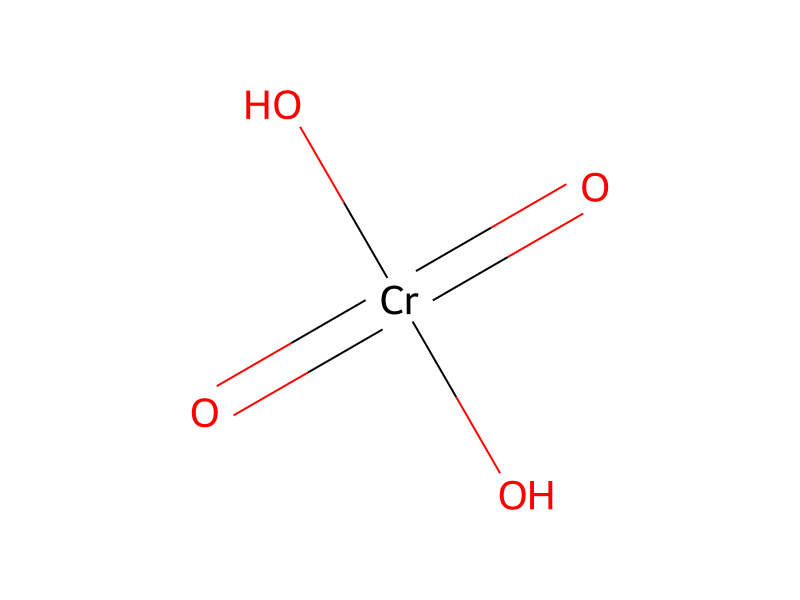
基本信息
- 标准SMILES
[O]=[Cr](=[O])([OH])[OH]- InChIKey
KRVSOGSZCMJSLX-UHFFFAOYSA-L- 分子式
- CrH2O4
- 平均分子量
- 118.01 g/mol
- 单同位素质量
- 117.93581604
概述
Chromic acid is a chromium oxoacid. It has a role as an oxidising agent. It is a conjugate acid of a hydrogenchromate.
名称与标识
- 首选名称
- Chromic Acid
- IUPAC
- dihydroxy(dioxo)chromium
- 中文名
- 铬酸
- 英文名
- Chromic acid
- 分子式
- CrH2O4
- 分子量
- 118.01
名称与别名
CHROMIC ACIDChromic(VI) acid7738-94-5Chromic acid (H2CrO4)Acide chromiquetetraoxochromic acidSA8VOV0V7QdihydroxidodioxidochromiumH2CrO4dihydrogen(tetraaoxidochromate)DTXSID8034455CHEBI:33143
展开更多名称
铬酸铬酸(H2CRO4)Cromic acidChromic acid USP/EP/BPTIANFU-CHEM Chromic aciddihydroxy(diketo)chromium
J34.508C(CrO2(OH)2)[CrO2(OH)2]dioxochromiumdiolChromium hydrogen oxideRefChem:5682DTXCID6014455231-801-5
数据库标识
- CAS
7738-94-5- PubChem CID
- 24425
- DTXSID
DTXSID8034455- ChEBI
CHEBI:33143- UNII
- SA8VOV0V7Q
- EC Number
- 231-801-5
性质
结构计算性质
- 极性表面积
- 74.6 Ų
- 氢键供体
- 2
- 氢键受体
- 4
- 可旋转键
- 0
- 重原子
- 5
- 形式电荷
- 0
- 复杂度
- 81.3
实验与物化性质
Chemical Classes
Metals -> Chromium Compounds, Inorganic
Carcinogens
Density1.67-2.82 /Anhydrous chromic acid/
Color/Form
Dark purplish-red crystals /Anhydrous chromic acid/
Red ortho crystals /Anhydrous chromic acid, chromic trioxide/
Brown solid
Solubility
In water, 1.1X10+6 mg/L at 17 °C
In water, 169 g/100 g water at 25 °C /Anhydrous chromic acid, chromic trioxide/
In water, 1854 g/L at 20 °C
Soluble in alcohol and mineral acids /Anhydrous chromic acid/
For more Solubility (Complete) data for CHROMIC ACID (6 total), please visit the HSDB record page.
CorrosivityAttacks most metals, particularly copper and brass. Attacks cloth, leather, and some plastics.
Boiling PointDecomposes at about 250 °C /Anhydrous chromic acid, chromic trioxide/
DecompositionWhen heated to decomposition it emits smoke and irritating fumes.
Melting Point196 °C /Anhydrous chromic acid/
Physical Description
Liquid; Other Solid
CrO3: Dark-red, odorless flakes or powder. [Note: Often used in an aqueous solution (H2CrO4); [NIOSH] Dark, red-purple solid; Soluble in water; [ACGIH]
Dissociation ConstantspKa = -0.8 to 1.6
Other Experimental Properties
Weighs 13.9 lb per gal /Chromic acid soln/
Deliquescent /Anhydrous chromic acid/
物理化学性质
- 熔点
- 196 °C · 196°C
- 沸点
- 250 °C · 250 °C (decomposes)
- 密度
- 2.29 · 2.290
- 溶解度
- Methanol (Slightly)
- 形态
- Liquid
- 颜色
- Clear, orange
- 气味 (Odor)
- Odorless
- PH值
- 3.03 · 3.03(1 mM solution);2.33(10 mM solution);2.06(100 mM solution)
- 水溶解性
- HIGHLY Soluble
- EPA化学物质信息
- Chromic(VI) acid (7738-94-5)
安全与法规
GHS分类
GHS Classification
Danger
H271 (26.7%): May cause fire or explosion; strong Oxidizer [Danger Oxidizing liquids; Oxidizing solids]
P203, P210, P220, P233, P260, P261, P262, P264, P264+P265, P270, P271, P272, P273, P280, P283, P284, P301+P316, P301+P330+P331, P302+P352, P302+P361+P354, P304+P340, P305+P354+P338, P306+P360, P316, P317, P318, P319, P320, P321, P330, P333+P317, P342+P316, P361+P364, P362+P364, P363, P370+P378, P371+P380+P375, P391, P403, P403+P233, P405, P420, and P501 (click each P-code to see the statement)
Aggregated GHS information provided per 101 reports by companies from 10 notifications to the ECHA C&L Inventory. Each notification may be associated with multiple companies.
Danger
H301: Toxic if swallowed [Danger Acute toxicity, oral]
危害信息
Regulatory Information
Chemical: Chromic acid (H2CrO4)
Chromic acid (H2CrO4) is listed on the EPA's Chemical Data Reporting (CDR) system. Manufacturers and importers of Chromic acid (H2CrO4) are required to report information about their production and use of this chemical to the EPA under the Toxic Substances Control Act (TSCA). (40 eCFR Part 711)
R - indicates a substance that is the subject of a TSCA section 6 risk management rule.
Substance: Chromic acid
Chromic (VI) acid: HSNO Approval: HSR003152 Approved with controls
The New Jersey Worker and Community Right to Know Act requires public and private employers to provide information about hazardous substances at their workplaces. (N.J.S.A. 34:5A-1 et. seq.)
Other Safety InformationIMAP assessments - Chromium trioxide and related compounds: Human health tier II assessment
Fire Hazards· Non-combustible, substance itself does not burn but may decompose upon heating to produce corrosive and/or toxic fumes.
Health Hazards· TOXIC and/or CORROSIVE; inhalation, ingestion or skin contact with material may cause severe injury or death.
Hazards Summary
Classified as a water-soluble, hexavalent chromium compound; [ACGIH] Chronic exposure to hexavalent chromium may produce evidence of kidney and liver injury. [ATSDR Case Studies # 4] Can cause second and third degree burns on short contact; [CHRIS] Highly corrosive to skin; [Quick CPC] Occupational asthma documented in a cement floor worker, plater, and other workers exposed to chromate salt; [Malo] Epidemiological studies of chromate production workers showed increased lung cancer. [IARC] See Chromium and linked occupational diseases.
DOT ID and Guide1755 154
RCRA Requirements
D007; A solid waste containing chromium may or may not become characterized as a hazardous waste when subjected to the Toxicity Characteristic Leaching Procedure listed in 40 CFR 261.24, and if so characterized, must be managed as a hazardous waste. /Chromium/
FIFRA Requirements
As the federal pesticide law FIFRA directs, EPA is conducting a comprehensive review of older pesticides to consider their health and environmental effects and make decisions about their continued use. Under this pesticide reregistration program, EPA examines newer health and safety data for pesticide active ingredients initially registered before November 1, 1984, and determines whether the use of the pesticide does not pose unreasonable risk in accordance to newer safety standards, such as those described in the Food Quality Protection Act of 1996. Chromic acid is found on List A, which contains most pesticides that are used on foods and, hence, have a high potential for human exposure. List A consists of the 194 chemical cases (or 350 individual active ingredients) for which EPA issued registration standards prior to FIFRA '88. Case No: 0132; Pesticide type: fungicide (wood perserative); Registration Standard Date: 06/01/88, 09/10/86; Case Status: OPP is reviewing data from the pesticide's producers regarding its human health and/or environmental effects, or OPP is determining the pesticide's eligibility for reregistration and developing the Reregistration Eligibility Decision (RED) document.; Active ingredient (AI): Chromic acid; Data Call-in (DCI) Date(s): 01/31/94; AI Status: The producers of the pesticide has made commitments to conduct the studies and pay the fees required for reregistration, and are meeting those commitments in a timely manner.
OSHA StandardsPermissible Exposure Limit: Table Z-2 Acceptable Ceiling Concentration: 1 mg/10 cu m. /Chromic acid and chromates/
Atmospheric StandardsChromium has been designated as a hazardous air pollutant under section 112 of the Clean Air Act. /Chromium/
DOT Emergency Guidelines
/GUIDE 154: SUBSTANCES - TOXIC AND/OR CORROSIVE (NON-COMBUSTIBLE)/ Health: TOXIC; inhalation, ingestion, or skin contact with material may cause severe injury or death. Contact with molten substance may cause severe burns to skin and eyes. Avoid any skin contact. Effects of contact or inhalation may be delayed. Fire may produce irritating, corrosive and/or toxic gases. Runoff from fire control or dilution water may be corrosive and/or toxic and cause pollution. /Chromic acid, solution/
/GUIDE 154: SUBSTANCES - TOXIC AND/OR CORROSIVE (NON-COMBUSTIBLE)/ Fire or Explosion: Non-combustible, substance itself does not burn but may decompose upon heating to produce corrosive and/or toxic fumes. Some are oxidizers and may ignite combustibles (wood, paper, oil, clothing, etc.). Contact with metals may evolve flammable hydrogen gas. Containers may explode when heated. /Chromic acid, solution/
/GUIDE 154: SUBSTANCES - TOXIC AND/OR CORROSIVE (NON-COMBUSTIBLE)/ Public Safety: CALL Emergency Response Telephone Number ... As an immediate precautionary measure, isolate spill or leak area in all directions for at least 50 meters (150 feet) for liquids and at least 25 meters (75 feet) for solids. Keep unauthorized personnel away. Stay upwind. Keep out of low areas. Ventilate enclosed areas. /Chromic acid, solution/
/GUIDE 154: SUBSTANCES - TOXIC AND/OR CORROSIVE (NON-COMBUSTIBLE)/ Protective Clothing: Wear positive pressure self-contained breathing apparatus (SCBA). Wear chemical protective clothing that is specifically recommended by the manufacturer. It may provide little or no thermal protection. Structural firefighters' protective clothing provides limited protection in fire situations ONLY; it is not effective in spill situations where direct contact with the substance is possible. /Chromic acid, solution/
For more DOT Emergency Guidelines (Complete) data for CHROMIC ACID (8 total), please visit the HSDB record page.
EPA Hazardous Waste Number
D007; A waste containing chromium may or may not be characterized as a hazardous waste following testing by the Toxicity Characteristic Leaching Procedure as prescribed by the Resource Conservation and Recovery Act (RCRA) regulations. /Chromium/
安全与防护
Accidental Release Measures
· CALL 911. Then call emergency response telephone number on shipping paper. If shipping paper not available or no answer, refer to appropriate telephone number listed on the inside back cover.
· ELIMINATE all ignition sources (no smoking, flares, sparks or flames) from immediate area.
First AidGeneral First Aid:
Exposure Control and Personal Protection
· Wear positive pressure self-contained breathing apparatus (SCBA).
TIH (Toxic Inhalation Hazard) - Term used to describe gases and volatile liquids that are toxic when inhaled. Some are TIH materials themselves, e.g., chlorine, and some release TIH gases when spilled in water, e.g., chlorosilanes. [ERG 2016].
Fire Fighting Procedures
If material involved in fire: Extinguish fire using agent suitable for type of surrounding fire (Material itself does not burn or burns with difficulty). Use water in flooding quantities as fog. Cool all affected contrainers with flooding quantities of water. Apply water from as far a distrance as possible. /Chromic acid solution/
Storage Conditions
PRECAUTIONS FOR "CARCINOGENS": Storage site should be as close as practical to lab in which carcinogens are to be used, so that only small quantities required for ... expt need to be carried. Carcinogens should be kept in only one section of cupboard, an explosion-proof refrigerator or freezer (depending on chemicophysical properties ...) that bears appropriate label. An inventory ... should be kept, showing quantity of carcinogen & date it was acquired ... Facilities for dispensing ... should be contiguous to storage area. /Chemical Carcinogens/
Cleanup Methods
PRECAUTIONS FOR "CARCINOGENS": A high-efficiency particulate arrestor (HEPA) or charcoal filters can be used to minimize amt of carcinogen in exhausted air ventilated safety cabinets, lab hoods, glove boxes or animal rooms ... Filter housing that is designed so that used filters can be transferred into plastic bag without contaminating maintenance staff is avail commercially. Filters should be placed in plastic bags immediately after removal ... The plastic bag should be sealed immediately ... The sealed bag should be labelled properly ... Waste liquids ... should be placed or collected in proper containers for disposal. The lid should be secured & the bottles properly labelled. Once filled, bottles should be placed in plastic bag, so that outer surface ... is not contaminated ... The plastic bag should also be sealed & labelled. ... Broken glassware ... should be decontaminated by solvent extraction, by chemical destruction, or in specially designed incinerators. /Chemical Carcinogens/
Environmental considerations: Land spill: Dig a pit, pond, lagoon, holding area to contain liquid or solid material. /SRP: If time permits, pits, ponds, lagoons, soak holes, or holding areas should be sealed with an impermeable flexible membrane liner./ Dike surface flow using soil, sand bags, foamed polyurethane, or foamed concrete. Absorb bulk liquid with fly ash or cement powder. Neutralize with agricultural lime (CaO), crushed limestone (CaCO3) or sodium bicarbonate (NaHCO3).
Environmental considerations: Water spill: Neutralize with agricultural lime (CaO), crushed limestone (CaCO3), or sodium bicarbonate (NaHCO3). Adjust pH to neutral (pH=7). Use mechanical dredges or lifts to remove immobilized masses of pollutants and precipitates. /Chromic acid solution/
Environmental considerations: Air spill: Apply water spray or mist to knock down vapors. Vapor knockdown water is corrosive or toxic and should be diked for containment. /Chromic acid solution/
Disposal Methods
Generators of waste (equal to or greater than 100 kg/mo) containing this contaminant, EPA hazardous waste number D007, must conform with USEPA regulations in storage, transportation, treatment and disposal of waste.
The following wastewater treatment technologies have been investigated for chromic acid: Concentration process: Reverse Osmosis.
SRP: Wastewater from contaminant suppression, cleaning of protective clothing/equipment, or contaminated sites should be contained and evaluated for subject chemical or decomposition product concentrations. Concentrations shall be lower than applicable environmental discharge or disposal criteria. Alternatively, pretreatment and/or discharge to a permitted wastewater treatment facility is acceptable only after review by the governing authority and assurance that "pass through" violations will not occur. Due consideration shall be given to remediation worker exposure (inhalation, dermal and ingestion) as well as fate during treatment, transfer and disposal. If it is not practicable to manage the chemical in this fashion, it must be evaluated in accordance with EPA 40 CFR Part 261, specifically Subpart B, in order to determine the appropriate local, state and federal requirements for disposal.
PRECAUTIONS FOR "CARCINOGENS": There is no universal method of disposal that has been proved satisfactory for all carcinogenic compounds & specific methods of chem destruction ... published have not been tested on all kinds of carcinogen-containing waste. ... summary of avail methods & recommendations ... /given/ must be treated as guide only. /Chemical Carcinogens/
For more Disposal Methods (Complete) data for CHROMIC ACID (8 total), please visit the HSDB record page.
Preventive Measures
If employees' clothing may have become contaminated with solids or liquids containing chromic acid or chromates, employees should change into uncontaminated clothing before leaving the work premises.
Clothing contaminated with chromic acid or chromates should be placed in closed containers for storage until it can be discarded or until provision is made for the removal of substance from the clothing. If the clothing is to be laundered or otherwise cleaned to remove the chromic acid or chromates, the person performing the operation should be informed of chromic acid or chromates hazardous properties.
Where there is any possibility of exposure of an employee's body to solids or liquids containing chromic acid or chromates, facilities for quick drenching of the body should be provided within the immediate work area for emergency use.
Non-impervious clothing which becomes contaminated with chromic acid or chromates should be removed immediately and not reworn until the substance is removed from the clothing.
For more Preventive Measures (Complete) data for CHROMIC ACID (23 total), please visit the HSDB record page.
Isolation and EvacuationImmediate precautionary measure
Minimum Risk LevelIntermediate Oral: 0.005 mg/kg/day (L134)
Chronic Oral: 0.001 mg/kg/day (L134)
Threshold Limit Values (TLV)
0.0002 [mg/m3], as Cr(VI), inhalable particulate matter
0.0005 [mg/m3], as Cr(VI), inhalable particulate matter
8 hr Time Weighted Avg (TWA): 0.05 mg/cu m /Chromium and inorganic compounds, as Cr; water-soluble Cr VI compounds/
A1: Confirmed human carcinogen. /Chromium and inorganic compounds, as Cr; water-soluble Cr VI compounds/
Biological Exposure Index (BEI): Determinant: total chromium in urine; Sampling Time: end of shift at end of workweek; BEI: 25 ug/L. /Chromium (VI), Water-soluble fume/
Biological Exposure Index (BEI): Determinant: total chromium in urine; Sampling Time: increase during shift; BEI: 10 ug/L. /Chromium (VI), Water-soluble fume/
Personal Protective Equipment (PPE)
Employees should be provided with and required to use impervious clothing, gloves, face shields (eight-inch minimum), and other appropriate protective clothing necessary to prevent any possiblity of skin contact with solids or liquids containing chromic acid or chromates.
Wear appropriate personal protective clothing to prevent skin contact. /Chromic acid and chromates/
Wear appropriate eye protection to prevent eye contact. /Chromic acid and chromates/
Eyewash fountains should be provided in areas where there is any possibility that workers could be exposed to the substances; this is irrespective of the recommendation involving the wearing of eye protection. /Chromic acid and chromates/
For more Personal Protective Equipment (PPE) (Complete) data for CHROMIC ACID (10 total), please visit the HSDB record page.
毒理信息
Treatment
The mainstay of treatment of any acid burn is copious irrigation with large amounts of tap water. To be most effective, treatment should be started immediately after exposure, preferably before arrival in the emergency department. Remove any contaminated clothing. Do not attempt to neutralize the burn with weak reciprocal chemicals (i.e. alkali for acid burns), because the heat generated from the chemical reaction may cause severe thermal injury.
Health Effects
Skin contact with chromic acid can cause redness, pain, and severe skin burns. Chromic acid may cause severe burns to the eye and permanent eye damage. Severe and rapid corrosive burns of the mouth, gullet and gastrointestinal tract will result if chromic acid is swallowed. Symptoms include burning, choking, nausea, vomiting and severe pain. Chronic exposure to low levels of chromic acid can lead to chronic exposure to hexavalent chromium. Hexavalent chromium is a known carcinogen. Chronic inhalation especially has been linked to lung cancer. Hexavalent chromium is also known to cause reproductive and developmental defects. (A12)
Ecotoxicity Values
LC50; Species: Colinus virginianus (Northern Bobwhite Quail) diet (chemical incorporated into food) >5100 ppm for 8 days
LD50; Species: Colinus virginianus (Northern Bobwhite Quail) age 38 wk; oral via capsule 164 mg/kg (95% confidence interval: 125-250 mg/kg)
LC50; Species: Anas platyrhynchos (Mallard Duck) age 10 days; diet (chemical incorporated into food) >5100 ppm for 8 days
EC50; Species: Daphnia magna (Water Flea) age <24 hr; Conditions: freshwater, static; Concentration: 760 ug/L for 48 hr (95% confidence interval: 680-900 ug/L); Effect: intoxication, immobilization /57% purity/
For more Ecotoxicity Values (Complete) data for CHROMIC ACID (7 total), please visit the HSDB record page.
Adverse EffectsOccupational hepatotoxin - Secondary hepatotoxins: the potential for toxic effect in the occupational setting is based on cases of poisoning by human ingestion or animal experimentation.
Exposure RoutesOral (L16) ; inhalation (L16) ; dermal (L16)
Toxicity Summary
IDENTIFICATION AND USE: Chromic acid forms dark purplish-red crystals. It is used as photographic chemical; aluminum anodizing reagent; chrome electroplating/zinc colorless conversion coatings reagent; side-chain oxidation reagent, and wood preservative. HUMAN EXPOSURE AND TOXICITY: Repeated or prolonged exposure to chromic acid or chromate dust or mist may cause an ulceration and perforation of the nasal septum. Respiratory irritation may occur with symptoms resembling asthma. Liver damage with yellow jaundice has been reported. Prolonged or repeated exposure of the skin may cause a skin rash. Allergic skin rash may also occur. Contact causes severe eye injury characterized by infiltration, vascularization, and opacification of the cornea. Full-thickness skin burns covering as little as 1% of the body surface area may lead to irreversible acute tubular necrosis secondary to acute chromium intoxication. The mortality rate is high if the burned area exceeds approximately 10% of the body surface. The correlation with duration of chrome bath work associated with exposure to chromium acid was positive only for cancers of the lung and bronchus in male workers. It was experimentally and epidemiologically confirmed that hexavalent chromium compounds act as carcinogens and cause specific biological effects on the respiratory system. These characteristics of hexavalent compounds might be attributable to the strong oxidizing potency and/or high permeability through the cell membrane. Furthermore, hexavalent compounds might be entirely different in biological action from trivalent compounds which are chemically most stable. ANIMAL STUDIES: There is limited evidence in experimental animals for the carcinogenicity of chromic acid. There was an increased incidence in abnormalities (cleft palate, cleft sternum, perforated sternum) in developmental studies in mice. In CHO cells, there was a significant increase in SCE with CrVI compounds. In the Ames test there was a dose-response for increase in revertant colonies for all CrVI compounds at 10-200 ug/plate with TA1537, TA98 and TA100. Addition of S9 did not affect mutation incidence. In other studies, when tested in Salmonella typhimurium strains TA1537, TA1538, TA98 and TA100 the S9 mix decreased the mutagenicity of CrVI compounds.
Chromic acid is highly corrosive and strongly oxidative. Many strong acids cause tissue burns through the denaturation of proteins and partial hydrolysis of proteins. Most proteins denature at pH values of less than 3-4. The large-scale denaturation of proteins, de-esterification of lipids and subsequent desiccation of tissues leads to chemical burns. . Symptoms include itching, bleaching or darkening of skin or tissues, blistering and burning sensations. Chromic acid also denatures proteins through inserting oxygen atoms into protein side chains. Chromic acid is also a source of chromium and especially hexavalent chromium. Hexavalent chromium compounds (including chromium trioxide, chromic acids, chromates, chlorochromates) are toxic and carcinogenic. For this reason, chromic acid oxidation is not used on an industrial scale except in the aerospace industry. Hexavalent chromium's carcinogenic effects are caused by its metabolites, pentavalent and trivalent chromium. The DNA damage may be caused by hydroxyl radicals produced during reoxidation of pentavalent chromium by hydrogen peroxide molecules present in the cell. Trivalent chromium may also form complexes with peptides, proteins, and DNA, resulting in DNA-protein crosslinks, DNA strand breaks, DNA-DNA interstrand crosslinks, chromium-DNA adducts, chromosomal aberrations and alterations in cellular signaling pathways. It has been shown to induce carcinogenesis by overstimulating cellular regulatory pathways and increasing peroxide levels by activating certain mitogen-activated protein kinases. It can also cause transcriptional repression by cross-linking histone deacetylase 1-DNA methyltransferase 1 complexes to CYP1A1 promoter chromatin, inhibiting histone modification. Chromium may increase its own toxicity by modifying metal regulatory transcription factor 1, causing the inhibition of zinc-induced metallothionein transcription. (A12, L16, A34, A35, A36)
Signs and Symptoms
Skin contact can cause redness, pain, and severe skin burns. Chromic acid may cause severe burns to the eye and permanent eye damage. Severe and rapid corrosive burns of the mouth, gullet and gastrointestinal tract will result if chromic acid is swallowed. Symptoms include burning, choking, nausea, vomiting and severe pain.
Medical Surveillance
PRECAUTIONS FOR "CARCINOGENS": Whenever medical surveillance is indicated, in particular when exposure to a carcinogen has occurred, ad hoc decisions should be taken concerning ... /cytogenetic and/or other/ tests that might become useful or mandatory. /Chemical Carcinogens/
TSCA Test Submissions
Chromic (VI) Acid (CAS #7738-94-5) was tested for carcinogenicity in Porton Wistar rats (52 females/48 males) exposed for up to 2 years to 2 mg of the test compound in stainless steel mesh pellets surgically implanted in the left inferior bronchiolus. Control rats (25-50/sex/treatment group) received a similar treatment with 2 mg of cholesterol (negative control) or 2 mg of 20-methylcholanthrene (positive control) or calcium chromate (positive control). Treatment with the test compound had no adverse effects with respect to mortality rate, body weights, or non-lung tumors. There were two occurrences of bronchial carcinomas out of 100 lungs examined and was considered not significant when analyzed by statistical methods based on the Null Hypothesis. Both groups of positive control rats had an increased incidence (25-46%) of bronchial carcinomas, as compared to the negative control group (0%).
Chromic (VI) Acid (CAS #7738) was tested for carcinogenicity in Porton Wistar rats (52 females/48 males) exposed for up to 2 years to 2 mg of the test compound in stainless steel mesh pellets surgically implanted in the left inferior bronchiolus. Control rats (25-50/sex/treatment group) received a similar treatment with 2 mg of cholesterol (negative control) or 2 mg of 20-methylcholanthrene (positive control) or calcium chromate (positive control). Treatment with the test compound had no adverse effects with respect to mortality rate, body weights, or non-lung tumors. There were two occurrences of bronchial carcinomas out of 100 lungs examined and was considered not significant when analyzed by statistical methods based on the Null Hypothesis. Both groups of positive control rats had an increased incidence (25-46%) of bronchial carcinomas, as compared to the negative control group (0%).
Human Toxicity Excerpts
/SIGNS AND SYMPTOMS/ Repeated or prolonged exposure to chromic acid or chromate dust or mist may cause an ulceration & perforation of the nasal septum. Respiratory irritation may occur with symptoms resembling asthma. Liver damage with yellow jaundice has been reported. Prolonged or repeated exposure of the skin may cause a skin rash. Allergic skin rash may also occur.
/SIGNS AND SYMPTOMS/ Contact causes severe injury characterized by infiltration, vascularization, & opacification of the cornea. Chronic exposure to fine droplets in the air from electroplating baths or transfer to the eyes on the fingers causes chronic conjunctival inflammation & in rare instances a brown band in the superficial layers of the cornea.
/SIGNS AND SYMPTOMS/ Splash contact of concentrated strong acids, such as ... chromic acid ... can prove as severely & devastatingly injurious to the eye as splashes of strong alkalies.
/SIGNS AND SYMPTOMS/ Symptomatology (after ingestion or skin contact): 4) Circulatory collapse with clammy skin, weak and rapid pulse, shallow respirations, and scanty urine. Circulatory shock is often the immediate cause of death. 5) Asphyxial death due to glottic edema. 6) Late esophageal, gastric and pyloric strictures and stenoses, which may require major surgical repair, should be anticipated. Signs of obstruction commonly appear within a few weeks but may be delayed for months and even years. Permanent scars may also appear in the cornea, skin and oropharynx. 7) Uncorrected circulatory collapse of several hours' duration may lead to renal failure and ischemic lesions in the liver and heart.
For more Human Toxicity Excerpts (Complete) data for CHROMIC ACID (12 total), please visit the HSDB record page.
Carcinogen Classification1, carcinogenic to humans. (L135)
Non-Human Toxicity Excerpts
/LABORATORY ANIMALS: Chronic Exposure or Carcinogenicity/ The effects of the chromic acid mist used in electroplating on the respiratory system of C57BL mice (female; n = 43) were examined histopathologically after exposure for 12 mo to the mist (1.81 mg chromium/cu m-120 min, twice a week). Among the 23 mice sacrificed at 12 mo after the first exposure, three cases of perforation in the nasal septum, a case of proliferative change of the tracheal epithelium, nine cases of emphysema and four of adenomatous metaplasia of the lungs were observed on autopsy. Among the 20 mice which were sacrificed six months after the last exposure, the same changes as the 12 mo exposure group were also observed in the nasal septum, trachea and lungs, but papillomas observed in the nasal epithelia of six mice and adenoma in the lung of a mouse were new findings not seen in the 12 mo exposure group. These results suggest that, in view of the low incidence of spontaneous lung tumor in C57BL mice, inhalation of chromic acid mist in electroplating might be a risk factor of lung cancer. Additionally, the occurrence of papillomas in the nasal epithelium demonstrates the need of directing attention to the possible development of cancer of the upper respiratory tract in chromium electroplating workers. Upon completion of our five reports on the effects of chromium compounds on the respiratory system, a recapitulation of our experimental studies was made and compared with the findings of a number of reports on chromium. It was experimentally and epidemiologically confirmed that hexavalent chromium compounds act as carcinogens and cause specific biological effects on the respiratory system. These characteristics of hexavalent compounds might be attributable to the strong oxidizing potency and/or high permeability through the cell membrane. Furthermore, hexavalent compounds might be entirely different in biological action from trivalent compounds which are chemically most stable.
/LABORATORY ANIMALS: Developmental or Reproductive Toxicity/ Chromic Acid Solution -60% (purity = 55.05%) was administered by gavage to artificially inseminated female New Zealand white rabbits (16/dose) at 0 (deionized water), 0.1, 0.5, 2.0 and 5.0 mg/kg/day during gestation days 7 through 19. Maternal NOEL = 0.5 mg/kg (Mortality for does was 6.25 and 31% at 2 and 5 mg/kg/day, respectively. Abortion occurred in 8.33 and 33.3% at 2 and 5 mg/kg/day. The incidence of total litter resorptions (7-46%) was detected mainly as implantation loss. Food consumption was statistically significantly lower at 5 mg/kg/day but at 2 mg/kg it was decreased 12-21%. Clinical observations were increased at > or =2 mg/kg.) Developmental NOEL = 5.0 mg/kg (There were no treatment-related effects at any dose).
/LABORATORY ANIMALS: Developmental or Reproductive Toxicity/ Chromic Acid Solution -60% (purity = 55.05%) administered by gavage to mated CD-1 mice (25/dose) at 0 (deionized water), 5, 20, 60 or 120 mg/kg/day during gestation days 6 through 15. Maternal NOEL = 5 mg/kg/day (Possible adverse effect: 1 dam at 120 mg/kg had total litter resorption. Food consumption was reduced up to 12, 19 and 28% for 20, 60 and 120 mg/kg/day, respectively. The death of a high dose dam was considered treatment-related.) Developmental NOEL = 20 mg/kg (There was an increased incidence in abnormalities (cleft palate, cleft sternum, perforated sternum) at > 60 mg/kg).
/GENOTOXICITY/ Oxidized CrVI (chromic acid, potassium chromate, sodium chromate, potassium dichromate, sodium dichromate) and CrIII (Cr-chloride, Cr-nitrate, Cr-potassium sulfate, Cr-acetate) were tested on baby hamster kidney (BHK) and Chinese hamster ovary (CHO) cell lines for cytotoxic and cytogenetic effects. Results showed CrVI compounds had inhibiting doses (50%) at 100 - 375 times lower than those of CrIII compounds with BHK cells. LD50 for CrVI compounds was more than 1250 fold lower than LD50 for CrIII with CHO cells. In CHO cells, there was a significant increase in sister chromatid exchange (SCE) with CrVI compounds. CrVI at 0.25 to 1 ug/mL reduced cell growth by 300-fold and survival (as indicated by DNA and RNA synthesis) with BHK cells. The frequency of SCE (1.5 - 2.1-fold) and chromosome aberrations (3.3 - 9.9-fold) was increased in CHO cells when CrVI and CrIII (SCE = 1.0-1.1-fold; CA = 1.2 - 2.3-fold) compounds were used, when compared to controls.
For more Non-Human Toxicity Excerpts (Complete) data for CHROMIC ACID (6 total), please visit the HSDB record page.
法规信息
RCRA Requirements
D007; A solid waste containing chromium may or may not become characterized as a hazardous waste when subjected to the Toxicity Characteristic Leaching Procedure listed in 40 CFR 261.24, and if so characterized, must be managed as a hazardous waste. /Chromium/
FIFRA Requirements
As the federal pesticide law FIFRA directs, EPA is conducting a comprehensive review of older pesticides to consider their health and environmental effects and make decisions about their continued use. Under this pesticide reregistration program, EPA examines newer health and safety data for pesticide active ingredients initially registered before November 1, 1984, and determines whether the use of the pesticide does not pose unreasonable risk in accordance to newer safety standards, such as those described in the Food Quality Protection Act of 1996. Chromic acid is found on List A, which contains most pesticides that are used on foods and, hence, have a high potential for human exposure. List A consists of the 194 chemical cases (or 350 individual active ingredients) for which EPA issued registration standards prior to FIFRA '88. Case No: 0132; Pesticide type: fungicide (wood perserative); Registration Standard Date: 06/01/88, 09/10/86; Case Status: OPP is reviewing data from the pesticide's producers regarding its human health and/or environmental effects, or OPP is determining the pesticide's eligibility for reregistration and developing the Reregistration Eligibility Decision (RED) document.; Active ingredient (AI): Chromic acid; Data Call-in (DCI) Date(s): 01/31/94; AI Status: The producers of the pesticide has made commitments to conduct the studies and pay the fees required for reregistration, and are meeting those commitments in a timely manner.
Atmospheric StandardsChromium has been designated as a hazardous air pollutant under section 112 of the Clean Air Act. /Chromium/
CERCLA Reportable Quantities
Persons in charge of vessels or facilities are required to notify the National Response Center (NRC) immediately, when there is a release of this designated hazardous substance, in an amount equal to or greater than its reportable quantity of 10 lb or 4.54 kg. The toll free number of the NRC is (800) 424-8802. The rule for determining when notification is required is stated in 40 CFR 302.4 (section IV. D.3.b).
Clean Water Act RequirementsToxic pollutant designated pursuant to section 307(a)(1) of the Federal Water Pollution Control Act and is subject to effluent limitations. /Chromium and compounds/
State Drinking Water Standards(CA) CALIFORNIA 10 ug/L /Hexavalent Chromium/
Federal Drinking Water StandardsEPA 100 ug/L
安全数据
- tsca
- TSCA listed
- 毒害物质数据
- 7738-94-5(Hazardous Substances Data)
- 职业暴露等级
- E
- 职业暴露限值
- TWA: 0.0002 mg/m3
- 危险品运输编号
- UN 1755 8/PG II/III (CHROMIC ACID SOLUTION)
毒性防护
急性毒性吸入-人 TCL0: 20 毫克/立方米
职业标准TWA 0.5 毫克(铬)/立方米
包装储运
可燃性危险特性助燃; 火场释放有毒含铬辛辣刺激烟雾
储运特性库房通风; 轻装轻卸; 与有机物、还原剂、硫磷易燃物分开存放
灭火剂水, 二氧化碳, 干粉, 砂土
化学与工业
药理信息
Mechanism of ActionThe strong oxidizing potential of chromium(VI) compounds explain much of their irritating and toxic properties. /Chromium(VI) compounds/
Metabolism/Metabolites
Skin contact with chromic acid can cause redness, pain, and severe skin burns. Chromic acid may cause severe burns to the eye and permanent eye damage. Severe and rapid corrosive burns of the mouth, gullet and gastrointestinal tract will result if chromic acid is swallowed. Symptoms include burning, choking, nausea, vomiting and severe pain. Chronic exposure to low levels of chromic acid can lead to chronic exposure to hexavalent chromium. Hexavalent chromium is a known carcinogen. Chronic inhalation especially has been linked to lung cancer. Hexavalent chromium is also known to cause reproductive and developmental defects. (A12)
Absorption, Distribution and Excretion
Inhalation of highly water-soluble hexavalent chromium salts, such as chromic acid, ... may result in systemic absorption.
Absorption of inhaled chromium cmpds takes place in the lung via transfer across cell membranes and in the GI tract from particles cleared from the lungs. Absorption after oral exposure in humans varies from essentially none for the highly insoluble chromium(III) cmpd chromic oxide, to 0.5-2.0% for chromium(III) cmpds in the diet, to approx 2-10% for chromium(VI) as potassium chromate. Dermal absorption depends on the physical and chemical properties of the cmpd, the vehicle, and the integrity of the skin. Concentrated soln of chromium(VI) cmpds such as potassium chromate can cause chemical burns and facilitate absorption. /Chromium cmpds/
用途与制造
Uses
Used in electroplating, metal cleaning, leather tanning, and photography; [HSDB]
Acid and Alkali Cleaning of Metals [Category: Clean]
Textile arts [Category: Hobbies]
For chromic acid (USEPA/OPP Pesticide Code: 021101) ACTIVE products with label matches. /SRP: Registered for use in the U.S. but approved pesticide uses may change periodically and so federal, state and local authorities must be consulted for currently approved uses./
Chemicals (chromates, oxidizing agents, catalysts), chromium-plating, intermediate, medicine (caustic), process engraving, anodizing, ceramic glazes, colored glass, metal cleaning, inks, tanning, paints, textile mordant, etchant for plastics.
ABS etchant, photographic chemical; aluminum anodizing reagent; chrome electroplating/zinc colorless conversion coatings reagent; side-chain oxidation reagent
U.S. Exports(1998) 11,200 short tons; (1999) 12,400 short tons
U.S. Imports(1998) 4,700 short tons; (1999) 7,400 short tons
U.S. Production2023: 180,304 lb
Consumption Patterns
Wood preservatives (72%); metal finishing (22%); misc, including magnetic material and catalysis (6%)
DEMAND: (1998) 47,000 short tons; (1999) 48,100 short tons; (2003) 52,600 short tons
Consumer UsesPlating agent
Industry UsesRefrigerants
Methods of Manufacturing
(1) Sulfuric acid is added to a solution of sodium dichromate and the product is crystalized out; (2) chromite is fused with soda ash and limestone and then treated with sulfuric acid; (3) electrolysis.
Sodium dichromate + sulfuric acid (reaction)
Formulations/Preparations
USEPA/OPP Pesticide Code 021101; Trade Names: Chromic acid flake.
Grades: technical; CP (chemically pure).
Osmose K-33 (60%) Wood Preservative (Osmose, Inc.): Active ingredient: arsenic oxide 20.0%, chromic acid 29.9% and cupric oxide 10.5%.
Osmose ACC 50% Wood Preservative (Osmose, Inc.): Active ingredient: chromic acid 35.46% and cupric oxide 14.07%.
For more Formulations/Preparations (Complete) data for CHROMIC ACID (11 total), please visit the HSDB record page.
General Manufacturing Information
Computer and Electronic Product Manufacturing
Chromic acid (H2CrO4): ACTIVE
/Chromic acid:/ This important acid is known also as chromium trioxide. The technical grade is obtainable from primary producers in an anhydrous form as small dark red flakes containing 99% CrO3. Like all chromates and dichromates, its chromium is in the hexavalent state. It is very soluble and strongly reactive both as an acid and as an oxidizing agent ... .
应用领域
用途其溶液用于镀铬
上下游产品信息
上游原料
下游产品
供应商43 家
湖北成丰化工有限公司13125175253 · [email protected]
上海光铧科技有限公司13801626616 · [email protected]
Suzhou ARTK Medchem Co., Ltd.+86-18168183658 · [email protected]
江苏艾康生物医药研发有限公司025-025-66113011 15955137747 · [email protected]
Dayang Chem (Hangzhou) Co.,Ltd.+86-0571-88938639 17705817739 · [email protected]
江苏普乐司生物科技有限公司0513-66017706 18551496367 · [email protected]
北京大田丰拓化学技术有限公司13651141086 · [email protected]
广东云星生物技术有限公司0751-18902340975/189023400307 18902340307 · [email protected]
南通合润生物科技有限公司18362409333 · [email protected]
山东多聚化学有限公司0531-88779566 13105315100
唐山默内德贸易有限公司+86-315-8309571 +86-15633399667 · [email protected]
医恩医疗系统研发(上海)有限公司021-58958002 18930822973 · [email protected]
广东大小化工有限公司1866-171603 18666171603 · [email protected]
斯百全化学(上海)有限公司021-021-021-67601398-809-809-809 15221380277 · [email protected]
PT CHEM GROUP LIMITED+86-85511178; +86-85511178 · [email protected]
无锡莫拉化工产品有限公司[email protected]
池州凯隆进出口贸易有限公司[email protected]
昆山中莱特贸易有限公司0512-55170668 13913095008;13770601296 · [email protected]
艾吉析科技(上海)有限公司17721401538;17717235263 17721401538 · [email protected]
启源(广东)医药化工有限公司18026564465 · [email protected]
上海炎泽化工有限公司15345144255 19901447308 · [email protected]
盼得(上海)国际贸易有限公司80159919 18662931292 · [email protected]
巴师傅(上海)生物医药科技有限公司60662071 18117346937 · [email protected]
上海易恩化学技术有限公司400-400-1332688 18019345275 · [email protected]
河南天孚化工有限公司+86-0371-55170693 +86-19937530512 · [email protected]
厦门盈融达化工有限公司+86-0592-6210733 · [email protected]
career henan chemical co+86-0371-86658258 · [email protected]
上海红乐生物科技有限公司021-56145923; 4001631568 · [email protected]
XIAMEN AMITY INDUSTRY AND TRADE CO., LTD.+8618950047208 · [email protected]
广东元丰化学试剂有限公司0751-2829979 13318584237 · [email protected]
SHANGHAI KEAN TECHNOLOGY CO., LTD.+8613817748580 · [email protected]
武汉吉鑫益邦生物科技有限公司59768661 13297943853 · [email protected]
唐缘生命科学(上海)有限公司400-618-1121 17316483629 · [email protected]
河南广沃新材料有限公司15225201380 18336995067 · [email protected]
江苏润丰合成科技有限公司0513-66017678 18551497631 · [email protected]
ShangHai IKSChem Technology Co.,LTD+86-18337276608 · [email protected]
上海珅桔化工有限公司13167128868 13248068001 · [email protected]
Hefei TNJ Chemical Industry Co.,Ltd.+86-0551-65418671 +86-189 4982 3763 · [email protected]
宝鸡缔都医药化工有限公司029-029-81148929 17792602132 · [email protected]
江苏雷恩环保科技有限公司66814573 16651336298 · [email protected]
南通润丰石油化工有限公司66814565 18912298907 · [email protected]
Henan Fengda Chemical Co., Ltd+86-371-86557731 +86-13613820652 · [email protected]
Dideu Industries Group Limited+8617392712697 · [email protected]
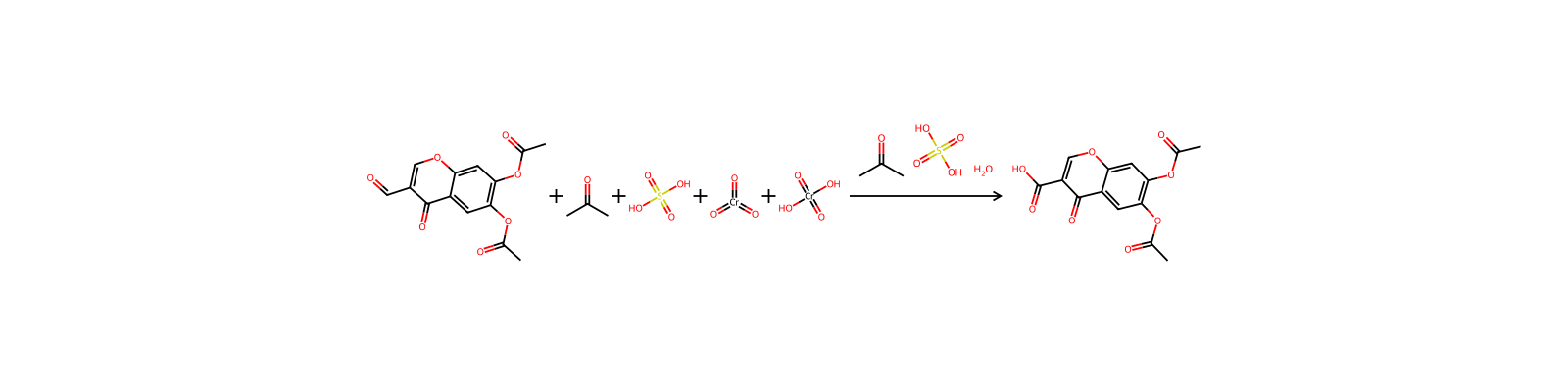
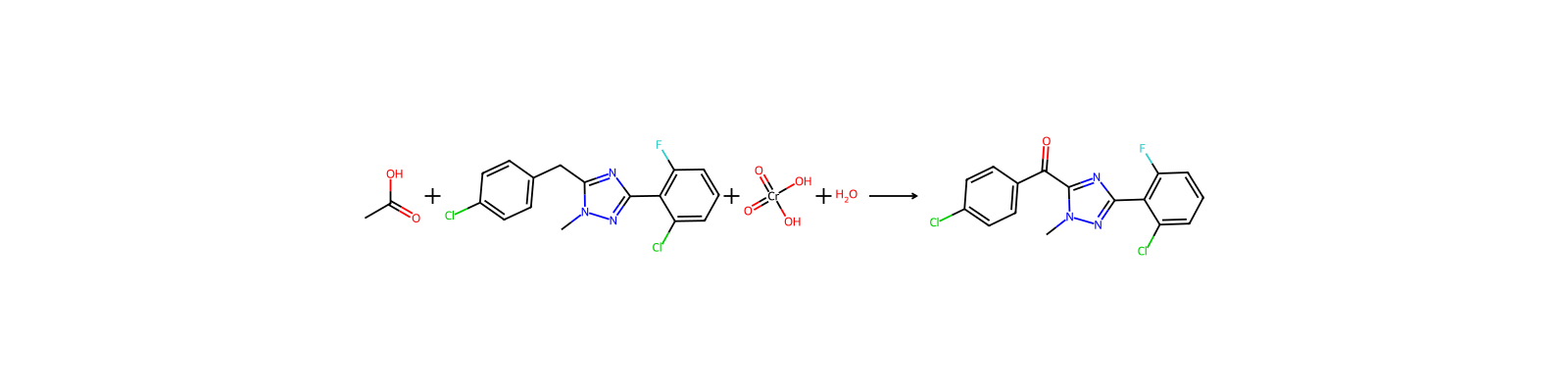
相关反应
210 条





关联笔记
加载中…