基本信息
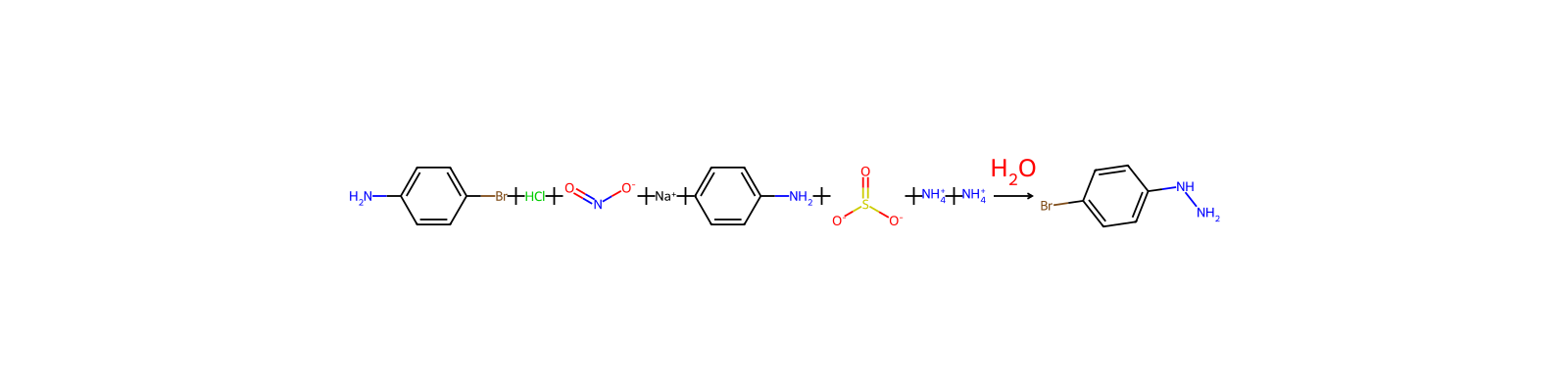
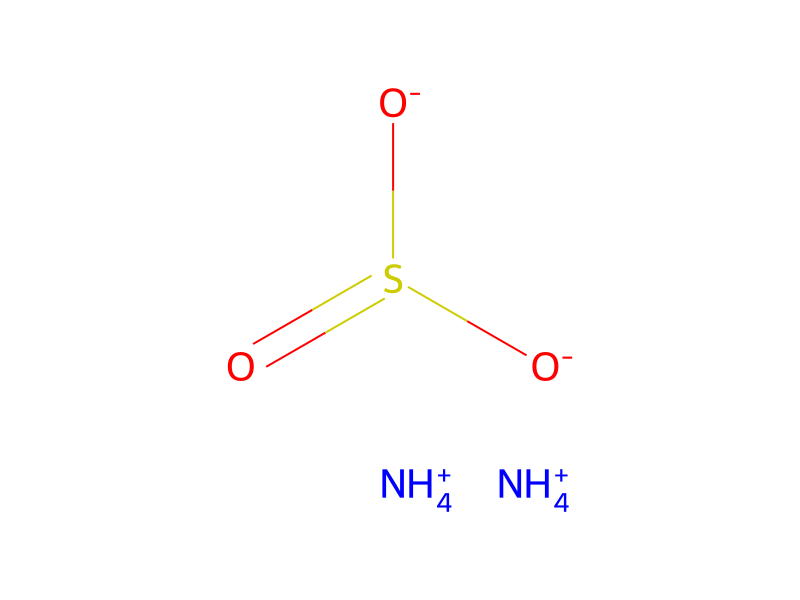
- 标准SMILES
O=S([O-])[O-].[NH4+].[NH4+]- InChIKey
PQUCIEFHOVEZAU-UHFFFAOYSA-N- 分子式
- H8N2O3S
- 平均分子量
- 116.14 g/mol
- 单同位素质量
- 116.02556312
概述
Ammonium sulfite is a colorless crystalline solid. The primary hazard is the threat to the environment. Immediate steps should be taken to limit its spread to the environment. It is used in the manufacture of other chemicals, in medicine, and photography.
名称与标识
- 首选名称
- Ammonium Sulfite
- IUPAC
- diazanium;sulfite
- 中文名
- 亚硫酸铵,溶液
- 英文名
- AMMONIUM SULFITE SOLUTION
- 分子式
- H5NO3S
- 分子量
- 99.1
名称与别名
AMMONIUM SULFITEDiammonium sulfiteAmmonium sulphite10196-04-0Diammonium sulfonate8LF589Y5GDSulfurous acid, diammonium saltSulfurous acid, ammonium saltDTXSID2064991RefChem:112210DTXCID4032667233-484-9
展开更多名称
AMMONIUM SULFITE SOLUTIONAMMONIUMSULFITE,CRYSTAL,PURIFIEDAMMONIUM SULFITE SOLUTION APPROX. 39% IAmmonium Sulfit Solution ca. 34 %, techn.
diazanium;sulfiteammoniumsulfiteAmmoniumsulfitdiazanium;suliteAmmonium sulfonateUNII-8LF589Y5GDAMMONIUM SULFITE [MI]AMMONIUM SULFITE [HSDB]
数据库标识
- CAS
10196-04-0、17026-44-7- PubChem CID
- 25041
- DTXSID
DTXSID2064991- ChEBI
CHEBI:186946- UNII
- 8LF589Y5GD
- EC Number
- 233-484-9
性质
结构计算性质
- 极性表面积
- 84.4 Ų
- 氢键供体
- 2
- 氢键受体
- 4
- 可旋转键
- 0
- 重原子
- 6
- 形式电荷
- 0
- 复杂度
- 18.8
实验与物化性质
Chemical ClassesOther Classes -> Sulfites
Cosmetics
Cosmetic ingredients (Ammonium Sulfite) -> CIR (Cosmetic Ingredient Review)
Preservative
pHIts aq soln is alkaline to litmus. /ammonium sulfate monohydrate/
OdorOdorless
Food AdditivesCOLOR OR COLORING ADJUNCT -> FDA Substance added to food
Density
greater than 1.1 at 68 °F (USCG, 1999)
1.41 @25 °C
Color/FormWhite, solid
SolubilitySoluble in water, almost insoluble in alcohol, acetone.
Physical Description
Ammonium sulfite is a colorless crystalline solid. The primary hazard is the threat to the environment. Immediate steps should be taken to limit its spread to the environment. It is used in the manufacture of other chemicals, in medicine, and photography.
Large Crystals; Dry Powder; Liquid
White odorless solid; [HSDB] White odorless crystalline solid; [MSDSonline]
Stability/Shelf LifeUNDER INFLUENCE OF AIR & HEAT LOSES ALL ITS WATER OF CRYSTALLIZATION & IS GRADUALLY OXIDIZED TO AMMONIUM SULFATE. /AMMONIUM SULFATE MONOHYDRATE/
Other Experimental Properties
Acrid, sulfurous taste; hygroscopic; sublimes @ 150 °C with decomposition; specific gravity 1.41. /ammonium sulfate monohydrate/
HEAT OF SOLN: 20.5 BTU/LB= 11.4 CAL/G= 0.477X10+5 J/KG
SLIGHTLY SOL IN ALC; INSOL IN ACETONE; SOL IN WATER, 32.4 G/100 CC @ 0 °C, 60.4 G/100 CC @ 100 °C; COLORLESS MONOCLINIC CRYSTALS; MP: 60-70 °C WITH DECOMP; INDEX OF REFRACTION: 1.515. /AMMONIUM SULFATE MONOHYDRATE/
At 230-245 °C, ammonium sulfite decomposes.
Monohydrate, efflorescent crystals
物理化学性质
- 颜色
- white hygroscopic crystals, crystalline
- 水溶解性
- 64.2 g/100g · 64.2 g/100g H2O [CRC10]
安全与法规
GHS分类
GHS Classification
This chemical does not meet GHS hazard criteria for 71.1% (133 of 187) of all reports.
Danger
H314 (13.4%): Causes severe skin burns and eye damage [Danger Skin corrosion/irritation]
P260, P261, P264, P264+P265, P271, P280, P301+P330+P331, P302+P352, P302+P361+P354, P304+P340, P305+P351+P338, P305+P354+P338, P316, P319, P321, P332+P317, P337+P317, P362+P364, P363, P403+P233, P405, and P501 (click each P-code to see the statement)
Aggregated GHS information provided per 187 reports by companies from 6 notifications to the ECHA C&L Inventory. Each notification may be associated with multiple companies.
Danger
危害信息
Regulatory Information
Chemical: Sulfurous acid, diammonium salt
Sulfurous acid, ammonium salt (1:2) is listed on the EPA's Chemical Data Reporting (CDR) system. Manufacturers and importers of Sulfurous acid, ammonium salt (1:2) are required to report information about their production and use of this chemical to the EPA under the Toxic Substances Control Act (TSCA). (40 eCFR Part 711)
Status: Active Update: 14-06-2016 https://echa.europa.eu/registration-dossier/-/registered-dossier/12645
Ammonium sulfite: Does not have an individual approval but may be used as a component in a product covered by a group standard. It is not approved for use as a chemical in its own right.
The New Jersey Worker and Community Right to Know Act requires public and private employers to provide information about hazardous substances at their workplaces. (N.J.S.A. 34:5A-1 et. seq.)
Other Safety InformationIMAP assessments - Sulfurous acid, diammonium salt: Environment tier I assessment
Fire HazardsSpecial Hazards of Combustion Products: Toxic sulfur dioxide and oxides of nitrogen may form in fires. (USCG, 1999)
Health HazardsInhalation of dust causes irritation of nose and throat. Ingestion causes irritation of mouth and stomach. Dust irritates eyes. (USCG, 1999)
Hazards SummaryAn eye, nose, and throat irritant; [HSDB] An irritant; [MSDSonline] See SULFITES.
Reactive GroupSalts, Acidic
Reactivity ProfileAMMONIUM SULFITE is a reducing agent. Emits toxic sulfur dioxide and oxides of nitrogen when heated to decomposition (USCG, 1999).
Air and Water ReactionsSoluble in water.
Toxic Combustion ProductsToxic sulfur dioxide and oxides of nitrogen may form in fires.
CERCLA Reportable Quantities
Persons in charge of vessels or facilities are required to notify the National Response Center (NRC) immediately, when there is a release of this designated hazardous substance, in an amount equal to or greater than its reportable quantity of 5000 lb or 2270 kg. The toll free number of the NRC is (800) 424-8802; In the Washington D.C. metropolitan area (202) 426-2675. The rule for determining when notification is required is stated in 40 CFR 302.4 (section IV. D.3.b).
Clean Water Act Requirements
Ammonium sulfite is designated as a hazardous substance under section 311(b)(2)(A) of the Federal Water Pollution Control Act and further regulated by the Clean Water Act Amendments of 1977 and 1978. These regulations apply to discharges of this substance. This designation includes any isomers and hydrates, as well as any solutions and mixtures containing this substance.
Hazard Classes and Categories
Skin Corr. 1B (13.4%)
Acute toxicity - category 4
安全与防护
First AidINHALATION: move to fresh air.
Storage Conditions
... SHOULD BE STORED IN A COOL, DRY PLACE, AS IN PRESENCE OF MOISTURE THERE IS CAKING & SLOW RELEASE OF SULFUR DIOXIDE. THESE SALTS, IF DRY, CAN BE HANDLED IN IRON OR STEEL EQUIPMENT. SOLN CAN BE HANDLED IN TYPE 316 & 347 SS, LEAD, RUBBER OR WOOD. /SULFITE SALTS/
KEEP TIGHTLY CLOSED & IN COOL PLACE. /AMMONIUM SULFATE MONOHYDRATE/
DURING TRANSPORT: STORAGE TEMP: AMBIENT; VENTING: OPEN; HAZARD ASSESSMENT CODE: SS.
Disposal Methods
SRP: At the time of review, criteria for land treatment or burial (sanitary landfill) disposal practices are subject to significant revision. Prior to implementing land disposal of waste residue (including waste sludge), consult with environmental regulatory agencies for guidance on acceptable disposal practices.
Preventive Measures
SRP: The scientific literature for the use of contact lenses in industry is conflicting. The benefit or detrimental effects of wearing contact lenses depend not only upon the substance, but also on factors including the form of the substance, characteristics and duration of the exposure, the uses of other eye protection equipment, and the hygiene of the lenses. However, there may be individual substances whose irritating or corrosive properties are such that the wearing of contact lenses would be harmful to the eye. In those specific cases, contact lenses should not be worn. In any event, the usual eye protection equipment should be worn even when contact lenses are in place.
Protective Action Criteria (PAC)
30 [mg/m3]
330 [mg/m3]
2000 [mg/m3]
Personal Protective Equipment (PPE)
Dust mask; goggles or face shield; rubber gloves (USCG, 1999)
/NIOSH CERTIFIED RESPIRATOR/; GOGGLES OR FACE SHIELD; RUBBER GLOVES.
毒理信息
Ecotoxicity Values
TLm Gambusia affinis (mosquito fish) 240 ppm/48 hr fresh water. /Conditions of bioassay not specified/
TLm Daphnia magna (water flea) 299 mg/l/25 hr. /Conditions of bioassay not specified/
TLm Daphnia magna (water flea) 273 mg/l/50 hr. /Conditions of bioassay not specified/
TLm Daphnia magna (water flea) 203 mg/l/100 hr. /Conditions of bioassay not specified/
Toxicity SummarySafe in the present practices of use and concentration. Ingredient, concentration, and use information are available in documents discoverable at https://cir-reports.cir-safety.org
Human Toxicity Excerpts
... If swallowed they may cause irritation of the stomach by liberating sulfurous acid. /Sulfites/
INHALATION OF DUST CAUSES IRRITATION OF NOSE AND THROAT. INGESTION CAUSES IRRITATION OF MOUTH AND STOMACH. DUST IRRITATES EYES.
Non-Human Toxicity Excerpts
WHEN INGESTED, SOLUTIONS CAUSE GASTRIC IRRITATION BY LIBERATION OF SULFUROUS ACID. BECAUSE OF RAPID OXIDATION TO SULFATE ... SULFITES ARE WELL TOLERATED UNTIL LARGE DOSES ARE REACHED; THEN VIOLENT COLIC & DIARRHEA, CIRCULATORY DISTURBANCES, CENTRAL NERVOUS DEPRESSION, & DEATH ARE DESCRIBED. /SULFITE SALTS/
Populations at Special RiskSome asthmatics are said to be dangerously sensitive to minute amounts of sulfites in foods. /Sulfites/
Antidote and Emergency Treatment
Basic treatment: Establish a patent airway. Suction if necessary. Watch for signs of respiratory insufficiency and assist ventilations if necessary. Administer oxygen by nonrebreather mask at 10 to 15 L/min. Monitor for signs of pulmonary edema and treat if necessary ... . Monitor for shock and treat if necessary ... . For eye contamination, flush eyes immediately with water. Irrigate each eye continuously with normal saline during transport ... . Do not use emetics. For ingestion, rinse mouth and administer 5 mg/kg up to 200 ml of water for dilution if the patent can swallow, has a strong gag reflex, and does not drool ... . Do not attempt to neutralize. /Ammonia and related compounds/
Advanced treatment: Consider orotracheal or nasotracheal intubation for airway control if signs of upper airway obstruction are present or if the patient is unconscious or has severe pulmonary edema. Positive-pressure ventilation techniques with a bag-valve-mask device may be beneficial. Monitor cardiac rhythm and treat arrhythmias if necessary ... . Start an IV with D5W /SRP: "To keep open", minimal flow rate/. Use lactated Ringer's if signs of hypovolemia are present. Watch for signs of fluid overload. Consider drug therapy for pulmonary edema ... . For hypotension with signs of hypovolemia, administer fluid cautiously. Consider vasopressors if patient is hypotensive with a normal fluid volume. Watch for signs of fluid overload ... . Use proparacaine hydrochloride to assist eye irrigation ... . /Ammonium and related compounds/
Basic treatment: Establish a patent airway. Suction if necessary. Watch for signs of respiratory insufficiency and assist ventilations if necessary. Administer oxygen by nonrebreather mask at 10 to 15 L/min. Monitor for pulmonary edema and treat if necessary ... . Anticipate seizures and treat if necessary ... . For eye contamination, flush eyes immediately with water. Irrigate each eye continuously with normal saline during transport ... . Do not use emetics. For ingestion, rinse mouth and administer 5 m1/kg up to 200 ml of water for dilution if the patient can swallow, has a strong gag reflex, and does not drool ... . Administer activated charcoal ... . Cover skin burns with dry sterile dressings after decontamination ... . /Sulfur and related compounds/
Advanced treatment: Consider orotracheal or nasotracheal intubation for airway control in the patient who is unconscious. Early intubation at the first sign of upper airway obstruction may be necessary. Monitor cardiac rhythm and treat arrhythmias if necessary ... . Start an IV with D5W /SRP: "To keep open", minimal flow rate/. Use lactated Ringer's if signs of hypovolemia are present. Watch for signs of fluid overload. Consider drug therapy for pulmonary edema ... . Treat seizures with diazepam (Valium) ... . For hypotension with signs of hypovolemia, administer fluid cautiously. Consider vasopressors for hypotension with a normal fluid volume. Watch for signs of fluid overload ... . Use proparacaine hydrochloride to assist eye irrigation ... . /Sulfur and related compounds/
法规信息
CERCLA Reportable Quantities
Persons in charge of vessels or facilities are required to notify the National Response Center (NRC) immediately, when there is a release of this designated hazardous substance, in an amount equal to or greater than its reportable quantity of 5000 lb or 2270 kg. The toll free number of the NRC is (800) 424-8802; In the Washington D.C. metropolitan area (202) 426-2675. The rule for determining when notification is required is stated in 40 CFR 302.4 (section IV. D.3.b).
Clean Water Act Requirements
Ammonium sulfite is designated as a hazardous substance under section 311(b)(2)(A) of the Federal Water Pollution Control Act and further regulated by the Clean Water Act Amendments of 1977 and 1978. These regulations apply to discharges of this substance. This designation includes any isomers and hydrates, as well as any solutions and mixtures containing this substance.
安全数据
- 安全说明
- 26-36
- 危险品标志
- Xi
- 危险类别码
- 36/37/38-31
毒性防护
毒性ADI 0~0.7(以SO2计,指SO2和亚硫酸盐类的总ADI值;FAO/WHO,2001)。
化学与工业
用途与制造
Uses
CIR ingredient: Ammonium Sulfite
Used in photography and in the production of caramel, refractory bricks, lubricants, medicines, permanent wave solutions, ammonium thiosulfite, and ammonium chloride; [HSDB]
Photographic Processing [Category: Other]
IN PRODN OF CARAMEL.
In photography; as reducing agent; in bricks for blast furnace linings; in lubricants for metal cold-working.
... Medicine, permanent wave solns. /Ammonium sulfite monohydrate/
U.S. Production2023: 100,000,000 - <250,000,000 lb
Consumer UsesSoil amendments (fertilizers)
Industry UsesIntermediate
Methods of ManufacturingIn the ATS process, sulfur dioxide is absorbed from incinerated Claus tail gas in aqueous ammonia to produce ammonium sulfite and ammonium bisulfite in solution.
Use ClassificationCosmetics -> Preservative
General Manufacturing Information
Oil and Gas Drilling, Extraction, and Support activities
Sulfurous acid, ammonium salt (1:2): ACTIVE
COMBUSTION GASES WERE WASHED WITH AQ AMMONIACAL SOLN, INCL AMMONIUM SULFITE, TO REMOVE SO(X).
REMOVAL OF NITROGEN OXIDES FROM WASTE GASES BY SCRUBBING WITH AQ SOLN CONTAINING IRON SALTS & AMMONIUM SULFITE.
应用领域
用途用作还原剂
供应商2 家
斯百全化学(上海)有限公司021-021-021-67601398-809-809-809 15221380277 · [email protected]
河北贞佳新材料有限公司0319-5925599 13315915972
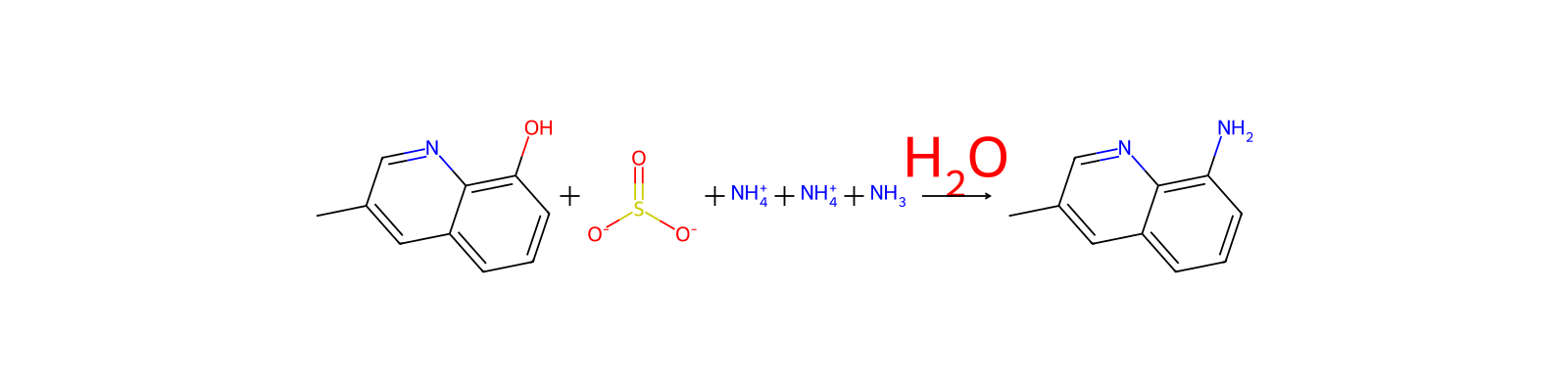
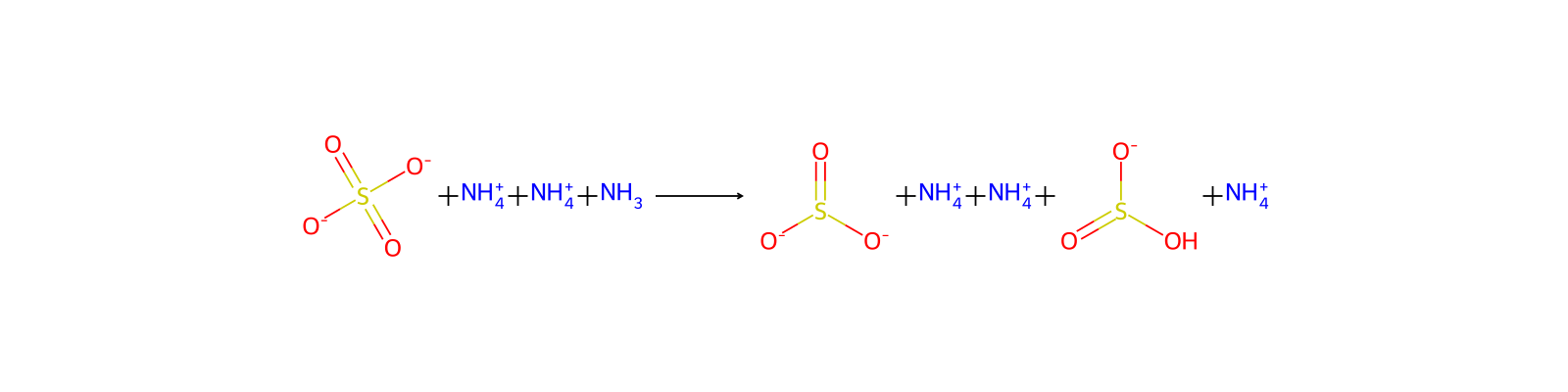
相关反应
18 条



关联笔记
加载中…