
基本信息
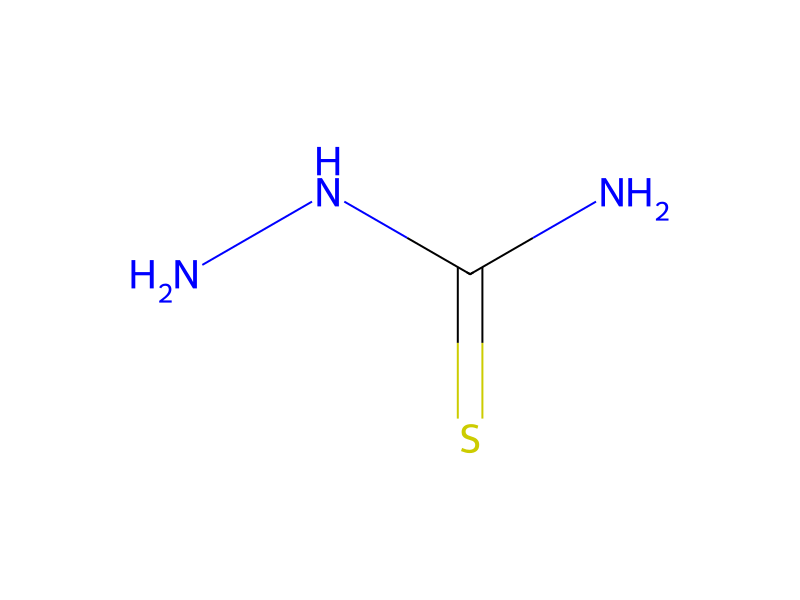
- 标准SMILES
NNC(N)=S- InChIKey
BRWIZMBXBAOCCF-UHFFFAOYSA-N- 分子式
- CH5N3S
- 平均分子量
- 91.14 g/mol
- 单同位素质量
- 91.02041835
名称与标识
- 首选名称
- Thiosemicarbazide
- IUPAC
- aminothiourea
- 中文名
- 氨基硫脲
- 英文名
- Thiosemicarbazide
- 分子式
- CH5N3S
- 分子量
- 91.14
名称与别名
Thiosemicarbazide79-19-6aminothioureaHydrazinecarbothioamideN-Aminothiourea1-AminothioureaIsothiosemicarbazide2-Thiosemicarbazide3-ThiosemicarbazideThiocarbamylhydrazineThiocarbamoylhydrazineSemicarbazide, thio-
展开更多名称
灭鼠特硫氨脲胺硫脲杀鼠特氨基硫脲硫半卡肼氨基硫尿硫代氨基脲硫代氯基硫脲N-氨基硫脲TSCTSZCHP3NSC 2213NSC 31792
Aminothio-ureaThiocarbamoyl hydrazide1-AMINO-2-THIOUREASemicarbazide, 3-thio-USAF EK-1275DTXSID9021346AI3-163196056O8W6ET
数据库标识
- CAS
79-19-6- PubChem CID
- 2723789
- DTXSID
DTXSID9021346- ChEMBL
CHEMBL256250- ChEBI
CHEBI:49929- UNII
- 6056O8W6ET
- EC Number
- 201-184-7
- Nikkaji
- J2.410D
性质
结构计算性质
- XLogP
- -1.2
- 极性表面积
- 96.2 Ų
- 氢键供体
- 3
- 氢键受体
- 2
- 可旋转键
- 0
- 重原子
- 5
- 形式电荷
- 0
- 复杂度
- 42
实验与物化性质
OdorOdorless
Color/Form
White crystalline powder
Long needles from water
Solubility
In water, 1./0X10+4 mg/L at 20 °C
Very soluble in water
Soluble in water or alcohol
Very soluble in ethanol
DecompositionWhen heated to decomposition it emits very toxic fumes of NOx and SOx.
Melting Point
356 to 363 °F (EPA, 1998)
183 °C
183 °C
Vapor Pressure0.33 [mmHg]
Physical Description
THIOSEMICARBAZIDE is a white crystalline powder and is odorless. This material is used as a reagent for ketones and certain metals, for photography and as a rodenticide. It is also effective for control of bacterial leaf blight of rice. Not a registered pesticide in the U.S. It is a chemical intermediate for herbicides and a reagent for detection of metals. (EPA, 1998)
White, odorless solid; [Hawley] Off-white crystalline powder; [Alfa Aesar MSDS]
Stability/Shelf LifeStable under recommended storage conditions.
物理化学性质
- 熔点
- 180 · 180-183 °C (dec.)(lit.)
- 沸点
- 208.6 · 208.6±23.0 °C(Predicted)
- 堆积密度
- 500 · 500-600kg/m3
- 密度
- 1.221 · 1.221 (estimate)
- 蒸气压
- 1.15 Pa · 1.15Pa at 25℃
- 折射率
- 1.58 · 1.5800 (estimate)
- 储存条件
- 15 °C · Store at +15°C to +25°C.
- 溶解度
- 125 mg/mL · DMSO : 125 mg/mL (1371.52 mM; Need ultrasonic)
- 酸度系数(pKa)
- 1 · pK1:1.5(+1) (25°C,μ=0.1)
- 形态
- Powder
- 颜色
- White to light yellow
- PH值
- 5 · 5-7 (50g/l, H2O, 20℃)
- 生物来源
- rabbit
- 水溶解性
- soluble
- Merck
- 14 · 14,9361
- BRN
- 506320 · 506320
- Henry's Law Constant
- 1.5 · 1.5×104 mol/(m3Pa) at 25℃, HSDB (2015)
- 稳定性
- Stable. Incompatible with strong oxidizing agents.
- InChI
- 1S/CH5N3S/c2-1(5)4-3/h3H2,(H3,2,4,5)
- InChIKey
- BRWIZMBXBAOCCF-UHFFFAOYSA-N
- SMILES
- NNC(N)=S
- LogP
- -1.67 · -1.67
- CAS 数据库
- 79 · 79-19-6(CAS DataBase Reference)
- NIST化学物质信息
- Hydrazinecarbothioamide(79-19-6)
- EPA化学物质信息
- Thiosemicarbazide (79-19-6)
化学性质
白色结晶或白色结晶性粉末。 溶于水和乙醇。
安全与法规
GHS分类
GHS Classification
Danger
H300 (100%): Fatal if swallowed [Danger Acute toxicity, oral];H412 (27.7%): Harmful to aquatic life with long lasting effects [Hazardous to the aquatic environment, long-term hazard]
P264, P270, P273, P301+P316, P321, P330, P405, and P501 (click each P-code to see the statement)
Aggregated GHS information provided per 83 reports by companies from 9 notifications to the ECHA C&L Inventory. Each notification may be associated with multiple companies.;Information may vary between notifications depending on impurities, additives, and other factors. The percentage value in parenthesis indicates the notified classification ratio from companies that provide hazard codes. Only hazard codes with percentage values above 10% are shown. For more detailed information, please visit ECHA C&L website.
H402: Harmful to aquatic life [Hazardous to the aquatic environment, acute hazard];H412: Harmful to aquatic life with long lasting effects [Hazardous to the aquatic environment, long-term hazard]
危害信息
Regulatory Information
Chemical: Hydrazinecarbothioamide
Status: Active Update: 09-02-2018 https://echa.europa.eu/registration-dossier/-/registered-dossier/17647;Status: Active Update: 13-02-2018 https://echa.europa.eu/registration-dossier/-/registered-dossier/20705
Thiosemicarbazide: HSNO Approval: HSR004724 Approved with controls
The New Jersey Worker and Community Right to Know Act requires public and private employers to provide information about hazardous substances at their workplaces. (N.J.S.A. 34:5A-1 et. seq.)
DOT LabelPoison
Fire HazardsWhen heated to decomposition, very toxic fumes of sulfur oxides and nitrogen oxides are emitted. (EPA, 1998)
Health HazardsThis material is highly toxic by ingestion. May induce goiter and cause delayed toxic effects in blood and skin. May be mutagenic in human cells. (EPA, 1998)
Hazards Summary
May cause irritation, goiter, bone marrow depression, hyperglycemia, CNS excitation, seizures, and pulmonary edema after ingestion; A GABA synthesis inhibitor in experimental animals; [HSDB] Causes convulsions in lethal-dose studies of guinea pigs, mice, and cats (oral, ocular, intravenous, and intraperitoneal routes); [RTECS] An irritant; [Alfa Aesar MSDS]
Reactive GroupAzo, Diazo, Azido, Hydrazine, and Azide Compounds;Isocyanates and Isothiocyanates
Special ReportsBazhina lM, kudymov GI; Farmatsiya (Moscow) 29 (3): 68-70 (1980). A review with 14 references on thiourea & thiosemicarbazide determination in drugs.
RCRA Requirements
P116; As stipulated in 40 CFR 261.33, when hydrazinecarbothioamide, as a commercial chemical product or manufacturing chemical intermediate or an off-specification commercial chemical product or a manufacturing chemical intermediate, becomes a waste, it must be managed according to federal and/or state hazardous waste regulations. Also defined as a hazardous waste is any container or inner liner used to hold this waste or any residue, contaminated soil, water, or other debris resulting from the cleanup of a spill, into water or on dry land, of this waste. Generators of small quantities of this waste may qualify for partial exclusion from hazardous waste regulations (40 CFR 261.5(e)).
Reactivity Profile
Isocyanates and thioisocyanates are incompatible with many classes of compounds, reacting exothermically to release toxic gases. Reactions with amines, aldehydes, alcohols, alkali metals, ketones, mercaptans, strong oxidizers, hydrides, phenols, and peroxides can cause vigorous releases of heat. Acids and bases initiate polymerization reactions in these materials. Some isocyanates react with water to form amines and liberate carbon dioxide. Base-catalysed reactions of isocyanates with alcohols should be carried out in inert solvents. Such reactions in the absence of solvents often occur with explosive violence, [Wischmeyer(1969)].
Air and Water ReactionsNo rapid reaction with air. No rapid reaction with water.
EPA Hazardous Waste NumberP116; An acute hazardous waste when a discarded commercial chemical product or manufacturing chemical intermediate or an off-specification commercial chemical product or a manufacturing chemical intermediate.
CERCLA Reportable Quantities
Releases of CERCLA hazardous substances are subject to the release reporting requirement of CERCLA section 103, codified at 40 CFR part 302, in addition to the requirements of 40 CFR part 355. Thiosemicarbazide is an extremely hazardous substance (EHS) subject to reporting requirements when stored in amounts in excess of its threshold planning quantity (TPQ) of 100 or 10,000 lbs. Extremely hazardous substances that are solids are subject to either of two threshold planning quantities ... The lower quantity applies only if the solid exists in powdered form and has a particle size less than 100 microns; or is handled in solution or in molten form; or meets the criteria for a National Fire Protection Association (NFPA) rating of 2, 3 or 4 for reactivity. If the solid does not meet any of these criteria, it is subject to the upper ... threshold planning quantity ... .
Persons in charge of vessels or facilities are required to notify the National Response Center (NRC) immediately, when there is a release of this designated hazardous substance, in an amount equal to or greater than its reportable quantity of 100 lb or 45.4 kg. The toll free number of the NRC is (800) 424-8802. The rule for determining when notification is required is stated in 40 CFR 302.4 (section IV. D.3.b).
安全与防护
Fire Fighting
(Non-Specific -- Poisonous, Solid, n.o.s.) Stay upwind; keep out of low areas. Wear self-contained (positive pressure if available) breathing apparatus and full protective clothing. Move container from fire area if you can do so without risk.;(Non-Specific -- Poisonous, Solid, n.o.;s) Extinguish with any chemical, carbon dioxide, water spray, fog, or foam. (EPA, 1998)
First Aid
Warning: Highly toxic by ingestion. May be mutagenic in human cells.;Signs and Symptoms of Thiosemicarbazide Exposure: Signs and symptoms of acute exposure to thiosemicarbazide may include eye and skin irritation, excessive salivation, vomiting, pulmonary edema, pleural effusions, central nervous system stimulation, and seizures.;Emergency Life-Support Procedures: Acute exposure to thiosemicarbazide may require decontamination and life support for the victims. Emergency personnel should wear protective clothing appropriate to the type and degree of contamination. Air-purifying or supplied-air respiratory equipment should also be worn, as necessary. Rescue vehicles should carry supplies such as plastic sheeting and disposable plastic bags to assist in preventing spread of contamination.;Inhalation Exposure:;1. Move victims to fresh air. Emergency personnel should avoid self-exposure to thiosemicarbazide.;2. Evaluate vital signs including pulse and respiratory rate, and note any trauma. If no pulse is detected, provide CPR. If not breathing, provide artificial respiration. If breathing is labored, administer 100% humidified oxygen or other respiratory support.;3. Obtain authorization and/or further instructions from the local hospital for performance of other invasive procedures.;4. Transport to a health care facility.;Dermal/Eye Exposure:;1. Remove victims from exposure. Emergency personnel should avoid self-exposure to thiosemicarbazide.;2. Evaluate vital signs including pulse and respiratory rate, and note any trauma. If no pulse is detected, provide CPR. If not breathing, provide artificial respiration. If breathing is labored, administer 100% humidified oxygen or other respiratory support.;3. Remove contaminated clothing and shoes as soon as possible.;4. If eye exposure has occurred, eyes must be flushed with lukewarm water for at least 15 minutes.;5. Wash exposed skin areas thoroughly with soap and water.;6. Obtain authorization and/or further instructions from the local hospital for performance of other invasive procedures.;7. Transport to a health care facility.;Ingestion Exposure:;1. Evaluate vital signs including pulse and respiratory rate, and note any trauma. If no pulse is detected, provide CPR. If not breathing, provide artificial respiration. If breathing is labored, administer 100% humidified oxygen or other respiratory support.;2. Obtain authorization and/or further instructions from the local hospital for administration of an antidote or performance of other invasive procedures.;3. DO NOT induce vomiting.
Firefighting HazardsSpecial hazards arising from the substance or mixture: Carbon oxides, nitrogen oxides (NOx), sulphur oxides.
Fire Fighting Procedures
Suitable extinguishing media: Use water spray, alcohol-resistant foam, dry chemical or carbon dioxide.
Advice for firefighters: Wear self-contained breathing apparatus for firefighting if necessary.
Storage ConditionsConditions for safe storage, including any incompatibilities: Keep container tightly closed in a dry and well-ventilated place.
Cleanup Methods
Accidental Release Measures. Personal precautions, protective equipment and emergency procedures: Wear respiratory protection. Avoid dust formation. Avoid breathing vapours, mist or gas. Ensure adequate ventilation. Evacuate personnel to safe areas. Avoid breathing dust. Environmental precautions: Prevent further leakage or spillage if safe to do so. Do not let product enter drains. Discharge into the environment must be avoided. Methods and materials for containment and cleaning up: Pick up and arrange disposal without creating dust. Sweep up and shovel. Keep in suitable, closed containers for disposal.
Nonfire Spill Response
Avoid skin contact, ingestion or inhalation. (Non-Specific -- Poisonous Solid, n.o.s.) Do not touch spilled material; stop leak if you can do it without risk.;Small spills: take up with sand or other noncombustible absorbent material and place into containers for later disposal.;Small dry spills: with clean shovel place material into clean, dry container and cover; move containers from spill area.;Large spills: dike far ahead of spill for later disposal. (EPA, 1998)
Disposal Methods
Generators of waste (equal to or greater than 100 kg/mo) containing this contaminant, EPA hazardous waste number P116, must conform with USEPA regulations in storage, transportation, treatment and disposal of waste.
A potential candidate for rotary kiln incineration at a temperature range of 820 to 1600 °C and residence times of seconds for liquids and gases, and hours for solids. A potential candidate for fluidized bed incineration at a temperature range of 450 to 980 °C and residence times of seconds for liquids and gases, and longer for solids.
Waste treatment methods. Product: Offer surplus and non-recyclable solutions to a licensed disposal company. Contact a licensed professional waste disposal service to dispose of this material. Dissolve or mix the material with a combustible solvent and burn in a chemical incinerator equipped with an afterburner and scrubber. Contaminated packaging: Dispose of as unused product.
Preventive Measures
Precautions for safe handling: Avoid contact with skin and eyes. Avoid formation of dust and aerosols. Provide appropriate exhaust ventilation at places where dust is formed.Normal measures for preventive fire protection.
Appropriate engineering controls: Avoid contact with skin, eyes and clothing. Wash hands before breaks and immediately after handling the product.
Gloves must be inspected prior to use. Use proper glove removal technique (without touching glove's outer surface) to avoid skin contact with this product. Dispose of contaminated gloves after use in accordance with applicable laws and good laboratory practices. Wash and dry hands.
Isolation and Evacuation
Excerpt from ERG Guide 154 [Substances - Toxic and/or Corrosive (Non-Combustible)]:;IMMEDIATE PRECAUTIONARY MEASURE: Isolate spill or leak area in all directions for at least 50 meters (150 feet) for liquids and at least 25 meters (75 feet) for solids.;SPILL: Increase the immediate precautionary measure distance, in the downwind direction, as necessary.;FIRE: If tank, rail tank car or highway tank is involved in a fire, ISOLATE for 800 meters (1/2 mile) in all directions; also, consider initial evacuation for 800 meters (1/2 mile) in all directions. (ERG, 2024)
Protective Action Criteria (PAC)
0.063 [mg/m3]
0.69 [mg/m3]
4.1 [mg/m3]
Personal Protective Equipment (PPE)
For emergency situations, wear a positive pressure, pressure-demand, full facepiece self-contained breathing apparatus (SCBA) or pressure- demand supplied air respirator with escape SCBA and a fully-encapsulating, chemical resistant suit. (EPA, 1998)
Wear rubber gloves & gas mask. /Thiourea/
Eye/face protection: Face shield and safety glasses Use equipment for eye protection tested and approved under appropriate government standards such as NIOSH (US) or EN 166(EU).
Skin protection: Handle with gloves.
Body Protection: Complete suit protecting against chemicals, The type of protective equipment must be selected according to the concentration and amount of the dangerous substance at the specific workplace.
Respiratory protection: Where risk assessment shows air-purifying respirators are appropriate use a full-face particle respirator type N100 (US) or type P3 (EN 143) respirator cartridges as a backup to engineering controls. If the respirator is the sole means of protection, use a full-face supplied air respirator. Use respirators and components tested and approved under appropriate government standards such as NIOSH (US) or CEN (EU).
毒理信息
Interactions
The acute neurobehavioral toxicity of organochlorine pesticide, aldrin, has been studied at sublethal doses. A dose of 8.9 mg/kg (1/4 LD50) induced piloerection, tremors, convulsive excitement restlessness, augmented spontaneous motor activity and exploratory behavior in mice after 60 min, of i.p. administration indicating CNS stimulation. Blockade of specific neurotransmitter system by pretreatment with atropine (10 mg/kg), iproniazid (100 mg/kg) alpha-methyl-p-tyrosine (200 mg/kg), p-chlorophenylalanine (200 mg/kg) or thiosemicarbazide (5 mg/kg) significantly altered the neurotoxic symptoms induced by the pesticide indicating direct or indirect involvement of various neurotransmitter system in mediating CNS toxicity. Conditioned avoidance response in rats was not affected by the pesticide alone or in combination with either drug.
Female CD1 mice given the contraceptive steroids mestranol and norethynodrel (1:10) in the diet (0.0033%) for 4 months had a growth reduction of 20% when compared with mice fed a normal diet, and had lower convulsive thresholds when tested with the vitamin B6 antagonists 2,4-dimethyl-5-methyl-hydroxypyrimidine and thiosemicarbazide. In conditioned avoidance response (CAR) tests, mice fed the steroid-containing diets showed a decreased acquisition performance during all six sessions; however, mice fed the same diet supplemented with vitamin B6 (0.04%) performed as well during the last three sessions of the CAR tests as mice fed the normal diet.
Susceptibility to thiosemicarbazide was compared in 7 animal species together with the protective effect of vitamin B6 on the induction of convulsions. Susceptibility occurred generally with the phylogenetic development of the brain of vertebrates as well as invertebrates. Abnormal behavior analogous to running fits in rats and mice, which was thought to be a characteristic and activated form of locomotion, was also induced in every animal except the silkworm. Vitamin B6 arrested the induction of convulsions and abnormal behavior in guinea pigs and goldfish.
GABA-/inhibitory/ agents (thiosemicarbazide) markedly decreased the effect of morphine, hydrocodone, and the enkephaline analogs: Tyr-D-Ala-Gly-Phe-NH2 and Tyr-D-Ala-Gly-Phe (NO2) NH2 /in experimental animals/.
For more Interactions (Complete) data for 1-AMINO-2-THIOUREA (15 total), please visit the HSDB record page.
Ecotoxicity Values
LC50; Species: Xenopus laevis /(African clawed frog)/ embryos; Concentration: 10,970 mg/L for 96 hr /Conditions of bioassay not specified in source examined/
EC50; Species: Xenopus laevis /(African clawed frog)/ embryos; Concentration: 25.5 mg/L for 96 hr; Effect: gross embryo malformation /Conditions of bioassay not specified in source examined/
LD50; Species: Wild bird oral 9100 ug/kg
Environmental Fate
TERRESTRIAL FATE: Based on a classification scheme(1), an estimated Koc value of 16(SRC), determined from a structure estimation method(2), indicates that 1-amino-2-thiourea is expected to have very high mobility in soil(SRC). Volatilization of 1-amino-2-thiourea from moist soil surfaces is not expected to be an important fate process(SRC) given an estimated Henry's Law constant of 6.6X10⁻¹⁰ atm-cu m/mole(SRC), using a fragment constant estimation method(2). 1-Amino-2-thiourea is not expected to volatilize from dry soil surfaces(SRC) based upon an estimated vapor pressure of 0.0087 mm Hg at 25 °C(SRC), determined from a fragment constant method(2). Utilizing the Japanese MITI test, 0% of the theoretical BOD was reached in 4 weeks indicating that biodegradation in soil is not an important environmental fate process(3).
AQUATIC FATE: Based on a classification scheme(1), an estimated Koc value of 16(SRC), determined from a structure estimation method(2), indicates that 1-amino-2-thiourea is not expected to adsorb to suspended solids and sediment(SRC). Volatilization from water surfaces is not expected(3) based upon an estimated Henry's Law constant of 6.6X10⁻¹⁰ atm-cu m/mole(SRC), developed using a fragment constant estimation method(2). 1-Amino-2-thiourea may undergo hydrolysis in the environment due to functional groups that hydrolyze under environmental conditions(3). According to a classification scheme(4), BCFs of 3.8-4.2 and <39 in carp (Cyprinus carpio)(5), suggest bioconcentration in aquatic organisms is low(SRC). Utilizing the Japanese MITI test, 0% of the theoretical BOD was reached in 4 weeks indicating that biodegradation in water is not an important environmental fate process(5).
ATMOSPHERIC FATE: According to a model of gas/particle partitioning of semivolatile organic compounds in the atmosphere(1), 1-amino-2-thiourea, which has an estimated vapor pressure of 0.008 mm Hg at 25 °C(SRC), determined from a fragment constant method(2), is expected to exist solely as a vapor in the ambient atmosphere. Vapor-phase 1-amino-2-thiourea is degraded in the atmosphere by reaction with photochemically-produced hydroxyl radicals(SRC); the half-life for this reaction in air is estimated to be 4 hours(SRC), calculated from its rate constant of 8.4X10⁻¹¹ cu cm/molecule-sec at 25 °C(SRC) that was derived using a structure estimation method(2). Particulate-phase 1-amino-2-thiourea may be removed from the air by wet and dry deposition(SRC). 1-Amino-2-thiourea contains chromophores that absorb at wavelengths >290 nm(3) and, therefore, may be susceptible to direct photolysis by sunlight(SRC).
Adverse EffectsNeurotoxin - Other CNS neurotoxin
Toxicity Summary
IDENTIFICATION AND USE: 1-Amino-2-thiourea is an odorless white crystalline powder or long needles from water. It is an intermediate for pesticides, especially herbicides, and pharmaceuticals; used in certain photographic and dye applications and used as a reagent for the detection of metals. HUMAN EXPOSURE AND TOXICITY: Thioureas are potential sensitizing accelerators and antioxidants used in the manufacture of rubber which may cause irritant contact dermatitis. ANIMAL STUDIES: Subcutaneous injections of thiosemicarbazide into postnatal mice caused convulsions in mice when treated on the day 7 or later but not on the days 1-5. The latent period of the 1st convulsion was 115 min in mice injected on the day 7. The convulsions were inhibited by pyridoxine-HCL, but not by pyridoxal phosphate. GABAergic antagonists (1-amino-2-thiourea) enhanced aggressive behavior and decreased the social behavior of mice. 1-amino-2-thiourea was noncarcinogenic in mice and rats. The agent was teratogenic in chick embryos when applied to the vascular area on the 3rd day of incubation at 0.5 to 1 mg it produced deformities of the wing and beak, but not harelip. ECOTOXICITY STUDIES: Exposure of Rana sylvatica tadpoles to 25 mg/L or more caused a curvature of digits, abnormal limb articulations, difficulty in swimming, and death. Wood frog (Rana sylvatica) tadpoles were exposed to 50 mg thiosemicarbazide (TSC)/L water for varying lengths of time and at different developmental stages. Short exposure periods (3 and 6 hr) resulted in no visible deformities. Exposure periods of 12 or more hr caused slight to severe abnormalities, with a direct relationship between length of exposure and degree of deformity. Tadpoles exposed to TSC from posthatching Days 24-30 were more seriously affected than were tadpoles exposed at an older age.
Ecotoxicity Excerpts
/AQUATIC SPECIES/ The effects of exposure of Rana sylvatica tadpoles to varying concentrations (10-75 mg/L for 4 days) of thiosemicarbazide (TSC) was studied. Exposure to concentrations of 25 mg/L or more caused a curvature of digits, abnormal limb articulations, difficulty in swimming, and death. For all of these parameters, effects were dose dependent. Tadpoles exposed to 10 mg/L metamorphosed significantly slower than controls while those exposed to 50 mg/L metamorphosed significantly faster than controls. Rate of endochondral ossification in femurs and tibio-fibulas also was affected by TSC. These long bones ossified faster than in controls in both the 25- and 75-mg/L exposure groups. R. sylvatica tadpoles respond to TSC (a known osteolathyrogen) in a manner similar to that of other species. This response appears to be due in part to an acceleration of long bone ossification and speed of metamorphosis in high-concentration exposure groups. These responses are similar but not identical to those seen in Xenopus laevis, the only other amphibian studied to date.
/AQUATIC SPECIES/ Wood frog (Rana sylvatica) tadpoles were exposed to 50 mg thiosemicarbazide (TSC)/L water for varying lengths of time and at different developmental stages. Short exposure periods (3 and 6 hr) resulted in no visible deformities. Exposure periods of 12 or more hr caused slight to severe abnormalities, with a direct relationship between length of exposure and degree of deformity. Tadpoles exposed to TSC from posthatching Days 24-30 were more seriously affected than were tadpoles exposed at an older age.
Ongoing Test Status
The following link will take the user to the National Toxicology Program (NTP) Test Agent Search Results page, which tabulates all of the "Standard Toxicology & Carcinogenesis Studies", "Developmental Studies", and "Genetic Toxicity Studies" performed with this chemical. Clicking on the "Testing Status" link will take the user to the status (i.e., in review, in progress, in preparation, on test, completed, etc.) and results of all the studies that the NTP has done on this chemical.[Available from, as of October 20, 2014: http://ntp-apps.niehs.nih.gov/ntp_tox/index.cfm?fuseaction=ntpsearch.searchresults&searchterm=79-19-6]
Soil Adsorption/Mobility
Using a structure estimation method based on molecular connectivity indices(1), the Koc of 1-amino-2-thiourea can be estimated to be 16(SRC). According to a classification scheme(2), this estimated Koc value suggests that 1-amino-2-thiourea is expected to have very high mobility in soil.
TSCA Test Submissions
Thiosemicarbazide was evaluated in range-finding study for acute oral toxicity in male CD rats administered single doses (0.5% Methocel dispersion, 10 mL/kg) of 0, 5, and 50 mg/kg by gavage. All rats of a 50 mg/kg dose were dead upon 2-hour observation, having shown no overt signs of toxicity one hour post-gavage. Terminal necropsy disclosed wet and/or tan or red-stained muzzles and darkened livers. No apparent toxicity was reported among rats of a 5 mg/kg dose and the study authors assigned an acute oral LD50 between 1 and 50 mg/kg.
Thiosemicarbazide was evaluated in range-finding study for acute dermal toxicity in male CD rats administered single occluded dermal applications (0.85% saline, 1:1) of 0, 20, and 200 mg/kg for 24 hours. Study authors reported incomplete cleansing of test substance from the application sites after treatment and possible oral exposure of treated rats by preening. Dermal exposure was associated with mortality in 5/6 high dose rats only, 4 on Day 1 of 14-day post-treatment observation and 1 on the day of treatment. Prior to death, the decedent rats unanimously exhibited convulsions, tremors, salivation, aggressiveness, and red-stained muzzle. Terminal necropsy disclosed wet and/or tan or red-stained muzzles and darkened livers. No apparent toxicity was reported among the solitary surviving rat of a 200 mg/kg application or rats of a 20 mg/kg dose, and no dermal irritation (Draize) was noted in any treated animal. The study authors assigned an acute dermal LD50 between 20 and 200 mg/kg.
Thiosemicarbazide was evaluated in range-finding study for eye irritation in 6 male New Zealand White rabbits administered single 0.1 g instillations onto the corneal surface of a single eye. Half (3/6) of the eyes were cleansed at 20-30 seconds after the exposure. No ocular irritation (Draize) of cornea, iris, or conjunctivae was reported in any animal throughout 7-day post-instillation observation.
Human Toxicity Excerpts
/SURVEILLANCE/ In the manufacture of rubber, irritant contact dermatitis may occur from a variety of acids, alkalis, detergents, and solvents used in the process. Allergic contact dermatitis occurs not infrequently and is almost always due to an organic accelerator or antioxidant. While the list of potential sensitizing accelerators and antioxidants is enormous, common allergens include ... thioureas. /Thioureas/
Artificial Pollution Sources1-Amino-2-thiourea's production and use as a reagent for ketones and certain metals, in photography, and in the production of pesticides(1) may result in its release to the environment through various waste streams(SRC).
Environmental BiodegradationAEROBIC: 1-Amino-2-thiourea, present at 100 mg/L, reached 0% of its theoretical BOD in 4 weeks using an activated sludge inoculum at 30 mg/L in the Japanese MITI test(1).
法规信息
Regulatory Information
Chemical: Hydrazinecarbothioamide
Status: Active Update: 09-02-2018 https://echa.europa.eu/registration-dossier/-/registered-dossier/17647;Status: Active Update: 13-02-2018 https://echa.europa.eu/registration-dossier/-/registered-dossier/20705
Thiosemicarbazide: HSNO Approval: HSR004724 Approved with controls
The New Jersey Worker and Community Right to Know Act requires public and private employers to provide information about hazardous substances at their workplaces. (N.J.S.A. 34:5A-1 et. seq.)
RCRA Requirements
P116; As stipulated in 40 CFR 261.33, when hydrazinecarbothioamide, as a commercial chemical product or manufacturing chemical intermediate or an off-specification commercial chemical product or a manufacturing chemical intermediate, becomes a waste, it must be managed according to federal and/or state hazardous waste regulations. Also defined as a hazardous waste is any container or inner liner used to hold this waste or any residue, contaminated soil, water, or other debris resulting from the cleanup of a spill, into water or on dry land, of this waste. Generators of small quantities of this waste may qualify for partial exclusion from hazardous waste regulations (40 CFR 261.5(e)).
CERCLA Reportable Quantities
Releases of CERCLA hazardous substances are subject to the release reporting requirement of CERCLA section 103, codified at 40 CFR part 302, in addition to the requirements of 40 CFR part 355. Thiosemicarbazide is an extremely hazardous substance (EHS) subject to reporting requirements when stored in amounts in excess of its threshold planning quantity (TPQ) of 100 or 10,000 lbs. Extremely hazardous substances that are solids are subject to either of two threshold planning quantities ... The lower quantity applies only if the solid exists in powdered form and has a particle size less than 100 microns; or is handled in solution or in molten form; or meets the criteria for a National Fire Protection Association (NFPA) rating of 2, 3 or 4 for reactivity. If the solid does not meet any of these criteria, it is subject to the upper ... threshold planning quantity ... .
Persons in charge of vessels or facilities are required to notify the National Response Center (NRC) immediately, when there is a release of this designated hazardous substance, in an amount equal to or greater than its reportable quantity of 100 lb or 45.4 kg. The toll free number of the NRC is (800) 424-8802. The rule for determining when notification is required is stated in 40 CFR 302.4 (section IV. D.3.b).
安全数据
- F
- 8-9-23
- wgk
- 3
- tsca
- TSCA listed
- 毒性
- LD50 orally in adult Norway rats: 13 mg/kg, Dieke, Proc. Soc. Exp. Biol. Med. 70, 688 (1949)
- RTECS号
- VT4200000
- 包装类别
- II
- 危险等级
- 6.1
- 存储类别
- 6.1A - Combustible acute toxic Cat. 1 and 2very toxic hazardous materials
- 安全说明
- 22-26-36/37-45-61-28A-36/37/39
- 海关编码
- 29335995
- 危险品标志
- T+
- 危险性类别
- Acute Tox. 2 OralAquatic Chronic 3
- 危险类别码
- 28-52/53-26/27/28
- 毒害物质数据
- 79-19-6(Hazardous Substances Data)
- 危险品运输编号
- UN 2811 6.1/PG 2
毒性防护
急性毒性口服- 大鼠 LD50: 9.16 毫克/ 公斤
包装储运
可燃性危险特性燃烧产生有毒硫氧化物和氮氧化物气体
储运特性库房通风低温干燥; 与食品原料分开储运
灭火剂干粉、泡沫、砂土
化学与工业
药理信息
Mechanism of ActionGlutamic acid decarboxylase activity in mouse brain homogenates was reduced after pretreatment with thiosemicarbazide.
MeSH Pharmacological Classification
Substances that act in the brain stem or spinal cord to produce tonic or clonic convulsions, often by removing normal inhibitory tone. They were formerly used to stimulate respiration or as antidotes to barbiturate overdose. They are now most commonly used as experimental tools.
Compounds or agents that combine with an enzyme in such a manner as to prevent the normal substrate-enzyme combination and the catalytic reaction.
用途与制造
Uses
Used as a reagent for ketones and detection of metals, rodenticide, and chemical intermediate; Also used in photography; [HSDB] Effective for controlling bacterial leaf blight in rice: [CAMEO]
Not registered as a pesticide for use in the US; [CAMEO]
Photographic Processing [Category: Other]
Reagent for ketones and certain metals; photography; rodenticide.
CHEM INT FOR HERBICIDES (EG, TEBUTHIURON); REAGENT FOR DETECTION OF METALS (POSSIBLE USE).
Used as chemical intermediates.... are useful in forming 1,3,4-thiadiazoles, as a class of compounds having herbicidal activity. /Thiosemicarbazides/
U.S. Imports(1977) AT LEAST 4.99X10+6 G
U.S. Production(1977) AT LEAST 4.54X10+6 G
Methods of Manufacturing
... Made from CS2 and hydrazine.
From potassium thiocyanate and hydrazine salts.
Formulations/PreparationsGrades: technical and pure.
General Manufacturing Information
Hydrazinecarbothioamide: ACTIVE
Thiosemicarbazide is effective for control of bacterial leaf blight of rice when applied around rice plant roots.
应用领域
用途用于合成抗结核药氨硫脲和磺胺药物,用作农药中间体、橡胶助剂、合成树脂添加剂以及分析试剂等
用途氨基硫脲又名硫代氨基脲,是制备氨基甲酸酯类杀虫剂唑蚜威以及噻二唑类杀菌剂和杀鼠剂的中间体,也可用于合成抗结核药氨硫脲和磺胺药物、橡胶助剂和合成树脂添加剂等,还可用作铬的定量及醛酮鉴定的分析试剂。
用途氨基硫脲是重要的有机合成中间体,常用于合成2-取代肼基-4-取代基噻唑类抗菌素,如硝呋喃唑(Nifurthiazole)以及抗病毒药酞丁安(Ftibamzone)等。
用途用作铬的定量测定及醛酮鉴定的分析试剂;用作铜的络合剂
用途铜的络合剂。测定铬的沉淀剂。检定某些金属和糖、醛、酮的试剂。毒鼠药制备。本品为有机合成中间体,用于合成抗结核药氨硫脲和磺胺药物,以及杀鼠剂。还可用作铬的定量及醛酮鉴定的分析试剂。此外,本品也用作农药中间体、橡胶助剂和合成树脂添加剂等。
用途用作分析试剂
制备方法
生产方法氨基硫脲是以水合肼、硫氰酸铵为原料,以乙醛为催化剂制得。反应方程式见:2H2NNH2·H2O+H2SO4→(H2NNH2)2·H2SO4+2H2O(H2NNH2)2·H2SO4+2NH4SCN→2H2NNH2·HSCN+(NH4)2SO4先将一定量的水合肼放入三口瓶内,以水冷却,在搅拌下缓慢加入一定浓度的硫酸,保持温度在40℃以下,控制pH=4~5为终点即得硫酸肼。然后加入硫氰酸铵,搅拌,在30℃加入一定量乙醛(或丙酮),然后趁热将反应物移至烧杯中,在室温下放置4h,析出结晶,经过滤、水洗、干燥而得成品,收率80%以上。另外,也可以硫脲与水合肼为原料进行加热反应制得。
生产方法1.以硫脲与水合肼为原料进行加热反应制得。2.由水合肼与硫酸配制成硫酸肼,与硫氰酸铵反应生成硫氰酸肼,再与乙醛反应后经水解得到氨基硫脲。
上下游产品信息
上游原料
下游产品
试剂价格
- A14630 · 2500g
- 氨基硫脲Thiosemicarbazide98% — 3321元
- T0221 · 25G
- 氨基硫脲Thiosemicarbazide — 210元
供应商50 家
国药集团化学试剂有限公司86-21-63210123 · [email protected]
梯希爱(上海)化成工业发展有限公司021-67121386 · [email protected]
上海阿拉丁生化科技股份有限公司400-6206333 13167063860 · [email protected]
湖北海克斯生化有限公司17362916295; 17362916295 · [email protected]
上海如吉生物科技发展有限公司+86-21-65211385-8001 36031160 · [email protected]
北京安司莫森技术有限公司010-82954736 13391601435 · [email protected]
上海将来实业股份有限公司400-0066400 13621662912 · [email protected]
上海迈瑞尔生化科技有限公司4006356688 18621169109 · [email protected]
武汉易泰科技有限公司上海分公司18930552037 · [email protected]
大连美仑生物技术有限公司0411-62910999 13889544652 · [email protected]
阿法埃莎(中国)化学有限公司400-6106006 · [email protected]
安耐吉化学&3A(安徽泽升科技股份有限公司)400-0056266 · [email protected]
上海瀚鸿科技股份有限公司021-54306202 13764082696 · [email protected]
怀化市冰峰化工有限公司0745-2866851 17711757908 · [email protected]
上海相辉医药科技有限公司13761987713 · [email protected]
上海景颜化工科技有限公司13817811078 · [email protected]
嘉兴市艾森化工有限公司0573-85285100 18627885956 · [email protected]
上海隆盛化工有限公司58099637 13585536065 · [email protected]
合肥天健化工有限公司551-65418679 15856988503;15837135945 · [email protected]
武汉诺必果生物科技有限公司15972140806 15972140806 · [email protected]
孝感深远化工有限公司15527621225; 15527621225 · [email protected]
唐山默内德贸易有限公司0315-8309571 15633399667 · [email protected]
玛雅试剂+86 (573) 82222445 (0)18006601000 452520369 · [email protected]
四川库利南科技有限公司400-1166-196 18981987031 · [email protected]
天津希恩思生化科技有限公司400 638 7771 · [email protected]
斯百全化学(上海)有限公司021-021-021-67601398-809-809-809 15221380277 · [email protected]
上海源叶生物科技有限公司13636370518 · [email protected]
艾科试剂4008-755-333 18080918076 · [email protected]
上海思域化工科技有限公司86-21-34053660 · [email protected]
赛默飞世尔科技(中国)有限公司800-810-5118 · [email protected]
江苏艾康生物医药研发有限公司025-66113011 13913916777 · [email protected]
TOKYO CHEMICAL INDUSTRY CO., LTD.03-36680489 · [email protected]
上海贤鼎生物科技有限公司4009209199 · [email protected]
越林试剂021-62960152 · [email protected]
无锡中坤生化科技有限公司+86 0510-85629785
上海倍卓生物科技有限公司021-61119791,13386096464 · [email protected]
上海洪创医药科技有限公司18151128828 · [email protected]
北京环宇世纪化学科技有限公司hysj_bj.com
湖北鑫源顺医药化工有限公司13971561712, 13995564702, 027-50664929 · [email protected]
上海湄水化工科技有限公司021-60549325 18616193163
上海将来实业股份有限公司400-0066400 13621662912 · [email protected]
上海将来实业股份有限公司021-61552785 · [email protected]
安徽科迪达化工有限公司0554-2106669 · [email protected]
上海毕得医药科技股份有限公司400-164-7117 18317119277 · [email protected]
上海笛柏生物科技有限公司400-008-9730,021-54359730 400-008-9730 · [email protected]
郑州阿尔法化工有限公司0371-53732842 15981811963 · [email protected]
美岚实业(上海)有限公司021-58958189 · [email protected]
上海爱蝶实业有限公司021-58957966 18930537195 · [email protected]
成都零六生物科技有限公司400-1166-196 13458535857 · [email protected]
广拓化学(上海)有限公司021-60899189-8001 18918189673 · [email protected]
相关反应
495 条


关联笔记
加载中…