基本信息
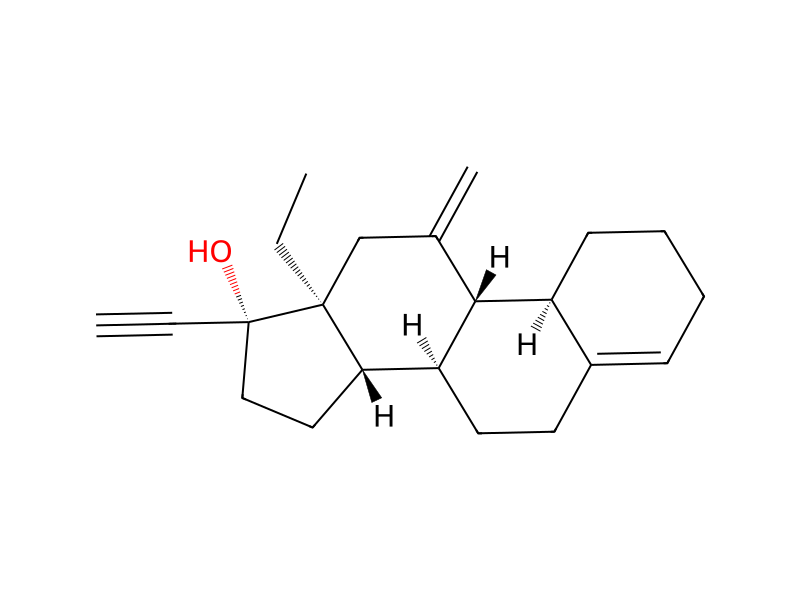
- 标准SMILES
C#C[C@]1(O)CC[C@H]2[C@@H]3CCC4=CCCC[C@@H]4[C@H]3C(=C)C[C@@]21CC- InChIKey
RPLCPCMSCLEKRS-BPIQYHPVSA-N- 分子式
- C22H30O
- 平均分子量
- 310.5 g/mol
- 单同位素质量
- 310.22966558
概述
Desogestrel is a 17beta-hydroxy steroid and a terminal acetylenic compound. It has a role as a contraceptive drug, a synthetic oral contraceptive and a progestin.
名称与标识
- 首选名称
- Desogestrel
- IUPAC
- (8S,9S,10R,13S,14S,17R)-13-ethyl-17-ethynyl-11-methylidene-1,2,3,6,7,8,9,10,12,14,15,16-dodecahydrocyclopenta[a]phenanthren-17-ol
- 中文名
- 去氧孕烯
- 英文名
- Desogestrel
- 分子式
- C22H30O
- 分子量
- 310.47
名称与别名
DESOGESTREL54024-22-5CerazetteDesogestrelumOrg-2969ORG 296913-Ethyl-11-methylene-18,19-dinor-17alpha-pregn-4-en-20-yn-17-ol(8S,9S,10R,13S,14S,17R)-13-ethyl-17-ethynyl-11-methylidene-1,2,3,6,7,8,9,10,12,14,15,16-dodecahydrocyclopenta[a]phenanthren-17-olDTXSID602289881K9V7M3A3VOLNEA COMPONENT DESOGESTRELBEKYREE COMPONENT DESOGESTREL
展开更多名称
妈富隆去氧孕烯氧炔诺酮脱氧炔诺酮地索睾诺酮地索高诺酮待索盖斯著乙腈中去氧孕烯去氧孕烯 标准品去氧孕烯 EP标准品Desogestrel for system suitability CRSDesogenDesogestrel CRS13-ethyl-17-ethynyl-11-methylene-1,2,3,6,7,8,9,10,12,14,15,16-dodecahydrocyclopenta[a]phenanthren-17-olorg2969CyclosaDicromilDESTODENE
ENSKYCE COMPONENT DESOGESTRELPIMTREA COMPONENT DESOGESTRELVIORELE COMPONENT DESOGESTRELISIBLOOM COMPONENT DESOGESTRELCHEBI:4453DTXCID70289813-ethyl-11-methylene-18,19-dinorpregn-4-en-20-yn-17alpha-ol18,19-Dinorpregn-4-en-20-yn-17-ol, 13-ethyl-11-methylene-, (17alpha)-
数据库标识
- CAS
54024-22-5- PubChem CID
- 40973
- DTXSID
DTXSID6022898- ChEMBL
CHEMBL1533- ChEBI
CHEBI:4453- UNII
- 81K9V7M3A3
- EC Number
- 258-929-4
- Nikkaji
- J12.635G
性质
结构计算性质
- XLogP
- 4.9
- 极性表面积
- 20.2 Ų
- 氢键供体
- 1
- 氢键受体
- 1
- 可旋转键
- 2
- 重原子
- 23
- 形式电荷
- 0
- 复杂度
- 605
实验与物化性质
DrugsPharmaceuticals -> Listed in ZINC15
LipidsLipids -> Sterol Lipids [ST] -> Steroids [ST02] -> C21 steroids (gluco/mineralocorticoids, progestogins) and derivatives [ST0203]
LogP4
Color/FormCrystals
Solubility
<1 mg/ml
Slightly soluble in ethanol and ethyl acetate; sparingly soluble in n-hexane.
3.01e-03 g/L
Human Drugs
Breast Feeding; Lactation; Milk, Human; Contraceptive Agents, Female; Contraceptives, Oral, Synthetic
FDA approved drugs -> Active ingredient
FDA approved drugs -> Active ingredient
Endocrine DisruptorsPotential endocrine disrupting compound
Boiling Point428ºC
DecompositionWhen heated to decomposition it emits acrid smoke and fumes.
Melting Point
109-110ºC
109-110 °C
109.5 °C
Optical RotationSpecific optical rotation = +55 deg at 20 °C/D (chloroform)
Physical DescriptionSolid
物理化学性质
- 熔点
- 109 · 109-110°C
- 比旋光度
- 20 · D20 +55° (chloroform)
- 沸点
- 390.62 °C · 390.62°C (rough estimate)
- 密度
- 1.0169 · 1.0169 (rough estimate)
- 折射率
- 1.51 · 1.5100 (estimate)
- 储存条件
- -20 °C · -20°C Freezer
- 溶解度
- Practically insoluble in water, very soluble in methanol, freely soluble in anhydrous ethanol and in methylene chloride.
- 酸度系数(pKa)
- 13.07 · 13.07±0.40(Predicted)
- 形态
- Solid
- 颜色
- White to Almost white
- Merck
- 14 · 14,2926
- 主要应用
- pharmaceutical (small molecule)
- InChI
- InChI=1S/C22H30O/c1-4-21-14-15(3)20-17-9-7-6-8-16(17)10-11-18(20)19(21)12-13-22(21,23)5-2/h2,8,17-20,23H,3-4,6-7,9-14H2,1H3
- InChIKey
- RPLCPCMSCLEKRS-UHFFFAOYSA-N
- SMILES
- C1C2C(CCC3C2C(=C)CC2(CC)C3CCC2(C#C)O)=CCC1
化学性质
白色或类白色结晶性粉末,熔点109~110℃。[α]D20+55°(氯仿)。不溶于水,易溶于无水乙醇和甲醇。
安全与法规
GHS分类
GHS Classification
Danger
H360 (10.8%): May damage fertility or the unborn child [Danger Reproductive toxicity]
P203, P260, P264, P270, P273, P280, P318, P319, P391, P405, and P501 (click each P-code to see the statement)
Aggregated GHS information provided per 65 reports by companies from 12 notifications to the ECHA C&L Inventory. Each notification may be associated with multiple companies.
危害信息
Regulatory InformationDesogestrel: Does not have an individual approval but may be used under an appropriate group standard
Fire PotentialNot flammable or combustible.
FDA Requirements
The Approved Drug Products with Therapeutic Equivalence Evaluations identifies currently marketed prescription drug products, including desogestrel, approved on the basis of safety and effectiveness by FDA under sections 505 of the Federal Food, Drug, and Cosmetic Act.
Toxic Combustion ProductsHazardous decomposition products formed under fire conditions. - Carbon oxides
Hazard Classes and CategoriesRepr. 1B (10.8%)
安全与防护
Fire Fighting ProceduresUse water spray, alcohol-resistant foam, dry chemical or carbon dioxide. Wear self contained breathing apparatus for fire fighting if necessary.
Storage Conditions
Keep container tightly closed in a dry and well-ventilated place.
Store at 20 to 25 °C (68 to 77 °F)
Cleanup Methods
Personal precautions: Use personal protective equipment. Avoid dust formation. Avoid breathing vapors, mist or gas. Ensure adequate ventilation. Evacuate personnel to safe areas. Avoid breathing dust. Environmental precautions: Prevent further leakage or spillage if safe to do so. Do not let product enter drains. Discharge into the environment must be avoided. Methods and materials for containment and cleaning up: Pick up and arrange disposal without creating dust. Sweep up and shovel. Keep in suitable, closed containers for disposal.
Disposal Methods
SRP: Expired or waste pharmaceuticals shall carefully take into consideration applicable DEA, EPA, and FDA regulations. It is not appropriate to dispose by flushing the pharmaceutical down the toilet or discarding to trash. If possible return the pharmaceutical to the manufacturer for proper disposal being careful to properly label and securely package the material. Alternatively, the waste pharmaceutical shall be labeled, securely packaged and transported by a state licensed medical waste contractor to dispose by burial in a licensed hazardous or toxic waste landfill or incinerator.
SRP: At the time of review, regulatory criteria for small quantity disposal are subject to significant revision, however, household quantities of waste pharmaceuticals may be managed as follows: Mix with wet cat litter or coffee grounds, double bag in plastic, discard in trash.
Preventive Measures
Handle in accordance with good industrial hygiene and safety practice. Wash hands before breaks and at the end of workday.
Skin and body protection: impervious clothing. The type of protective equipment must be selected according to the concentration and amount of the dangerous substance at the specific workplace.
Gloves must be inspected prior to use. Use proper glove removal technique (without touching glove's outer surface) to avoid skin contact with this product. Dispose of contaminated gloves after use in accordance with applicable laws and good laboratory practices. Wash and dry hands.
Avoid contact with skin and eyes. Avoid formation of dust and aerosols. Provide appropriate exhaust ventilation at places where dust is formed.
Personal Protective Equipment (PPE)
Handle with gloves.
For nuisance exposures use type P95 (US) or type P1 (EU EN 143) particle respirator.For higher level protection use type OV/AG/P99 (US) or type ABEK-P2 (EU EN 143) respirator cartridges. Use respirators and components tested and approved under appropriate government standards such as NIOSH (US) or CEN (EU).
毒理信息
Milk Concentrations
EXPERIMENTAL: Cerazette does not influence the production or the quality (protein, lactose, or fat concentrations) of breast milk. However, small amounts of etonogestrel are excreted in the breast milk. As a result, 0.01 - 0.05 ug etonogestrel per kg body weight per day may be ingested by the child (based on an estimated milk ingestion of 150 mL/kg/day).
Human Toxicity Excerpts
/HUMAN EXPOSURE STUDIES/ This study investigated the effect of transdermal T and oral desogestrel on the reproductive axis of healthy men. Twenty-three men were randomized to 1 of 3 treatment groups and received a daily transdermal T patch plus oral desogestrel at a dose of 75, 150, or 300 ug/d for 24 weeks. Baseline blood and semen samples were obtained and then every 4 weeks thereafter for 32 weeks. The outcome measures were sperm density and plasma levels of FSH, LH, total and free T. The results show a dose-dependent suppression of spermatogenesis and gonadotropins. Seven of the 17 subjects became azoospermic. Desogestrel (300 ug daily) in combination with 5 mg daily transdermal T was the most effective (57% azoospermic), whereas a dose of 75 ug was ineffective (0% azoospermic). Total and free plasma T were reduced by approximately 30%. High density lipoprotein cholesterol was significantly reduced. No serious side-effects were encountered. ...
/SIGNS AND SYMPTOMS/ There have been no reports of serious deleterious effects from overdose. Symptoms that may occur in this case are nausea, vomiting and, in young girls, slight vaginal bleeding.
/CASE REPORTS/ /The authors/ report a case of coeliac axis thrombosis and splenic infarction presenting in a girl of 14 years who had been on the oral contraceptive pill (OCP), Marvelon (ethinyloestradiol 30 ug plus desogestrel 150 ug), for 3 weeks. She had no other risk factors for thrombo-embolism. Diagnosis was made with duplex Doppler ultrasound and confirmed with dynamically-enhanced computed tomography and magnetic resonance angiography, thus avoiding the need for percutaneous arteriography. Though mesenteric thrombo-embolic disease is recognized in association with use of the combined OCP, it has not previously been reported to affect the coeliac axis. Pediatricians and surgeons should be aware of the risks to young girls on the OCP, and consider it in their differential diagnosis of the acute abdomen.
/CASE REPORTS/ ... A 20-year-old female taking the third-generation oral contraceptive desogestrel/ethinyl estradiol and ethinyl estradiol (Mircette) developed bruising and increased pain and swelling of her right arm over a 5-day period after whole-blood donation. She was a first-time donor and the venipuncture was reported as being mildly traumatic. There was no personal or family history of thrombosis. Ultrasound examination of her upper extremity revealed the presence of a deep venous thrombosis that required treatment with enoxaparin sodium for 5 days and warfarin for 6 months. Evaluation for thrombophilia was negative. The only risk factor for thrombosis was use of oral contraceptives. ...
For more Human Toxicity Excerpts (Complete) data for DESOGESTREL (27 total), please visit the HSDB record page.
Drug Induced Liver Injury
Drug-Induced Liver Injury Severity and Toxicity (DILIst)
Desogestrel
DILI Positive
DOI:10.1016/j.drudis.2019.09.022
Populations at Special Risk
There have been no reports of serious deleterious effects from overdose. Symptoms that may occur in this case are nausea, vomiting and, in young girls, slight vaginal bleeding.
/The authors/ report a case of coeliac axis thrombosis and splenic infarction presenting in a girl of 14 years who had been on the oral contraceptive pill (OCP), Marvelon (ethinyloestradiol 30 ug plus desogestrel 150 ug), for 3 weeks. She had no other risk factors for thrombo-embolism. Diagnosis was made with duplex Doppler ultrasound and confirmed with dynamically-enhanced computed tomography and magnetic resonance angiography, thus avoiding the need for percutaneous arteriography. Though mesenteric thrombo-embolic disease is recognized in association with use of the combined OCP, it has not previously been reported to affect the coeliac axis. Pediatricians and surgeons should be aware of the risks to young girls on the OCP, and consider it in their differential diagnosis of the acute abdomen.
Oral contraceptives like Apri (desogestrel and ethinyl estradiol) tablets should not be used in women who currently have the following conditions: thrombophlebitis or thromboembolic disorders; a past history of deep vein thrombophlebitis or thromboembolic disorders; cerebral vascular or coronary artery disease; known or suspected carcinoma of the breast; carcinoma of the endometrium or other known or suspected estrogen-dependent neoplasia; undiagnosed abnormal genital bleeding; cholestatic jaundice of pregnancy or jaundice with prior pill use; hepatic adenomas or carcinomas...
Cerazette contains less than 65 mg lactose and therefore should not be administered to patients with rare hereditary problems of galactose intolerance, the Lapp lactase deficiency, or glucose-galactose malabsorption.
For more Populations at Special Risk (Complete) data for DESOGESTREL (6 total), please visit the HSDB record page.
Antidote and Emergency Treatment
/SRP:/ Immediate first aid: Ensure that adequate decontamination has been carried out. If patient is not breathing, start artificial respiration, preferably with a demand valve resuscitator, bag-valve-mask device, or pocket mask, as trained. Perform CPR if necessary. Immediately flush contaminated eyes with gently flowing water. Do not induce vomiting. If vomiting occurs, lean patient forward or place on the left side (head-down position, if possible) to maintain an open airway and prevent aspiration. Keep patient quiet and maintain normal body temperature. Obtain medical attention. /Poisons A and B/
/SRP:/ Basic treatment: Establish a patent airway (oropharyngeal or nasopharyngeal airway, if needed). Suction if necessary. Watch for signs of respiratory insufficiency and assist ventilations if needed. Administer oxygen by nonrebreather mask at 10 to 15 L/min. Monitor for pulmonary edema and treat if necessary ... . Monitor for shock and treat if necessary ... . Anticipate seizures and treat if necessary ... . For eye contamination, flush eyes immediately with water. Irrigate each eye continuously with 0.9% saline (NS) during transport ... . Do not use emetics. For ingestion, rinse mouth and administer 5 mL/kg up to 200 mL of water for dilution if the patient can swallow, has a strong gag reflex, and does not drool ... . Cover skin burns with dry sterile dressings after decontamination ... . /Poisons A and B/
/SRP:/ Advanced treatment: Consider orotracheal or nasotracheal intubation for airway control in the patient who is unconscious, has severe pulmonary edema, or is in severe respiratory distress. Positive-pressure ventilation techniques with a bag valve mask device may be beneficial. Consider drug therapy for pulmonary edema ... . Consider administering a beta agonist such as albuterol for severe bronchospasm ... . Monitor cardiac rhythm and treat arrhythmias as necessary ... . Start IV administration of D5W /SRP: "To keep open", minimal flow rate/. Use 0.9% saline (NS) or lactated Ringer's if signs of hypovolemia are present. For hypotension with signs of hypovolemia, administer fluid cautiously. Watch for signs of fluid overload ... . Treat seizures with diazepam or lorazepam ... . Use proparacaine hydrochloride to assist eye irrigation ... . /Poisons A and B/
Effects During Pregnancy and Lactation◉ Summary of Use during Lactation
EPA Human Health Benchmarks for Pharmaceuticals
Desogestrel
0.003
0.01
Desogestrel is given in combination with ethinyl estradiol. Each orange tablet (debossed with "S3" on one side) contains 0.15 mg desogestrel and 0.03 mg ethinyl estradiol and is taken once per day. To achieve maximum contraceptive effectiveness, desogestrel and ethinyl estradiol tablets must be taken exactly as directed and at intervals not exceeding 24 hours.
Data used to generate the benchmarks include the following: Lowest Daily Dose (LDD): 0.15 mg/day, Lowest Therapeutic Dose (LTD): 0.002 mg/kg-day, and Screening Dose: 0.0000006 mg/kg-day.
4-Jan-21
法规信息
FDA Requirements
The Approved Drug Products with Therapeutic Equivalence Evaluations identifies currently marketed prescription drug products, including desogestrel, approved on the basis of safety and effectiveness by FDA under sections 505 of the Federal Food, Drug, and Cosmetic Act.
安全数据
- wgk
- 3
- RTECS号
- JF7975000
- 存储类别
- 6.1C - Combustible acute toxic Cat.3toxic compounds or compounds which causing chronic effects
- 安全说明
- 24/25
- 海关编码
- 29372390
- 危险性类别
- Aquatic Acute 1Aquatic Chronic 1Repr. 1B
- 毒害物质数据
- 54024-22-5(Hazardous Substances Data)
- 危险品运输编号
- UN 3077 9 / PGIII
化学与工业
药理信息
ATC Code
G03AC09
G - Genito urinary system and sex hormones
QG - Genito urinary system and sex hormones
Protein Binding
The main metabolite of desogestrel is mainly found bound to albumin and sex-hormone binding globulin. Around 96-98% of the administered dose of desogestrel is found bound to plasma proteins from which 40-70% is found bound to sex-hormone binding globulin.
Pharmacodynamics
The effects of desogestrel are divided on reproductive including modification of luteinizing hormone and follicle stimulating hormone, declines on the onset of menstruation, and increases the viscosity of the vaginal fluid; and on metabolic that includes increase insulin secretion and resistance, increased lipase activity, and increased fat deposition. The effect of desogestrel on the lipids has been studied extensively and the results are contradictory. Desogestrel main therapeutic effect due to its mechanism of action is known to be related to the inhibition of the ovulation in 97% of the cycles. This effect was proven in clinical trials in non-breastfeeding women from which the Pearl failure rate was reported to be of 0.17 per 100 women-years. This result indicated that desogestrel is more efficient when compared to other progestogen-only pills. All the therapeutic effect is produced by a transformation of the endometrium followed by an inhibition of the ovulation due to the suppression of other hormones. Desogestrel has been widely confirmed to be related to an increase in the risk of venous thromboembolism due to the driven increased in blood coagulation factors, leading to a pronounced prothrombotic state. However, the effects of desogestrel are known to not impact significantly the level of total cholesterol remaining in the range of change of 10% which allows it to be a molecule that presents a favorable lipid profile.
Mechanism of Action
Desogestrel enters the cell passively and acts by binding selectively to the progesterone receptor and generating low androgenic activity. Its binding produces an effect like a transcription factor and thus, it produces modifications in the mRNA synthesis. The active metabolite of desogestrel, [etonogestrel], presents a combination of high progestational activity with minimal intrinsic androgenicity.
Combination oral contraceptives act by suppression of gonadotropins. Although the primary mechanism of this action is inhibition of ovulation, other alterations include changes in the cervical mucus, which increase the difficulty of sperm entry into the uterus, and changes in the endometrium which reduce the likelihood of implantation. Receptor binding studies, as well as studies in animals, have shown that 3-keto-desogestrel, the biologically active metabolite of desogestrel, combines high progestational activity with minimal intrinsic androgenicity. The relevance of this latter finding in humans is unknown.
In contrast to traditional progestogen-only pills, the contraceptive effect of Cerazette is achieved primarily by inhibition of ovulation. Other effects include increased viscosity of the cervical mucus.
Recent studies have demonstrated that desogestrel activates the estrogen receptor-alpha at an activity of about 50% of that of 17beta-estradiol but activates the estrogen receptor-beta at an activity of only 20%. Desogestrel and/or its metabolite 3-keto-desogestrel (etonogestrel) were strongly progestogenic (approximately twofold over progesterone), weakly or not androgenic in animal studies in vivo and in-vitro binding assays and weakly or not active on the glucocorticoid receptor. The active metabolite of desogestrel, 3-ketodesogestrel, strongly bound to and activated progesterone receptor-A and, to a slightly lesser extent, progesterone receptor-B
Improvement in oral contraceptive formulations was originally achieved through dose reduction of the estrogen and progestogen components. Recently, further improvement was achieved by increasing the selectivity of contraceptive progestins. The ratio between the affinity for the progesterone receptor and the affinity for the androgen receptor is an indicator of progesterone (or androgen) selectivity of a progestin. This ratio (selectivity index) reflects the relative amount of androgenic or progestational effect at a given dose. Relative selectivity can be characterized with in vitro receptor-binding studies and animal pharmacologic experiments. In comparison with levonorgestrel, desogestrel displays markedly lower androgenicity and slightly increased relative progestational activity. In receptor-binding experiments and animal pharmacologic studies, 3-keto-desogestrel, the active metabolite of desogestrel, shows the highest selectivity index. The favorable effect of desogestrel-containing oral contraceptives on lipoprotein metabolism and preexisting androgen-dependent skin disorders and the absence of adverse effects on blood pressure and body weight are attributed to the increased progestin selectivity of desogestrel.
For more Mechanism of Action (Complete) data for DESOGESTREL (6 total), please visit the HSDB record page.
Biological Half-Life
The terminal half-life of desogestrel is determined to be of 30 hours.
Etonogestrel is eliminated with a mean half-life of approximately 30 hours, with no difference between single and multiple dosing.
The elimination half-life for 3-keto-desogestrel is approximately 38+/-20 hours at steady state. /3-Keto-desogestrel/
Metabolism/Metabolites
Desogestrel is rapidly metabolized in the intestinal mucosa and by first-pass hepatic metabolism to form the major metabolite of desogestrel is [etonogestrel] which is the biologically active metabolite. This modification is described by the hydroxylation in C3 of the desogestrel molecule. Later, etonogestrel is metabolized following the normal pathways of steroid metabolism. On the other hand, due to the 11-methylene side chain, desogestrel cannot be metabolized to other progestins.
In addition to 3-keto-desogestrel, other phase I metabolites are 3alpha-OH-desogestrel, 3beta-OH-desogestrel, and 3alpha-OH-5alpha-H-desogestrel. These other metabolites are not known to have any pharmacologic effects, and are further converted in part by conjugation (phase II metabolism) into polar metabolites, mainly sulfates and glucuronides.
Desogestrel is metabolized via hydroxylation and dehydrogenation to the active metabolite etonogestrel. Etonogestrel is metabolised via sulphate and glucuronide conjugation.
Desogestrel is metabolized rapidly and completely in the liver and gut wall. It is metabolized to 3-keto-desogestrel, which mediates its progestogenic effects, and it is not metabolized further to another progestogen. The serum concentrations of 3-keto-desogestrel reached maximum levels within 2-3 hours after oral administration of desogestrel and were subsequently cleared with a half-life of 12-24 hours.
The metabolism of desogestrel in microsomes from six hours livers in vitro /were studied/. The main metabolite formed was 3-keto-desogestrel; 3alpha-hydroxydesogestrel and 3beta-hydroxydesogestrel were also detected. The metabolism of desogestrel was inhibited by 50% by primaquine at a concentration of 30 umol/L, but not by levonorgestrel at 250 umol/L.
For more Metabolism/Metabolites (Complete) data for DESOGESTREL (7 total), please visit the HSDB record page.
FDA Pharmacological Classification
81K9V7M3A3
DESOGESTREL
Chemical Structure [CS] - Progesterone Congeners
Established Pharmacologic Class [EPC] - Progestin
Desogestrel is a Progestin.
MeSH Pharmacological Classification
Oral contraceptives which owe their effectiveness to hormonal preparations.
Oral contraceptives which owe their effectiveness to synthetic preparations.
Compounds that interact with PROGESTERONE RECEPTORS in target tissues to bring about the effects similar to those of PROGESTERONE. Primary actions of progestins, including natural and synthetic steroids, are on the UTERUS and the MAMMARY GLAND in preparation for and in maintenance of PREGNANCY.
Absorption, Distribution and Excretion
After oral administration, desogestrel is rapidly absorbed and it reaches a peak concentration of 2 ng/ml after 1.5 hours. The bioavailability of desogestrel is reported to be in the range of 60-80% and the reported AUC is of 3000 ng.h/ml. Almost all the administered dose is modified to the active metabolite, [etonogestrel].
The elimination of desogestrel is found to be mainly renal corresponding to about 6 times the dose eliminated in the bile. The elimination of desogestrel is only done as the metabolites and not as the unchanged drug and about 85% of the administered dose can be excreted as metabolites after 6-8 days.
The apparent volume of distribution of desogestrel is of 1.5 L/kg.
The metabolic clearance rate of desogestrel is reported to be of about 2 ml/min/kg.
After oral dosing of Cerazette desogestrel (DSG) is rapidly absorbed and converted into etonogestrel (ENG). Under steady-state conditions, peak serum levels are reached 1.8 hours after tablet-intake and the absolute bioavailability of ENG is approximately 70%.
In the third cycle of use after a single desogestrel and ethinyl estradiol tablet, maximum concentrations of 3-keto-desogestrel of 2,805 +/- 1,203 pg/mL (mean+/-SD) are reached at 1.4+/-0.8 hours. The area under the curve (AUC) is 33,858+/-11,043 pg/mL (hr) after a single dose.
Cellular LocationsCytoplasm
用途与制造
Uses
MEDICATION
Use (kg; approx.) in Germany (2009): >25
Impurities
Reported impurities include: 13-ethyl-16-[13-ethyl-17beta-hydroxy-11-methylene-18,19-dinor-17alpha-pregn-4-en-20-yn-16-ylidene]-11-methylene-18,19-dinor-17alpha-pregn-4-en-20-yn-17beta-ol, 13-ethyl-11-methylene-18,19-dinor-5alpha,17alpha-pregn-3-en-20-yn-17-ol (desogestrel D3-isomer) and 11-methylene-19-nor-17alpha-pregn-4-en-20-yn-17-ol; 13-ethyl-11-methylenegon-4-en-17-one.
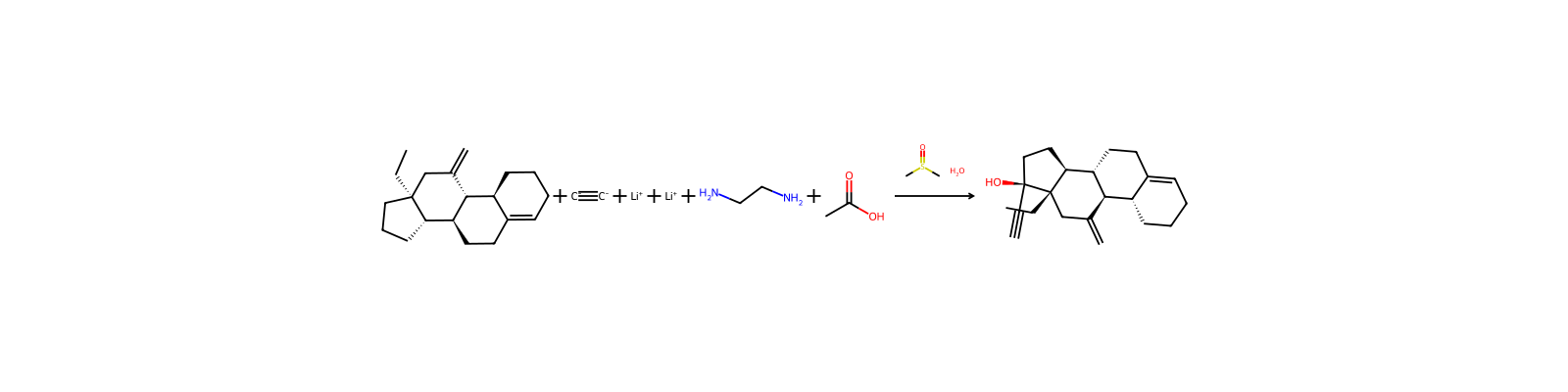
Methods of Manufacturing/Desogestrel/ is produced by adding a solution of 11,11-methylene-18-methyl-delta4-estren-17-one in tetrahydrofuran to potassium acetylide solution in tetrahydrofuran and acidified.
Formulations/Preparations
Oral: Tablets: 0.15 mg/0.03 mg (desogestrel and ethinyl estradiol), Apri (Barr Laboratories Inc).
Desogestrel is available commercially only in combination with ethinylestradiol in tablets.
Oral: Tablet (film coated): 75 ug Cerazette (Organon Laboratories Limited).
General Manufacturing Information...manufactured or formulated in Argentina, Australia, Belgium, Brazil, Canada, France, Germany, India, Mexico, the Netherlands, South Africa, Spain, Switzerland, the United Kingdom, and the United States.
应用领域
用途去氧孕烯为孕激素避孕药,抗雌性激素的活性很强,能抑制排卵及促性腺激素的分泌。用于防止妊娠。
用途为强效排卵抑制剂,尚能改变宫颈粘液稠度、抑制子宫内膜发育
制备方法
生产方法化合物(Ⅰ)先氧化11位的羟基为酮后,再进行Wittig反应,然后脱缩酮,得到化合物(Ⅲ)。(Ⅲ)和乙二硫醇反应,在3位形成硫缩酮,接着硼氢化钠还原17位羰基为羟基,再在液氨中和钠作用,脱去3位的硫缩酮,得到化合物(Ⅶ)。把17位的羟基重新氧化为羰基,最后和乙炔钾反应,得到去氧孕烯。
上下游产品信息
上游原料
下游产品
试剂价格
- S4638 · 20mg
- 去氧孕烯Desogestrel — 794.8元
- HY-12516R · 5 mg
- 去氧孕烯Desogestrel (Standard) — 760元
供应商50 家
国药集团化学试剂有限公司86-21-63210123 · [email protected]
北京华美互利生物化工010-56205725 · [email protected]
梯希爱(上海)化成工业发展有限公司021-67121386 · [email protected]
上海阿拉丁生化科技股份有限公司400-6206333 13167063860 · [email protected]
南通飞宇生物科技有限公司0513-68819626 15152877458 · [email protected]
济南百隆化学有限公司[email protected] · [email protected]
成都超九八生物科技有限公司13348960310 13348960310 · [email protected]
合肥翰刚医药科技有限公司+8618062405514 · [email protected]
广州隽沐生物科技股份有限公司020-36607679; 13502246435 · [email protected]
湖北金梭生物科技有限公司00123456789 · [email protected]
Hebei shuoxi biotechnology co. LTD+8613081092107
Dayang Chem (Hangzhou) Co.,Ltd.+86-0571-88938639 17705817739 · [email protected]
广州隽唐科技有限公司020-36607679 13502246435 · [email protected]
南京兰亚化工贸易有限公司+86-25-8331-5620 · [email protected]
Hebei Yanxi Chemical Co., Ltd.+86-17531190177 · [email protected]
Syntechem Co.,Ltd[email protected]
上海波以尔化工有限公司[email protected]
安耐吉化学&3A(安徽泽升科技股份有限公司)400-0056266 · [email protected]
连云港加佰力生化科技有限公司+86 (518) 8548-7361 · [email protected]
上海瀚鸿科技股份有限公司021-54306202 13764082696 · [email protected]
Cangzhou Wanyou New Material Technology Co.,Ltd18631714998 · [email protected]
深圳市恩赞生物医药有限公司0755-25325458 13602565027 · [email protected]
MedBio脉铂医药021-69568360 18916172912 · [email protected]
Pure Chemistry Scientific Inc.001-857-928-2050 or 1-888-588-9418 · [email protected]
南京美博生物科技有限公司025-58619198 · [email protected]
孝感深远化工有限公司15527621225; 15527621225 · [email protected]
Nanjing Shizhou Biotechnology Co., Ltd+86-15850508050 · [email protected]
Xiamen AmoyChem Co., Ltd+86-86-5926051114 · [email protected]
深圳菲斯生物科技有限公司0755-83725681-603
TCI AMERICA800-4238616 · [email protected]
TOKYO CHEMICAL INDUSTRY CO., LTD.03-36680489 · [email protected]
TCI Europe320-37350700 · [email protected]
深圳振强药物研发有限公司0755-66853366 13670046396 · [email protected]
南京生利德生物科技有限公司025-57798810 18652991625 · [email protected]
南京世洲生物科技有限公司13675144456 · [email protected]
湖北鑫源顺医药化工有限公司13971561712, 13995564702, 027-50664929 · [email protected]
南京世洲生物科技有限公司025-0258556344 17301488900 · [email protected]
杭州杰恒化工有限公司0571-87396432 · [email protected]
上海孚一生物科技有限公司+86 (21) 61124340
凯试(上海)科技有限公司021-50135380 · [email protected]
台州市科德化工有限公司0576-84613060 13093829633;13736603231 · [email protected]
池州凯隆进出口贸易有限公司[email protected]
桦特昇生物科技(武汉)有限公司027-59207879 1972026995 18140587686 · [email protected]
珠海安哲生物科技有限公司13169972583 · [email protected]
武汉森威尔世纪化工有限公司027-86652399 · [email protected]
TargetMol中国(陶术生物)021-021-33632979 15002134094 · [email protected]
上海裕英生物医药科技有限公司021-50158063 · [email protected]
上海陶术生物科技股份有限公司+1-781-999-5354; +1-00000000000 · [email protected]
九鼎化学(上海)科技有限公司4009209199 · [email protected]
BOC Sciences16314854226; +8616314854226 · [email protected]
相关反应
1 条
关联笔记
加载中…