
基本信息
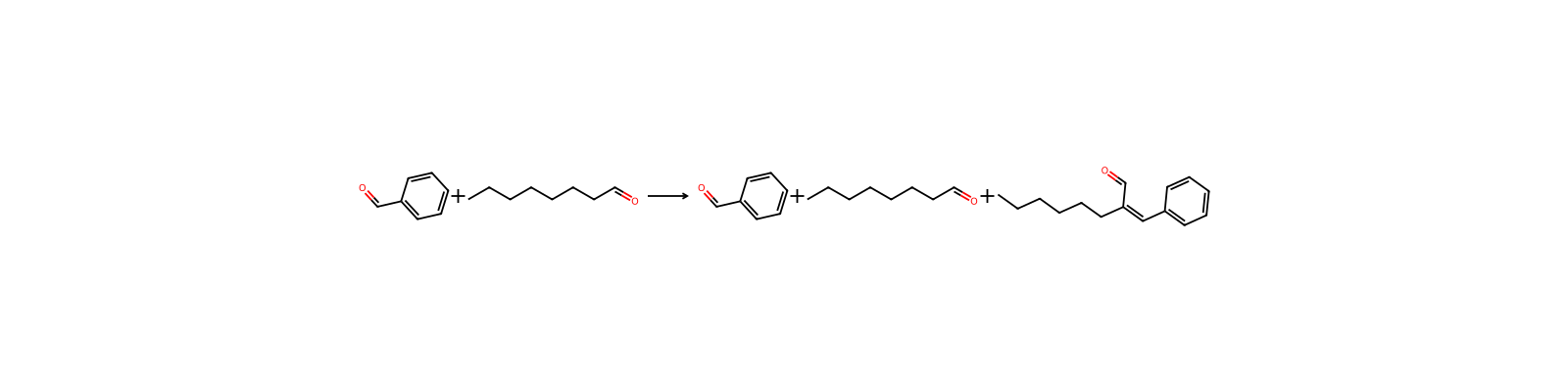
- 标准SMILES
CCCCCCCC=O- InChIKey
NUJGJRNETVAIRJ-UHFFFAOYSA-N- 分子式
- C8H16O
- 平均分子量
- 128.21 g/mol
- 单同位素质量
- 128.12011513
概述
N-octylaldehyde is a colorless liquids with a strong fruity odor. Less dense than water and insoluble in water. Flash points 125 °F. Used in making perfumes and flavorings.
名称与标识
- 首选名称
- Octanal
- IUPAC
- octanal
- 中文名
- 正辛醛
- 英文名
- Octanal
- 分子式
- C8H16O
- 分子量
- 128.21
名称与别名
Octanal124-13-0CaprylaldehydeCaprylic aldehyden-Octanal1-octanaln-Octyl aldehyden-Caprylaldehyden-OctaldehydeOctanaldehyden-OctylalAldehyde C-8
展开更多名称
辛醛八醛羊脂醛正辛醛C8醛1-辛醛辛醛C-8辛醛 标准品正辛醛 1KG1-辛醛,99%OCTYL ALDEHYDEFEMA 2797ORANGE ALDEHYDENatural Doctanal
Octanoic aldehydeOctaldehydeC-8 aldehydeOCTYLALDEHYDE1-Octylaldehyde1-Octaldehyde1-CaprylaldehydeOctanal, tech.
数据库标识
- CAS
124-13-0、9006-52-4- PubChem CID
- 454
- DTXSID
DTXSID3021643- ChEMBL
CHEMBL18407- ChEBI
CHEBI:17935- UNII
- XGE9999H19
- EC Number
- 204-683-8、618-432-9
- Nikkaji
- J2.504F
性质
结构计算性质
- XLogP
- 2.7
- 极性表面积
- 17.1 Ų
- 氢键供体
- 0
- 氢键受体
- 1
- 可旋转键
- 6
- 重原子
- 9
- 形式电荷
- 0
- 复杂度
- 59.6
实验与物化性质
Chemical ClassesOther Classes -> Aldehydes
LipidsFatty Acyls [FA] -> Fatty aldehydes [FA06]
SpringerMaterials PropertiesBoiling point
FragrancesFragrance Ingredient (Octanal) -> IFRA transparency List
LogP
log Kow = 3.5 at pH 6.9 (by HPLC)
2.53
Odor
Strong, fruity odor
Fatty, citrus, honey odor on dilution
Pungent odor; citrus-like on dilution
TasteTaste characteristics at 25 ppm: aldehyde, green with a peely citrus orange note
Food AdditivesFLAVORING AGENT OR ADJUVANT -> FDA Substance added to food
Density
0.82 to 0.83 (USCG, 1999)
0.8211 g/cu cm at 20 °C
Density: 0.820-0.830
0.810-0.830
0.821 @ 20°C
Flavoring AgentsEU Flavoring substances
Color/Form
Colorless liquid
Colorless to light yellow liquid
Solubility
In water, 5.6X10+2 mg/L at 25 °C
In water, <0.01 wt% at 20 °C
Slightly soluble in water
Miscible with alcohol, ether
For more Solubility (Complete) data for Octylaldehyde (7 total), please visit the HSDB record page.
0.56 mg/mL
物理化学性质
- 熔点
- 12 · 12-15 °C(lit.)
- 沸点
- 171 °C · 171 °C(lit.)
- 密度
- 0.822 g/mL · 0.822 g/mL at 20 °C
- 蒸气压
- 2 mm · 2 mm Hg ( 20 °C)
- 折射率
- 20 · n20/D 1.421(lit.)
- FEMA
- 2797 · 2797 | OCTANAL
- 闪点
- 125 °F · 125 °F
- 储存条件
- 30 °C · Store below +30°C.
- 溶解度
- 0.21 g/l · 0.21g/l
- 形态
- Liquid
- 颜色
- Clear colorless to pale yellow
- 气味 (Odor)
- fatty-orange odor
- 嗅觉阈值(Odor Threshold)
- 0.00001 ppm · 0.00001ppm
- 香型
- aldehydic
- 生物来源
- synthetic
- 爆炸极限值(explosive limit)
- 1 · 1.0-6.5%(V)
- 水溶解性
- slightly soluble
- 敏感性
- Air Sensitive
- Merck
- 14 · 14,1766
- JECFA Number
- 98 · 98
- BRN
- 1744086 · 1744086
- Henry's Law Constant
- 2 · 2.0×10-2 mol/(m3Pa) at 25℃, Brockbank (2013)
- 稳定性
- Stable. Flammable. Incompatible with strong oxidizing agents, strong reducing agents, strong bases.
- 主要应用
- flavors and fragrances
- 化妆品成分功效
- PERFUMING
- InChI
- 1S/C8H16O/c1-2-3-4-5-6-7-8-9/h8H,2-7H2,1H3
- InChIKey
- NUJGJRNETVAIRJ-UHFFFAOYSA-N
- SMILES
- [H]C(=O)CCCCCCC
- LogP
- 3.5 at · 3.5 at 20℃
- CAS 数据库
- 124 · 124-13-0(CAS DataBase Reference)
- NIST化学物质信息
- Octanal(124-13-0)
- EPA化学物质信息
- Octanal (124-13-0)
化学性质
无色液体。沸点170℃,熔点54℃,相对密度0.818-0.830,折射率 1.417-1.425,闪点54℃,溶于2体积70%乙醇及油类。酸值<10.0。有青辛尖锐而有力的脂蜡香,带果香茉莉气息。留香力差。极度稀释后有甜橙样香气,略带脂肪蜜香气息。
安全与法规
GHS分类
GHS Classification
This chemical does not meet GHS hazard criteria for < 0.1% (1 of 1971) of reports.
Warning
H226 (93.3%): Flammable liquid and vapor [Warning Flammable liquids]
P210, P233, P240, P241, P242, P243, P264, P264+P265, P273, P280, P302+P352, P303+P361+P353, P305+P351+P338, P321, P332+P317, P337+P317, P362+P364, P370+P378, P391, P403+P235, and P501 (click each P-code to see the statement)
Aggregated GHS information provided per 1971 reports by companies from 23 notifications to the ECHA C&L Inventory. Each notification may be associated with multiple companies.
Warning
危害信息
Regulatory Information
Chemical: Octanal
Octanal is listed on the EPA's Chemical Data Reporting (CDR) system. Manufacturers and importers of Octanal are required to report information about their production and use of this chemical to the EPA under the Toxic Substances Control Act (TSCA). (40 eCFR Part 711)
Status: Active Update: 30-09-2021 https://echa.europa.eu/registration-dossier/-/registered-dossier/5251
Octanal: Does not have an individual approval but may be used under an appropriate group standard
DOT LabelFlammable Liquid
Fire Hazards
Excerpt from ERG Guide 129 [Flammable Liquids (Water-Miscible / Noxious)]:
· HIGHLY FLAMMABLE: Will be easily ignited by heat, sparks or flames.
Fire Potential
Flammable liquid when exposed to heat, sparks, or flame
Moderate fire risk. Combustible.
Health Hazards
Inhalation may be irritating to mucous membrane; overexposure may cause dizziness and collapse. Ingestion causes irritation of mouth and stomach. Contact with eyes or skin causes irritation. (USCG, 1999)
· May cause toxic effects if inhaled or absorbed through skin.
Hazards Summary
Category of C7-C9 aliphatic aldehydes and carboxylic acids: Members and supporting chemicals demonstrate low acute toxicity by oral, dermal, and inhalation exposures; toxicity in repeated-dose studies only at relatively high levels; no evidence of reproductive toxicity, developmental toxicity, or mutagenicity; [EPA ChAMP: Hazard Characterization] A skin, eye, and mucous membrane irritant; [CAMEO] A skin irritant; [eChemPortal: ERMA] An irritant; [MSDSonline]
DOT ID and Guide1191 129
FDA Requirements
Octanal is a food additive permitted for direct addition to food for human consumption as a synthetic flavoring substance and adjuvant in accordance with the following conditions: 1) the quantity added to food does not exceed the amount reasonably required to accomplish its intended physical, nutritive, or other technical effect in food, and 2) when intended for use in or on food it is of appropriate food grade and is prepared and handled as a food ingredient.
Reactive GroupAldehydes
TSCA Requirements
Section 8(a) of TSCA requires manufacturers of this chemical substance to report preliminary assessment information concerned with production, exposure, and use to EPA as cited in the preamble in 51 FR 41329. Effective date 9/30/91; Reporting date: 11/27/91.
Pursuant to section 8(d) of TSCA, EPA promulgated a model Health and Safety Data Reporting Rule. The section 8(d) model rule requires manufacturers, importers, and processors of listed chemical substances and mixtures to submit to EPA copies and lists of unpublished health and safety studies. Octanal is included on this list. Effective date 9/30/91; Sunset date: 6/30/98.
FIFRA Requirements
Residues of 1-octanal are exempted from the requirement of a tolerance when used in accordance with good agricultural practice as inert (or occasionally active) ingredients in pesticide formulations applied to growing crops or to raw agricultural commodities after harvest. Use: Odor masking agent. Limit: Not more than 0.2% of the pesticide formulation.
Residues of 1-octanal are exempted from the requirement of a tolerance when used in accordance with good agricultural practice as inert (or occasionally active) ingredients in pesticide formulations applied to animals. Use: Odor masking agent. Limit: Not more than 0.2% of the pesticide formulation.
Residues of the following chemical substances are exempted from the requirement of a tolerance when used in accordance with good manufacturing practice as ingredients in an antimicrobial pesticide formulation, provided that the substance is applied on a semi-permanent or permanent food-contact surface (other than being applied on food packaging) with adequate draining before contact with food. (a) The following chemical substances when used as ingredients in an antimicrobial pesticide formulation may be applied to: Food-contact surfaces in public eating places, dairy-processing equipment, and food-processing equipment and utensils. Octanal is included on this list. Limits: When ready for use, the end-use concentration is not to exceed 100 ppm.
Reactivity Profile
N-OCTYLALDEHYDE is an aldehyde. Aldehydes are frequently involved in self-condensation or polymerization reactions. These reactions are exothermic; they are often catalyzed by acid. Aldehydes are readily oxidized to give carboxylic acids. Flammable and/or toxic gases are generated by the combination of aldehydes with azo, diazo compounds, dithiocarbamates, nitrides, and strong reducing agents. Aldehydes can react with air to give first peroxo acids, and ultimately carboxylic acids. These autoxidation reactions are activated by light, catalyzed by salts of transition metals, and are autocatalytic (catalyzed by the products of the reaction). The addition of stabilizers (antioxidants) to shipments of aldehydes retards autoxidation.
安全与防护
Fire FightingExcerpt from ERG Guide 129 [Flammable Liquids (Water-Miscible / Noxious)]:
Accidental Release Measures
· CALL 911. Then call emergency response telephone number on shipping paper. If shipping paper not available or no answer, refer to appropriate telephone number listed on the inside back cover.
· ELIMINATE all ignition sources (no smoking, flares, sparks or flames) from immediate area.
First Aid
Call for medical aid.
General First Aid:
Exposure Control and Personal Protection· Wear positive pressure self-contained breathing apparatus (SCBA).
Fire Fighting Procedures
Suitable extinguishing media: Dry powder, dry sand. Unsuitable extinguishing media: Do NOT use water jet.
Advice for firefighters: Wear self-contained breathing apparatus for firefighting if necessary.
To fight fire, use foam, carbon dioxide, dry chemical.
Storage ConditionsKeep container tightly closed in a dry and well-ventilated place. Containers which are opened must be carefully resealed and kept upright to prevent leakage. Storage class (TRGS 510): 3: Flammable liquids
Cleanup Methods
ACCIDENTAL RELEASE MEASURES: Personal precautions, protective equipment and emergency procedures: Use personal protective equipment. Avoid breathing vapors, mist or gas. Ensure adequate ventilation. Remove all sources of ignition. Beware of vapors accumulating to form explosive concentrations. Vapors can accumulate in low areas. Environmental precautions: Prevent further leakage or spillage if safe to do so. Do not let product enter drains. Discharge into the environment must be avoided. Methods and materials for containment and cleaning up: Contain spillage, and then collect with non-combustible absorbent material, (e.g. sand, earth, diatomaceous earth, vermiculite) and place in container for disposal according to local/national regulations.
Nonfire Spill ResponseExcerpt from ERG Guide 129 [Flammable Liquids (Water-Miscible / Noxious)]:
Disposal Methods
SRP: Recycle any unused portion of the material for its approved use or return it to the manufacturer or supplier. Ultimate disposal of the chemical must consider: the material's impact on air quality; potential migration in air, soil or water; effects on animal, aquatic and plant life; and conformance with environmental and public health regulations. If it is possible or reasonable use an alternative chemical product with less inherent propensity for occupational harm/injury/toxicity or environmental contamination.
Product: Offer surplus and non-recyclable solutions to a licensed disposal company. Burn in a chemical incinerator equipped with an afterburner and scrubber but exert extra care in igniting as this material is highly flammable. Contact a licensed professional waste disposal service to dispose of this material. Contaminated packaging: Dispose of as unused product.
Preventive Measures
ACCIDENTAL RELEASE MEASURES: Personal precautions, protective equipment and emergency procedures: Use personal protective equipment. Avoid breathing vapors, mist or gas. Ensure adequate ventilation. Remove all sources of ignition. Beware of vapors accumulating to form explosive concentrations. Vapors can accumulate in low areas. Environmental precautions: Prevent further leakage or spillage if safe to do so. Do not let product enter drains. Discharge into the environment must be avoided.
Precautions for safe handling: Avoid contact with skin and eyes. Avoid inhalation of vapor or mist. Keep away from sources of ignition - No smoking. Take measures to prevent the build up of electrostatic charge.
Appropriate engineering controls: Handle in accordance with good industrial hygiene and safety practice. Wash hands before breaks and at the end of workday.
Gloves must be inspected prior to use. Use proper glove removal technique (without touching glove's outer surface) to avoid skin contact with this product. Dispose of contaminated gloves after use in accordance with applicable laws and good laboratory practices. Wash and dry hands.
SRP: The scientific literature for the use of contact lenses by industrial workers is inconsistent. The benefits or detrimental effects of wearing contact lenses depend not only upon the substance, but also on factors including the form of the substance, characteristics and duration of the exposure, the uses of other eye protection equipment, and the hygiene of the lenses. However, there may be individual substances whose irritating or corrosive properties are such that the wearing of contact lenses would be harmful to the eye. In those specific cases, contact lenses should not be worn. In any event, the usual eye protection equipment should be worn even when contact lenses are in place.
Isolation and Evacuation
Excerpt from ERG Guide 129 [Flammable Liquids (Water-Miscible / Noxious)]:
Immediate precautionary measure
Allowable Tolerances
Residues of 1-octanal are exempted from the requirement of a tolerance when used in accordance with good agricultural practice as inert (or occasionally active) ingredients in pesticide formulations applied to growing crops or to raw agricultural commodities after harvest. Use: Odor masking agent. Limit: Not more than 0.2% of the pesticide formulation.
Residues of 1-octanal are exempted from the requirement of a tolerance when used in accordance with good agricultural practice as inert (or occasionally active) ingredients in pesticide formulations applied to animals. Use: Odor masking agent. Limit: Not more than 0.2% of the pesticide formulation.
Residues of the following chemical substances are exempted from the requirement of a tolerance when used in accordance with good manufacturing practice as ingredients in an antimicrobial pesticide formulation, provided that the substance is applied on a semi-permanent or permanent food-contact surface (other than being applied on food packaging) with adequate draining before contact with food. (a) The following chemical substances when used as ingredients in an antimicrobial pesticide formulation may be applied to: Food-contact surfaces in public eating places, dairy-processing equipment, and food-processing equipment and utensils. Octanal is included on this list. Limits: When ready for use, the end-use concentration is not to exceed 100 ppm.
毒理信息
Body BurdenFour of eight samples of human milk, from women living in Bayonne and Jersey City, New Jersey; Pittsburgh, PA; Baton Rouge, LA; Charleston, WV, contained octylaldehyde at unreported concentrations(1).
Interactions
The effects of 16 aliphatic aldehydes with 3-10 carbons on the growth and patulin production of Penicillium expansum were examined. When P. expansum spores were inoculated into apple juice broth, some alkenals, including 2-propenal, (E)-2-butenal, (E)-2-pentenal, and (E)-2-hexenal, inhibited fungal growth and patulin production. Their minimal inhibitory concentrations were 5, 50, 80, and 80 ug/mL respectively. Vital staining indicated that these alkenals killed mycelia within 4 hr. Treatment of the spores with these aldehydes also resulted in rapid loss of germination ability, within 0.5-2 d. On the other hand, aliphatic aldehydes with 8-10 carbons significantly enhanced patulin production without affecting fungal growth: 300 ug/mL of octanal and 100 ug/mL of (E)-2-octenal increased the patulin concentrations in the culture broth by as much as 8.6- and 7.8-fold as compared to that of the control culture respectively. The expression of the genes involved in patulin biosynthesis in P. expansum was investigated in mycelia cultured in apple juice broth containing 300 ug/mL of octanal for 3.5, 5, and 7 d. Transcription of the msas gene, encoding 6-methylsalicylic acid synthase, which catalyzed the first step in the patulin biosynthetic pathway was remarkably high in the 3.5-d and 5-d-old cultures as compared with the control. However, octanal did not any increase the transcription of the msas in the 7-d-old culture or that of the other two genes, IDH and the peab1, in culture. Thus the enhanced patulin accumulation with supplementation with these aldehydes is attributable to the increased amount of the msas transcript.
Ecotoxicity Values
LC50; Species: Alburnus alburnus (Bleak) wild caught; Conditions: saltwater, static; Concentration: 16 mg/L for 96 hr (95% confidence interval: 15-17 mg/L) /data for metabolic precursor, 1-octanol dissolved in water and acetone/
LC50; Species: Pimephales promelas (Fathead minnow) juvenile 26-34 days old; Conditions: freshwater, flow through; Concentration: 13.5 mg/L for 96 hr /data for metabolic precursor, 1-octanol/
LC50; Species: Nitocra spinipes (Harpacticoid) 3-6 wk old; Conditions: saltwater, static; Concentration: 58 mg/L for 96 hr (95% confidence interval: 53-64 mg/L) /data for metabolic precursor, 1-octanol dissolved in acetone/water/
Environmental Fate
TERRESTRIAL FATE: Based on a classification scheme(1), an estimated Koc value of 290(SRC), determined from a log Kow of 3.5(2) and a regression-derived equation(3), indicates that octylaldehyde is expected to have moderate mobility in soil(SRC). Volatilization of octylaldehyde from moist soil surfaces is expected to be an important fate process(SRC) given a Henry's Law constant of 5.14X10⁻⁴ atm-cu m/mole(4). Octylaldehyde has a vapor pressure of 0.6 mm Hg(2) and exists as a liquid under environmental conditions; therefore, octylaldehyde may volatilize from dry soil. Utilizing the Zahn-Wellens test, 77% degradation was reached using an activated sludge inoculum after 28 days(5) which indicates this compound is expected to biodegrade under certain environmental conditions in soil(SRC).
AQUATIC FATE: Based on a classification scheme(1), an estimated Koc value of 290(SRC), determined from a log Kow of 3.5(2) and a regression-derived equation(3), indicates that octylaldehyde may adsorb to suspended solids and sediment(SRC). Volatilization from water surfaces is expected(4) based upon a estimated Henry's Law constant of 5.14X10⁻⁴ atm-cu m/mole(5). Using this Henry's Law constant and an estimation method(3), volatilization half-lives for a model river and model lake are 5 hours and 5 days, respectively(SRC). According to a classification scheme(6), an estimated BCF of 60(SRC), from its log Kow(2) and a regression-derived equation(3), suggests the potential for bioconcentration in aquatic organisms is moderate(SRC). Utilizing the Zahn-Wellens test, 77% degradation was reached using an activated sludge inoculum after 28 days(7) which indicates this compound is expected to biodegrade under certain environmental conditions in water(SRC).
ATMOSPHERIC FATE: According to a model of gas/particle partitioning of semivolatile organic compounds in the atmosphere(1), octylaldehyde, which has a vapor pressure of 0.6 mm Hg at 20 °C(2), will exist solely in the vapor phase in the ambient atmosphere. Vapor-phase octylaldehyde is degraded in the atmosphere by reaction with photochemically-produced hydroxyl radicals(SRC); the half-life for this reaction in air is estimated to be 12 hours(SRC), calculated from its rate constant of 3.2X10⁻¹¹ cu cm/molecule-sec at 25 °C(SRC) that was derived using a structure estimation method(3). Octylaldehyde does not contain chromophores that absorb at wavelengths >290 nm(4) and, therefore, is not expected to be susceptible to direct photolysis by sunlight(SRC).
Food Survey Values
Octylaldehyde has been reported in foods and beverages including, apple, apricot, many berries, guava, grapes, melon, papaya, celery, peas, potato, tomato, ginger, spearmint oil, hop oil, beer, rum, cider, white wine, cocoa, tea, roasted filberts and peanuts, pecans, oats, coconut products, soybean, avocado, passion fruit, starfruit, beans, mushroom, trassi, macadamia nut, sesame seed, mango, cauliflower, tamarind, loquat, angelica root oil and mastic gum oil(1).
Octylaldehyde was detected in peanut oil, heated to 200 °C, at unreported concentrations(1). Commercial rice cakes were found to contain 800-960 ppb of octylaldehyde(2). Octylaldehyde was identified in gari and farine, both products of cassava(3), in Beaufort cheese(4), roasted filberts(5), heated corn oil(6), kiwi fruit flowers(7), in both commercial and concentrated aqueous orange essences(8). Bisbee Delicious apples from Washington state emitted increasing concentrations of octylaldehyde through the end of August (to 1671.9 pL/kg-hr) but concentrations decreased in apples harvested after this point (to 32.4-141.9 pL/kg-hr)(9). Octylaldehyde was detected in raw and roasted earth almonds (Cyperus esculentus L.)(10). Octylaldehyde was detected in the emissions from heated rapeseed oil(11).Commercial samples of California navel orange, Florida Valencia orange, midseason orange, tangerine, and white grapefruit cold-pressed oils contained 0.161, 0.449, 0.358, 0.371, 0.493 wt% octylaldehyde, respectively(12). Octylaldehyde was detected in whole and ground musty sorghum with direct helium-purge method and with supercritical fluid extraction method(13).
Octylaldehyde was identified as a volatile component of raw beef(1) and in scrambled eggs(2) at unreported concentrations. Octylaldehyde was measured at 999 ng/g and 1080 ng/g in big eyed herring paste and hair tail viscera paste, and was not detected in anchovy paste or shrimp paste(3). Octylaldehyde was detected in full fat and reduced fat frankfurters(4), Italian-type dry-cured ham(5), and as an odorant in cooked mussels (Mytilus edulis)(6). Octylaldehyde was released from charbroiling meat at 146,000 ug/kg of cooked meat(7). Aroma concentrates of uncured beef and chicken contained 0.69 mg/kg and 5.08 mg/kg octylaldehyde, respectively(8). Octylaldehyde was isolated as a volatile component of duck meat at 9.3 ppb, duck fat at 13.64 ppb, Cantonese style roasted duck at 9.66 ppb and Cantonese style roasted duck gravy at 38.08 ppb(9).
Octylaldehyde has been reported in cooked eggs and meats(1). Octylaldehyde has been detected in foal meat at increasing levels upon aging(2).
Milk Concentrations
Octylaldehyde has been reported in cheeses, butter and milk(1). Four of eight samples of human milk, from women living in Bayonne and Jersey City, New Jersey; Pittsburgh, PA; Baton Rouge, LA; Charleston, WV, contained octylaldehyde at unreported concentrations(2).
Toxicity Summary
IDENTIFICATION AND USE: Octylaldehyde (Octanal) is a colorless liquid. It is employed in the perfume industry for the preparation of synthetic citrus oils and for the synthesis of alpha-hexylcinnamaldehyde. HUMAN STUDIES: In vitro in human A549 cells octanal affects the expression of several chemokines and inflammatory cytokines and increases the levels of interleukin 6 (IL-6) and IL-8 released. Microarray analysis identified 15 miRNAs that were differentially expressed in octanal-exposed A549 human alveolar cells. ANIMAL STUDIES: It induced a significant decrease in the number of live pups in rats but only at a dose which causes maternal toxicity. Octanal was tested in Salmonella typhimurium TA98, TA100, TA1535 and TA1537 with and without metabolic activation. No cytotoxic or genotoxic effects were observed. ECOTOXICITY STUDIES: A membrane damage mechanism involving membrane peroxidation might contribute to the antifungal activity of octanal against P. digitatum spores. Aflatoxin production by the fungus Aspergillus parasiticus was stimulated by octanal.
Plant Concentrations
Octylaldehyde was detected in raw earth almonds (Cyperus esculentus L.)(1). Octylaldehyde was detected in the emissions from northern red oak, dawn redwood, bass wood, eastern hemlock, iron wood, slippery elm, loblolly pine and black gum trees from Fernbank Forest, Atlanta, GA, from sugar maple, cotton grass, and yellow birch trees from Willow Springs, WI and apple, big sugar bush, willow, Gambell oak, service berry, snow berry and salt bush trees from Temple Ridge, Hayden, CO(2). Octylaldehyde was detected in the emissions of Quercus ilex (oak) from the Mediterranean(3). Octylaldehyde was emitted from rape during the blooming period at a rate of 0.04-0.15 and 0.06-0.19 ppbv on May 8 and 9, 1998(4). Octylaldehyde was detected in whole musty sorghum with direct helium-purge method and with supercritical fluid extraction method(5). Octylaldehyde was detected in Tahitian liverwort (Cyathodium foetidissimum)(6).
Octylaldehyde occurs in various plants and plant parts(1).[Table#5196]
Animal ConcentrationsOctylaldehyde has been reported in cooked eggs and meats(1). Octylaldehyde has been detected in foal meat at increasing levels upon aging(2).
Ongoing Test Status
EPA has released the Interactive Chemical Safety for Sustainability (iCSS) Dashboard. The iCSS Dashboard provides an interactive tool to explore rapid, automated (or in vitro high-throughput) chemical screening data generated by the Toxicity Forecaster (ToxCast) project and the federal Toxicity Testing in the 21st century (Tox21) collaboration. /The title compound was tested by ToxCast and/or Tox21 assays/[USEPA; ICSS Dashboard Application; Available from, as of February 4, 2019: http://actor.epa.gov/dashboard/]
Effluent Concentrations
Octylaldehyde was identified, not quantified, in rush hour traffic air samples taken at the Oakland-San Francisco Bay Bridge toll plaza April 23, 2001, 5-7PM, April 24, 2001, 6-10AM, and 3-7PM(1). Octylaldehyde was emitted in the exhaust gases from a diesel engine at unreported concentrations(2). Octylaldehyde was measured in the emissions of medium duty diesel trucks at a rate of 3,100 ug/km in the gas phase(3). Octylaldehyde was measured in the emissions of gasoline powered motor vehicles at a rate of 190 ug/km and 2,600 ug/km for catalyst equipped engines and non-catalyst equipped engines(4).
Soil Adsorption/Mobility
The Koc of octylaldehyde is estimated as 290(SRC), using a log Kow of 3.5(1) and a regression-derived equation(2). According to a classification scheme(3), this estimated Koc value suggests that octylaldehyde is expected to have moderate mobility in soil(SRC).
法规信息
FDA Requirements
Octanal is a food additive permitted for direct addition to food for human consumption as a synthetic flavoring substance and adjuvant in accordance with the following conditions: 1) the quantity added to food does not exceed the amount reasonably required to accomplish its intended physical, nutritive, or other technical effect in food, and 2) when intended for use in or on food it is of appropriate food grade and is prepared and handled as a food ingredient.
TSCA Requirements
Section 8(a) of TSCA requires manufacturers of this chemical substance to report preliminary assessment information concerned with production, exposure, and use to EPA as cited in the preamble in 51 FR 41329. Effective date 9/30/91; Reporting date: 11/27/91.
Pursuant to section 8(d) of TSCA, EPA promulgated a model Health and Safety Data Reporting Rule. The section 8(d) model rule requires manufacturers, importers, and processors of listed chemical substances and mixtures to submit to EPA copies and lists of unpublished health and safety studies. Octanal is included on this list. Effective date 9/30/91; Sunset date: 6/30/98.
FIFRA Requirements
Residues of 1-octanal are exempted from the requirement of a tolerance when used in accordance with good agricultural practice as inert (or occasionally active) ingredients in pesticide formulations applied to growing crops or to raw agricultural commodities after harvest. Use: Odor masking agent. Limit: Not more than 0.2% of the pesticide formulation.
Residues of 1-octanal are exempted from the requirement of a tolerance when used in accordance with good agricultural practice as inert (or occasionally active) ingredients in pesticide formulations applied to animals. Use: Odor masking agent. Limit: Not more than 0.2% of the pesticide formulation.
Residues of the following chemical substances are exempted from the requirement of a tolerance when used in accordance with good manufacturing practice as ingredients in an antimicrobial pesticide formulation, provided that the substance is applied on a semi-permanent or permanent food-contact surface (other than being applied on food packaging) with adequate draining before contact with food. (a) The following chemical substances when used as ingredients in an antimicrobial pesticide formulation may be applied to: Food-contact surfaces in public eating places, dairy-processing equipment, and food-processing equipment and utensils. Octanal is included on this list. Limits: When ready for use, the end-use concentration is not to exceed 100 ppm.
安全数据
- F
- 10
- wgk
- 2
- tsca
- TSCA listed
- 毒性
- LD50 orally in Rabbit: 4616 mg/kg LD50 dermal Rabbit 5207 mg/kg
- RTECS号
- RG7780000
- 包装类别
- III
- 危险等级
- 3
- 存储类别
- 3 - Flammable liquids
- 安全说明
- 16
- 海关编码
- 29121990
- 自燃温度
- 190 °C
- 危险性类别
- Aquatic Chronic 3Eye Irrit. 2Flam. Liq. 3Skin Irrit. 2
- 危险类别码
- 10
- 毒害物质数据
- 124-13-0(Hazardous Substances Data)
- 危险品运输编号
- UN 1191
毒性防护
毒性ADI 0~0.1 mg/kg(FAO/WHO,1994)。LD50 5630 mg/kg(大鼠,经口)。
急性毒性口服- 大鼠 LD50: 5630 毫克/ 公斤
刺激数据皮肤- 兔子 500 毫克/ 24小时 轻度; 眼- 兔子 100 毫克 轻度
包装储运
可燃性危险特性遇明火、高温、强氧化剂可燃;燃烧排放刺激烟雾
储运特性包装完整、轻装轻放; 库房通风、远离明火、高温、与氧化剂分开存放
灭火剂泡沫、二氧化碳、干粉、砂土
化学与工业
药理信息
Absorption, Distribution and Excretion
Rats were nose exposed to an atmosphere containing 11.4 ppm of (11)C-octanal for 2 min. Inhaled octanal was absorbed from the lungs in a biphasic manner and the greatest concentration of octanal occurred in most tissues at 5 min. Tissue activities calculated on the basis of the administered dose and on the radiolabel retained until the animal was killed indicated a redistribution of the radiolabel as metabolic products after 20 min. The labeled carbon was eliminated in a biphasic manner as (11)CO2, which accounted for essentially all of the activity lost by the exposed rats.
Cellular LocationsMembrane
用途与制造
Uses
Found in rose and orange oils; Used in perfumes, flavors, and fragrances; Used to make linear alcohols; [HSDB]
For octylaldehyde (USEPA/OPP Pesticide Code: 128948) there are 0 labels match. /SRP: Not registered for current use in the USA, but approved pesticide uses may change periodically and so federal, state and local authorities must be consulted for currently approved uses./
Perfumery, flavors.
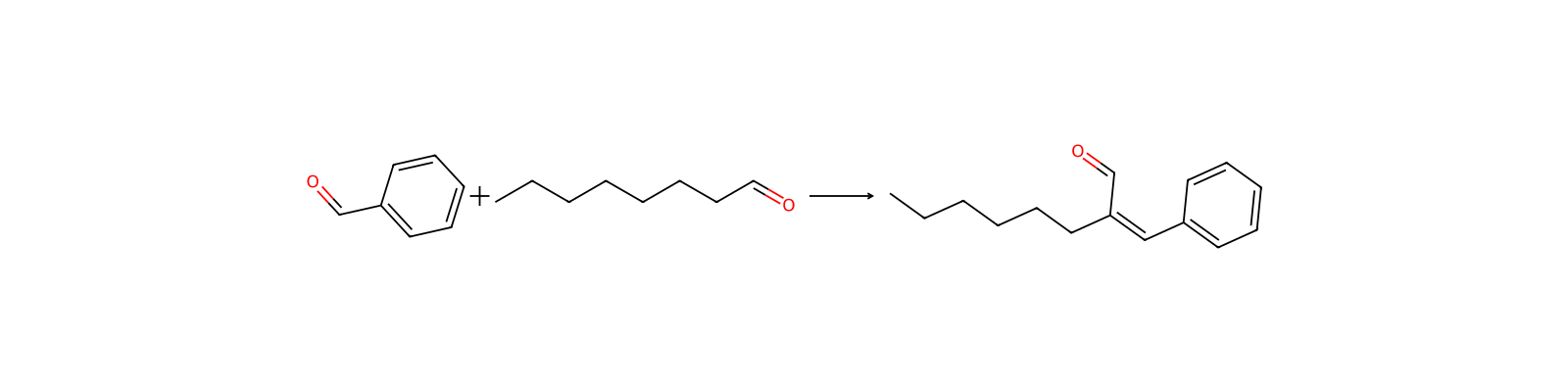
Octanal is employed in the perfume industry for the preparation of synthetic citrus oils and for the synthesis of alpha-hexylcinnamaldehyde.
ingredient in some air fresheners
For more Uses (Complete) data for Octylaldehyde (6 total), please visit the HSDB record page.
U.S. Production
2023: 10,000,000 - <25,000,000 lb
(1975) 3.18X10+6 GRAMS
(1979) PROBABLY GREATER THAN 9.08X10+5 GRAMS
Octanal is listed as a High Production Volume (HPV) chemical (65FR81686). Chemicals listed as HPV were produced in or imported into the U.S. in >1 million pounds in 1990 and/or 1994. The HPV list is based on the 1990 Inventory Update Rule. (IUR) (40 CFR part 710 subpart B; 51FR21438).
Production volumes for non-confidential chemicals reported under the Inventory Update Rule. [Table#5197]
Non-confidential 2016 Chemical Data Reporting (CDR) information on the production and use of chemicals manufactured or imported into the United States. Chemical: Octanal:
Consumer UsesFragrance
Industry UsesFragrance
Methods of Manufacturing
By oxidation of the corresponding alcohol or reduction of the corresponding acid; also from coconut fatty acids via methyl-n-octoate.
Octanal can be obtained by hydroformylation of 1-heptene or by dehydrogenation of octanol.
Formulations/PreparationsGrade: Technical, FCC
Household ProductsInformation on 69 consumer products that contain Octanal in the following categories is provided:
Use Classification
Fragrance Ingredients
Flavouring Agent -> FLAVOURING_AGENT -> JECFA Functional Classes
Flavoring Agents -> JECFA Flavorings Index
Flavouring Agent -> FLAVOURING_AGENT -> JECFA Functional Classes
Flavouring Agent -> FLAVOURING_AGENT -> JECFA Functional Classes
General Manufacturing Information
All Other Chemical Product and Preparation Manufacturing
Octanal: ACTIVE
应用领域
用途是玫瑰头香组成之一,亦用于甜橙花、苦橙花、香柠檬和柑橘古龙型。还可微量用于仿制奶油、巧克力、杏子、梅子、葡萄、柠檬、甜橙、干酪等食用香精中。
用途辛醛有很强的水果香味,在极稀时有令人愉快的甜橙香气,我国 GB 2760-86规定为暂时允许使用的食用香料,主要用于柑橘类香料的调合,在饮料、冰淇淋、糖果、面包等中的用量为1.4-4.4ppm,也可作肥皂、洗涤剂用香料。辛醛也是有机合成的中间体。
用途GB 2760-1996规定为暂时允许使用的食用香料。主要用以配制杏、梅、奶油、巧克力、葡萄和柑橘类香精。用量一般<10mg/kg,以免产生不良油脂气味。
制备方法
生产方法由辛醇经铜、铂、氧化银处理铜网等催化下氧化而得。辛酸在300℃下通过镍催化剂而成。
生产方法可采用辛醇或辛酸为原料。辛醇在铜铬催化剂存在下经氧化即生成辛醛。采用辛酸生产辛酸的多种方法,例如将辛酸蒸气与过量度的甲酸蒸气混合,于300℃通过氧化钛或氧化锰催化剂,能以90%的收率制得辛醛。
上下游产品信息
上游原料
下游产品
试剂价格
- A10901 · 50g
- 辛醛, 98+% Octanal, 98% — 164元
- 12948 · 500ml
- 辛醛Octyl aldehyde, 99%, Thermo Scientific Chemicals — 1220元
供应商5 家
厦门志信化学有限公司+86-5922680277 +86-13806087780 · [email protected]
XIAMEN AMITY INDUSTRY AND TRADE CO., LTD.+8618950047208 · [email protected]
湖北拓源精细化工有限公司027-84700466 13260688474 · [email protected]
DAYANG CHEM (HANGZHOU) CO.,LTD+86-88938639 +86-17705817739 · [email protected]
AFINE CHEMICALS LIMITED+86-571-85134551 +86-18958018566 · [email protected]
相关反应
63 条




关联笔记
加载中…