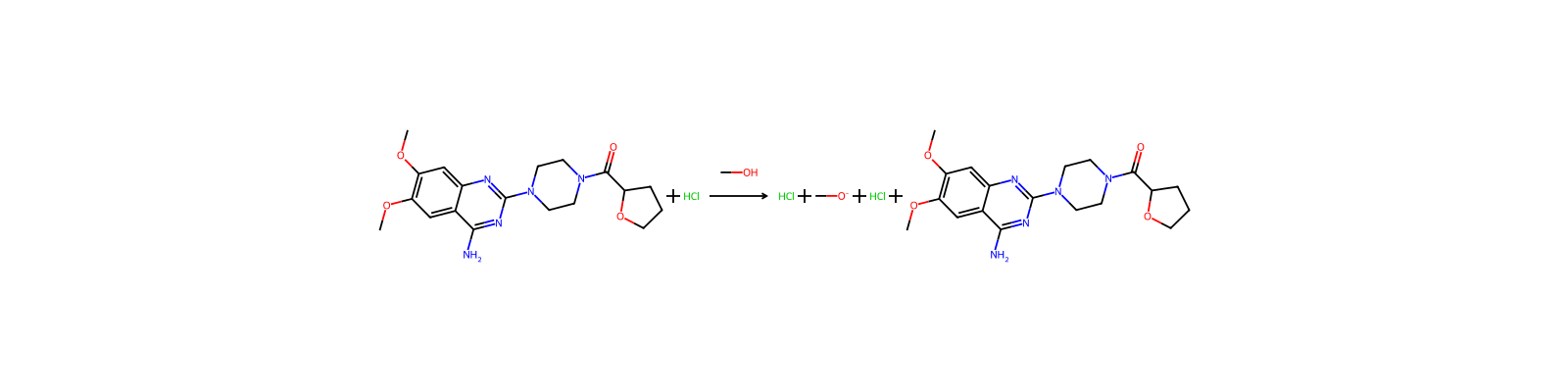
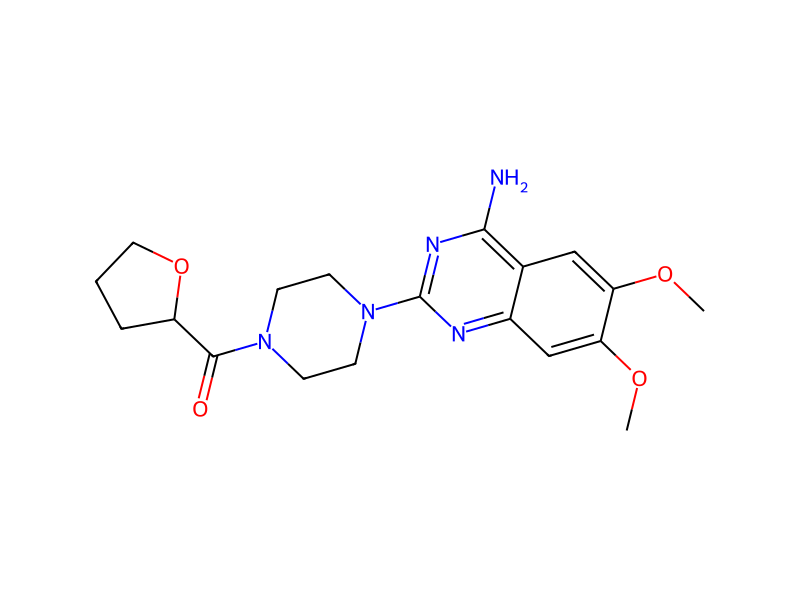
基本信息
- 标准SMILES
COc1cc2nc(N3CCN(C(=O)C4CCCO4)CC3)nc(N)c2cc1OC- InChIKey
VCKUSRYTPJJLNI-UHFFFAOYSA-N- 分子式
- C19H25N5O4
- 平均分子量
- 387.4 g/mol
- 单同位素质量
- 387.19065428
概述
Terazosin is a member of furans, a member of piperazines, a member of quinazolines and a primary amino compound. It has a role as an antineoplastic agent, an antihypertensive agent and an alpha-adrenergic antagonist.
名称与标识
- 首选名称
- Terazosin
- IUPAC
- [4-(4-amino-6,7-dimethoxyquinazolin-2-yl)piperazin-1-yl]-(oxolan-2-yl)methanone
- 中文名
- 特拉唑嗪
- 英文名
- Terazosin
- 分子式
- C19H25N5O4
- 分子量
- 387.43
名称与别名
terazosin63590-64-7TerazosineFosfomicTerazosinaBlavinFlumarcTerazosinumTerazosabb1-(4-Amino-6,7-dimethoxy-2-quinazolinyl)-4-((tetrahydro-2-furanyl)carbonyl)piperazineHytrinexVicard
展开更多名称
降压宁特拉唑嗪盐酸四喃唑嗪哌唑嗪四氢杂质特拉唑嗪标准品哌唑嗪四氢化杂质哌嗪四氢呋喃杂质化合物 TERAZOSIN1-(4-氨基-6,7-二甲氧基-2-喹唑啉基)-4-[(四氢呋喃-2-甲酰基)哌嗪1-(4-氨基-6,7- 二甲氧基-2-喹唑啉基)-4-[(四氢-2-呋喃基)羰基]哌嗪TERAZOSIN HCLUrodieHYTRINerazosinarbonyl)-CID 663211Vasomet:VicardHytrin:Hytrinex
8L5014XET7CHEBI:9445DTXSID3023639Piperazine, 1-(4-amino-6,7-dimethoxy-2-quinazolinyl)-4-((tetrahydro-2-furanyl)carbonyl)-6,7-dimethoxy-2-(4-((oxolan-2-yl)carbonyl)piperazin-1-yl)quinazolin-4-amine6,7-dimethoxy-2-(4-(oxolane-2-carbonyl)piperazin-1-yl)-3,4-dihydroquinazolin-4-imine6,7-dimethoxy-2-[4-(oxolane-2-carbonyl)piperazin-1-yl]-3,4-dihydroquinazolin-4-imine6,7-dimethoxy-2-{4-[(oxolan-2-yl)carbonyl]piperazin-1-yl}quinazolin-4-amine
数据库标识
- CAS
63590-64-7- PubChem CID
- 5401
- DTXSID
DTXSID3023639- ChEMBL
CHEMBL611- ChEBI
CHEBI:9445- UNII
- 8L5014XET7
- EC Number
- 613-265-8
- Nikkaji
- J19.669J
性质
结构计算性质
- XLogP
- 1.4
- 极性表面积
- 103 Ų
- 氢键供体
- 1
- 氢键受体
- 8
- 可旋转键
- 4
- 重原子
- 28
- 形式电荷
- 0
- 复杂度
- 544
实验与物化性质
Drugs
Pharmaceuticals -> Antihypertensives
Pharmaceuticals
LogP
1
1.14
Solubility1.50e+00 g/L
Human Drugs
Breast Feeding; Lactation; Milk, Human; Adrenergic alpha-Antagonists; Antihypertensive Agents
Pharmaceuticals
Melting Point
271-274
273 °C
Physical DescriptionSolid
Collision Cross Section189.79 Ų [M+Na]+ [CCS Type: TW; Method: calibrated with polyalanine and drug standards]
物理化学性质
- 熔点
- 281 · 281-283°C
- 沸点
- 664.5 · 664.5±65.0 °C(Predicted)
- 密度
- 1.332 · 1.332±0.06 g/cm3(Predicted)
- 储存条件
- -20 °C · -20°C Freezer
- 溶解度
- 2 O: · H2O: 25 mg/mL
- 形态
- powder
- 酸度系数(pKa)
- pKa (0.1N NaOH): 7.1(at 25℃)
- 颜色
- white to off-white
- 水溶解性
- 30.6 mg/L · 30.6mg/L(22.5 ºC)
- BCS Class
- 1 · 1/3
- InChIKey
- VCKUSRYTPJJLNI-UHFFFAOYSA-N
- CAS 数据库
- 63590 · 63590-64-7(CAS DataBase Reference)
化学性质
细微白色结晶,无臭无味,熔点272.6~174℃。25℃的溶解度(mg/m1):甲醇33.7,水29.7,95%乙醇4.1,0.1mol/L盐酸3,8,氯仿1.2,丙酮0.01。几不溶于己烷。UV最大吸收(0.005%水):212,245,330nm(a 65.7,127.5,24.0)。pKa(0.1mol/L氢氧化钠)7.1。盐酸特拉唑嗪(Terazosin Hydrochloride):C19H25N5O4HCl。从异丙醇结晶,有吸湿性。熔点278~279℃。溶于水:761.2mg/ml。急性毒性LD50小鼠(mg/kg):259.3静脉注射。盐酸特拉唑嗪二水合物:C19H25N5O4HCl2H2O。[70024-40-7]。熔点271~274℃。溶于水:24.2mg/ml。急性毒性LD50雄、雌大鼠(mg/kg):277,293静脉注射。
安全与法规
GHS分类
GHS Classification
This chemical does not meet GHS hazard criteria for 2.3% (1 of 44) of reports.
Warning
H302 (97.7%): Harmful if swallowed [Warning Acute toxicity, oral]
P264, P270, P301+P317, P330, and P501 (click each P-code to see the statement)
Aggregated GHS information provided per 44 reports by companies from 3 notifications to the ECHA C&L Inventory.
危害信息
Regulatory InformationStatus: Active Update: 25-07-2018 https://echa.europa.eu/registration-dossier/-/registered-dossier/25502
Hazard Classes and CategoriesAcute Tox. 4 (97.7%)
毒理信息
Treatment
Should overdosage of Terazosin lead to hypotension, support of the cardiovascular system is of first importance. Restoration of blood pressure and normalization of heart rate may be accomplished by keeping the patient in the supine position. If this measure is inadequate, shock should first be treated with volume expanders. If necessary, vasopressors should then be used and renal function should be monitored and supported as needed. Laboratory data indicate that Terazosin is highly protein bound; therefore, dialysis may not be of benefit. (L1712)
Health EffectsHypotension, palpitations, postural hypotension, syncope, peripheral edema, weight gain, dyspnea, nasal congestion/rhinitis, impotence.
Hepatotoxicity
Terazosin has been associated with a low rate of serum aminotransferase elevations that in controlled trials was no higher than with placebo therapy. These elevations were transient and did not require dose modification. Instances of serum enzyme elevations, but no instances of clinically apparent acute liver injury with jaundice due to terazosin, have been published. Furthermore, product labels do not include discussion of hepatic toxicity. Cholestatic hepatitis and jaundice have been reported with other alpha-adrenergic blockers. Thus, acute symptomatic liver injury due to terazosin must be exceedingly rare if it occurs at all.
Adverse EffectsTerazosin is generally well-tolerated. Many adverse effects of terazosin are explainable due to its blockade of alpha-1 adrenergic receptors.
Exposure RoutesOral. Essentially completely absorbed in man (90% bioavailability).
Toxicity Summary
Overdose of terazosin may lead to hypotension, and standard life-support protocols should be in place for instances of hemodynamic instability. There are no specific antidotes for terazosin toxicity. Vasopressors may be used to support physiologic blood pressure parameters in the event of terazosin overdose. Terazosin is long-acting, with an elimination half-life of approximately 12 hours, and is highly protein-bound. Elimination is via renal excretion (40%) and excretion of feces (60%).
Terazosin selectively and competitively inhibits vascular postsynaptic alpha(1)-adrenergic receptors, resulting in peripheral vasodilation and a reduction of vascular resistance and blood pressure. Unlike the nonselective alph-adrenergic blockers phenoxybenzamine and phentolamine, terazosin does not block presynaptic alpha(2)-receptors and, hence, does not cause reflex activation of norepinephrine release to produce reflex tachycardia.
Signs and SymptomsAsthenia, postural hypotension, dizziness, somnolence, nasal congestion/rhinitis.
Carcinogen ClassificationNo indication of carcinogenicity to humans (not listed by IARC).
Drug Induced Liver Injury
Drug-Induced Liver Injury Severity and Toxicity (DILIst)
terazosin
DILI Negative
Oral
DOI:10.1016/j.drudis.2019.09.022
Effects During Pregnancy and Lactation◉ Summary of Use during Lactation
Toxicity DataLD50: 259.3mg/kg (parental-intravenous, Mouse) (A308)
安全数据
- wgk
- 3
- RTECS号
- TK8044925
- 安全说明
- 26-36
- 危险品标志
- Xn,Xi
- 危险类别码
- 22-36/37/38
化学与工业
药理信息
ATC Code
G04CA03
G - Genito urinary system and sex hormones
Protein Binding90-94%.
PharmacodynamicsTerazosin is a quinazoline derivative alpha-1-selective adrenergic blocker.
Mechanism of Action
Terazosin is selective for alpha-1-adrenoceptors but not their individual subtypes. Inhibition of these alpha-1-adrenoceptors results in relaxation of smooth muscle in blood vessels and the prostate, lowering blood pressure and improving urinary flow. Smooth muscle cells accounts for roughly 40% of the volume of the prostate and so their relaxation reduces pressure on the urethra. It has also been shown that catecholamines induce factors responsible for mitogenesis and alpha-1-adrenergic receptor blockers inhibit this effect. A final long term mechanism of terazosin and other alpha-1-adrenergic receptor blockers is the induction of apoptosis of prostate cells. Treatment with terazosin enhances the expression of transforming growth factor beta-1 (TGF-beta1), which upregulates p27kip1, and the caspase cascade.
Biological Half-LifeTerazosin has a mean half life 12 hours though this can be as high as 14 hours in patients over 70 years and as low as 11.4 hours in patients 20 to 39 years old.
Metabolism/Metabolites
The majority of terazosin is hepatically metabolized. The metabolites recovered include 6-O-demethyl terazosin, 7-O-methyl terazosin, a piperozine derivative, and a diamine derivative.
Hepatic. One of the four metabolites identified (piperazine derivative of terazosin) has antihypertensive activity. Route of Elimination: Approximately 10% of an orally administered dose is excreted as parent drug in the urine and approximately 20% is excreted in the feces. Half Life: 12 hours
FDA Pharmacological Classification
8L5014XET7
TERAZOSIN
Mechanisms of Action [MoA] - Adrenergic alpha-Antagonists
Established Pharmacologic Class [EPC] - alpha-Adrenergic Blocker
Terazosin is an alpha-Adrenergic Blocker. The mechanism of action of terazosin is as an Adrenergic alpha-Antagonist.
TERAZOSIN
MeSH Pharmacological Classification
Drugs that bind to and block the activation of ADRENERGIC ALPHA-1 RECEPTORS.
Drugs used in the treatment of urological conditions and diseases such as URINARY INCONTINENCE and URINARY TRACT INFECTIONS.
Absorption, Distribution and Excretion
Approximately 90%.
Approximately 10% of the oral dose is excreted unchanged in the urine and approximately 20% is excreted in the feces. 40% of the total dose is eliminated in urine and 60% of the total dose is eliminated in the feces.
25L to 30L.
Plasma clearance is 80mL/min and renal clearance is 10mL/min.
Cellular LocationsMembrane
用途与制造
Uses
Use (kg; approx.) in Germany (2009): >75
Terazosin is indicated for the treatment of symptomatic benign prostatic hyperplasia (BPH). There is a rapid response, with approximately 70% of patients experiencing an increase in urinary flow and improvement in symptoms of BPH when treated with terazosin. The long-term effects of terazosin on the incidence of surgery, acute urinary obstruction or other complications of BPH are yet to be determined. Terazosin tablets are also indicated for the treatment of hypertension. Terazosin tablets can be used alone or in combination with other antihypertensive agents such as diuretics or beta-adrenergic blocking agents.
Use ClassificationPharmaceuticals
应用领域
用途抗高血压药。
用途为喹唑啉衍生物,α1-受体阻滞剂,具有良好的降压作用。用于肾性,原发性轻、中度高血压和由细胞瘤引起的高血压。
制备方法
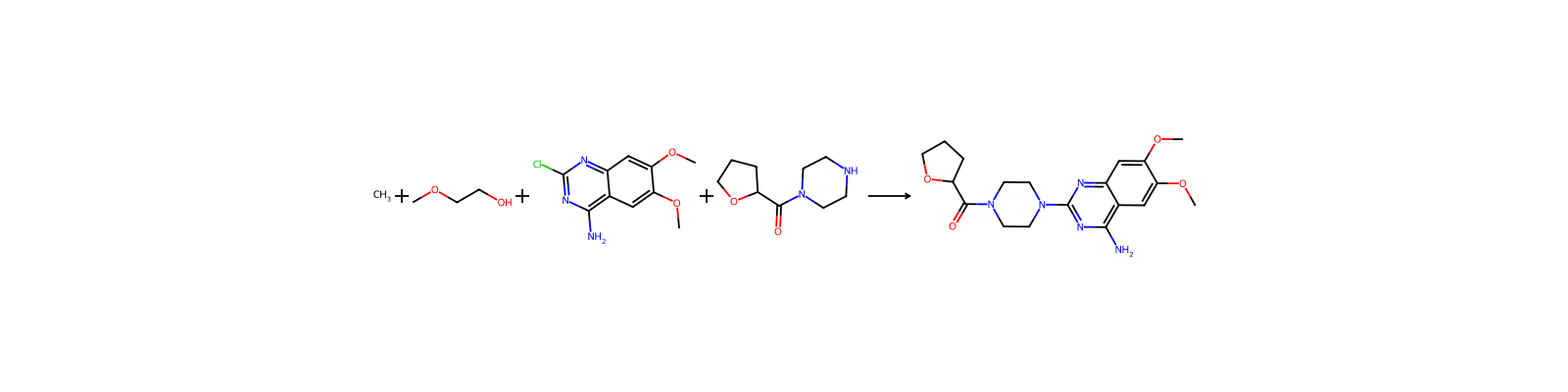
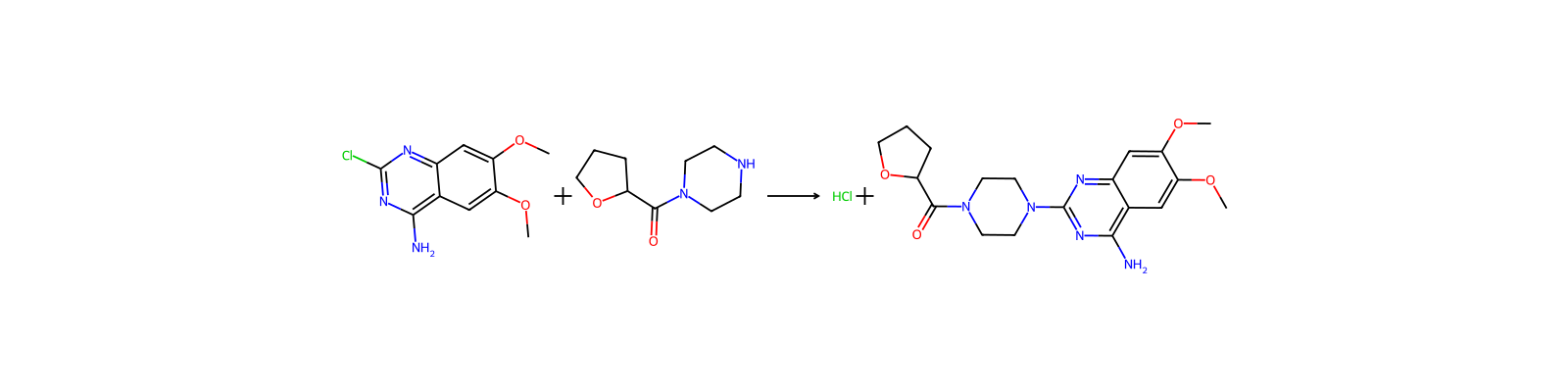
生产方法以糠酸为原料,用氯化亚砜氯化生成糠酰氯,再对哌嗪进行单酰化,单酰化产物还原后与4-氨基-2-氯-6,7-二甲氧基喹唑啉在三乙胺存在下缩合,即得特拉唑嗪。在乙醇中用盐酸酸化可得含两个结晶水的盐酸特拉唑嗪。
上下游产品信息
上游原料
试剂价格
- HY-B0371 · 10 mg
- 特拉唑嗪Terazosin — 400元
- HY-B0371 · 10 mM * 1 mL in DMSO
- 特拉唑嗪Terazosin — 440元
供应商50 家
北京华美互利生物化工010-56205725 · [email protected]
陕西缔都新材料有限公司81124267 17392282731 · [email protected]
湖北威德利化学试剂有限公司181-6332-1995 18062128043 · [email protected]
Shaanxi LonierHerb Bio Technology Co Ltd+86-86-+86-86-029-87551862 15002946897 · [email protected]
山东海舟生物工程有限公司130-0567-0367 13006570367 · [email protected]
广州佳途科技股份有限公司81960175 18933936954 · [email protected]
Hong Kong Tiansheng New Material Trading Co., Ltd+8617320695765 · [email protected]
杭州品高化工有限公司0571-87658025 · [email protected]
上海毕得医药科技股份有限公司400-1647117 13681763483 · [email protected]
杭州摩库生物医药科技有限公司+86-057181025280; +8617767106207 · [email protected]
Hebei shuoxi biotechnology co. LTD+8613081092107
湖北研科时代科技有限公司15780669880 · [email protected]
LGM Pharma1-(800)-881-8210 · [email protected]
武汉易泰科技有限公司上海分公司18930552037 · [email protected]
安耐吉化学&3A(安徽泽升科技有限公司)021-58432009 400-005-6266 · [email protected]
广东元丰化学试剂有限公司0751-2829979 13318593351 · [email protected]
广州市亿邦医药科技有限公司+86 (20) 28996708,29078958,28139708,29076128,28133708,28139728,28139738,28133718,021-31663278,021-31663578,021-60538387
江苏艾康生物医药研发有限公司025-5885952 15955137747 · [email protected]
United Life Science020-82099279 18988941402 · [email protected]
西安泽邦生物科技有限公司[email protected]
MedBio脉铂医药021-69568360 18916172912 · [email protected]
上海沛灵生物科技有限公司13127581762 13127581762 · [email protected]
上海隆盛化工有限公司58099637 13585536065 · [email protected]
MedChemexpress LLC021-58955995 · [email protected]
湖北魏氏化学试剂股份有限公司17771898297 13125137661 · [email protected]
NANJING YINGWEN BIOTECHNOLOGY CO LTD+86-13382787392 · [email protected]
孝感深远化工有限公司15527621225; 15527621225 · [email protected]
玺标(上海)科技有限公司18512111473 18512111473 · [email protected]
上海遐瑞医药科技有限公司+86 21 61551611
深圳振强药物研发有限公司0755-66853366 13670046396 · [email protected]
武汉鹏胤药业有限公司13163333255 · [email protected]
湖北威德利化学试剂有限公司186-02735115 18602735115 · [email protected]
北京奥秘佳得医药科技有限公司+86-13522808617 · [email protected]
杭州杰恒化工有限公司0571-87396432 · [email protected]
常州翔龙医药科技有限公司18915873328 18915873328 · [email protected]
广州市慈铭生物科技有限公司020-38082199,29065168,38082986,29878298,29866629,4000192398
上海孚一生物科技有限公司+86 (21) 61124340
凯试(上海)科技有限公司021-50135380 · [email protected]
池州凯隆进出口贸易有限公司[email protected]
Sigma-Aldrich西格玛奥德里奇(上海)贸易有限公司021-61415566 800-8193336 · [email protected]
湖北威德利化学科技有限公司027-83989310 18627915365
厦门志信化学有限公司+86-5922680277 +86-13806087780 · [email protected]
上海阿拉丁生化科技股份有限公司6206333 13167063860 · [email protected]
风咏生物(AbMole)021-10000000 13000000000 · [email protected]
陕西缔都医药化工有限公司+86-29-81139210 +86-17392587031 · [email protected]
上海源叶生物科技有限公司13636370518 · [email protected]
上海陶术生物科技股份有限公司13564774135 · [email protected]
上海麦克林生化科技股份有限公司50706066 15221275939 · [email protected]
成都标样生物科技有限公司028-81700200 13308200041 · [email protected]
常州合晶化工有限公司85528066 13775048983 · [email protected]
相关反应
24 条




关联笔记
加载中…