
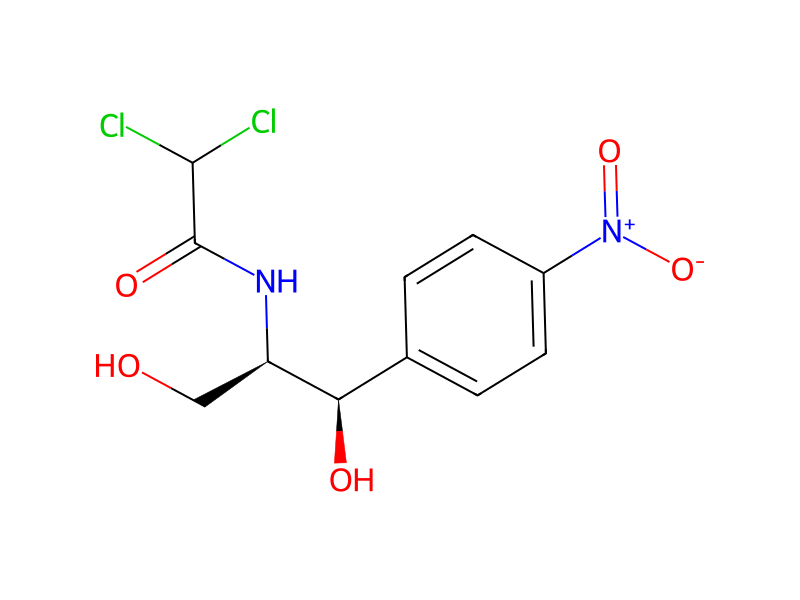
基本信息
- 标准SMILES
O=C(N[C@H](CO)[C@H](O)c1ccc([N+](=O)[O-])cc1)C(Cl)Cl- InChIKey
WIIZWVCIJKGZOK-RKDXNWHRSA-N- 分子式
- C11.H12.Cl2.N2.O5
- 平均分子量
- 323.13 g/mol
- 单同位素质量
- 322.01232684
概述
Chloramphenicol is an organochlorine compound that is dichloro-substituted acetamide containing a nitrobenzene ring, an amide bond and two alcohol functions. It has a role as a Mycoplasma genitalium metabolite, a geroprotector, an antimicrobial agent, an antibacterial drug, a protein synthesis inhibitor and an Escherichia coli metabolite. It is a diol, a C-nitro compound, an organochlorine compound and a carboxamide.
名称与标识
- 首选名称
- Chloramphenicol
- IUPAC
- 2,2-dichloro-N-[(1R,2R)-1,3-dihydroxy-1-(4-nitrophenyl)propan-2-yl]acetamide
- 中文名
- DL-氯霉素
- 英文名
- DL-chloramphenicol
- 分子式
- C11H12Cl2N2O5
- 分子量
- 323.13
名称与别名
chloramphenicol56-75-7ChlornitromycinLevomycetinChloroamphenicolChlorocidLevomicetinaHalomycetinAlficetynAmphicolChloramexGlobenicol
展开更多名称
DL-氯霉素/合霉素SynthomycinCHLORAMPHENICOLUMDL-ChloramphenicolCHLORAMPHENICOL(RG)CHLORAMPHENICOL LEVOChloramphenicol BP2000,CP2000DL-chloramphenicol SynthomycinSynthomycin (DL-chloramphenicol)Chloramphenicol USP25/BP2000/CP2000
D-ChloramphenicolMychelChloramficinChloramfilinChloronitrinEnteromycetinAmseclorAquamycetin
数据库标识
- CAS
2787-09-9、56-75-7- PubChem CID
- 5959
- DTXSID
DTXSID7020265- ChEMBL
CHEMBL130- ChEBI
CHEBI:17698- UNII
- 66974FR9Q1
- EC Number
- 200-287-4
- Nikkaji
- J2.802I
性质
结构计算性质
- XLogP
- 1.1
- 极性表面积
- 115 Ų
- 氢键供体
- 3
- 氢键受体
- 5
- 可旋转键
- 5
- 重原子
- 20
- 形式电荷
- 0
- 复杂度
- 342
实验与物化性质
Chemical ClassesOther Uses -> Pharmaceuticals
Drugs
Pharmaceuticals -> Antibiotics
Pharmaceuticals -> Antibiotics (Amphenicols)
Pharmaceutical
Pharmaceuticals -> Listed in ZINC15
pHNeutral to litmus
LogP
log Kow = 1.14
0.7
TasteBitter to taste
Color/Form
Needles or elongated plates from water or ethylene dichloride
White to greyish-white or yellowish-white fine crystalline powder or fine crystals, needles or elongated plates. Of the four possible stereoisomers, only the alphaR,betaR (or D-threo) form is active ... .
Pale yellow plates or needles from water
Solubility
In water, 2.5 mg/mL at 25 °C
Solubility in propylene glycol: 150.8 mg/mol. Very sol in methanol, ethanol, butanol, ethyl acetate, acetone. Fairly soluble in ether. Insoluble in benzene, petroleum ether, vegetable oils. Solubility in 50% acetamide solution about 5%.
Very soluble in acetone, chloroform, ethanol
4.61e-01 g/L
Human Drugs
Breast Feeding; Lactation; Anti-Infective Agents; Antibacterial Agents
FDA approved drugs -> Active ingredient
FDA approved drugs -> Active ingredient
Access group antibiotics
Animal Drugs
Active Ingredients (Chloramphenicol) -> FDA Greenbook
Pharmaceuticals -> Animal Drugs -> Approved in Taiwan
Boiling PointSublimes in high vacuum
DecompositionWhen heated to decomposition it emits very toxic fumes of /nitrogen oxides and chloride/.
Melting Point
150.5-151.5 °C
MP: 149-153 °C
150.5 °C
151 °C
物理化学性质
- 熔点
- 148 · 148-150 °C(lit.)
- 沸点
- 644.9 · 644.9±55.0 °C(Predicted)
- 密度
- 1.547 · 1.547±0.06 g/cm3(Predicted)
- 储存条件
- 2 · 2-8°C
- 形态
- powder
- 酸度系数(pKa)
- 11.03 · 11.03±0.46(Predicted)
- 颜色
- white
- InChI
- InChI=1/C11H12Cl2N2O5/c12-10(13)11(18)14-8(5-16)9(17)6-1-3-7(4-2-6)15(19)20/h1-4,8-10,16-17H,5H2,(H,14,18)/t8-,9-/s3
- InChIKey
- WIIZWVCIJKGZOK-JQEWEITDNA-N
- SMILES
- C(N[C@H](CO)[C@H](O)C1=CC=C([N+]([O-])=O)C=C1)(=O)C(Cl)Cl |&1:2,5,r|
- CAS 数据库
- 2787 · 2787-09-9(CAS DataBase Reference)
安全与法规
GHS分类
GHS Classification
This chemical does not meet GHS hazard criteria for 2% (6 of 294) of reports.
Danger
H317 (18%): May cause an allergic skin reaction [Warning Sensitization, Skin]
P203, P261, P264+P265, P272, P280, P302+P352, P305+P354+P338, P317, P318, P321, P333+P317, P362+P364, P405, and P501 (click each P-code to see the statement)
Aggregated GHS information provided per 294 reports by companies from 32 notifications to the ECHA C&L Inventory. Each notification may be associated with multiple companies.
Danger
危害信息
Regulatory Information
Hazard Traits - Carcinogenicity
Status: Active Update: 30-05-2018 https://echa.europa.eu/registration-dossier/-/registered-dossier/26156
Chloramphenicol: Does not have an individual approval but may be used under an appropriate group standard
Other Safety InformationIMAP assessments - Acetamide, 2,2-dichloro-N-[2-hydroxy-1-(hydroxymethyl)-2-(4-nitrophenyl)ethyl]-, [R-(R*,R*)]-: Environment tier I assessment
Hazards Summary
Allergic contact dermatitis reported in pharmaceutical workers; [Marks, p. 189-90] Chloramphenicol is an antibiotic, and many side effects have been reported after ingestion of therapeutic doses including, rarely, bone marrow suppression. [HSDB] The lowest dose to cause reversible bone marrow depression was 2000 mg/day for 21 days. While the reversible bone marrow depression is dose related, the rare aplastic anemia is not dose related and is thought to be an idiosyncratic reaction in susceptible individuals. IARC has noted cases of leukemia developing in patients suffering from chloramphenicol-induced aplastic anemia. Occupational allergic dermatitis reported in ophthalmologists and farmers using topical chloramphenicol solutions; No evidence of significant skin absorption; Toxic to embryos and fetuses in animal studies at 1000 mg/kg-day; [AIHA]
FDA Requirements
The Approved Drug Products with Therapeutic Equivalence Evaluations identifies currently marketed prescription drug products, including chloramphenicol sodium succinate, approved on the basis of safety and effectiveness by FDA under sections 505 of the Federal Food, Drug, and Cosmetic Act. /Chloramphenicol sodium succinate/
The Generic Animal Drug and Patent Restoration act requires that each sponsor of an approved animal drug must submit to the FDA certain information regarding patents held for the animal drug or its method of use. The Act requires that this information, as well as a list of all animal drug products approved for safety and effectiveness, be made available to the public. Chloramphenicol is included on this list.
Drug products withdrawn or removed from the market for reasons of safety or effectiveness. The following drug products were withdrawn or removed from the market because such drug products or components of such drug products have been found to be unsafe or not effective. The following drug products may not be compounded under the exemptions provided by section 503A(a) or section 503B(a) of the Federal Food, Drug, and Cosmetic Act. Included on list: Chloramphenicol: All oral drug products containing chloramphenicol.
Implantation or injectable dosage form new animal drugs. Chloramphenicol. ... Indications for use /in dogs/: Treatment of infections of the respiratory tract, the urinary tract, and enteritis and tonsillitis caused by organisms susceptible to chloramphenicol. ... Limitations. Federal law restricts this drug to use by or on the order of a licensed veterinarian. Federal law prohibits the extralabel use of this drug in food-producing animals.
Extralabel drug use in animals. Drugs prohibited for extralabel use in animals. The following drugs, families of drugs, and substances are prohibited for extralabel animal and human drug uses in food-producing animals. Chloramphenicol is included on this list.
Special Reports
Lietman PS; Chloramphenicol and the Neonate- 1979 View; Clin Perinatol 6 (1): 151 (1979). Review of chloramphenicol use in newborn infant.
DHHS/National Toxicology Program; Report on Carcinogens, Fourteenth Edition: Chloramphenico (November 2016). The Report on Carcinogens is an informational scientific and public health document that identifies and discusses substances (including agents, mixtures, or exposure circumstances) that may pose a carcinogenic hazard to human health. Chloramphenico (56-75-7) is listed as reasonably anticipated to be a human carcinogen.[Available from, as of April 10, 2017: http://ntp.niehs.nih.gov/pubhealth/roc/index-1.html]
Toxic Combustion Products
Special hazards arising from the substance or mixture: Carbon oxides, nitrogen oxides (NOx), hydrogen chloride gas.
Poisonous gases are produced in fire, including chlorine and nitrogen oxides.
Hazard Classes and Categories
Skin Sens. 1 (18%)
Acute toxicity (Oral) - Category 5
Germ cell mutagenicity - Category 2
Shipment Methods and Regulations
PRECAUTIONS FOR "CARCINOGENS": Procurement ... of unduly large amt ... should be avoided. To avoid spilling, carcinogens should be transported in securely sealed glass bottles or ampoules, which should themselves be placed inside strong screw-cap or snap-top container that will not open when dropped & will resist attack from the carcinogen. Both bottle & the outside container should be appropriately labelled. ... National post offices, railway companies, road haulage companies & airlines have regulations governing transport of hazardous materials. These authorities should be consulted before ... material is shipped. /Chemical Carcinogens/
PRECAUTIONS FOR "CARCINOGENS": When no regulations exist, the following procedure must be adopted. The carcinogen should be enclosed in a securely sealed, watertight container (primary container), which should be enclosed in a second, unbreakable, leakproof container that will withstand chem attack from the carcinogen (secondary container). The space between primary & secondary container should be filled with absorbent material, which would withstand chem attack from the carcinogen & is sufficient to absorb the entire contents of the primary container in the event of breakage or leakage. Each secondary container should then be enclosed in a strong outer box. The space between the secondary container & the outer box should be filled with an appropriate quantity of shock-absorbent material. Sender should use fastest & most secure form of transport & notify recipient of its departure. If parcel is not received when expected, carrier should be informed so that immediate effort can be made to find it. Traffic schedules should be consulted to avoid ... arrival on weekend or holiday ... /Chemical Carcinogens/
Hazardous Reactivities and Incompatibilities
Incompatible materials: Acids, acid chlorides, acid anhydrides, oxidizing agents.
Chloramphenicol has been reported to be physically incompatible with many drugs, but the compatibility depends on several factors (e.g., the concentration of the drugs, specific diluents used, resulting pH, temperature). Specialized references should be consulted for specific compatibility information.
安全与防护
Fire Fighting Procedures
Suitable extinguishing media: Use water spray, alcohol-resistant foam, dry chemical or carbon dioxide.
Advice for firefighters: Wear self-contained breathing apparatus for firefighting if necessary.
Use dry chemical, carbon dioxide, water spray, or foam extinguishers. ... If material or contaminated runoff enters waterways, notify downstream users of potentially contaminated waters. Notify local health and fire officials and pollution control agencies. From a secure, explosion-proof location, use water spray to cool exposed containers. If cooling streams are ineffective (venting sound increases in volume and pitch, tank discolors, or shows any signs of deforming), withdraw immediately to a secure position. ... The only respirators recommended for firefighting are self-contained breathing apparatuses that have full face-pieces and are operated in a pressure-demand or other positive-pressure mode.
Storage Conditions
Keep container tightly closed in a dry and well-ventilated place.
Store at 20 deg to 25 °C (68 deg to 77 °F). /Chloramphenicol sodium succinate/
Store at or below 25 °C (77 °F) in a dry place.
Chloramphenicol sodium succinate sterile powder for injection should be stored at 15-25 °C. /Chloramphenicol sodium succinate/
For more Storage Conditions (Complete) data for Chloramphenicol (6 total), please visit the HSDB record page.
Cleanup Methods
ACCIDENTAL RELEASE MEASURES: Personal precautions, protective equipment and emergency procedures: Use personal protective equipment. Avoid dust formation. Avoid breathing vapors, mist or gas. Ensure adequate ventilation. Evacuate personnel to safe areas. Avoid breathing dust. Environmental precautions: Prevent further leakage or spillage if safe to do so. Do not let product enter drains. Methods and materials for containment and cleaning up: Pick up and arrange disposal without creating dust. Sweep up and shovel. Keep in suitable, closed containers for disposal.
Evacuate persons not wearing protective equipment from area of spill or leak until cleanup is complete. Remove all ignition sources. Collect powdered material in the most convenient and safe manner and deposit in sealed containers. Ventilate area after cleanup is complete. It may be necessary to contain and dispose of this chemical as a hazardous waste. If material or contaminated runoff enters waterways, notify downstream users of potentially contaminated waters.
PRECAUTIONS FOR "CARCINOGENS": A high-efficiency particulate arrestor (HEPA) or charcoal filters can be used to minimize amt of carcinogen in exhausted air ventilated safety cabinets, lab hoods, glove boxes or animal rooms ... Filter housing that is designed so that used filters can be transferred into plastic bag without contaminating maintenance staff is avail commercially. Filters should be placed in plastic bags immediately after removal ... The plastic bag should be sealed immediately ... The sealed bag should be labelled properly ... Waste liquids ... should be placed or collected in proper containers for disposal. The lid should be secured & the bottles properly labelled. Once filled, bottles should be placed in plastic bag, so that outer surface ... is not contaminated ... The plastic bag should also be sealed & labelled. ... Broken glassware ... should be decontaminated by solvent extraction, by chemical destruction, or in specially designed incinerators. /Chemical Carcinogens/
Disposal Methods
SRP: Expired or waste pharmaceuticals shall carefully take into consideration applicable DEA, EPA, and FDA regulations. It is not appropriate to dispose by flushing the pharmaceutical down the toilet or discarding to trash. If possible return the pharmaceutical to the manufacturer for proper disposal being careful to properly label and securely package the material. Alternatively, the waste pharmaceutical shall be labeled, securely packaged and transported by a state licensed medical waste contractor to dispose by burial in a licensed hazardous or toxic waste landfill or incinerator.
SRP: Wastewater from contaminant suppression, cleaning of protective clothing/equipment, or contaminated sites should be contained and evaluated for subject chemical or decomposition product concentrations. Concentrations shall be lower than applicable environmental discharge or disposal criteria. Alternatively, pretreatment and/or discharge to a permitted wastewater treatment facility is acceptable only after review by the governing authority and assurance that "pass through" violations will not occur. Due consideration shall be given to remediation worker exposure (inhalation, dermal and ingestion) as well as fate during treatment, transfer and disposal. If it is not practicable to manage the chemical in this fashion, it must be evaluated in accordance with EPA 40 CFR Part 261, specifically Subpart B, in order to determine the appropriate local, state and federal requirements for disposal.
Product: Contact a licensed professional waste disposal service to dispose of this material. Dissolve or mix the material with a combustible solvent and burn in a chemical incinerator equipped with an afterburner and scrubber. Offer surplus and non-recyclable solutions to a licensed disposal company; Contaminated packaging: Dispose of as unused product.
PRECAUTIONS FOR "CARCINOGENS": There is no universal method of disposal that has been proved satisfactory for all carcinogenic compounds & specific methods of chem destruction ... published have not been tested on all kinds of carcinogen-containing waste. ... summary of avail methods & recommendations ... /given/ must be treated as guide only. /Chemical Carcinogens/
For more Disposal Methods (Complete) data for Chloramphenicol (8 total), please visit the HSDB record page.
Preventive Measures
ACCIDENTAL RELEASE MEASURES: Personal precautions, protective equipment and emergency procedures: Use personal protective equipment. Avoid dust formation. Avoid breathing vapors, mist or gas. Ensure adequate ventilation. Evacuate personnel to safe areas. Avoid breathing dust. Environmental precautions: Prevent further leakage or spillage if safe to do so. Do not let product enter drains.
Precautions for safe handling: Avoid formation of dust and aerosols. Further processing of solid materials may result in the formation of combustible dusts. The potential for combustible dust formation should be taken into consideration before additional processing occurs. Provide appropriate exhaust ventilation at places where dust is formed.
Appropriate engineering controls: Handle in accordance with good industrial hygiene and safety practice. Wash hands before breaks and at the end of workday.
Gloves must be inspected prior to use. Use proper glove removal technique (without touching glove's outer surface) to avoid skin contact with this product. Dispose of contaminated gloves after use in accordance with applicable laws and good laboratory practices. Wash and dry hands.
For more Preventive Measures (Complete) data for Chloramphenicol (16 total), please visit the HSDB record page.
Protective Action Criteria (PAC)
1.5 [mg/m3]
42 [mg/m3]
250 [mg/m3]
Personal Protective Equipment (PPE)
Eye/face protection: Safety glasses with side-shields conforming to EN166. Use equipment for eye protection tested and approved under appropriate government standards such as NIOSH (US) or EN 166(EU).
Skin protection: Handle with gloves.
Body Protection: Impervious clothing. The type of protective equipment must be selected according to the concentration and amount of the dangerous substance at the specific workplace.
Respiratory protection: Where risk assessment shows air-purifying respirators are appropriate use a full-face particle respirator type N100 (US) or type P3 (EN 143) respirator cartridges as a backup to engineering controls. If the respirator is the sole means of protection, use a full-face supplied air respirator. Use respirators and components tested and approved under appropriate government standards such as NIOSH (US) or CEN (EU).
For more Personal Protective Equipment (PPE) (Complete) data for Chloramphenicol (6 total), please visit the HSDB record page.
Other Standards Regulations and GuidelinesWorkplace Environmental Exposure Level (WEEL): 8-hr Time-weighted Average (TWA) 0.5 mg/cu m. Last Revised: 2008.
毒理信息
TreatmentDrug therapy is discontinued immediately; exchange transfusion may be required to remove the drug. Sometimes, phenobarbital (UGT induction) is used.
Interactions
Chloramphenicol-treated patient may respond poorly to cyanocobalamin therapy since chloramphenicol interferes with erythrocyte maturation.
Concurrent therapy with other drugs that may cause bone marrow depression should be avoided.
Chloramphenicol antagonizes the action of such antibiotics as penicillin and streptomycin, which act only on growing cells, but is synergistic to tetracycline, which also acts by inhibiting protein synthesis. It is possible the chloramphenicol would produce similar synergism with other antibiotics which act by inhibiting protein synthesis.
Clinical observations in man and corresponding investigations in laboratory animals experimentally infected with various pathogenic bacteria have shown that a combination of chloramphenicol with gamma-globulin or specific antisera has a greater therapeutic effect than would be expected from a mere addition of the individual effects.
For more Interactions (Complete) data for Chloramphenicol (26 total), please visit the HSDB record page.
Health Effects
The most serious adverse effect associated with chloramphenicol treatment is bone marrow toxicity, which may occur in two distinct forms: 1) bone marrow suppression, which is a direct toxic effect of the drug and is usually reversible, and 2) aplastic anemia, which is idiosyncratic (rare, unpredictable) and generally fatal. Other less serious reactions from chloramphenicol use include fever, rashes, headache, and confusion. Use of intravenous chloramphenicol has also been associated with gray baby syndrome, a phenomenon resulting from newborn infants' inability to metabolize chloramphenicol in the liver via UDP-glucuronyl transferase. Gray baby syndrome is characterized by vomiting, ashen gray color of the skin, limp body tone, hypotension and cyanosis.
Hepatotoxicity
A proportion of patients with blood dyscrasias due to chloramphenicol also developed clinically apparent liver injury with jaundice, usually occurring before the appearance of aplastic anemia or severe thrombocytopenia. Jaundice arises in 10% to 25% of cases of aplastic anemia, usually within 1 to 2 months of starting chloramphenicol and often shortly after it is stopped. Aplastic anemia and the accompanying liver injury occur most frequently in patients who receive multiple courses of chloramphenicol or prolonged therapy. The serum enzyme pattern is usually hepatocellular and the clinical presentation is an acute hepatitis-like syndrome with onset of fatigue, nausea, anorexia and abdominal discomfort followed by dark urine and jaundice. Rare instances have a cholestatic pattern of presentation with jaundice and itching and prominent elevations in alkaline phosphatase. Some cases occur in the absence of bone marrow involvement. Immunoallergic and autoimmune features are rarely present. The course is self-limited in most instances, but examples of acute liver failure have been reported, particularly in patients without aplastic anemia. In most cases, however, the liver injury associated with chloramphenicol use is eclipsed by the severe bone marrow aplasia.
Ecotoxicity Values
EC50; Species: Desmodesmus subspicatus (Green Algae) 86.71 SAG, 10+4 algae/mL; Conditions: freshwater, static, 23 °C; Concentration: 780 ug/L for 72 hr (95% confidence interval: 210-2930 ug/L); Effect: decreased population growth rate /formulation/
EC50; Species: Desmodesmus subspicatus (Green Algae) 86.71 SAG, 10+4 algae/mL; Conditions: freshwater, static, 23 °C; Concentration: 200 ug/L for 72 hr (95% confidence interval: 150-240 ug/L); Effect: decreased population biomass /formulation/
EC50; Species: Desmodesmus subspicatus (Green Algae) 86.71 SAG, 10+4 algae/mL; Conditions: freshwater, static, 23 °C; Concentration: 130 ug/L for 72 hr (95% confidence interval: 6-240 ug/L); Effect: decreased population, general /formulation/
LC50; Species: Artemia franciscana (San Francisco Brine Shrimp) age ~48 hr nauplii; Conditions: saltwater, static, 25 °C; Concentration: 0.00197 M for 48 hr /formulation/
For more Ecotoxicity Values (Complete) data for Chloramphenicol (6 total), please visit the HSDB record page.
Environmental Fate
TERRESTRIAL FATE: Based on a classification scheme(1), a Koc value of 1150(2), indicates that chloramphenicol is expected to have low mobility in soil(SRC). Volatilization of chloramphenicol from moist soil surfaces is not expected(SRC) given an estimated Henry's Law constant of 2.3X10⁻¹⁸ atm-cu m/mole(SRC), using a fragment constant estimation method(3). Chloramphenicol is not expected to volatilize from dry soil surfaces(SRC) based upon an estimated vapor pressure of 1.7X10⁻¹² mm Hg at 25 °C(SRC), determined from a fragment constant method(3). Half-lives in marine and freshwater sediment of 2.4 to 18.4 days and <12 days, respectively, indicate that biodegradation may occur in terrestrial environments(4).
AQUATIC FATE: Based on a classification scheme(1), a Koc value of 1150(2), indicates that chloramphenicol is expected to adsorb to suspended solids and sediment(SRC). Volatilization from water surfaces is not expected(3) based upon an estimated Henry's Law constant of 2.3X10⁻¹⁸ atm-cu m/mole(SRC), developed using a fragment constant estimation method(4). Chloramphenicol is not expected to undergo hydrolysis in the environment due to the lack of functional groups that hydrolyze under environmental conditions(3). According to a classification scheme(5), an estimated BCF of 1(SRC), from its log Kow of 1.14(6) and a regression-derived equation(4), suggests the potential for bioconcentration in aquatic organisms is low. Aerobic and anaerobic half-lives in marine sediment are reported as 2.4-18.4 and 0.4-2.4 days, in freshwater sediment respective half-lives of <12 and < 4 days were reported, these half-lives indicate that biodegradation may occur in aquatic environments(7).
ATMOSPHERIC FATE: According to a model of gas/particle partitioning of semivolatile organic compounds in the atmosphere(1), chloramphenicol, which has an estimated vapor pressure of 1.7X10⁻¹² mm Hg at 25 °C(SRC), determined from a fragment constant method(2), is expected to exist solely in the particulate phase in the ambient atmosphere. Particulate-phase chloramphenicol may be removed from the air by wet and dry deposition(SRC). Chloramphenicol contains chromophores that absorb at wavelengths >290 nm(3) and, therefore, may be susceptible to direct photolysis by sunlight(SRC).
Food Survey Values
Chloramphenicol was not detected in 203 Canadian egg samples screened for veterinary antibiotics; 99% of the samples in this study were free of all drug residues(1). Chloramphenicol was not detected in 10 unifloral (orange, eucalyptus, lavender, rosemary, thyme) and 2 multifloral honey samples collected in Spain(2). Chloramphenicol was not detected (detection limit 0.3 ug/L) in raw, full-fat, half-skimmed or skimmed milk samples collected from a local farm and local supermarkets of China(3). Chloramphenicol was not detected in eight types of milk (whole, semi-skim, skim and raw cow's milk; whole and semi-skim goat's milk; human milk; powdered milk) from Spain and Morocco(4).
The percentage of violations of veterinary drug content in seafood inspections for chloramphenicol was reported as follows(1):[Table#4354]
Adverse Effects
Aplastic anemia - The presence of increased methemoglobin in the blood; the compound is classified as primary toxic effect.
Chloramphenicol is associated with severe hematological side effects when administered systemically. Since 1982, chloramphenicol has reportedly caused fatal aplastic anemia, with possible increased risk when taken together with cimetidine. This adverse side effect can occur even with the topical administration of the drug, which is most likely due to the systemic absorption of the drug after topical application.
Exposure Routes
Rapidly and completely absorbed from gastrointestinal tract following oral administration (bioavailability 80%). Well absorbed following intramuscular administration (bioavailability 70%). Intraocular and some systemic absorption also occurs after topical application to the eye.
Milk Concentrations
Chloramphenicol was not detected (detection limit 0.3 ug/L) in raw, full-fat, half-skimmed or skimmed milk samples collected from a local farm and local supermarkets of China(1). Chloramphenicol was not detected in eight types of milk (whole, semi-skim, skim and raw cow's milk; whole and semi-skim goat's milk; human milk; powdered milk) from Spain and Morocco(2).
Chloramphenicol is excreted in breast milk in concentrations up to 25 ug per mL.
Toxicity Summary
IDENTIFICATION AND USE: Chloramphenicol is an antibiotic for human and veterinary use, originally isolated from the soil bacterium Streptomyces venzeuelae. HUMAN STUDIES: Chloramphenicol is known to produce major adverse effects in humans. One of these is generally irreversible aplastic anemia and reversible bone marrow suppression. A link between chloramphenicol and liver disease has been noted. Acute myeloid leukemia is also associated with chloramphenicol exposure. Neonates, especially if premature, may develop a serious illness termed "gray baby syndrome" if exposed to excessive doses of chloramphenicol. This syndrome usually begins 2-9 days (average of 4 days) after treatment is started. Within the first 24 hours, vomiting, refusal to suck, irregular and rapid respiration, abdominal distention, periods of cyanosis, and passage of loose green stools occur. The children are severely ill by the end of the first day, and in the next 24 hours turn an ashen-gray color and become flaccid and hypothermic. A similar "gray syndrome" has been reported in adults who were accidentally overdosed with the drug. Allergic contact dermatitis has been noted from a patient using a topical cream containing chloramphenicol. Optic neuritis and scotoma with failing vision has also been reported. Chloramphenicol has been implicated in cleft lip. Chromosomal anomalies were noted in human lymphocytes treated with chloramphenicol in vitro. ANIMAL STUDIES: After three groups of ten 3-month old mice were given daily intraperitoneal injections of chloramphenicol at 20, 40 or 100 mg/kg bw for 3 months, splenomegaly, hepatomegaly, lymph adenopathy and hypertrophy of the thymus occurred in a dose-dependent fashion. An increased incidence in lymphomas in two strains of mice were noted after exposure to chloramphenicol in drinking water. Chloramphenicol has been shown to cause DNA strand breaks in bacterial cells and to inhibit DNA synthesis in lymphocytes and in the phage of Escherichia coli. Chromosomal anomalies were noted in mouse bone marrow cells given chloramphenicol ip or im in F1 generation mouse liver. When groups of 3-9 female Sprague-Dawley rats were given chloramphenicol in drinking water with or without exposure to short duration high intensity noise, ototoxicity was noted. Oral doses of this antibiotic suppressed paradoxical sleep in cats. Chloramphenicol administered to pregnant monkeys had no effect on fetal development. High oral doses of chloramphenicol of 500-2000 mg/kg to rats and mice and of 500 and 1000 mg/kg to rabbits produced high incidences of embryonic and fetal deaths and fetal growth retardation in all three species. Teratogenic effects, predominantly umbilical hernia, were observed only in rats. The pregnant animals showed no toxic sign, except that those given the highest dose gained significantly less weight than controls. Progeny of chloramphenicol-treated mice had reduced learning ability, higher brain seizure threshold and poorer performance in the open-field test. ECOTOXICITY STUDIES: Chloramphenicol was added to cultures of one freshwater green alga, Chlorella pyrenoidosa, and two marine algae, Isochrysis galbana and Tetraselmis chui. It was more toxic to the freshwater algae. Chloramphenicol exposure could significantly inhibit the growth of Scenedesmus obliquus, while Chlorella pyrenoidosa exhibited less sensitivity. Abnormal behavioral changes were observed in fish Clarias gariepinus exposed to chloramphenicol. Hematological parameters were also affected. In Egyptian toads (Bufo regularis) given a dose of chloramphenicol of 5 mg/40 g body weight for 12 weeks, it induced numerous, severe ultrastructural changes in almost all types of leukocytes.
Chloramphenicol can be fatal in an overdose; this usually occurs with intravenous administration of the drug and is more likely to affect infants. Symptoms of poisoning include nausea and vomiting, abdominal distension, metabolic acidosis, hypotension, hypothermia, cardiovascular collapse, and coma.
Chloramphenicol targets the large 39S subunit of the mitochondrial ribosome thereby deactivation mitochondrial protein synthesis. As a result chloramphenicol is cytotoxic to the most metabolically active cells or tissues including the heart, liver, thymus and bone-marrow. (A7823). The likely target of chloramphenicol is the 16S rRNA molecule in the mitochondrial ribosome, which is analogous to the 23S rRNA in bacterial ribosomes.
Ecotoxicity Excerpts
/AQUATIC SPECIES/ This study investigated the growth inhibition effects of three phenicol antibiotics on microalgae used in aquaculture. Different dose levels of chloramphenicol (CAP), florfenicol (FF), and thiamphenicol (TAP) were added to cultures of one freshwater green alga, Chlorella pyrenoidosa, and two marine algae, Isochrysis galbana and Tetraselmis chui. For the two marine algae, FF showed higher toxicity levels (EC50, 1.3-8 mg/L) than CAP (4-41 mg/L) and TAP (38-158 mg/L). CAP was more toxic to the freshwater algae (EC50, 14 mg/L) than FF (215 mg/L) and TAP (1283 mg/L). TAP was the least toxic to the three algae, but maintained the highest stability during the test period. Among the tested algae, T. chui was the species most sensitive to the three antibiotics. This study demonstrates that all three phenicol antibiotics can inhibit growth of the three microalgae and should be carefully used in aquaculture.
/AQUATIC SPECIES/ ... The present work aimed to assess the persistence of chloramphenicol (a banned but illegally used antibiotic) in seawater, together with its effects on the growth of the green macroalgae Ulva lactuca. Moreover, the potential use of this species as a bioindicator was assessed. Results showed CAP presented an exponential degradation pattern in seawater with concentrations decreasing faster than expected. As for the effects on U. lactuca it acted as a growth promoter also contradicting the initial assumptions. Regarding the role of this species in biomonitoring it successfully took up CAP in solution while reflecting the concentrations present conferring it good characteristics as a bioindicator. On the other hand, this ability points to a possibility of CAP being accumulated and transferred along the trophic web through the consumption of U. lactuca by organisms in higher levels.
/AQUATIC SPECIES/ ... The indoor experiments were ... to observe and analyze the chloramphenicol (CAP) induced changes /on Scenedesmus obliquus and Chlorella pyrenoidosa/. Results of the observations ... showed that CAP exposure could significantly inhibit the growth of Scenedesmus obliquus in almost all the treated groups, while Chlorella pyrenoidosa exhibited less sensitivity. Chlorophyll-a syntheses of Scenedesmus obliquus were all inhibited by CAP exposure, while Chlorella pyrenoidosa displayed obvious stimulation effect. Catalase (CAT) and Superoxide dismutase (SOD) activities of both algae were promoted in all the treatments. The experimental results indicated that the growth and Chlorophyll-a syntheses of Scenedesmus obliquus were more sensitive in response to CAP exposure than that of Chlorella pyrenoidosa. While for CAT and SOD activities, Chlorella pyrenoidosa showed more susceptible. ...
/AQUATIC SPECIES/ The present study was aimed at evaluating the effects of different concentrations of the most commonly used fish antimicrobial drug, chloramphenicol (CAP), on the behavior and hematological parameters of Clarias gariepinus. Fish specimens were exposed to three (2.5, 5.0 and 10.0 mg/L) sublethal concentrations of CAP and a control. Abnormal behavioral changes were observed in fish exposed to higher concentration of CAP. Blood erythrocytes were sampled on days 1, 5, 10 and 15 postexposure to evaluate hematological parameters. Results showed concentration- and time-dependent significant increase in packed cell volume after day 5 of exposure (p<0.05). Hemoglobin values also significantly decreased from day 5, whereas values of mean cellular volume significantly decreased throughout the experimental period (p<0.05). A mixed trend was observed in the mean values of red blood cells, white blood cells, mean cellular hemoglobin and mean cellular hemoglobin concentration as well as neutrophils. Activities of lymphocytes were significantly increased in all CAP-treated fish during the exposure period, whereas no significant differences were observed in values of monocytes, eosinophils and basophils among the treatment groups and control. Consequently, precautions must be taken, especially when high concentrations of CAP are used in long-term treatments of C. gariepinus in aquaculture.
For more Ecotoxicity Excerpts (Complete) data for Chloramphenicol (6 total), please visit the HSDB record page.
法规信息
FDA Requirements
The Approved Drug Products with Therapeutic Equivalence Evaluations identifies currently marketed prescription drug products, including chloramphenicol sodium succinate, approved on the basis of safety and effectiveness by FDA under sections 505 of the Federal Food, Drug, and Cosmetic Act. /Chloramphenicol sodium succinate/
The Generic Animal Drug and Patent Restoration act requires that each sponsor of an approved animal drug must submit to the FDA certain information regarding patents held for the animal drug or its method of use. The Act requires that this information, as well as a list of all animal drug products approved for safety and effectiveness, be made available to the public. Chloramphenicol is included on this list.
Drug products withdrawn or removed from the market for reasons of safety or effectiveness. The following drug products were withdrawn or removed from the market because such drug products or components of such drug products have been found to be unsafe or not effective. The following drug products may not be compounded under the exemptions provided by section 503A(a) or section 503B(a) of the Federal Food, Drug, and Cosmetic Act. Included on list: Chloramphenicol: All oral drug products containing chloramphenicol.
Implantation or injectable dosage form new animal drugs. Chloramphenicol. ... Indications for use /in dogs/: Treatment of infections of the respiratory tract, the urinary tract, and enteritis and tonsillitis caused by organisms susceptible to chloramphenicol. ... Limitations. Federal law restricts this drug to use by or on the order of a licensed veterinarian. Federal law prohibits the extralabel use of this drug in food-producing animals.
Extralabel drug use in animals. Drugs prohibited for extralabel use in animals. The following drugs, families of drugs, and substances are prohibited for extralabel animal and human drug uses in food-producing animals. Chloramphenicol is included on this list.
安全数据
- F
- 3-10
- wgk
- 3
- RTECS号
- AB6825000
- 安全说明
- 53-45
- 危险品标志
- T
- 危险类别码
- 45
化学与工业
药理信息
ATC Code
S01AA01
G - Genito urinary system and sex hormones
S - Sensory organs
J - Antiinfectives for systemic use
D - Dermatologicals
D - Dermatologicals
Protein BindingPlasma protein binding is 50-60% in adults and 32% is premature neonates.
Pharmacodynamics
Chloramphenicol is a broad-spectrum antibiotic that was derived from the bacterium Streptomyces venezuelae and is now produced synthetically. Chloramphenicol is effective against a wide variety of microorganisms, but due to serious side-effects (e.g., damage to the bone marrow, including aplastic anemia) in humans, it is usually reserved for the treatment of serious and life-threatening infections (e.g., typhoid fever). Chloramphenicol is bacteriostatic but may be bactericidal in high concentrations or when used against highly susceptible organisms. Chloramphenicol stops bacterial growth by binding to the bacterial ribosome (blocking peptidyl transferase) and inhibiting protein synthesis.
Mechanism of Action
Chloramphenicol is lipid-soluble, allowing it to diffuse through the bacterial cell membrane. It then reversibly binds to the L16 protein of the 50S subunit of bacterial ribosomes, where transfer of amino acids to growing peptide chains is prevented (perhaps by suppression of peptidyl transferase activity), thus inhibiting peptide bond formation and subsequent protein synthesis.
Chloramphenicol inhibits protein synthesis in bacteria, and to a lesser extent, in eukaryotic cells. The drug readily penetrates bacterial cells, probably by facilitated diffusion. Chloramphenicol acts primarily by binding reversibly to the 50S ribosomal subunit (near the binding site for the macrolide antibiotics and clindamycin, which chloramphenicol inhibits competitively). Although binding of tRNA at the codon recognition site on the 30S ribosomal subunit is undisturbed, the drug apparently prevents the binding of the amino acid-containing end of the aminoacyl tRNA to the acceptor site on the 50S ribosomal subunit. The interaction between peptidyltransferase and its amino acid substrate cannot occur, and peptide bond formation is inhibited.
Chloramphenicol ... can inhibit mitochondrial protein synthesis in mammalian cells, perhaps because mitochondrial ribosomes resemble bacterial ribosomes (both are 70S) more than they do the 80S cytoplasmic ribosomes of mammalian cells. The peptidyltransferase of mitochondrial ribosomes, but not of cytoplasmic ribosomes, is inhibited by chloramphenicol. Mammalian erythropoietic cells are particularly sensitive to the drug.
/Chloramphenicol/ inhibits bacterial protein synthesis by interfering with the transfer of activated amino acids from soluble RNA to ribosomes. In vitro, chloramphenicol exerts mainly a bacteriostatic effect on a wide range of gram-negative and gram-positive bacteria.
/Chloramphenicol/ acts by inhibition of protein synthesis by interfering with the transfer of activated amino acids from soluble RNA to ribosomes.
For more Mechanism of Action (Complete) data for Chloramphenicol (9 total), please visit the HSDB record page.
Biological Half-Life
Half-life in adults with normal hepatic and renal function is 1.5 - 3.5 hours. In patients with impaired renal function half-life is 3 - 4 hours. In patients with severely impaired hepatic function half-life is 4.6 - 11.6 hours. Half-life in children 1 month to 16 years old is 3 - 6.5 hours, while half-life in infants 1 to 2 days old is 24 hours or longer and is highly variable, especially in low birth-weight infants.
Chloramphenicol has a half-time /in humans/ ranging from 1.6 to 4.6 hr; using different techniques and in different adult patients, apparent volumes of distribution ranging from 0.2 to 3.1 l/kg have been measured ... . The half-time is considerably longer in neonates ... in 1- to 8-day-old infants the half-life ranged from 10 to over 48 hr, and in 11-day to 8-wk-old infants the range was 5-16 hr ... .
The plasma half-life of chloramphenicol in adults with normal renal and hepatic function is 1.5-4.1 hours. ... The plasma half-life is 24 hours or longer in infants 1-2 days of age and approximately 10 hours in infants 10-16 days of age. The plasma half-life of chloramphenicol is prolonged in patients with markedly reduced hepatic function. In patients with impaired renal function, the plasma half-life of chloramphenicol is not significantly prolonged, although half-lives of the inactive conjugated derivatives may be prolonged.
Metabolism/Metabolites
Hepatic, with 90% conjugated to inactive glucuronide.
Chloramphenicol is rather rapidly metabolized, mainly in the liver, by conjugation with glucuronic acid.
Yields d-threo-2-amino-1-(p-nitrophenyl)-1,3-propanediol and chloramphenicol-beta-d-glucuronide in man. In rat. /from table/
... /undergoes/ direct conjugation. Formation of glucuronide was shown to occur at primary rather than at secondary alcoholic group ... its major reaction of inactivation and detoxication of drug in man, and any factor which decreases its importance ... results in greatly increased toxicity. ... In newborns ... bilirubin ... acts as competitive endogenous acceptor.
Chloramphenicol 3-glucuronide was the major metabolite of chloramphenicol produced by isolated rat hepatocytes although a minor metabolite was also formed.
For more Metabolism/Metabolites (Complete) data for Chloramphenicol (10 total), please visit the HSDB record page.
FDA Pharmacological Classification
66974FR9Q1
CHLORAMPHENICOL
Established Pharmacologic Class [EPC] - Amphenicol-class Antibacterial
Amphenicols [EXT]
Chloramphenicol is an Amphenicol-class Antibacterial.
MeSH Pharmacological Classification
Compounds which inhibit the synthesis of proteins. They are usually ANTI-BACTERIAL AGENTS or toxins. Mechanism of the action of inhibition includes the interruption of peptide-chain elongation, the blocking the A site of ribosomes, the misreading of the genetic code or the prevention of the attachment of oligosaccharide side chains to glycoproteins.
Substances that inhibit the growth or reproduction of BACTERIA.
Absorption, Distribution and Excretion
Rapidly and completely absorbed from gastrointestinal tract following oral administration (bioavailability 80%). Well absorbed following intramuscular administration (bioavailability 70%). Intraocular and some systemic absorption also occurs after topical application to the eye.
Hepatic metabolism to the inactive glucuronide is the major route of elimination. This metabolite and chloramphenicol itself are excreted in the urine following filtration and secretion.
Chloramphenicol administered orally is absorbed rapidly from the intestinal tract. In controlled studies in adult volunteers using the recommended dosage of 50 mg/kg/day, a dosage of 1 g every 6 hours for 8 doses was given. Using the microbiological assay method, the average peak serum level was 11.2 ug/mL one hour after the first dose. A cumulative effect gave a peak rise to 18.4 ug/mL after the fifth dose of 1 g. Mean serum levels ranged from 8 to 14 ug/mL over the 48-hour period. Total urinary excretion of chloramphenicol in these studies ranged from a low of 68% to a high of 99% over a three-day period. From 8% to 12% of the antibiotic excreted is in the form of free chloramphenicol; the remainder consists of microbiologically inactive metabolites, principally the conjugate with glucuronic acid. Since the glucuronide is excreted rapidly, most chloramphenicol detected in the blood is in the microbiologically active free form. Despite the small proportion of unchanged drug excreted in the urine, the concentration of free chloramphenicol is relatively high, amounting to several hundred mcg/mL in patients receiving divided doses of 50 mg/kg/day. Small amounts of active drug are found in bile and feces. Chloramphenicol diffuses rapidly, but its distribution is not uniform. Highest concentrations are found in liver and kidney, and lowest concentrations are found in brain and cerebrospinal fluid. Chloramphenicol enters cerebrospinal fluid even in the absence of meningeal inflammation, appearing in concentrations about half of those found in the blood. Measurable levels are also detected in pleural and in ascitic fluids, saliva, milk, and in the aqueous and vitreous humors. Transport across the placental barrier occurs with somewhat lower concentration in cord blood of neonates than in maternal blood.
Chloramphenicol achieves maximum serum levels very rapidly following oral, intravenous and intraperitoneal administration. Intramuscular injection with chloramphenicol, except certain soluble forms, results in a somewhat delayed absorption and lower serum levels than when given by the oral, intravenous, or intraperitoneal route. Chloramphenicol diffuses readily into all body tissues, but at different concentrations. Highest concentrations are found in the liver and kidney of dogs indicating that these organs are the main route of inactivation and excretion of the metabolites. The lungs, spleen, heart and skeletal muscles contain concentrations similar to that of the blood. Chloramphenicol reaches significant concentration in the aqueous and vitreous humors of the eye from the blood. A significant difference from other antibiotics is its marked ability to diffuse into the cerebrospinal fluid. Within three to four hours after administration, the concentration in the cerebrospinal fluid has reached, on the average, 50% of the concentration in the serum. If the meninges are inflamed, the percentage may be even higher. Chloramphenicol diffuses readily into milk, pleural and ascitic fluids and crosses the placenta attaining concentrations of about 75% of that of the maternal blood.
Approximately 55% of a single daily dose can be recovered from the urine of a treated dog. A small fraction of this is in the form of unchanged chloramphenicol.
For more Absorption, Distribution and Excretion (Complete) data for Chloramphenicol (21 total), please visit the HSDB record page.
Cellular LocationsMembrane
Metabolite PathwaysChloramphenicol Action Pathway
用途与制造
Uses
Broad-spectrum antibiotic; [HSDB]
Anti-Bacterial Agents; Protein Synthesis Inhibitors
MEDICATION
MEDICATION (VET)
Use (kg; approx.) in Germany (2009): >50
Used in treatment of cholera, as it destroys the vibrios and decreases the diarrhea. It is effective against tetracycline-resistant vibrios. It is also used in eye drops or ointment to treat bacterial conjunctivitis.
U.S. Imports
(1977) 8.15X10+6 G (PRINCPL CUSTMS DISTS)
(1979) 8.20X10+6 G (PRINCPL CUSTMS DISTS)
U.S. Production
(1977) PROBABLY GREATER THAN 9.08X10+5 G
(1979) PROBABLY GREATER THAN 9.08X10+5 G
Methods of Manufacturing
Broad spectrum antibiotic obtained from cultures of the soil bacterium Streptomyces venezuelae.
An antibiotic derived from Streptomyces venezuelae or by organic synthesis ... .
Chloramphenicol can be obtained from the filtrate of a Streptomyces venezuelae culture by extraction with ethyl acetate. If the charcoal extract is rich in chloramphenicol, the latter can be crystallized from the ethyl acetate by diluting with many volumes of kerosene.
Chloramphenicol can be synthesized by condensation of para-nitrobenzoyl chloride with ethyl malonate to give para-nitroacetophenone, followed by bromination in acetic acid to form para-nitro-alpha-bromoacetophenone, and reaction of this with hexamethylene tetramine, followed by hydrolysis to give para-nitro-alpha-aminoacetophenone; subsequent acetylation of the amine group and condensation with formaldehyde gives a hydroxymethyl group alpha to the amine group. Treatment with aluminium isopropylate reduces the keto group to a secondary alcohol, and, after deacetylation, condensation of the amine group with methyl dichloroacetate give chloramphenicol. Chemical syntheses of chloramphenicol usually include a resolution step to separate stereoisomers.
For more Methods of Manufacturing (Complete) data for Chloramphenicol (8 total), please visit the HSDB record page.
Formulations/Preparations
Table: Chloramphenicol Sodium Succinate Preparations [Table#4355]
Chloromycetin Ophthalmic Ointment, 1% (Chloramphenicol Ophthalmic Ointment, USP) is supplied, sterile, in ophthalmic ointment tubes of 3.5 grams.
Three common forms are used for systemic therapy, depending on the route of administration; a free base form of chloramphenicol, chloramphenicol palmitate and chloramphenicol succinate. Other formulations are also available for topical use.
Ak chlor liq 0.5%; Ak chlor oph ont 1%; Chloromycetin succinate injection 1 gm; Diochloram ointment 1%; Diochloram solution 0.5%; Pentamycetin liq 2.5 mg/mL; Pentamycetin ont 10 mg/gm; Pentamycetin ophthalmic solution 0.5% - liq; Pentamycetin/hc (combination product); PMS-chloramphenicol ophthalmic soln 0.5%. /Chloramphenicol sodium succinate/
For more Formulations/Preparations (Complete) data for Chloramphenicol (6 total), please visit the HSDB record page.
Use Classification
Animal Drugs -> FDA Approved Animal Drug Products (Green Book) -> Active Ingredients
Veterinary Drug -> ANTIMICROBIAL_AGENT -> JECFA Functional Classes
Pharmaceuticals -> Animal Drugs -> Approved in Taiwan
General Manufacturing Information
Acetamide, 2,2-dichloro-N-[(1R,2R)-2-hydroxy-1-(hydroxymethyl)-2-(4-nitrophenyl)ethyl]-: ACTIVE
The antibiotic is unique among natural compounds in that it contains nitrobenzene moiety and is a derivative of dichloroacetic acid.
供应商12 家
上海麦克林生化科技股份有限公司021-50706066 15221275939 · [email protected]
怀化市冰峰化工有限公司0745-2866851 17711757908 · [email protected]
南京生利德生物科技有限公司025-57798810 18652991625 · [email protected]
华融(广东)制药有限公司13751168070 19925801629
HANGZHOU LEAP CHEM CO., LTD.+86-571-87711850 +86-15355479329 · [email protected]
厦门盈融达化工有限公司+86-0592-6210733 · [email protected]
合肥天健化工有限公司+86-0551-65418679 +86-18949832763 · [email protected]
career henan chemical co+86-0371-86658258 · [email protected]
爆牛贸易重庆有限公司+86-023-6139-8061 +86-86-13650506873 · [email protected]
AFINE CHEMICALS LIMITED+86-571-85134551 +86-18958018566 · [email protected]
湖北博蓝化工有限公司13297969979 13297969979
Wuhan Fortuna Chemical Co., Ltd+86-27-59207850 · [email protected]
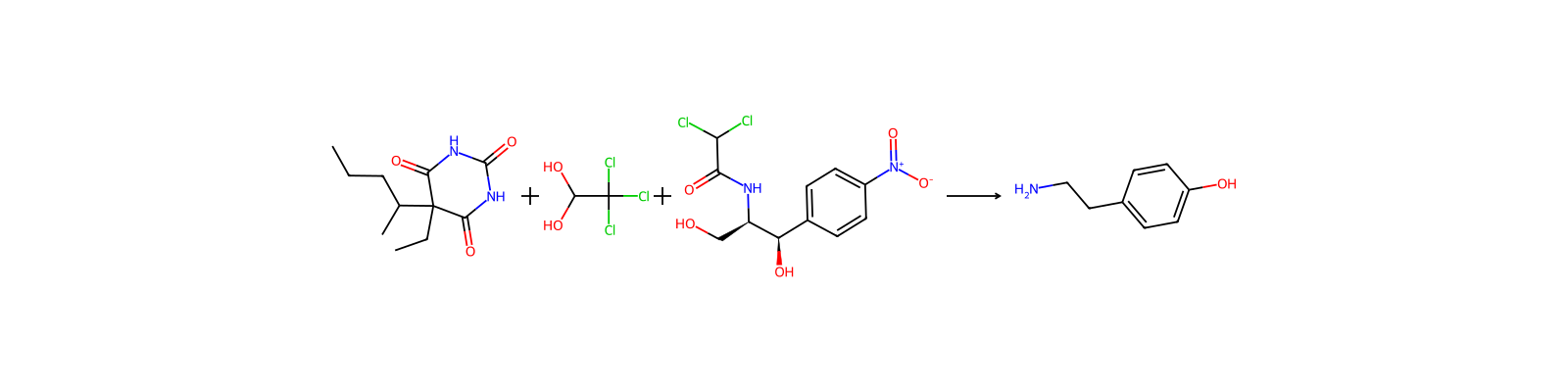
相关反应
32 条






关联笔记
加载中…