

基本信息
- 标准SMILES
C[N+](C)(C)Cc1ccccc1.[Cl-]- InChIKey
KXHPPCXNWTUNSB-UHFFFAOYSA-M- 分子式
- C10H16N.Cl
- 平均分子量
- 185.69 g/mol
- 单同位素质量
- 185.09712719
概述
Benzyltrimethylammonium chloride appears as light yellow liquid with a mild almond odor. May float or sink in water. (USCG, 1999)
名称与标识
- 首选名称
- Benzyltrimethylammonium chloride
- IUPAC
- benzyl(trimethyl)azanium chloride
- 中文名
- 苄基三甲基氯化铵
- 英文名
- Benzyltrimethylammonium chloride
- 分子式
- C10H16ClN
- 分子量
- 185.69
名称与别名
Benzyltrimethylammonium chloride56-93-9TmbacBenzenemethanaminium, N,N,N-trimethyl-, chlorideTRIMETHYLBENZYLAMMONIUM CHLORIDEBenzyl trimethylammonium chlorideAmmonium, benzyltrimethyl-, chlorideDTXSID8024600VNK45Y7BA1Hipochem migrator jN,N,N-Trimethylbenzenemethanaminium chlorideVARIQUAT B 200
展开更多名称
氯化苄基三甲铵苄基三甲基氯化苄基三甲基氯化铵三甲基苄基氯化铵苄基三甲基氯化胺苄基三甲基铵氯化物苄基三甲基氯化铵固体苄基三甲基氯化铵液体苄基三甲基氯化铵 溶液B**苄基三甲基氯化铵BTMBTMACBENZYL TRIMETHYL AMMONIUM CHLORIDE (BTMAC60) SURFACTANTN1,1,1,BZCl4-OH-Sudan I(+)-Benzotetramisole
BTMAC 100DTXCID604600Benzenemethanaminium, N,N,N-trimethyl-, chloride (1:1)RefChem:566996200-300-3N,N,N-Trimethyl-1-phenylmethanaminium chloridebenzyl(trimethyl)azanium;chlorideBenzyltrimethyl ammonium chloride
数据库标识
- CAS
56-93-9- PubChem CID
- 5963
- DTXSID
DTXSID8024600- ChEMBL
CHEMBL1372143- UNII
- VNK45Y7BA1
- EC Number
- 200-300-3
性质
结构计算性质
- 极性表面积
- 0 Ų
- 氢键供体
- 0
- 氢键受体
- 1
- 可旋转键
- 2
- 重原子
- 12
- 形式电荷
- 0
- 复杂度
- 107
实验与物化性质
Chemical ClassesNitrogen Compounds -> Quaternary Amines
LogPlog Kow = -2.17
OdorMild almond odor
Density
1.07 at 68 °F (USCG, 1999) - Denser than water; will sink
1.07 @ 20 °C/20 °C
Properties of 60% soln; wt/gal /bulk density/: 8.90 lb; FP: less than -50 °C
Color/Form
CRYSTALLIZED FROM ACETONE
Colorless crystals
Light yellow, liquid (@ 15 °C and 1 atm)
Solubility
greater than or equal to 100 mg/mL at 65.3 °F (NTP, 1992)
VERY SOL IN WATER, SOL IN HOT ACETONE
Readily sol in ethanol, butanol, and water; slightly sol in butyl phthalate and tributyl phosphate
>27.9 [ug/mL] (The mean of the results at pH 7.4)
Boiling Point
greater than 275 °F at 760 mmHg (decomposes) (NTP, 1992)
>135 °C (Some decomp)
DecompositionWhen heated to decomposition it emits very toxic fumes of /hydrogen chloride and nitrogen oxides/.
Melting Point
469 °F (NTP, 1992)
243 °C
Vapor Pressure0.00000022 [mmHg]
Food Contact SubstancesFCS -> FDA Inventory of Food Contact Substances Listed in 21 CFR
Physical Description
Benzyltrimethylammonium chloride appears as light yellow liquid with a mild almond odor. May float or sink in water. (USCG, 1999)
Liquid
Colorless solid; [HSDB] Light yellow liquid; [CAMEO] Off-white to yellow powder, soluble in water; [MSDSonline]
物理化学性质
- 熔点
- 239 °C · 239 °C (dec.) (lit.)
- 沸点
- 305.52 °C · 305.52°C (rough estimate)
- 密度
- 1.08 g/mL · 1.08 g/mL at 25 °C
- 蒸气压
- 0.0001 hPa · <0.0001 hPa (20 °C)
- 折射率
- 20 · n20/D 1.479
- 闪点
- 50 ° · <50° (for 61%sol), d: 1.07 at 20°/20° (61% sol)
- 储存条件
- 30 °C · Store below +30°C.
- 溶解度
- 800 g/l · 800g/l
- 形态
- Crystalline Powder or Chunks
- 颜色
- White to ivory
- 气味 (Odor)
- Faint, almond like odor
- PH值
- 6 · 6-8 (100g/l, H2O, 20℃)
- 酸碱指示剂变色ph值范围
- 6 · 6 - 8
- 水溶解性
- 800 g/L · 800 g/L
- 敏感性
- Hygroscopic
- BRN
- 3917255 · 3917255
- Henry's Law Constant
- 2.9 · 2.9×108 mol/(m3Pa) at 25℃, HSDB (2015)
- 稳定性
- Stable. Hygroscopic. Incompatible with strong oxidizing agents.
- InChI
- 1S/C10H16N.ClH/c1-11(2,3)9-10-7-5-4-6-8-10;/h4-8H,9H2,1-3H3;1H/q+1;/p-1
- InChIKey
- KXHPPCXNWTUNSB-UHFFFAOYSA-M
- SMILES
- [Cl-].C[N+](C)(C)Cc1ccccc1
- CAS 数据库
- 56 · 56-93-9(CAS DataBase Reference)
- EPA化学物质信息
- Benzyltrimethylammonium chloride (56-93-9)
化学性质
无色结晶,135℃以上分解为氯化苄和三甲胺,易溶于水、乙醇和丁醇,不溶于醚。易潮解,一般商品为60%溶液,相对密度1.07(20/20℃)。
安全与法规
GHS分类
GHS Classification
This chemical does not meet GHS hazard criteria for 1.5% (5 of 339) of reports.
Danger
H301+H311 (36.3%): Toxic if swallowed or in contact with skin [Danger Acute toxicity, oral; acute toxicity, dermal]
P203, P261, P262, P264, P264+P265, P270, P271, P273, P280, P301+P316, P302+P352, P304+P340, P305+P351+P338, P316, P317, P318, P321, P330, P332+P317, P337+P317, P361+P364, P362+P364, P405, and P501 (click each P-code to see the statement)
Aggregated GHS information provided per 339 reports by companies from 16 notifications to the ECHA C&L Inventory. Each notification may be associated with multiple companies.
Danger
危害信息
Regulatory Information
Chemical: Benzenemethanaminium, N,N,N-trimethyl-, chloride (1:1)
Benzenemethanaminium, N,N,N-trimethyl-, chloride (1:1) is listed on the EPA's Chemical Data Reporting (CDR) system. Manufacturers and importers of Benzenemethanaminium, N,N,N-trimethyl-, chloride (1:1) are required to report information about their production and use of this chemical to the EPA under the Toxic Substances Control Act (TSCA). (40 eCFR Part 711)
Status: Active Update: 08-06-2016 https://echa.europa.eu/registration-dossier/-/registered-dossier/13489
Benzyltrimethylammonium chloride: Does not have an individual approval but may be used under an appropriate group standard
Fire HazardsSpecial Hazards of Combustion Products: Toxic oxides of nitrogen and hydrochloric acid fumes may form in fire. (USCG, 1999)
Health HazardsIngestion causes gastrointestinal disturbances. Contact with liquid irritates eyes and may irritate skin. (USCG, 1999)
Hazards SummaryA skin and eye irritant; [HSDB] Harmful if swallowed; A skin, eye, and respiratory tract irritant; [MSDSonline]
Reactive GroupNon-Redox-Active Inorganic Compounds
Reactivity ProfileBENZYLTRIMETHYLAMMONIUM CHLORIDE can react with oxidizing materials (NTP, 1992). Toxic oxides of nitrogen and hydrochloric acid fumes may form in fire (USCG, 1999).
Air and Water ReactionsWater soluble.
Toxic Combustion ProductsPoisonous gases may be produced in fire.
Hazard Classes and Categories
Acute Tox. 3 (90.9%)
Acute toxicity (Oral) - Category 3
Acute toxicity (Oral) - Category 3
Skin, Eye, and Respiratory IrritationsLiquid irritating to skin and eyes.
安全与防护
Fire FightingFire Extinguishing Agents Not to Be Used: Water may be ineffective on fire. (USCG, 1999)
First Aid
EYES: First check the victim for contact lenses and remove if present. Flush victim's eyes with water or normal saline solution for 20 to 30 minutes while simultaneously calling a hospital or poison control center. Do not put any ointments, oils, or medication in the victim's eyes without specific instructions from a physician. IMMEDIATELY transport the victim after flushing eyes to a hospital even if no symptoms (such as redness or irritation) develop.
Fire Fighting ProceduresWear goggles and self-contained breathing apparatus. Extinguish with dry chemical, foam or carbon dioxide. Water may be ineffective on fire.
Nonfire Spill Response
SMALL SPILLS AND LEAKAGE: If you spill this chemical, you should dampen the solid spill material with water, then transfer the dampened material to a suitable container. Use absorbent paper dampened with water to pick up any remaining material. Seal your contaminated clothing and the absorbent paper in a vapor-tight plastic bag for eventual disposal. Wash all contaminated surfaces with a strong soap and water solution. Do not reenter the contaminated area until the Safety Officer (or other responsible person) has verified that the area has been properly cleaned.
Disposal Methods
SRP: At the time of review, criteria for land treatment or burial (sanitary landfill) disposal practices are subject to significant revision. Prior to implementing land disposal of waste residue (including waste sludge), consult with environmental regulatory agencies for guidance on acceptable disposal practices.
Preventive Measures
SRP: The scientific literature for the use of contact lenses in industry is conflicting. The benefit or detrimental effects of wearing contact lenses depend not only upon the substance, but also on factors including the form of the substance, characteristics and duration of the exposure, the uses of other eye protection equipment, and the hygiene of the lenses. However, there may be individual substances whose irritating or corrosive properties are such that the wearing of contact lenses would be harmful to the eye. In those specific cases, contact lenses should not be worn. In any event, the usual eye protection equipment should be worn even when contact lenses are in place.
Personal Protective Equipment (PPE)Goggles and rubber gloves (USCG, 1999)
毒理信息
Environmental Fate
TERRESTRIAL FATE: Based on a classification scheme(1), an estimated Koc value of 900(SRC), determined from a log Kow of -2.17(2) and a regression-derived equation(3), indicates that trimethylbenzylammonium chloride is expected to have low mobility in soil(SRC). Volatilization of trimethylbenzylammonium chloride from moist soil surfaces is not expected to be an important fate process(SRC) given an estimated Henry's Law constant of 3.4X10⁻¹⁴ atm-cu m/mole(SRC), using a fragment constant estimation method(4). Trimethylbenzylammonium chloride is not expected to volatilize from dry soil surfaces(SRC) based upon an estimated vapor pressure of 2.2X10⁻⁷ mm Hg(SRC), determined from a fragment constant method(5). Studies on the influence of chemical structure on quaternary ammonium compound (QACs) biodegradability suggest that alkyltrimethylammonium QACs will be most rapidly degraded followed by alkyldimethylbenzylammonium and alkylpyridinium QACs, although at high concentrations it may be toxic to the microbial population(6).
AQUATIC FATE: Based on a classification scheme(1), an estimated Koc value of 900(SRC), determined from a log Kow of -2.17(2) and a regression-derived equation(3), indicates that trimethylbenzylammonium chloride is expected to adsorb to suspended solids and sediment in water(SRC). By analogy to other alkyldimethylbenzyl quaternary ammonium compounds, trimethylbenzylammonium chloride is expected to strongly adsorb to sediment and suspended organic matter(8). Volatilization from water surfaces is not expected(3) based upon an estimated Henry's Law constant of 3.4X10⁻¹⁴ atm-cu m/mole(SRC), developed using a fragment constant estimation method(4). Trimethylbenzylammonium chloride will not volatilize from water to the atmosphere(9,SRC) because it completely dissociates. According to a classification scheme(5), a BCF of <0.2(7), and a regression-derived equation(6), suggests the potential for bioconcentration in aquatic organisms is low. If released to water, trimethylbenzylammonium chloride will completely dissociate(SRC) since it is an ionic compound. By analogy to other alkyldimethylbenzyl quaternary ammonium compounds, trimethylbenzylammonium chloride may biodegrade in aquatic systems at low concentrations(8).
ATMOSPHERIC FATE: According to a model of gas/particle partitioning of semivolatile organic compounds in the atmosphere(1), trimethylbenzylammonium chloride, which has an estimated vapor pressure of 2.2X10⁻⁷ mm Hg at 25 °C(SRC), using a fragment onstant estimation method(2), will exist in both the vapor and particulate phases in the ambient atmosphere. Vapor-phase trimethylbenzylammonium chloride is degraded in the atmosphere by reaction with photochemically-produced hydroxyl radicals(SRC); the half-life for this reaction in air is estimated to be 1 day(SRC), calculated from its rate constant of 1.7X10⁻¹³ cu cm/molecule-sec at 25 °C(3) determined using a structure estimation method(3). Particulate-phase trimethylbenzylammonium chloride may be removed from the air by wet and dry deposition(SRC).
Ongoing Test Status
The following link will take the user to the National Toxicology Program (NTP) Test Agent Search Results page, which tabulates all of the "Standard Toxicology & Carcinogenesis Studies", "Developmental Studies", and "Genetic Toxicity Studies" performed with this chemical. Clicking on the "Testing Status" link will take the user to the status (i.e., in review, in progress, in preparation, on test, completed, etc.) and results of all the studies that the NTP has done on this chemical. [http://ntp-apps.niehs.nih.gov/ntp_tox/index.cfm?fuseaction=ntpsearch.searchresults&searchterm=56-93-9]
Soil Adsorption/Mobility
The Koc of trimethylbenzylammonium chloride is estimated as 900(SRC), using a log Kow of -2.17(1) and a regression-derived equation(2). According to a classification scheme(3), this estimated Koc value suggests that trimethylbenzylammonium chloride is expected to have low mobility in soil. Quaternary ammonium compounds (QACs) are strongly adsorbed by a wide variety of materials, and alkyldimethylbenzylammonium QACs are known to adsorb strongly to sewage sludge(4).
Human Toxicity ExcerptsLiquid irritating to skin and eyes.
Artificial Pollution Sources
Trimethylbenzylammonium chloride's production and use as a solvent for cellulose, a gelling inhibitor in polyester resins and as an intermediate(1) and as a phase-transfer catalyst(2) may result in its release to the environment through various waste streams(SRC).
Environmental Biodegradation
At an initial concentration of 100 mg/L, trimethylbenzylammonium chloride did not biodegrade when incubated with activated sludge for ten days(1), although at high concentrations it may be toxic to the microbial population(2). Studies on the influence of chemical structure on quaternary ammonium compound (QACs) biodegradability suggest that alkyltrimethylammonium QACs will be most rapidly degraded followed by alkyldimethylbenzylammonium and alkylpyridinium QACs; few, if any, of the QACs should be regarded as persistent(2). The acclimation of the microbial community may profoundly influence the biodegradability of alkyldimethylbenzylammonium QACs(2).
Environmental BioconcentrationA BCF of <0.2 was measured for trimethylbenzylammonium(1). According to a classification scheme(2), this BCF suggests the potential for bioconcentration in aquatic organisms is low.
Volatilization from Water/Soil
The Henry's Law constant for trimethylbenzylammonium chloride is estimated as 3.4X10⁻¹⁴ atm-cu m/mole(SRC) using a fragment constant estimation method(1). This Henry's Law constant indicates that trimethylbenzylammonium chloride is expected to be essentially nonvolatile from water surfaces(2). Trimethylbenzylammonium chloride's Henry's Law constant(1) indicates that volatilization from moist soil surfaces will not occur(SRC). Trimethylbenzylammonium chloride is not expected to volatilize from dry soil surfaces(SRC) based upon an estimated vapor pressure of 2.2X10⁻⁷ mm Hg(SRC), determined from a fragment constant method(3).
Non-Human Toxicity Excerpts
EFFECTS OF BENZYLTRIMETHYLAMMONIUM CHLORIDE ON BLOOD PRESSURE IN DOGS WAS STUDIED. IT WAS A MUSCARINIC VASODEPRESSOR.
IT WAS APPROX 1/4 TO 1/2 AS ACTIVE AS ACETYLCHOLINE CHLORIDE AS DEPRESSOR AGENT IN DOG & APPROX 4-15 TIMES AS ACTIVE IN ABILITY TO INDUCE SALIVA FORMATION. HIGHER DOSES DEMONSTRATED ANTICHOLINERGIC ACTIVITY & INHIBITION MAY BE NONCOMPETITIVE TYPE.
BENZYLTRIMETHYLAMMONIUM BROMIDE BLOCKED RESPONSES TO ACTYLCHOLINE, NICOTINE & POTASSIUM CHLORIDE IN FROG RECTUS ABDOMINIS PREPN. IT CAUSED INHIBITION OF RABBIT SCIATIC NERVE GASTROCNEMIUS MUSCLE PREPN.
Environmental Abiotic Degradation
The rate constant for the vapor-phase reaction of trimethylbenzylammonium chloride with photochemically-produced hydroxyl radicals has been estimated as 1.7X10⁻¹³ cu cm/molecule-sec at 25 °C(SRC) using a structure estimation method(1). This corresponds to an atmospheric half-life of about 1 day at an atmospheric concentration of 5X10+5 hydroxyl radicals per cu cm(1).
Probable Routes of Human Exposure
NIOSH (NOES Survey 1981-1983) has statistically estimated that 3,635 workers (2,606 of these are female) are potentially exposed to trimethylbenzylammonium chloride in the US(1). Occupational exposure to trimethylbenzylammonium chloride may occur through dermal contact with this compound at workplaces where trimethylbenzylammonium chloride is produced or used(SRC).
Environmental Fate/Exposure Summary
Trimethylbenzylammonium chloride's production and use as a solvent for cellulose, a gelling inhibitor in polyester resins and as an intermediate and as a phase-transfer catalyst may result in its release to the environment through various waste streams. If released to air, an estimated vapor pressure of 2.2X10⁻⁷ mm Hg at 25 °C indicates trimethylbenzylammonium chloride will exist in both the vapor and particulate phases in the ambient atmosphere. Vapor-phase trimethylbenzylammonium chloride will be degraded in the atmosphere by reaction with photochemically-produced hydroxyl radicals; the half-life for this reaction in air is estimated to be 1 day. Particulate-phase trimethylbenzylammonium chloride will be removed from the atmosphere by wet and dry deposition. If released to soil, trimethylbenzylammonium chloride is expected to have low mobility based upon an estimated Koc of 900. By analogy to other alkyldimethylbenzyl quaternary ammonium compounds, trimethylbenzylammonium chloride is expected to strongly adsorb to sediment and suspended organic matter. Volatilization from moist soil surfaces is not expected to be an important fate process based upon an estimated Henry's Law constant of 3.4X10⁻¹⁴ atm-cu m/mole. If released into water, trimethylbenzylammonium chloride is expected to adsorb to suspended solids and sediment in water based upon the estimated Koc. Volatilization from water surfaces is not expected to be an important fate process based upon this compound's estimated Henry's Law constant. Studies on the influence of chemical structure on quaternary ammonium compound (QACs) biodegradability suggest that alkyltrimethylammonium QACs will be most rapidly degraded followed by alkyldimethylbenzylammonium and alkylpyridinium QACs, although at high concentrations it may be toxic to the microbial population. A BCF of <0.2 suggests bioconcentration in aquatic organisms is low. Occupational exposure to trimethylbenzylammonium chloride may occur through inhalation and dermal contact with this compound at workplaces where trimethylbenzylammonium chloride is produced or used. (SRC)
安全数据
- F
- 3
- wgk
- 3
- tsca
- TSCA listed
- 毒性
- LD50 orally in Rabbit: 500 mg/kg
- RTECS号
- BO8400000
- 包装类别
- III
- 危险等级
- 6.1
- 存储类别
- 6.1D - Non-combustible acute toxic Cat.3toxic hazardous materials or hazardous materials causing chronic effects
- 安全说明
- 26-37/39
- 海关编码
- 29239000
- 危险品标志
- Xn
- 危险性类别
- Acute Tox. 3 DermalAcute Tox. 3 OralAcute Tox. 4 InhalationAquatic Chronic 3Muta. 2
- 危险类别码
- 22-36/38-36
- 毒害物质数据
- 56-93-9(Hazardous Substances Data)
- 危险品运输编号
- UN 2811 6.1/PG 3
毒性防护
急性毒性口服-大鼠 LDL0: 250 毫克/公斤; 口服-小鼠 LDL0: 1600 毫克/公斤
包装储运
可燃性危险特性较易燃; 受热分解有毒氮氧化物, 氨和氯化物烟雾
储运特性低温通风干燥; 与库房食品原料分开存放
灭火剂干粉,泡沫,沙土,二氧化碳, 雾状水
化学与工业
药理信息
Mechanism of Action
IT DECR THE RESTING MEMBRANE POTENTIALS & BLOCKED ACTION POTENTIAL OF BOTH INNERVATED & DENERVATED MUSCLES. BTM MAY HAVE DUAL MECHANISM OF ACTION, A DEPOLARIZING TYPE & A BLOCKING ACTION WHICH IS DOSE DEPENDENT.
ACETYLCHOLINE-LIKE AGONIST ACTIVITY ON CAT SUPERIOR CERVICAL GANGLION IN VIVO & FROG RECTUS ABDOMINIS IN VITRO WAS STUDIED. BENZYLTRIMETHYLAMMONIUM WAS MORE ACTIVE THAN ACETYLCHOLINE AS GANGLION STIMULANT.
IT WAS TESTED FOR MUSCARINIC ACTIVITY RELATIVE TO ACETYLCHOLINE DURING NONDEPOLARIZING BLOCKAGE DUE TO NICOTINE 1.2 MG/MIN IV & WAS FOUND TO BE MORE ACTIVE THAN ACETYLCHOLINE. IT IS CAPABLE OF STIMULATING BOTH NICOTINIC & MUSCARINIC RECEPTORS.
MeSH Pharmacological Classification
Substances that prevent infectious agents or organisms from spreading or kill infectious agents in order to prevent the spread of infection.
Agents that modify interfacial tension of water; usually substances that have one lipophilic and one hydrophilic group in the molecule; includes soaps, detergents, emulsifiers, dispersing and wetting agents, and several groups of antiseptics.
用途与制造
Uses
Used as a solvent for cellulose; a gelling inhibitor in polyester resins; an intermediate; a dye assistant; a phase-transfer catalyst; [HSDB] Used as a catalyst along with other quaternary ammonium salts; [Ullmann]
Plastic Composites Manufacturing [Category: Industry]
Solvent for cellulose; gelling inhibitor in polyester resins; intermediate
DYE ASSISTANT, EG, FOR ACRYLICS.
Phase-transfer catalyst
U.S. Production
2023: 2,451,010 lb
(1977) 4.65X10+8 GRAMS (SALES)
(1979) 4.34X10+8 GRAMS
(1988) 3,985,000 lb
Industry UsesSurface modifier
Methods of Manufacturing
REACTION OF TRIMETHYLAMINE AND BENZYL CHLORIDE
Trimethylamine + benzyl chloride (quaternisation)
Formulations/Preparations
Grades: 60-62% aq soln.
Grades: 50-60% solution in water
General Manufacturing Information
All Other Chemical Product and Preparation Manufacturing
Benzenemethanaminium, N,N,N-trimethyl-, chloride (1:1): ACTIVE
应用领域
应用苄基三甲基氯化铵是一种季铵盐类化合物,在化学合成中常用作相转移催化剂,可用于催化非均相有机转化反应。该物质也可用作纤维素溶剂和阻聚剂,在精细化学品生产中也有一定的应用。
用途用于测定铂、钯、汞和金,用作乳化剂和阻聚剂。
用途用作医药中间体及相转移催化剂
用途用作乳化剂、纤维素溶剂和阻聚剂
制备方法
合成方法在一个干燥的反应烧瓶中,将氯化苄和三甲胺按1比1的化学计量比进行混合,然后将所得的反应混合物在干燥的四氢呋喃溶液中加热至回流,并保持在回流状态下搅拌反应48小时。反应结束后,将所得的反应混合物冷却至室温然后将其过滤除去粗反应体系以除去未反应的杂质。然后将所得的滤液在真空下进行浓缩以除去反应体系中的溶剂,所得的沉淀固体即为目标产物分子。需要说明的是该体系在浓缩的时候注意温度不要超过80 °C,以避免发生逆反应。 图 苄基三甲基氯化铵的合成路线
生产方法将氯化苄、三甲胺和甲醇的混合物回流反应4h,蒸除甲醇得到粗品,经乙醇重结晶得苄基三甲基氯化铵成品,产率88%。
上下游产品信息
上游原料
下游产品
试剂价格
- B0447 · 25G
- 苄基三甲基氯化铵Benzyltrimethylammonium Chloride — 160元
- B0447 · 100g
- 苄基三甲基氯化铵Benzyltrimethylammonium Chloride — 190元
供应商50 家
梯希爱(上海)化成工业发展有限公司021-67121386 · [email protected]
衢州润东化工有限公司0570-8789886 18892685668 · [email protected]
上海阿拉丁生化科技股份有限公司400-6206333 13167063860 · [email protected]
爱斯特(成都)生物制药股份有限公司+86-28-85122536 85324413 · [email protected]
南京兰亚化工贸易有限公司+86-25-8331-5620 · [email protected]
韶远科技(上海)有限公司021-50795510 4000665055 · [email protected]
科瑞迪化学400-821-5857 021-64326257 · [email protected]
南京凯天化工有限公司+86 (25) 5860-8846 · [email protected]
Syntechem Co.,Ltd[email protected]
上海迈瑞尔生化科技有限公司4006356688 18621169109 · [email protected]
阿法埃莎(中国)化学有限公司400-6106006 · [email protected]
安耐吉化学&3A(安徽泽升科技股份有限公司)400-0056266 · [email protected]
上海柏卡化学技术有限公司400-026-1533/(021) 6478-0600 · [email protected]
上海瀚鸿科技股份有限公司021-54306202 13764082696 · [email protected]
上海相辉医药科技有限公司13761987713 · [email protected]
上海景颜化工科技有限公司13817811078 · [email protected]
嘉兴市艾森化工有限公司0573-85285100 18627885956 · [email protected]
合肥天健化工有限公司551-65418679 15856988503;15837135945 · [email protected]
孝感深远化工有限公司15527621225; 15527621225 · [email protected]
山东西亚化学有限公司13355009207 13355009207 · [email protected]
唐山默内德贸易有限公司0315-8309571 15633399667 · [email protected]
玛雅试剂+86 (573) 82222445 (0)18006601000 452520369 · [email protected]
四川库利南科技有限公司400-1166-196 18981987031 · [email protected]
上海耐士化工科技有限公司400-188-0725 +86 21 34310725 13611771617
天津希恩思生化科技有限公司400 638 7771 · [email protected]
湖南汇百侍生物科技有限公司0731-85526065 13308475853 · [email protected]
河南多贝化工有限公司0370-2785118 17550508557 · [email protected]
上海源叶生物科技有限公司13636370518 · [email protected]
艾科试剂4008-755-333 18080918076 · [email protected]
上海思域化工科技有限公司86-21-34053660 · [email protected]
赛默飞世尔科技(中国)有限公司800-810-5118 · [email protected]
北京伊诺凯科技有限公司400-810-7969 010-59572699 · [email protected]
江苏艾康生物医药研发有限公司025-66113011 13913916777 · [email protected]
上海健超生物科技有限公司150-2103-5486 18017383231 · [email protected]
TCI AMERICA800-4238616 · [email protected]
TOKYO CHEMICAL INDUSTRY CO., LTD.03-36680489 · [email protected]
TCI Europe320-37350700 · [email protected]
深圳振强药物研发有限公司0755-66853366 13670046396 · [email protected]
深圳康特腾科技有限公司86-0755-86635001 · [email protected]
无锡市乾丰化工科技有限公司0510-82860650 · [email protected]
无锡中坤生化科技有限公司+86 0510-85629785
上海皋翔化工有限公司021-57816257 18930243658 · [email protected]
北京环宇世纪化学科技有限公司hysj_bj.com
上海湄水化工科技有限公司021-60549325 18616193163
上海将来实业股份有限公司400-0066400 13621662912 · [email protected]
上海将来实业股份有限公司021-61552785 · [email protected]
HBCChem, Inc.+1-510-219-6317 · [email protected]
上海笛柏生物科技有限公司400-008-9730,021-54359730 400-008-9730 · [email protected]
日照力德士化工有限公司010-51268198 · [email protected]
美岚实业(上海)有限公司021-58958189 · [email protected]
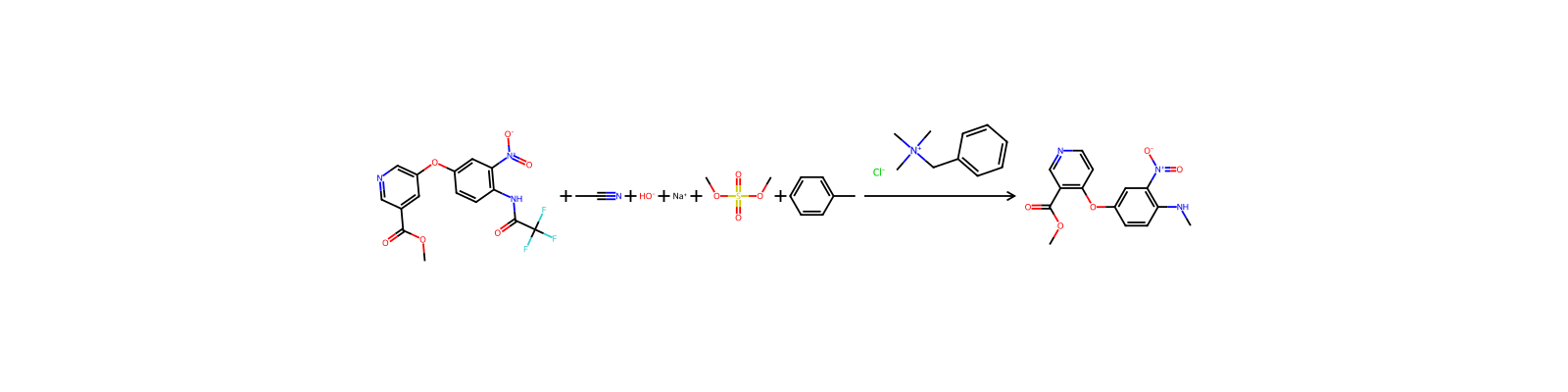
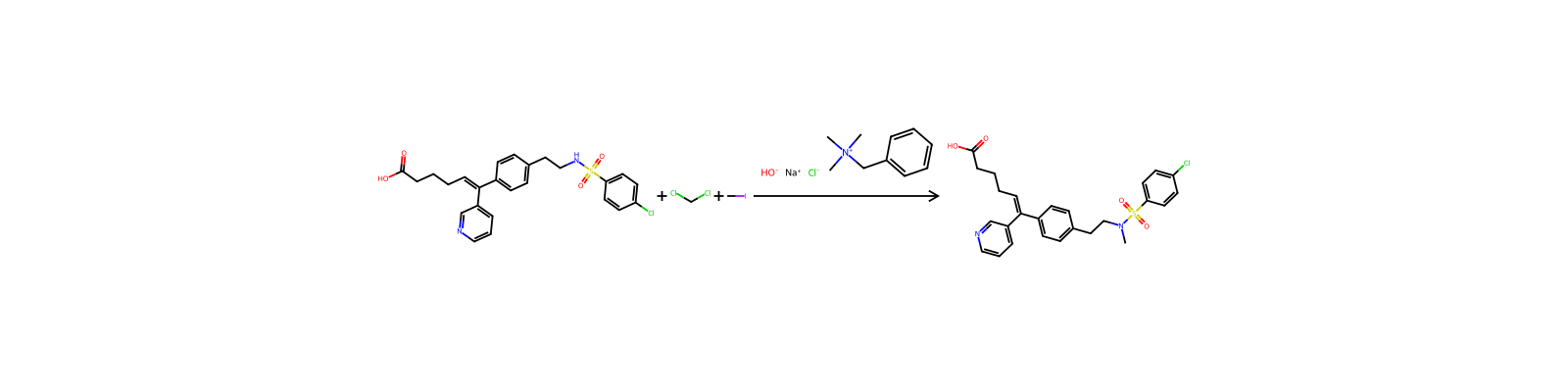
相关反应
210 条





关联笔记
加载中…