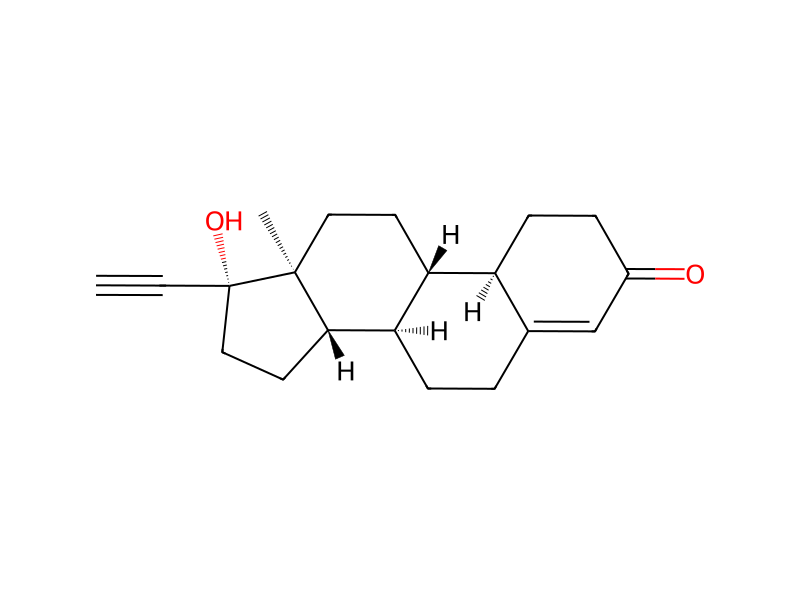
基本信息
- 标准SMILES
C#C[C@]1(O)CC[C@H]2[C@@H]3CCC4=CC(=O)CC[C@@H]4[C@H]3CC[C@@]21C- InChIKey
VIKNJXKGJWUCNN-XGXHKTLJSA-N- 分子式
- C20H26O2
- 平均分子量
- 298.4 g/mol
- 单同位素质量
- 298.19328007
概述
Norethisterone (Norethindrone) can cause cancer according to California Labor Code. It can cause developmental toxicity according to state or federal government labeling requirements.
名称与标识
- 首选名称
- Norethindrone
- IUPAC
- (8R,9S,10R,13S,14S,17R)-17-ethynyl-17-hydroxy-13-methyl-1,2,6,7,8,9,10,11,12,14,15,16-dodecahydrocyclopenta[a]phenanthren-3-one
- 中文名
- 炔诺酮
- 英文名
- Norethindrone
- 分子式
- C20H26O2
- 分子量
- 298.43
名称与别名
norethindroneNorethisterone68-22-4MicronorNorethisteronNorlutin19-NorethisteroneAnovuleGestestMicronovumNorcolutNorluten
展开更多名称
炔诺酮降雄甾炔酮炔诺酮抗体去甲吲哚杂质甲醇中炔诺酮炔诺酮杂质B炔诺酮对照品乙腈中炔诺酮炔诺酮 标准品炔诺酮(甾体)NETENTNorethindrone (Norethisterone)19-NORETHINDRONEElkCek6ElkhHek6EPB1
CamilaNoridayUtovlanPrimolut-NMicronettNoralutinNorethynodroneNorgestin
数据库标识
- CAS
68-22-4- PubChem CID
- 6230
- DTXSID
DTXSID9023380- ChEMBL
CHEMBL1162- ChEBI
CHEBI:7627- UNII
- T18F433X4S
- EC Number
- 200-681-6
- Nikkaji
- J1.416H
性质
结构计算性质
- XLogP
- 3
- 极性表面积
- 37.3 Ų
- 氢键供体
- 1
- 氢键受体
- 2
- 可旋转键
- 1
- 重原子
- 22
- 形式电荷
- 0
- 复杂度
- 594
实验与物化性质
Chemical ClassesPharmaceutical and(or) hormone
Drugs
Pharmaceuticals -> Listed in ZINC15
Pharmaceutical
LipidsLipids -> Sterol Lipids [ST] -> Steroids [ST02] -> C21 steroids (gluco/mineralocorticoids, progestogins) and derivatives [ST0203]
LogP
log Kow = 2.97
3.2
2.97
OdorODORLESS
TasteSlightly bitter taste
Color/Form
White crystalline powder
Crystals from ethyl acetate
Solubility
PRACTICALLY INSOL IN WATER; SOL IN CHLOROFORM, ETHER, DIOXANE; SOL @ 25 °C: 1 IN 12.5 PARTS 95% ETHANOL, 1 IN 4 PARTS ACETONE /ACETATE/
Solubility in double-distilled water, 0.98 mg/L /Norethindrone acetate/
SLIGHTLY SOL IN VEGETABLE OIL; SOL @ 25 °C: 1 IN 150 PARTS 95% ETHANOL, 1 IN 5 PARTS PYRIDINE, 1 IN 80 PARTS ACETONE, 1 IN 30 PARTS CHLOROFORM
Sparingly soluble in alcohol; soluble in chloroform and dioxane; slightly soluble in ether.
In double-distilled water, 1.44 mg/L
In water, 7.04 mg/L water at 25 °C
Human Drugs
Breast Feeding; Lactation; Milk, Human; Contraceptive Agents, Female; Contraceptives, Oral, Synthetic
FDA approved drugs -> Active ingredient
FDA approved drugs -> Active ingredient
Pharmaceuticals
Oral hormonal contraceptives
Endocrine DisruptorsPotential endocrine disrupting compound
DecompositionWhen heated to decomposition, it emits acrid smoke and fumes.
Melting Point
202-208C
204 °C
Crystals from methylene chloride and hexane; max absorption: 240 nm (e = 18,690); MP: 161-162 °C /Norethindrone acetate/
203.5 °C
397.4 °F
物理化学性质
- 熔点
- 205 · 205-206 °C (lit.)
- 比旋光度
- 20 · D20 -31.7° (chloroform); D20 -25° (chloroform)
- 沸点
- 379.83 °C · 379.83°C (rough estimate)
- 密度
- 1.0766 · 1.0766 (rough estimate)
- 折射率
- 1.48 · 1.4800 (estimate)
- 储存条件
- 2 · 2-8°C
- 溶解度
- 50 mg/mL, · chloroform: ≥50 mg/mL, clear, colorless
- 酸度系数(pKa)
- 13.09 · 13.09±0.40(Predicted)
- 形态
- powder
- 颜色
- white to off-white
- 生物来源
- rabbit
- 水溶解性
- 7.043 mg/L · 7.043mg/L(25 ºC)
- Merck
- 6697 · 6697
- BRN
- 1915671 · 1915671
- Specific Activity
- 122 · 122-165nmol/min·mg
- Henry's Law Constant
- 1.7 · 1.7×104 mol/(m3Pa) at 25℃, HSDB (2015)
- BCS Class
- 1 · 1
- 主要应用
- pharmaceutical (small molecule)
- InChI
- 1S/C20H26O2/c1-3-20(22)11-9-18-17-6-4-13-12-14(21)5-7-15(13)16(17)8-10-19(18,20)2/h1,12,15-18,22H,4-11H2,2H3/t15-,16+,17+,18-,19-,20-/m0/s1
- InChIKey
- VIKNJXKGJWUCNN-XGXHKTLJSA-N
- SMILES
- O[C@@]1([C@@]2([C@H]([C@H]3[C@@H]([C@H]4CCC(=O)C=C4CC3)CC2)CC1)C)C#C
- CAS 数据库
- 68 · 68-22-4(CAS DataBase Reference)
- NIST化学物质信息
- Norethindrone(68-22-4)
- EPA化学物质信息
- Norethisterone (68-22-4)
安全与法规
GHS分类
GHS Classification
Danger
H312 (28.4%): Harmful in contact with skin [Warning Acute toxicity, dermal]
P203, P261, P271, P280, P302+P352, P304+P340, P317, P318, P321, P362+P364, P405, and P501 (click each P-code to see the statement)
Aggregated GHS information provided per 67 reports by companies from 10 notifications to the ECHA C&L Inventory. Each notification may be associated with multiple companies.
危害信息
Regulatory Information
Hazard Traits - Carcinogenicity; Developmental Toxicity
Status: Active Update: 27-07-2021 https://echa.europa.eu/registration-dossier/-/registered-dossier/21038
Norethindrone: Does not have an individual approval but may be used under an appropriate group standard
Other Safety InformationIMAP assessments - 19-Norpregn-4-en-20-yn-3-one, 17-hydroxy-, (17.alpha.)-: Human health tier I assessment
FDA Requirements
The Approved Drug Products with Therapeutic Equivalence Evaluations identifies currently marketed prescription drug products, including norethindrone, approved on the basis of safety and effectiveness by FDA under sections 505 of the Federal Food, Drug, and Cosmetic Act.
The Approved Drug Products with Therapeutic Equivalence Evaluations identifies currently marketed prescription drug products, including norethindrone acetate, approved on the basis of safety and effectiveness by FDA under sections 505 of the Federal Food, Drug, and Cosmetic Act. /Norethindrone acetate/
Special Reports
National Toxicology Program. Eleventh Report on Carcinogens (2005). The Report on Carcinogens is an informational scientific and public health document that identifies and discusses substances (including agents, mixtures, or exposure circumstances) that may pose a carcinogenic hazard to human health. Norethisterone (68-22-4) is listed as reasonably anticipated to be a human carcinogen.[Available from, as of July 31, 2009: http://ntp.niehs.nih.gov/ntp/roc/eleventh/profiles/s139nore.pdf]
Hazard Classes and CategoriesAcute Tox. 4 (28.4%)
安全与防护
Storage ConditionsNorethindrone acetate tablets should be stored in well-closed containers at room temperature (approximately 25 °C).
Disposal Methods
SRP: Expired or waste pharmaceuticals shall carefully take into consideration applicable DEA, EPA, and FDA regulations. It is not appropriate to dispose by flushing the pharmaceutical down the toilet or discarding to trash. If possible return the pharmaceutical to the manufacturer for proper disposal being careful to properly label and securely package the material. Alternatively, the waste pharmaceutical shall be labeled, securely packaged and transported by a state licensed medical waste contractor to dispose by burial in a licensed hazardous or toxic waste landfill or incinerator.
SRP: At the time of review, regulatory criteria for small quantity disposal are subject to significant revision, however, household quantities of waste pharmaceuticals may be managed as follows: Mix with wet cat litter or coffee grounds, double bag in plastic, discard in trash.
毒理信息
Body Burden
Five women with well-established lactation (exact time postpartum not stated) were given an oral dose of 350 ug of norethindrone daily. Breastmilk levels were measured several times on the first day of treatment. Peak milk levels occurred at 2 or 4 hours after the dose in various individuals. Average milk levels were 0.747 ug/L at 2 hours after the dose; 0.747 mcg/L at 4 hours; 0.396 ug/L at 8 hours; 0.253 ug/L at 12 hours; and, 0.174 ug/L at 12 hours after the dose. ... Milk norethindone levels were measured in 4 women after daily ingestion of oral norethindrone 350 ug started after 3 months postpartum. Peak milk norethindrone levels in the range of 0.4 to 0.5 ug/L occurred between 1 and 3 hours after the dose and dropped slowly over the 6-hour study interval to about 0.15 to 0.4 ug/L. ... At 6 to 20 weeks postpartum, 15 women received a single tablet of a combination oral contraceptive containing a dose of 3 mg of norethindrone. At 2 to 2.5 hours after the dose, a foremilk sample was taken. The mothers breastfed their infants and then a hindmilk sample was taken. The two samples were pooled for assay. Milk levels averaged 2.4 ug/L (range 0.9 to 5.5 ug/L) ...
At 6 to 20 weeks postpartum, 15 women received a single tablet of a combination oral contraceptive containing a dose of 3 mg of norethindrone. At 2 to 2.5 hours after the dose the mothers breastfed their infants; infant serum samples were taken 1.5 to 2 hours later at about 4 hours after the maternal dose. Infant serum levels averaged 0.19 ug/L which was 0.8% of peak maternal serum levels drawn at 2 to 2.5 hours after the dose.
Interactions
The concomitant use of antibiotics and oral contraceptives should be included in the assessment of contraceptive failure. A case of unwanted adolescent pregnancy in an 18-year-old female who had a severe staphylococcal skin infection and an underlying chronic granulomatous disease is presented and discussed. She had been receiving semisynthetic penicillin (500 mg. of oxacillin sodium every 6 hours) for 6 weeks and reported not having a menstrual period for 40 days. She was also on an oral contraceptive (1 mg. norethindrone/0.035 mg. estradiol). Results of a beta subunit human chorionic gonadotropin in serum test confirmed that she was pregnant. Careful review of her contraceptive package and antibiotic prescription suggests that indeed she had faithfully followed directions with both medicines. She and her boyfriend and the family received counseling; a therapeutic abortion was done. Advising a different contraceptive method or an additional contraceptive modality may be indicated in adolescents taking longterm antibiotic medication.
... In a randomized, 2-way crossover study, 20 healthy female subjects received Treatments A and B. Treatment A consisted of a single dose of OrthoNovum containing 1 mg norethisterone (norethindrone) and 35 microg ethinyl estradiol. Treatment B consisted of bosentan, 125 mg b.i.d. for 7 days plus concomitant norethisterone and ethinyl estradiol on Day 7. Plasma concentrations of norethisterone and ethinyl estradiol were measured on days of oral contraceptive administration. In the absence of bosentan, the pharmacokinetics of norethisterone and ethinyl estradiol were characterized by Cmax and AUC0-infinity values (95% CI) of 9.8 (8.1, 11.9) ng/mL and 72.9 (57.0, 93.1) ng x hr/mL, and 53.0 (47.0, 59.9) pg/mL and 758 (655, 878) pg x hr/mL, respectively. Concomitant bosentan did not affect the Cmax but significantly decreased the AUC of norethisterone and ethinyl estradiol by 13.7% (-23.5, -2.6) and 31.0% (-40.5,-20.2), respectively. The maximum decrease in AUC of norethisterone and ethinyl estradiol in an individual subject was 56% and 66%, respectively. Bosentan decreases the AUC of norethisterone and ethinyl estradiol in healthy female subjects. In patients treated with bosentan, reduced efficacy of hormonal contraceptives should be considered.
The effects of phenytoin treatment on plasma concentrations of norethisterone (NET) was studied in 7 healthy female rhesus monkeys. Before phenytoin treatment was started each monkey received an oral dose of 0.5 mg NET and 2 weeks later the same dose was given intravenously. On both occasions, plasma concentrations of NET were measured at frequent intervals during 24 hours. The monkeys were given phenytoin daily orally for more than 4 weeks. The absorption of phenytoin was confirmed by plasma determinations of phenytoin. While still on phenytoin treatment, the monkeys were again given 0.5 mg NET orally and 2 weeks later i.v. and blood sampling was repeated. During phenytoin treatment, plasma NET concentrations were always below those found before treatment. Both at iv and oral administration, the areas under the plasma concentration vs time curve (AUC) were reduced to 55% of the pretreatment AUCs. No difference in plasma half-life was found during phenytoin treatment. The results of this study may suggest that women on antiepileptic treatment with phenytoin should be given an oral contraceptive with a comparatively high dose of the steroids to provide contraceptive efficacy.
The pharmacokinetics of norethisterone have been studied in 8 women during and one month after treatment with rifampicin (450--600 mg/day). Rifampicin caused a significant reduction in the AUC of a single dose of 1 mg norethisterone from 37.8 +/- 13.1 to 21.9 +/- 5.9 ng/mL X hr (p less than 0.01). The plasma norethisterone half life (beta-phase) was also reduced from 6.2 +/- 1.7 to 3.2 +/- 1.0 hr (p less than 0.0025). In one additional woman on long term oral contraceptive therapy the 12 hour plasma norethisterone concentration was reduced by rifampicin from 12.3 ng/mL to 2.3 ng/mL. Rifampicin caused a significant increase in antipyrine clearance, 6 beta-hydroxycortisol excretion and plasma gamma-glutamyltranspeptidase activity but there was no significant correlations between changes in these indices of liver microsomal enzyme induction. There was a significant correlation between the percentage increase in antipyrine clearance and the percentage decrease in norethisterone AUC during rifampicin. The changes in norethisterone pharmacokinetics during rifampicin therapy are compatible with the known enzyme inducing effect of rifampicin.
For more Interactions (Complete) data for NORETHINDRONE (8 total), please visit the HSDB record page.
Ecotoxicity ValuesLC50; Species: Daphnia magna (Water flea, age <24 hr neonate); Conditions: freshwater, static, 20 °C; Concentration: 6410 ug/L for 48 hr /100% purity/
Environmental Fate
TERRESTRIAL FATE: Based on a classification scheme(1), an estimated Koc value of 220(SRC), determined from a log Kow of 2.97(2) and a regression-derived equation(3), indicates that norethindrone is expected to have moderate mobility in soil(SRC). Volatilization of norethindrone from moist soil surfaces is not expected to be an important fate process(SRC) given an estimated Henry's Law constant of 5.8X10⁻¹⁰ atm-cu m/mole(SRC), using a fragment constant estimation method(4). Norethindrone is not expected to volatilize from dry soil surfaces(SRC) based upon an estimated vapor pressure of 3.1X10⁻⁷ mm Hg at 25 °C(SRC), determined from a fragment constant method(5). Biodegradation data in soil were not available(SRC, 2011).
AQUATIC FATE: Based on a classification scheme(1), an estimated Koc value of 220(SRC), determined from a log Kow of 2.97(2) and a regression-derived equation(3), indicates that norethindrone is expected to adsorb to suspended solids and sediment(SRC). Volatilization from water surfaces is not expected(4) based upon an estimated Henry's Law constant of 5.8X10⁻¹⁰ atm-cu m/mole(SRC), developed using a fragment constant estimation method(5). According to a classification scheme(5), an estimated BCF of 42(SRC), from its log Kow(2) and a regression-derived equation(6), suggests the potential for bioconcentration in aquatic organisms is moderate(SRC). Biodegradation data in water were not available(SRC, 2011).
ATMOSPHERIC FATE: According to a model of gas/particle partitioning of semivolatile organic compounds in the atmosphere(1), norethindrone, which has an estimated vapor pressure of 3.1X10⁻⁷ mm Hg at 25 °C(SRC), determined from a fragment constant method(2), will exist in both the vapor and particulate phases in the ambient atmosphere. Vapor-phase norethindrone is degraded in the atmosphere by reaction with photochemically-produced hydroxyl radicals(SRC); the half-life for this reaction in air is estimated to be 1.1 hours(SRC), calculated from its rate constant of 1.1X10⁻¹⁰ cu cm/molecule-sec at 25 °C(SRC) that was derived using a structure estimation method(3). Particulate-phase norethindrone may be removed from the air by wet or dry deposition(SRC). Norethindrone contains chromophores that absorb at wavelengths >290 nm(4), and therefore may be susceptible to direct photolysis by sunlight(SRC).
Exposure Routes
Norethindrone acetate is completely and rapidly deacetylated to norethindrone (NET) after oral administration, and the disposition of norethindrone acetate is indistinguishable from that of orally administered norethindrone. Norethindrone is rapidly absorbed from norethindrone acetate, in which maximum plasma concentration occur 2 hours post-dose (Tmax). When a single dose is given to healthy women, the Cmax is 26.19 Њ± 6.19 hours. The AUC (0-inf) is 166.90 Њ± 56.28 ng/mL*h. Absolute oral bioavailability is approximately 64%. The effect of food on the pharmacokinetics of norethindrone acetate is unknown.
Milk Concentrations
EXPERIMENTAL: Five women with well-established lactation (exact time postpartum not stated) were given an oral dose of 350 ug of norethindrone daily. Breastmilk levels were measured several times on the first day of treatment. Peak milk levels occurred at 2 or 4 hours after the dose in various individuals. Average milk levels were 0.747 ug/L at 2 hours after the dose; 0.747 ug/L at 4 hours; 0.396 ug/L at 8 hours; 0.253 ug/L at 12 hours; and, 0.174 ug/L at 12 hours after the dose.
EXPERIMENTAL: Milk norethindone levels were measured in 4 women after daily ingestion of oral norethindrone 350 ug started after 3 months postpartum. Peak milk norethindrone levels in the range of 0.4 to 0.5 ug/L occurred between 1 and 3 hours after the dose and dropped slowly over the 6-hour study interval to about 0.15 to 0.4 ug/L.
EXPERIMENTAL: At 6 to 20 weeks postpartum, 15 women received a single tablet of a combination oral contraceptive containing a dose of 3 mg of norethindrone. At 2 to 2.5 hours after the dose, a foremilk sample was taken. The mothers breastfed their infants and then a hindmilk sample was taken. The two samples were pooled for assay. Milk levels averaged 2.4 ug/L (range 0.9 to 5.5 ug/L).
Toxicity Summary
Progestins diffuse freely into target cells and bind to the progesterone receptor. Target cells include the female reproductive tract, the mammary gland, the hypothalamus, and the pituitary. Once bound to the receptor, progestins slow the frequency of release of gonadotropin releasing hormone (GnRH) from the hypothalamus and blunt the pre-ovulatory LH surge.
Effluent Concentrations
For norethindrone, a concentration range of 0.45 to 1.20 ug/L was reported as a result of analysis of raw sewage entering 14 representative sewage plants within a 50-mile radius of Cincinnati, OH; the average concentration was 0.83 ug/L. The treated effluent concentration range was 0.28 to 1.01 ug/L, average 0.60 ug/L(1). Norethindrone was detected in effluent collected from an unspecified sedimentation tank at concentrations ranging from 8 to 20 ng/L(2). The compound was detected in effluent from the Eysines Sewage Treatment Plant (northern suburbs, Bordeaux, France) at mean concentrations of <5.0, <1.0, and <2.0 ng/L in July 2003, September 2003, and February 2004, respectively (detection limit = 5.0, 1.0, and 2.0 ng/L respectively)(3). Norethindrone was tested for but not detected (detection limit = 2-100 ng/L) in effluent samples from sewage treatment plants in the vicinity of Barcelona, Spain, sampled from April to June, 1999(4).
Soil Adsorption/Mobility
The Koc of norethindrone is estimated as 220(SRC), using a log Kow of 2.97(1) and a regression-derived equation(2). According to a classification scheme(3), this estimated Koc value suggests that norethindrone is expected to have moderate mobility in soil.
Human Toxicity Excerpts
/HUMAN EXPOSURE STUDIES/ 12 normal female volunteers were recruited to examine the effects of capsules containing 35 mcg ethinyl estradiol (EE) and 500 mcg norethisterone (NET) and suspended in an oily medium of polyethylene glycol 400 surrounded by a soft gelatin capsule on the pituitary-ovarian axis. These women were studied for 2 cycles; in the 1st cycle no capsules were taken and daily blood samples were drawn from days 5-21. FSH, LH, estradiol, and progesterone were assayed. In the next cycle, 35 mcg EE and 500 mcg NET were taken on days 5-21 with daily blood samples drawn. Capsules were taken 2 hours before blood sampling and FSH, LH, estradiol, and progesterone as well as EE and NET were assayed. ...Ten of 12 volunteers showed a control cycle suggestive of ovulation (serum progesterone levels greater than 30 nmol/L and a significant midcycle LH surge). During the pill cycle, these same 10 patients experienced suppression of ovulation as demonstrated by low progesterone levels in the second 1/2 of the cycle. NET and EE levels varied to the extent that they indicate a resonably physiologic variation. Results indicate that ovulation was suppressed in 11 of 12 subjects and cervical mucus studies showed that the local sperm blocking mechanism of the progestogen was operating whenever this parameter was assessed. This capsule formulation did suppress pituitary-ovarian function satisfactorily and the capsule is mainly acting by suppressing the positive feedback of estradiol on LH and not as strongly by suppressing follicular activity. ...
/SIGNS AND SYMPTOMS/ Serious ill effects have not been reported following acute ingestion of large doses of oral contraceptives by young children. Overdosage may cause nausea, and withdrawal bleeding may occur in females.
/CASE REPORTS/ 2 cases of thromboembolism in young women with no risk factors except use of triphasic oral contraceptives are reported. A 21-year old White woman, Gravida I Para I, presented to the emergency room with a painful, blue, mottled right lower leg after pain in the hip and buttock for 1 week. She had taken a triphasic oral contraceptive containing 35 ug ethinyl estradiol and 0.5, 0.75, 1 mg norethindrone for 1 month, and had no other related history. Doppler and venogram tests showed thrombosis of the ileal, femoral, popliteal and infrapopliteal veins. She was treated with heparin, streptokinase, and urokinase without success and recovered after ileal, femoral and popliteal thrombectomy. The 2nd case was a 30-year-old Gravida III Para I Black woman who had taken a pill containing 50 ug ethinyl estradiol and 500 ug norgestrel for 13 years and had recently switched to the triphasic pill described above. She had dull midepigastric pain, nausea, vomiting, diarrhea and chills, for 1 week. Physical exam was negative except for abdominal tenderness and a heart murmur. Abdominal ultrasound revealed portal venous thrombosis extending to the splenic and superior mesenteric veins. She was treated with transhepatic urokinase without effect and celiotomy was performed. She was discharged with an occluded right branch of the portal vein.
/CASE REPORTS/ A 23-year-old woman presented with severe headache, followed by hemiparesis, seizures, and altered sensorium. She had been prescribed norethindrone acetate for the management of dysfunctional uterine bleeding secondary to polycystic ovary syndrome. Investigations revealed acquired hyperhomocysteinemia, presumably due to nutritional deficiencies, and evidence of CVST on MRI and magnetic resonance venography. Investigations showed no evidence of inherited thrombophilia. The patient was treated with low molecular weight heparin, followed by warfarin, vitamin B12, vitamin B6, and folic acid, and recovered successfully. Although venous thrombosis is usually linked to the ingestion of estrogen, rather than progestogen, this case illustrates that patients who are prescribed progestogen-only pills for gynaecological disorders may develop thrombosis, especially if they have predisposing metabolic disorders.
For more Human Toxicity Excerpts (Complete) data for NORETHINDRONE (40 total), please visit the HSDB record page.
Artificial Pollution SourcesNorethindrone's production and use in combination with other drugs as a contraceptive(1) may result in its release to the environment through various waste streams(SRC).
Carcinogen Classification2B, possibly carcinogenic to humans. (L135)
法规信息
FDA Requirements
The Approved Drug Products with Therapeutic Equivalence Evaluations identifies currently marketed prescription drug products, including norethindrone, approved on the basis of safety and effectiveness by FDA under sections 505 of the Federal Food, Drug, and Cosmetic Act.
The Approved Drug Products with Therapeutic Equivalence Evaluations identifies currently marketed prescription drug products, including norethindrone acetate, approved on the basis of safety and effectiveness by FDA under sections 505 of the Federal Food, Drug, and Cosmetic Act. /Norethindrone acetate/
安全数据
- wgk
- 3
- 毒性
- LD50 oral in mouse: 6gm/kg
- RTECS号
- RC8975000
- 存储类别
- 6.1C - Combustible acute toxic Cat.3toxic compounds or compounds which causing chronic effects
- 安全说明
- 22-36/37/39-45-37/39-26
- 海关编码
- 29144000
- 危险品标志
- Xn
- 危险性类别
- Aquatic Acute 1Aquatic Chronic 1Carc. 2Lact.Repr. 1A
- 危险类别码
- 40-36/37/38-20/21/22
- 毒害物质数据
- 68-22-4(Hazardous Substances Data)
- 危险品运输编号
- UN 3077 9 / PGIII
化学与工业
药理信息
ATC Code
G03FA01
G - Genito urinary system and sex hormones
G - Genito urinary system and sex hormones
QG - Genito urinary system and sex hormones
QG - Genito urinary system and sex hormones
G03AC01; G03DC02
Protein BindingNorethisterone is 38% bound to sex hormone-binding globulin and 61% bound to albumin.
Pharmacodynamics
Norethisterone is a synthetic oral progestin used for contraception or to treat other hormone-related conditions such as menopausal symptoms and endometriosis. As a synthetic progestin, norethisterone acts similarly to endogenous progesterone but with a much higher potency - it acts at the pelvic level to alter cervical and endometrial function, as well as via the inhibition of pituitary hormones that play a role in follicular maturation and ovulation. A small increase in the risk of developing breast cancer has been observed in patients using combined oral contraceptives, with some evidence also implicating progestin-only pills - patients starting hormonal contraception should be advised of this risk and should employ routine breast self-examinations to check for evidence of any developing masses.
Mechanism of Action
On a molecular level, progestins like norethisterone exert their effects on target cells via binding to progesterone receptors that result in downstream changes to target genes. Target cells are found in the reproductive tract, breast, pituitary, hypothalamus, skeletal tissue, and central nervous system. Contraceptive efficacy is derived mainly from changes to the cervical mucus, wherein norethisterone increases the cell content and viscosity of the mucous to impede sperm transport and migration. Norethisterone also induces a variety of changes to the endometrium - including atrophy, irregular secretion, and suppressed proliferation - that make it inhospitable for implantation. Working via a negative feedback loop, norethisterone also acts on both the hypothalamus and anterior pituitary to suppress the release of follicle-stimulating hormone (FSH) and luteinizing hormone (LH) from the anterior pituitary. Suppression of these hormones prevents follicular development, ovulation, and corpus luteum development. When used as a component of hormone replacement therapy in menopausal women, norethisterone’s value is mainly in suppressing the growth of the endometrium. As estrogen stimulates endometrial growth, the unopposed use of estrogen in postmenopausal women with an intact uterus can lead to endometrial hyperplasia which can increase the risk of endometrial cancer. The addition of a progestin to a hormone replacement therapy in this population protects against this endometrial hyperplasia and, therefore, lowers the risk associated with the use of hormone replacement therapies. Norethisterone, along with other progestins and endogenous progesterone, has a low affinity for other steroid receptors, such as the androgen receptor and glucocorticoid receptor. While affinity and agonistic activity at these receptors is minimal, it is thought that androgen receptor agonism is responsible for some of the adverse effects observed with progestin use (e.g. acne, serum lipid changes).
Norethindrone shares the actions of progestins. Although the exact mechanism of action of progestin-only oral contraceptives is not known, norethindrone, when administered in usual contraceptive doses, appears to act principally by altering cervical mucus so that sperm migration into the uterus is inhibited. Progestational changes in the endometrium also occur which may inhibit implantation of the fertilized ovum in the uterus. In addition, continuous administration of low doses of norethindrone alters the rate of ovum transport by changing motility and secretion in fallopian tubes. Norethindrone prevents pregnancy even in the presence of ovulation. Norethindrone suppresses ovulation and causes ovarian and endometrial atrophy at high doses; the drug does not consistently suppress ovulation when administered in a continuous low-dose regimen. In low doses, norethindrone causes variable suppression of follicle-stimulating hormone (FSH) and luteinizing hormone (LH). Norethindrone has mild androgenic activity. At low doses, norethindrone also has some estrogenic activity.
Norethindrone shares the pharmacologic actions of the progestins. In women with adequate endogenous estrogen, norethindrone transforms a proliferative endometrium into a secretory one. Norethindrone has been shown to have some estrogenic, androgenic, and anabolic activity. The drug inhibits the secretion of pituitary gonadotropins at usual dosages and thus prevents follicular maturation and ovulation.
Progestins enter target cells by passive diffusion and bind to cytosolic (soluble) receptors that are loosely bound in the nucleus. The steroid receptor complex initiates transcription, resulting in an increase in protein synthesis. /Progestins/
Progestins are capable of affecting serum concentrations of other hormones, particularly estrogen. Estrogenic effects are modified by the progestins, either by reducing the availability or stability of the hormone receptor complex or by turning off specific hormone-responsive genes by direct interaction with the progestin receptor in the nucleus. In addition, estrogen priming is necessary to increase progestin effects by upregulating the number of progestin receptors and/or increasing progesterone production, causing a negative feedback mechanism that inhibits estrogen receptors. /Progestins/
For more Mechanism of Action (Complete) data for NORETHINDRONE (9 total), please visit the HSDB record page.
Biological Half-Life
The half-life of norethisterone has been variably estimated as 8-10 hours.
The mean terminal elimination half-life of norethindrone following a single dose administration of AYGESTIN is approximately 9 hours.
The plasma half-life, MCR and plasma metabolite levels at various time intervals have been studied in six women after an intravenous injection of 3H-norethindrone acetate. The disappearance curve due to norethindrone acetate showed an initial rapid disappearance of 3H with an average half-life of 7.5 minutes and a subsequent slow disapperance with a half-life of 51.5 hours. Norethindrone acetate was cleared from the plasma with an average MCR of 495 L/day. Norethindrone acetate is rapidly metabolised after an intravenous injection. Norethindrone, the main metabolite, disappears from the plasma with an average half-life of 34.8 hours. Norethindrone maintains a high level compared with norethindrone acetate at all time intervals up to 24 hours and an equilibrium is reached between the two at 24 to 48 hours.
The half-life (of the beta phase of a two-component model) of elimination ranged from 4.8 to 12.8 hr (mean, 7.6 hr) with no significant differences between oral and intravenous administration.
Metabolism/Metabolites
Norethisterone is extensively metabolized, primarily in the liver, to a number of metabolites via partial and total reduction of its A-ring. The enzymes predominantly involved are 3α- and 3β-hydroxysteroid dehydrogenase (HSD) as well as 5α- and 5β-reductase. The 5α-reduced metabolites, including 5α-dihydronorethisterone and its derivatives, appear to carry biological activity while the 5β-reduced metabolites appear inactive. Norethisterone and its metabolites are also extensively conjugated - most of the plasmatic metabolites are sulfate conjugates, while most of the urinary metabolites are glucuronide conjugates. The major metabolites in plasma are a disulfate conjugate of 3α,5α-tetrahydronorethisterone and a monosulfate conjugate of 3α,5β-tetrahydronorethisterone, while the major metabolite(s) in the urine are comprised of glucuronide and/or sulfate conjugates of 3α,5β-tetrahydronorethisterone. Norethisterone has also been observed to undergo some degree of metabolism via the cytochrome P450 enzyme system, predominantly by CYP3A4 and, to a much lesser extent, by CYP2C19, CYP1A2, and CYP2A6. The metabolites generated by these reactions have not been fully characterized.
Norethindrone undergoes extensive biotransformation, primarily via reduction, followed by sulfate and glucuronide conjugation. The majority of metabolites in the circulation are sulfates, with glucuronides accounting for most of the urinary metabolites.
Norethisterone undergoes extensive ring A reduction to form dihydro- and tetrahydronorethisterone metabolites that undergo conjugation; it can also be aromatized. Low serum levels of ethinylestradiol have been measured in postmenopausal women following oral administration of relatively large doses of norethisterone acetate or norethisterone. On the basis of the area-under-the-curve (AUC) values that were determined for ethinylestradiol and norethisterone, it was shown that the mean conversion ratio of norethisterone to ethinylestradiol was 0.7 and 1.0% at doses of 5 and 10 mg, respectively. The authors calculated that this corresponds to an oral dose equivalent of about 6 ug ethinylestradiol/ mg of norethisterone acetate. Similarly, it was shown that a dose of 5 mg norethisterone administered orally was equivalent to about 4 ug ethinylestradiol/mg norethisterone.
After incubation of norethisterone with dog liver microsomes the 4beta,5beta-epoxide of norethisterone and a 6-oxygenated norethisterone derivative were obtained as minor metabolites ... .
Rabbit liver homogenates ... catalyze the deethinylation of norethisterone, giving rise to the metabolite oestr-4-ene-3,17-dione.
For more Metabolism/Metabolites (Complete) data for NORETHINDRONE (7 total), please visit the HSDB record page.
FDA Pharmacological Classification
T18F433X4S
NORETHINDRONE
Chemical/Ingredient structural concept [Chemical/Ingredient] - Progesterone Congeners
Established Pharmacologic Class [EPC] - Progestin
Norethindrone is a Progestin. The chemical classification of norethindrone is Progesterone Congeners.
T18F433X4S
MeSH Pharmacological Classification
Fixed drug combinations administered orally for contraceptive purposes.
Oral contraceptives which owe their effectiveness to hormonal preparations.
Drugs administered orally and sequentially for contraceptive purposes.
Oral contraceptives which owe their effectiveness to synthetic preparations.
Absorption, Distribution and Excretion
The Cmax of norethisterone following oral administration of a single dose ranges from 5.39 to 7.36 ng/mL with a Tmax of 1-2 hours. AUC0-24 values following single oral doses range from approximately 30 to 37 ng*hr/mL. The oral bioavailability of norethisterone is approximately 64%. When applied transdermally, norethisterone is well-absorbed through the skin, reaches steady-state concentrations within 24 hours, and has a Cmax ranging from 617 to 1060 pg/mL at steady state. Norethisterone is often formulated as norethisterone acetate, which is completely and rapidly deacetylated to norethisterone following oral administration - the disposition of norethisterone acetate is indistinguishable from that of orally administered norethisterone.
Following administration of radio-labeled norethisterone, slightly more than 50% of the administered dose was eliminated in the urine and 20-40% was eliminated in the feces.
The volume of distribution of norethisterone is approximately 4 L/kg. Sulfated metabolites of norethisterone, as well as small quantities of parent drug, have been shown to distribute into breast milk.
The plasma clearance of norethisterone has been estimated as 0.4 L/hr/kg, and the intrinsic clearance is approximately 73-81 L/h.
Norethindrone is 36% bound to sex hormone-binding globulin (SHBG) and 61% bound to albumin. Volume of distribution of norethindrone is about 4 L/kg.
Plasma clearance value for norethindrone is approximately 0.4 L/hr/kg.
Cellular LocationsCytoplasm
用途与制造
Uses
MEDICATION
Use (kg; approx.) in Germany (2009): >100
Norethindrone acetate is indicated for the treatment of secondary amenorrhea, endometriosis, and abnormal uterine bleeding due to hormonal imbalance in the absence of organic pathology, such as submucous fibroids or uterine cancer.
Impurities
Reported impurities include: 6alpha-acetyl-3-oxo-19-nor-17alpha-pregn-4-en-20-yn-17-yl acetate, 3,20-dioxo-19-nor-17alpha-pregn-4-en-17-yl acetate, 6beta-hydroxy-3-oxo-19-nor-17alpha- pregn-4-en-20-yn-17-yl acetate, 3,6-dioxo-19-nor-17alpha-pregn-4-en-20-yn-17-yl acetate, norethisterone, 3-oxo-19-nor-17alpha-pregn-5(10)-en-20-yn-17-yl acetate and 3-oxo-19-nor-17alpha-pregn-5-en-20-yn-17-yl acetate. /Norethisterone acetate/
U.S. ExportsTotal US sales for human medicine containing norethisterone have been estimated to have been <4,400 lb/yr prior to 1972 ... .
Consumption PatternsSince 1962, the most common use in the US has been as the progestin in progestin-estrogen combination oral contraceptives.
Methods of Manufacturing
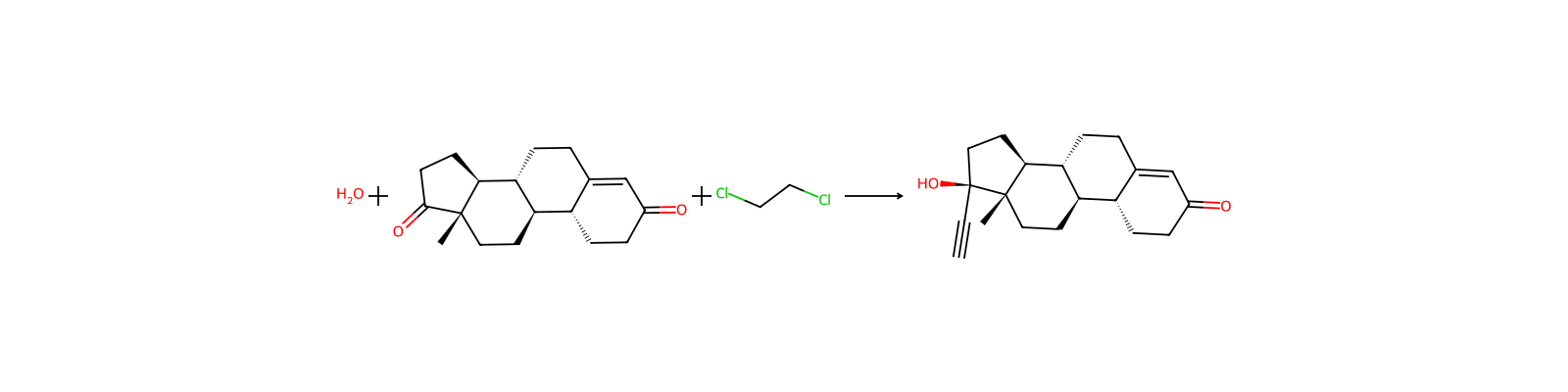
The methyl ether of estrone is reacted with lithium metal in liquid ammonia to reduce Ring A to the 4-ene state and the reduced compound is then oxidized with chromic acid in aqueous acetic acid to form estr-4-ene-3,17-dione (I). To prevent the 3-keto group from participating in the ensuing ethynylation reaction, I is reacted with ethyl orthoformate in the presence of pyridine hydrochloride to form the 3-ethoxy-3,5-diene compound (II). Acetylene is then passed into a solution of II in toluene, previously admixed with a solution of sodium in tert-amyl alcohol, to form the 17-ethynyl-17-hydroxy compound. Hydrolysis at the 3-ethyoxy linkage by heating with dilute HCl is accompanied rearrangement of the 3-hydroxy-3,5-diene compound to the 3-oxo-4- ene state.
It is prepared by reacting the methyl ester of estrone with lithium metal in liquid ammonia to reduce ring A to the 4-ene state; the reduced product is oxidized with chromic acid in aqueous acetic acid to form estr-4-ene-3,17-dione. In order to prevent the 3-keto group from participating in the ensuing ethynylation reaction, estr-4-ene-3,17-dione is reacted with ethyl orthoformate in the presence of pyridine hydrochloride to form the 3-ethoxy-3,5-diene compound. Acetylene is passed into a solution of this compound in toluene, previously admixed with a solution of sodium in tert-amyl alcohol, to form the 17-ethynyl-17-hydroxy compound. Hydrolysis at the 3-ethoxy linkage by heating with dilute hydrochloric acid is accompanied by rearrangement of the 3-hydroxy-3,5-diene compound to the 3-oxo-4-ene compound.
From 19-nor-4-androstene-3,17-dione. U.S. pat. 2,744,122 (1956 to Syntex); DeRuggieri, U.S. pat. 2,849,462 (1958).
Formulations/Preparations
Norethisterone is available commercially as single-ingredient tablets or as a component of combination tablets with ethinylestradiol or mestranol.
Norethisterone acetate is available commercially as single-ingredient tablets or as a component of combination tablets with ethinylestradiol. ... It is also available as a percutaneous patch with estradiol. /Norethisterone acetate/
Norethisterone enanthate is available commercially in an oily solution for depot injection. /Norethisterone enanthate/
Norethindrone, USP (Micronor, Nor-GD, Norlutin), and norethindrone acetate, USP (norlutate), are available alone in 0.35-5-mg tablets and in combination with estrogens as oral contraceptives.
Use ClassificationPharmaceuticals
General Manufacturing Information
Norethindrone is a synthetic progestin. The drug is the 17alpha-ethinyl derivative of 19-nortestosterone which differs structurally from norethynodrel only in the position of the double bond in the A ring of the steroid. Norethindrone acetate is the acetic acid ester of norethindrone.
应用领域
用途孕激素类药,用于月经不调、子宫功能性出血、子宫内膜异位症等
制备方法
生产方法在氮气保护下,将10.2 g 3-乙氧基-19-去甲-3,5-雄二烯-17-酮(cas:2863-88-9)溶解于无水甲苯中。随后,向溶液中加入10 g金属钾溶于200 mL叔戊醇的溶液。向反应体系中通入纯乙炔气体,并在室温下搅拌反应混合物过夜。反应完成后,向体系中加入水,并用50%盐酸将反应体系的pH值调节至1。将反应混合物冷却后过滤,所得固体用乙酸乙酯进行重结晶,最终得到8.9 g (8R,9S,10R,13S,14S,17R)-17-乙炔基-17-羟基-13-甲基-6,7,8,9,10,11,12,13,14,15,16,17-十二氢-1H-环戊烷并[a]菲-3(2H)-酮(炔诺酮),收率为88%。参考文献:[1] Patent: CN104788524, 2016, B. Location in patent: Paragraph 0040-0043[2] Journal of the American Chemical Society, 1954, vol. 76, p. 4092
上下游产品信息
上游原料
下游产品
试剂价格
- 26289 · 5g
- 炔诺酮Norethisterone, Thermo Scientific Chemicals — 3155元
- S4040 · 50mg
- 炔诺酮Norethindrone — 794.11元
供应商50 家
国药集团化学试剂有限公司86-21-63210123 · [email protected]
北京华美互利生物化工010-56205725 · [email protected]
上海阿拉丁生化科技股份有限公司400-6206333 13167063860 · [email protected]
Shanghai Biolang Biotechnology Co., Ltd.+86-15970428662 +86-13397199602 · [email protected]
Baoji Guokang Healthchem co.,ltd+8615604608665 15604608665 · [email protected]
南京兰亚化工贸易有限公司+86-25-8331-5620 · [email protected]
Hebei Yanxi Chemical Co., Ltd.+86-17531190177 · [email protected]
LGM Pharma1-(800)-881-8210 · [email protected]
Syntechem Co.,Ltd[email protected]
武汉易泰科技有限公司上海分公司18930552037 · [email protected]
安耐吉化学&3A(安徽泽升科技股份有限公司)400-0056266 · [email protected]
成都普思生物科技股份有限公司028-85370565-229 18080489829 · [email protected]
MedChemexpress LLC021-58955995 · [email protected]
孝感深远化工有限公司15527621225; 15527621225 · [email protected]
云南西力生物技术股份有限公司0871-65217109 · [email protected]
四川库利南科技有限公司400-1166-196 18981987031 · [email protected]
天津希恩思生化科技有限公司400 638 7771 · [email protected]
Hebei Qige Biological Technology Co. Ltd+86 +8618733132031
斯百全化学(上海)有限公司021-021-021-67601398-809-809-809 15221380277 · [email protected]
上海源叶生物科技有限公司13636370518 · [email protected]
TOKYO CHEMICAL INDUSTRY CO., LTD.03-36680489 · [email protected]
TCI Europe320-37350700 · [email protected]
深圳振强药物研发有限公司0755-66853366 13670046396 · [email protected]
广州爱纯医药科技有限公司020-39119399 18927568969 · [email protected]
南京生利德生物科技有限公司025-57798810 18652991625 · [email protected]
湖北鑫源顺医药化工有限公司13971561712, 13995564702, 027-50664929 · [email protected]
上海湄水化工科技有限公司021-60549325 18616193163
天津阿尔塔科技有限公司022-65378550-8551 · [email protected]
上海笛柏生物科技有限公司400-008-9730,021-54359730 400-008-9730 · [email protected]
成都零六生物科技有限公司400-1166-196 13458535857 · [email protected]
上海御略医药科技有限公司021-60345187 13671753212 · [email protected]
上海麦克林生化科技股份有限公司15221275939 15221275939 · [email protected]
杭州杰恒化工有限公司0571-87396432 · [email protected]
上海永叶生物科技有限公司86-021-61559134 15921386130 · [email protected]
上海嵩爰化工科技有限公司010-1234567 18521000990 · [email protected]
上海孚一生物科技有限公司+86 (21) 61124340
凯试(上海)科技有限公司021-50135380 · [email protected]
池州凯隆进出口贸易有限公司[email protected]
Sigma-Aldrich西格玛奥德里奇(上海)贸易有限公司021-61415566 800-8193336 · [email protected]
AN PharmaTech Co Ltd86(21)68097365 · [email protected]
桦特昇生物科技(武汉)有限公司027-59207879 1972026995 18140587686 · [email protected]
天津阿尔塔科技有限公司022-6537-8550 15522853686 · [email protected]
Wuhan Biocar Bio-Pharm Co., Ltd.86 15387057351 · [email protected]
TargetMol中国(陶术生物)021-021-33632979 15002134094 · [email protected]
上海陶术生物科技股份有限公司+1-781-999-5354; +1-00000000000 · [email protected]
BOC Sciences16314854226; +8616314854226 · [email protected]
杭州鼎燕化工有限公司0571-87157530-8003 18267553885 · [email protected]
EMMX Biotechnology LLC888-539-0666 · [email protected]
上海缮远医药科技有限公司021-31761238 13167072949 · [email protected]
广州市齐云生物技术有限公司020-61288194 61288195 · [email protected]
相关反应
5 条


关联笔记
加载中…